
The past few months, I have experienced multiple male cab drivers trying to get my phone number to take me out on a date. One even stopped his car a few blocks away from my apartment. I have also had men yell "Nice tits" and make obscene gestures at me while driving away. I got a boob job a few years ago, so you could say I was asking for it, but the sheer volume of men who corner me in public would suggest that it’s more than an isolated incident. This kind of harassment is ubiquitous.
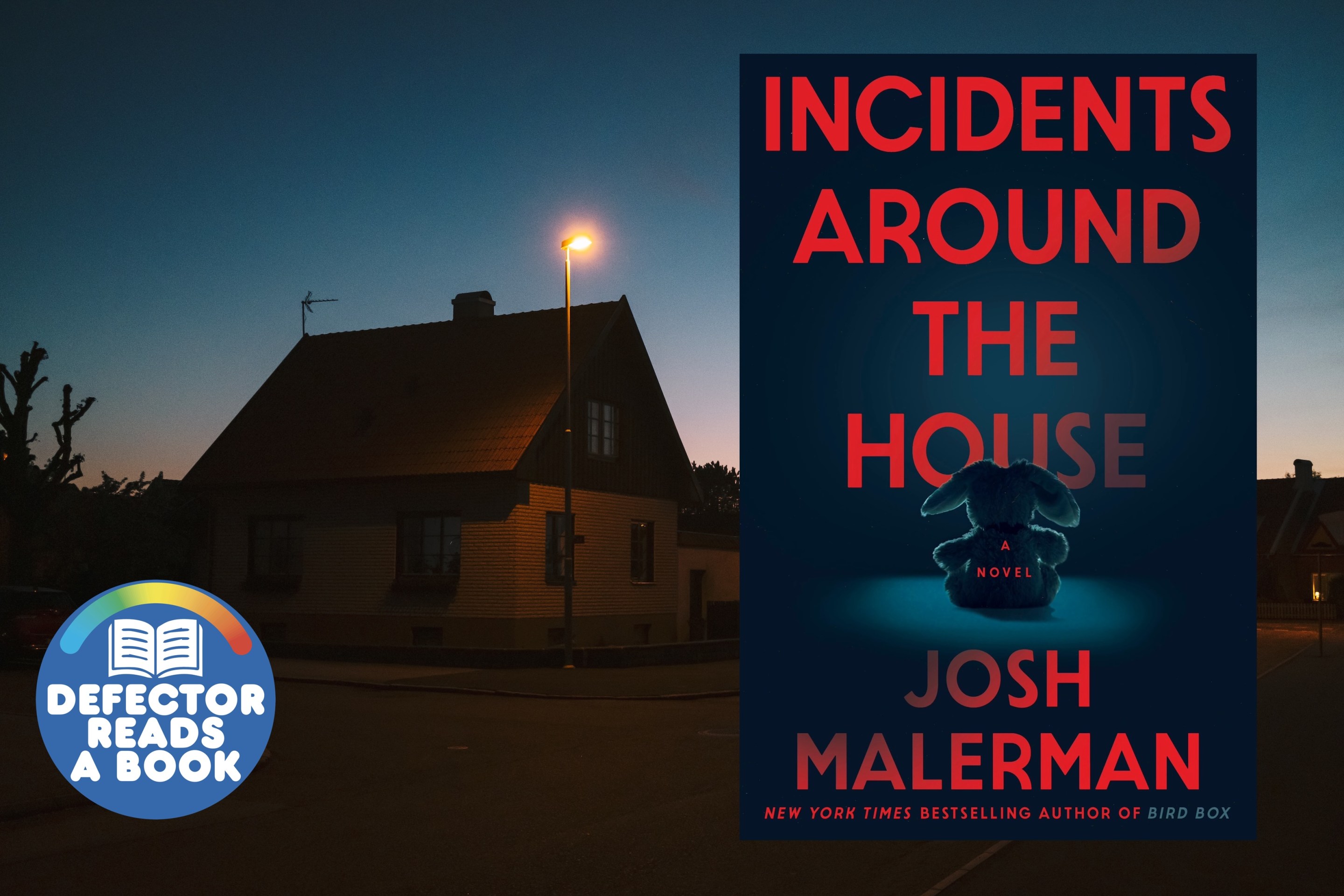
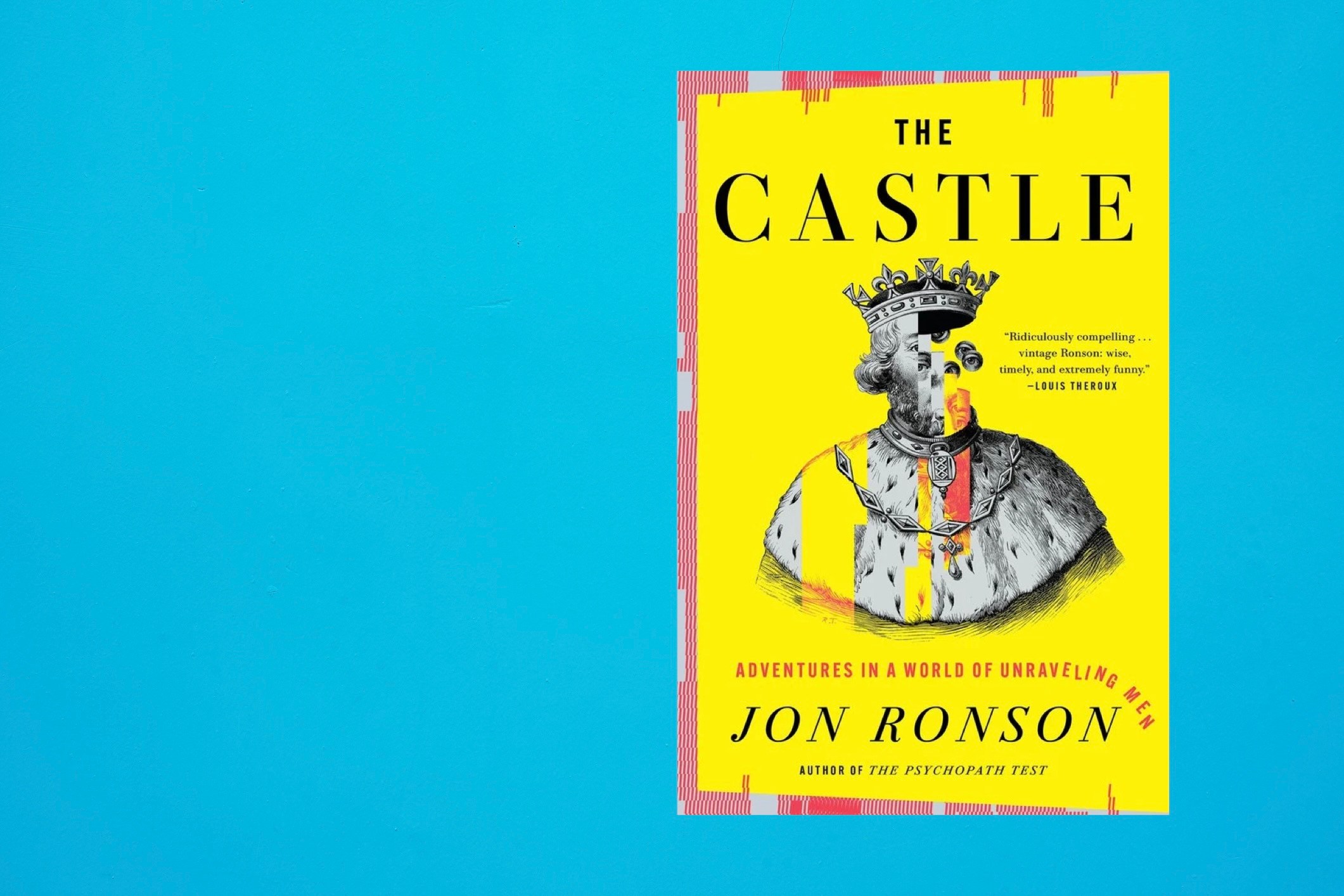
Still, I love men. I would like them to do better because I do often enjoy their company. I know I have previously panned many books on reforming the coarser sex—you could say we are living in a crisis of bad books about the masculinity crisis. Thankfully, Jon Ronson's The Castle is a thoughtful, empathetic work of narrative journalism. His prose is rigorous. No adverb or adjective is wasted.
Ronson is a sort of literary Louis Theroux, interested in the ideas and people at the fringes of society. He's explored a number of conspiracy theories, hosted multiple podcasts and radio shows, and wrote a book on cancellation and stigma called So You've Been Publicly Shamed. In The Castle, he follows two primary narrative strands: a man who is trying to lure women to his fortress in rural Connecticut, and a man who was shamed online for making video content that involved his kids. Through these stories, he wonders what a more positive version of masculinity could look like for future generations. He is neither proscriptive nor apolitical when considering the lonely destructive capacity of men without an outlet.
It is hard to read this book outside of the shadow of the gang rape that took place at Cornell University, orchestrated by seven young men who, thus far, seem to have moved on with their lives free of any real consequences. The very first chapter of The Castle is called "The Impossibility of Keeping a Harem in the Post-#MeToo Age." Chris Mark, the owner of the giant property, is trying to throw a party at his house in order to meet more women. Often, he meets such girls on dating apps and convinces them they have an opportunity to appear on his reality TV show—something that never materializes. Ronson's own son attended one of these "parties," only to realize it was a pretense for Mark to try and "princess"—seduce and bankroll—some women. Ideally, these girls only sleep with him and each other. He seems to think every woman is a latent lesbian. "So this was porn?" Ronson asks some of the girls when he interviews them later on. But no, the truth is far more twisted. The dogged journalist uncovers a tale of complicity that involves Mark's lawyer and women who persuade other women to just come over.
Mark is eventually flagged by the U.S. government as a suspected trafficker. He's an even seedier version of Hugh Hefner for the age of influencers, clamoring to be on camera. But his comments, even on the record, reveal a grim kind of opportunism. "The only girls that really work in this kind of scenario are drug addicts," he says during one initial interview, "because they don't know what's going on." Soon women come forward revealing sexual and emotional abuse. As he begins to run out of money, Mark even tries to leave the U.S. to escape his growing legal troubles. Those who badmouth him he merely decries as jealous old lovers. Mark turns on Ronson—viciously, saying he may even send men to hurt him if he doesn't stop pursuing the story.
"Chris was lashing out to protect his secret life," Ronson says early on in The Castle. "It was as if he'd nurtured a private fantasy of manhood that he knew could survive only in the shadows, because of how grotesque it would look to outsiders. And now I'd come along and put it all in peril."
Ronson himself is wondering what kind of man he wants to be. He doesn't want to be the kind of man who lingers on his glory days; he wants to work now. His quixotic journey to unravel the tale of Chris Mark becomes his raison d'etre. Too many men, he thinks, simply lack purpose. They lose steam, they play video games, they goon. Soon, they're aimless, prone to conspiracy theories, and disconnected from the real world.
"Pursuing my kind of journalism—journeying into shadowy worlds," Ronson writes, "is how I feel better. It's the one contribution I can make, and without it there's nothing. I'm sure there are millions of men out there with similar anxieties—underemployed and flailing, looking for something, anything, to fill the void, a void our fathers in many cases never had to grapple with." Telling this story of unmoored men with dwindling job options was a way of "preventing [himself] from plunging into that same terrible emptiness."
The Castle isn’t so interested in the manosphere. The book is more interested in men who assume a position of superiority even without clear social aggrievement. True, these men still resent women, but their frustration is more amorphous than that of incels. Ronson wants to dig deeper, to expose something about masculinity's crossroads even if he doesn't discover an answer.
His best answer is that we need to get off the computer. While the internet can democratize, it also destroys institutions, which even "as we cheered on their collapse, we perhaps forgot that at their best, institutions are a coming together, the culmination of experience, a consensus." In the void, he says, "narcissists have thrived." So has extremism. Influencer culture, like capitalism, requires endless growth, endless capacity for more intensity.
The pathetic nature of Mark's plight is best exemplified by the fact that he talks to five AI chatbots at a time, because he thinks that's the only way they can keep up with him. "AI kind of makes me happy," he said. "They say there's no one in the whole world like me." Ronson, on the other hand, rightly calls ChatGPT a "psychopath." The author is intent on holding nearly everyone accountable. One of my few qualms with the book is the way Ronson later brings in Armie Hammer and underplays the accusations against him. Ronson doesn't mention the actor was accused not just of affairs or BDSM, but of sexual assault. But in basically every other case, Ronson is clear that trying to understand what drives these men should not be an attempt to excuse their behavior. Men who feel scared or powerless are always capable of violence. Their fragility does not insulate them from causing harm.
Ultimately, the person Ronson most brings to task is himself. He points out the liberal backlash to male vulnerability and questions his willingness to follow this story at the expense of his family. He recognizes how the "dangerous" research he is doing informs his own sense of masculinity. On his wedding anniversary, he finds himself interviewing men who knew Chris Mark as a child, rather than celebrating at home with his wife. "Luckily my wife is not sentimental either when it comes to date milestones," he jokes.
Through Ronson's descent into the grim state of online masculinity, we may learn something about what not to do—but the hard work is discovering what to do next. There do not seem to be many positive male role models left available to young men. Once, when interviewing a young musician, I asked him if there were any men he looked up to. He paused for quite a long time before telling me he couldn't think of one.