
Adaptation is a tricky process. Representing source material created in one medium within the formal and aesthetic environment of another without changing the original material in the process is impossible. As is the case with any sort of translation, the adapter must digest and synthesize the source material, then find some way to reproduce its poetic truths while accommodating as much of its structural skeleton as they care to or are capable of. The concept of a "faithful adaptation" supposes a perfectly reflective surface that does not exist.
That said, Netflix's adaptation of Cixin Liu's brilliant novel The Three-Body Problem is a disaster. I hated it. Not necessarily because it changed key parts of the foundational Remembrance of Earth's Past sci-fi trilogy, though it did, but more because it failed to represent any of the thematic or conceptual gnarliness that made the books so good. The show's first season, overseen by Game of Thrones duo David Benioff and D. B. Weiss and stylized as 3 Body Problem for some reason, debuted in March 2024, and the second season drops this coming January, as revealed in a trailer earlier this week.
The first season of the show loosely follows the titular first book of the trilogy, while including a bunch of stuff from the third book and ending by revealing the central conceit of the second book. I will move into spoilery territory in the paragraphs to come, but the basic premise of both the show and The Three-Body Problem novel is that humanity learns of the existence of an alien civilization, known as the Trisolarans, whose message is, We're on our way to come hang out, and kick your ass. They are very far away, though their technological supremacy is such that they've established a toehold on Earth, which they are using to get theoretical physicists to kill themselves so human science can't advance in the next few hundred years.
When I first read that the right to adapt The Three-Body Problem was the subject of bidding war back in 2018, I remember thinking of all the ways the trilogy would be difficult to translate into a TV series. For one, the trilogy is almost hilariously light on three-dimensional characters. Every character exists to advance the plot or fill some specific scientific function, rendering every human participant in the story into machinery, except perhaps Ye Wenjie. For example, Luo Ji, the protagonist of The Dark Forest, the second and best book in the series, is a mopey loser whose only character traits are that he's lazy and despondent until it's convenient for him to stop being lazy, at which point he invents the Fermi Paradox.
The books' strength is that they don't need individual people to stand out as fully rounded characters because the central character in the trilogy is humanity as a collective. Liu is interested in representing struggles to understand, fight, or collaborate with the Trisolarans on factional, not individual, levels. This works because he depicts everything on such a grand scale, and because the characters act with a brutal analytic directness that matches the grand stakes of the conflict.
In capable hands, this flatness means that the would-be adapter has a great deal of space to inflate characters into. Instead, Benioff and Weiss neither match the grandiosity of the novels nor create worthwhile characters. They evince a fundamental misunderstanding of Liu's books by (poorly) writing characters motivated by personal trauma and moral equivocation, muddying the clarity of Liu's source material.
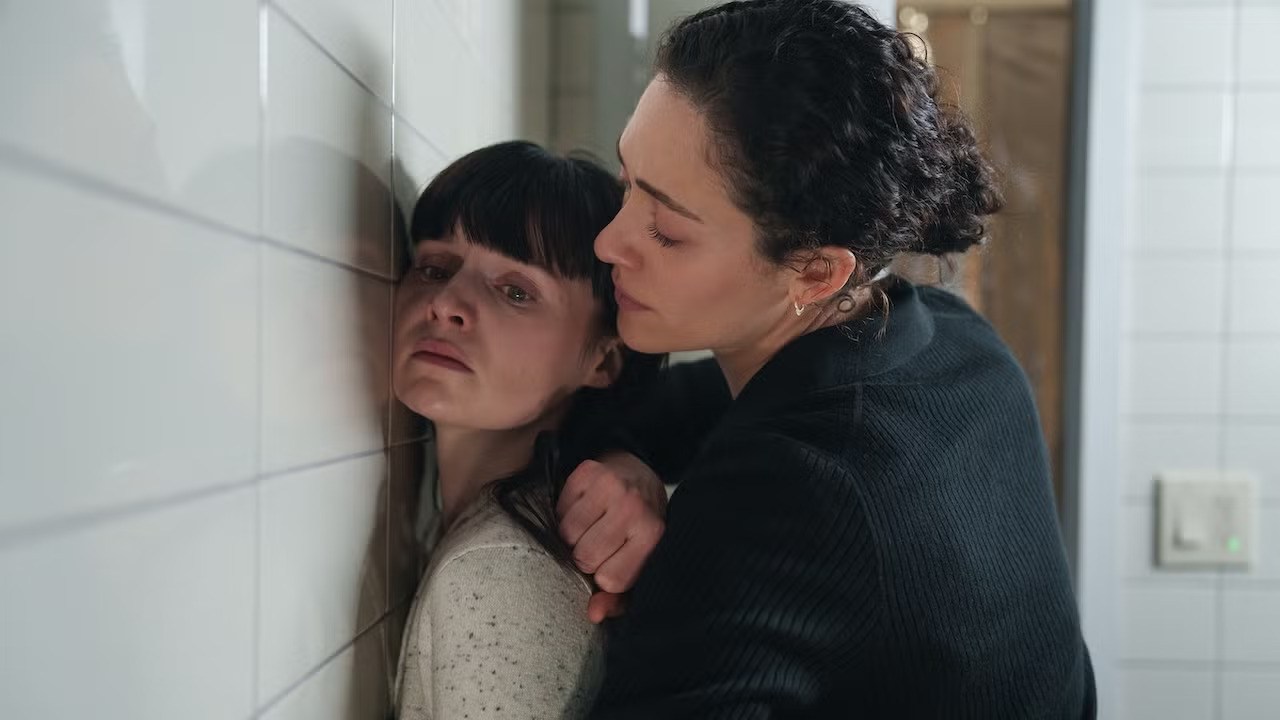
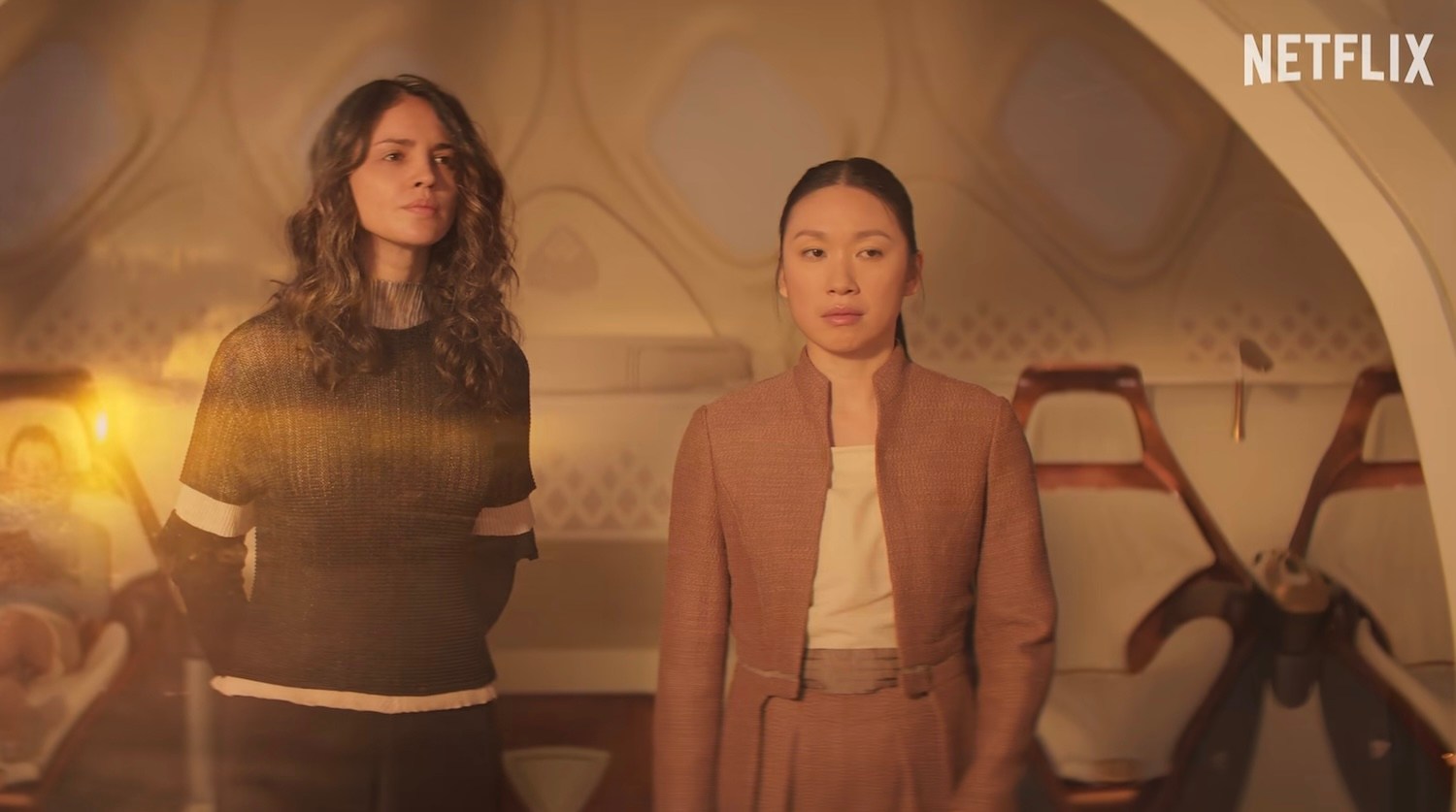
Eiza González stars as nanotechnologist/entrepreneur Dr. Augustina Salazar, a slapdash version of the novel's Wang Miao. The show's Salazar is motivated to create advanced technology because of the unjust suffering her mother endured, and when this technology is used to kill members of an anti-humanity organization, she is forced to grapple with the moral dilemma of having her creation used to inflict collateral damage on both unwitting children and people actively working toward the extermination of humanity. She achieves something like atonement when she finds a way to use the technology to provide access to clean water to a village in Mexico.
There's no place for such moral equivocation in Liu's books, because everyone operates on the logical premise that the stakes of the struggle are so significant that losing inherently means no villages, no Mexico, no clean water. "[Morality] is located not in any individual character or deed," writes Nan Z. Da of the show in Vulture, "but in the way the story is concocted, in its relentless commitment to how real problems actually unfold, step by step." The show can't help but personalize species-level quandaries, rendering them meaningless.
Again, I grant that this feature of Liu's work would be difficult to adapt. But the show even bungles the more straightforwardly cinematic elements of the first book. Some of the most evocative parts of The Three-Body Problem take place in a computer game, designed by the Trisolarans to teach humanity about the plight of their home world and the struggles their species has gone through to get to the point where they are both capable of invading Earth and also put in a position where they have to. This is the segment of the book where Liu, plainly and by his own admission uninterested in literature's aspirations toward beauty, manages to write most strikingly. The game's player-character must solve the central mystery of why the game's world is subject to unpredictable atmospheric conditions that create cycles of extinction. The scenes in the book are some of the only parts where a solution is not relentlessly driven toward, and as such there is some welcome ornamentation.
The show fails to capture any of the wonder or awe of this plot line, skimps on showing as many scenes as Liu does, and insists on deadening the stakes by having Jin Cheng spend her time trying and failing to rescue an orphan girl. You will not be surprised to learn that the orphan side-plot is an echo of Jin's own trauma, a frustrating narrative cul-de-sac in what should be an eight-lane highway of possibility.
The biggest and most inexplicable choice the adaptation makes is to westernize The Three-Body Problem. The novels are mostly set in China and populated by Chinese characters, which gives the trilogy a subjectivity rarely seen in popular American fiction. The show preserves some of the China-based plot that opens the book—not coincidentally, this is where the best stuff is—while primarily shifting its present-day plot line to London. A fair interpretation of the books, one made in such august pages as those of the damn-ass New Yorker by the translator of The Dark Forest, posits that the Trisolarans can be read as a rough vessel for anxieties over Chinese imperial ambitions in an uncertain future.
Whether you find this reading valid or even interesting—one could even fairly take the opposite tack and read the Trisolarans as American—the novels' subjectivity is one of their key distinguishing features. Chinese science-fiction emerges from an entirely different political and literary context. Stripping that away to have various Game of Thrones veterans express some version of Um, so that just happened! when the circumstances of the possible end of the world align in such a way that they're forced to overcome foundational childhood trauma is a disappointment.
As Liu's trilogy progresses, the scope of the story dilates. Characters are forced to make choices of significantly larger scope. The question of the fate of the planet gives way to the fate of the solar system, which then gives way to the fate of the universe. The genius of Liu's trilogy is its ability to keep giving its characters, and by extension its readers, increasingly interesting and difficult problems to solve. Do you leave or do you fight? How do you trick a civilization orders of magnitude more advanced than you? Is the galaxy a dark forest populated by hunters and angels? This is what the series is about, not a loose group of five university buddies trying to hold together as they face uncertainty and their mutual dissolution.