In her 1980 essay “Compulsory Heterosexuality and the Lesbian Existence,” Adrienne Rich lists over 60 examples of systematized female oppression. To name a few: the power of men to deny women their own sexuality or to force male sexuality upon them via rape, domestic violence, prostitution, chastity belts, incest; to command or exploit their labor via horizontal segregation in the workplace, pimping, and male control of abortion; to confine them physically or control their movement via rape as terrorism, high heels and restrictive clothing, or physical violence; to use them as objects in male transactions—the use of women as gifts, the use of women as entertainment in male transactions, wife-hostesses, call girls, cocktail waitresses. She concludes, after her harrowing delineation of the ways that women are restricted by male desire, that the pervasiveness of patriarchy can only suggest that “an enormous potential counterforce is having to be restrained.”
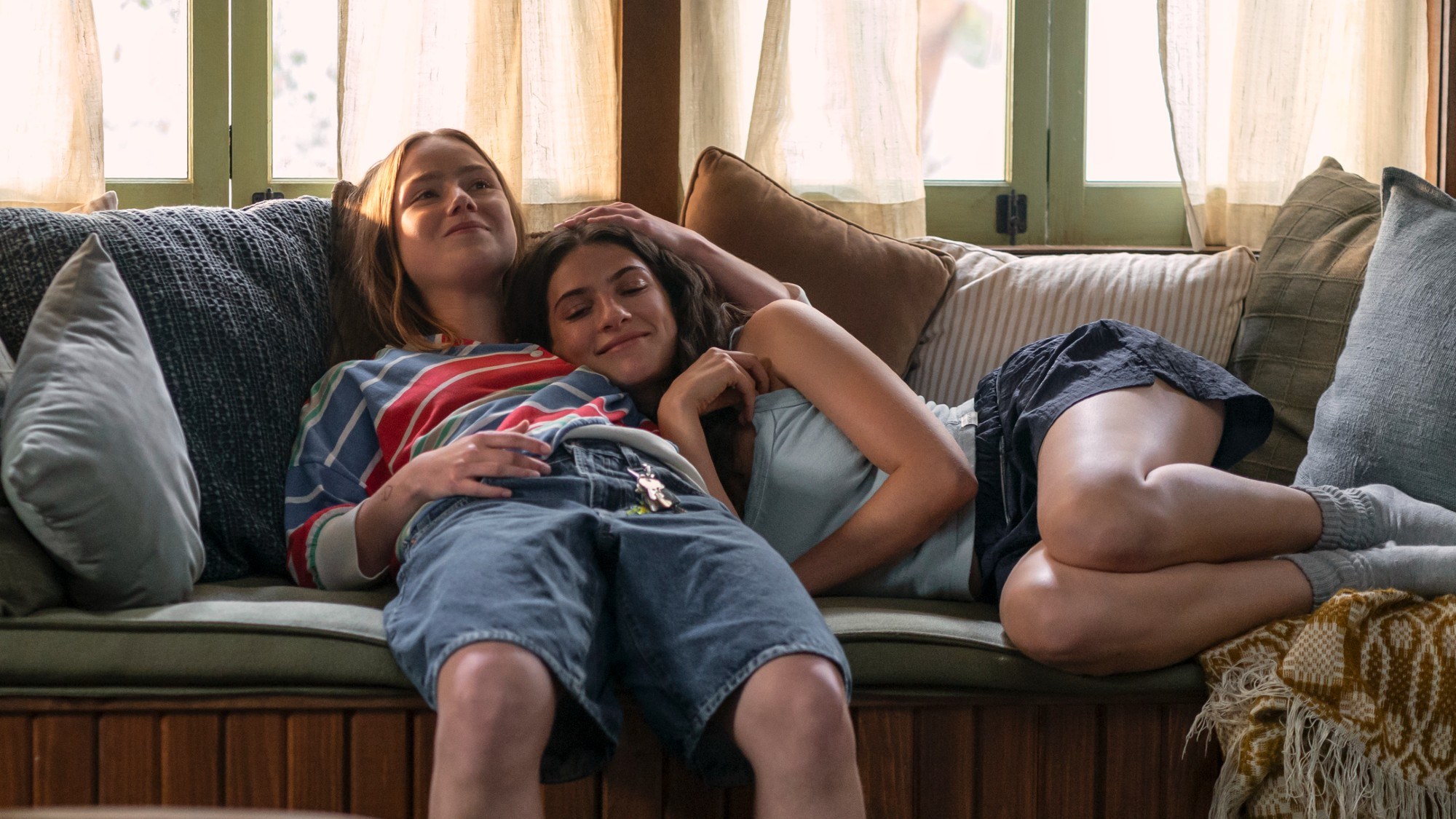
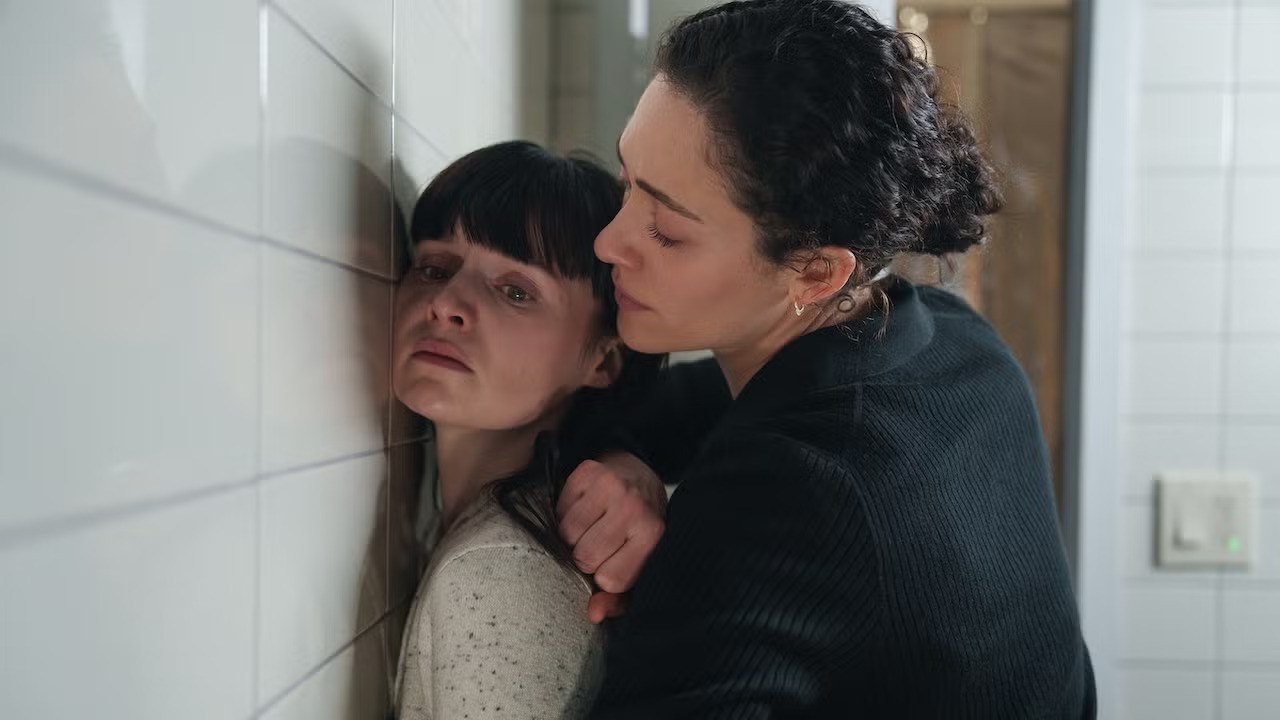
Furious, Hulu’s new drama from Elizabeth Meriwether, is a love letter to that counterforce, showing us what happens when it erupts from its restraints. The show follows Alice (Emmy Rossum), a newly hired FBI agent tracking down a mysterious serial killer, and Catherine (Lola Petticrew), the killer herself, as she kidnaps and murders a series of seemingly unconnected men. In the show’s first five minutes, we see Catherine inject fentanyl into the arm of an already sedated man, lying next to him as he dies. Next, we cut to Alice, confined to the phone lines at the otherwise all-male New York City FBI office, helping a confused old woman that the men had been teasing. Catherine is too powerful; Alice, not powerful enough. At a glance, the premise could appear to be another lazy attempt at wedging so-called feminism into mainstream television by way of shallow representation—look, a female cop, brought down by the boy’s club, chasing a crazed female serial killer! But as the story progresses, we see the brutal complexity of life under omnipotent patriarchy: Alice grows twisted and strong, while Catherine deflates, gives her own game away, until the two meet in the middle. Ultimately they are no better or worse than each other, just women forced into a world they never chose, figuring out how to survive it. Furious is not a girlboss fantasy. Instead, it’s a story of our world—a world in which women are sidelined, beaten, raped, and killed with impunity—and the women who try, in their own mangled ways, to resist it.
First, all the typical TV stuff. The show is beautifully acted: You can’t take your eyes off Petticrew as they dance along Catherine’s traumatized web of contradictions, sometimes gleeful, sometimes scared, sometimes so angry you can feel the heat rising in you as you watch. Quincy Tyler Bernstine is delightfully withering as the burned-out, cynical, mythology-obsessed sex crimes specialist Nora Washington, oscillating between taking slugs of tequila and giving the show’s more powerful monologues about justice, trust, and power. The pacing is excellent, devastating me each time an episode ended and I knew I’d have to wait a week for the next. The show weaves Catherine and Alice’s paths until they finally intersect with grace and finesse. But where Furious really shines is the writing, both on the line level (“I’m not getting high and mighty; I am high and mighty”) and as a holistic triumph of narrative structure. We come in thinking we know the story: a sex-crazed, mind-addled serial killer and the competent yet haunted agent trying to track her down. But as the web of crimes unfolds, we see that Catherine’s motivations are far more complex, and that she is not the show’s true villain. We see Alice resist and find love, we see Catherine look for a home, we see intimacy and rage and so much fear that we can’t help but want a better world, too, not just for these women but for ourselves, recognizing that horrors are happening every day to women we will never meet and who will likely never have the wherewithal to embark on a mass murder campaign in an attempt to stop them.
The show aggressively defies easy resolutions, making no compromises in the project of telling a truly empathetic and honest story about men and power and what women are up against in a search for justice. We see this on a systemic level: The Feds don’t take Alice seriously as an agent, nor do they take Catherine seriously as a threat; the cops don’t believe Alice when she says her ex, a fellow cop, beat her; the rich, powerful men raping teenage girls have an upper-level FBI agent on call to clean up their messes; the girls being trafficked are too afraid of prosecution, or too in love with their pimp, to come forward and report the men abusing them.
But we also see the various petty indignities of womanhood in a man’s world, and the violent suffering enacted in private. In a few cringe-inducing scenes, various men attempt to seduce Catherine—not knowing that Catherine has been targeting them, that they’re about to be victims or tools of her revenge. A wealthy lawyer does lines of coke off his coffee table and dances to The Animals as a sort of mating ritual, while Catherine, bewigged in a catering uniform, looks up at him doe-eyed and tells him that she “feels everything.” A 20-something Ivy League grad asks Catherine, disguised in a new wig with a new pseudonym, about her advocacy as a former sex worker; then the show cuts to him fucking Catherine without a condom on the first date and calling her a slut over and over until she stops him, curls up into a ball, and he hastily apologizes: “I’m such a fucking fraud.”
We see the ways that women do and do not have power: Alice seducing her abusive ex in order to get him off the case, wearing an old skirt she keeps in a box with his other memorabilia and laughing in faux-naivete as he looks on hungrily, falling right into her trap. A teenage girl cutting off her hair because her pedophile father liked it long; Catherine trying to drag her best friend’s 14-year-old daughter out of a motel where she’s being held, partially of her own will, to make OnlyFans content. Alice terrified of taking a shower, because her ex used to beat her in the bathroom; that ex receiving an award for “injury in the line of duty” after stalking and attacking Alice; Nora being called a “diversity hire,” pushed down by decades of dead girls and lost cases. In one of her most arresting monologues, Nora describes the world as she sees it, and as the audience may understand it, coming into the show: “Women are supposed to be hit, and raped, and go away and die quietly, not start murdering people. Everyone likes it when there’s a sweet little woman, lying on the floor naked and cut up in pieces … it doesn’t matter; anything you do, the ones really to blame don’t get caught. Never. Never.”
But amid all this bleakness there’s hope, and nuance is the show’s particular strength. This is not a story of perfect women and evil men, nor is it one of superheroes and villains. The women are not all virtuous—we see Emma Easton (Hope Davis) wheeling her father into a saferoom where she’s arranged for a teenage girl to be raped by him, later calling herself a “victim,” too. There is a lesbian domestic violence shelter worker who lets herself be seduced by Catherine, her client, and grants her special favors. We see Catherine do too many cruel or childish things to count, and Alice do the same. The characters in the show maintain or resist systems because they simply know no other way, or because they have no other choice—they are not uniquely strong, nor enlightened, nor banal, but the products of their circumstances. And it is their circumstances that enrage us, remind us that we have a duty, too. The show pulls no punches, but it makes no excuses, either. It forces us to resist the urge to numbness, to feel the way we so often feel, the way the FBI and our world operates: “It was one dead girl, and she would have died anyway.”
Even the questions I had throughout won me over by the end—why would a woman so skilled at hiding from police leave a poppy tattoo uncovered? Because it was given to her by her best friend, and she’s not as grown up as we think she is. Why does Alice have to be a victim of pedophilia as well? Couldn’t the domestic violence and general righteous indignation be enough motivation to take on this case? Because it brings Alice, ultimately, to kill Jay Easton, the Epstein-esque patriarch who is at the center of her and Catherine’s trauma. It gives us that stunning closing scene, where Catherine asks her: “Did you like the way it felt?” Did it feel good to have that power, to take it away from someone who’d said he’d never get caught, that nothing would ever happen to him? We see rows and rows of names populate in a search for viewers of Alice’s teenage assault video, and we think of one of Nora’s last, perfect lines, about the FBI sex trafficking beat, but also the world: “You wanna do this job? You have to face it.” The same is true for artists, and political people of any kind. If we’re ever going to make a better world, we have to be honest about the world we live in now—we have to be honest about who gets justice, and who gets left behind, and who is victim to the petty indignities of male desire and ego every day and who has the power to change it. Furious makes us all face it—and about time.