


Following this week's news of Patrick Stewart's death, the Defector staff convened to remember some of our favorite performances by him.
The Simpsons
Patrick Stewart is one of our most recognizable forces in pop culture: the kind of star who could be identified just by his profile, a rare feat of notoriety in any era. Every bit of him is iconic, but it’s his voice that truly makes him the performer he was. It's only right, then, that he became a memorable voice actor in animated work.
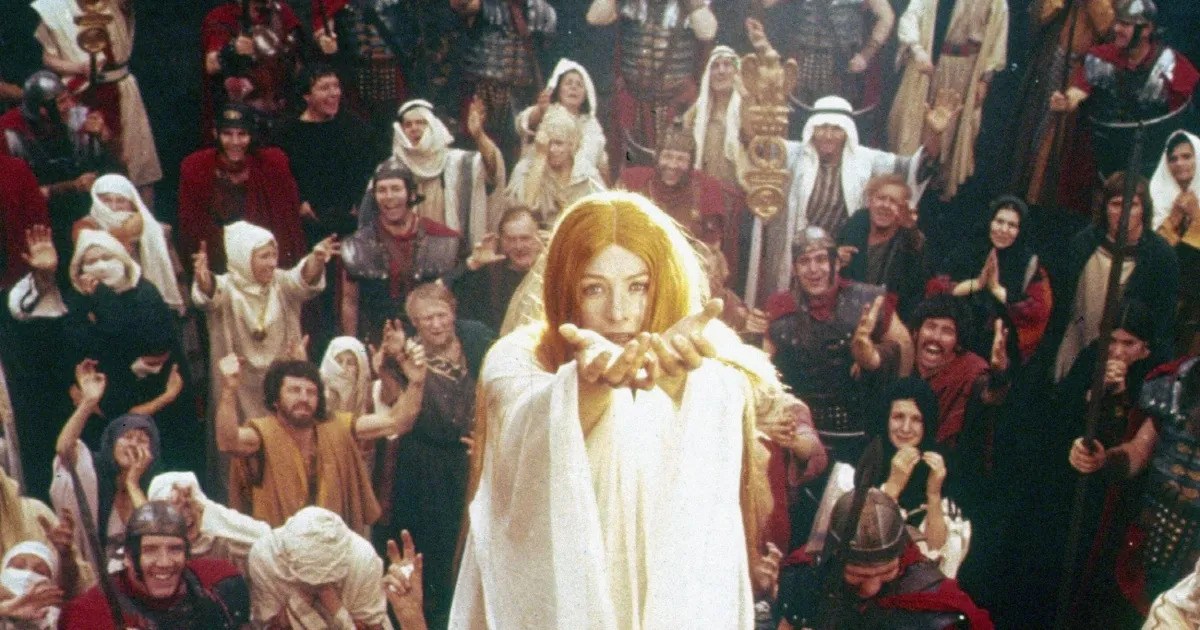
He has a great recurring role in American Dad! as Avery Bullock, Stan’s CIA boss, and he makes a wonderful turn in the English-language version of Nausicaä of The Valley of The Wind. But I will always remember his guest turn on The Simpsons for the episode "Homer The Great," in which he plays “Number One,” the leader of the Springfield chapter of The Stonecutters, a Freemason-ish secret society which Homer finds his way into, and which eventually makes him their Christ figure. Stewart’s voice was the tool that made this one-off character a believable leader of an Illuminati randomly placed in a humdrum suburban American town. A character that felt like it only existed in the shadows.
Famous guest stars on The Simpsons can be a mixed bag. Sometimes they’re cute, winking nods from celebrities in on the joke and capable of telling one. Sometimes they draw too much attention to themselves. Two of the best guest-star voice turns in The Simpsons came from the world of Star Trek: first Leonard Nimoy, as a mystical and pompous version of himself, and then Stewart. His gravitas and bass gave his character the right import, but also plays the jokes with perfect pitch. His performance of the phrase “the paddling of the swollen ass … with paddles” is especially wonderful.
It’s one of the greatest episodes of one of the great shows, and Stewart brought his magic and up-for-anything playfulness to it. He could make any world he was part of a little brighter, just by showing up. — Israel Daramola
Waiting For Godot
I paid to see Patrick Stewart and Ian McKellen doing Waiting For Godot on stage, and no one can say I didn’t get exactly that. Hollywood actors doing Broadway is always hit or miss, but I figured two stentorian, veteran Shakespearean actors was a safe bet.
It was all right. Stewart played his Vladimir big and broad, gesturing for the cheap seats, less a down-on-his-luck tramp and more like a vaudeville emcee; it was surprising, but not at all a strange choice, given Beckett's love of music hall and slapstick duos. And it is a very funny play. But while Stewart often excelled at lending his high-culture vibe to low humor, he also felt a little like a miscast. You never lost yourself in the show; you never forgot about the actors playing the characters. (Cf. Frank Langella disappearing into Lear around the same time.)
Afterward, I thought about why Stewart had taken the role. At that point in his career, he certainly didn’t need the work or the money, and it would be his last stage role. But man, he looked like he was having fun up there. And why wouldn’t he? Taking on a new challenge in his 70s. Playing both to and against type. Bro-ing out with his best pal Ian for a year in New York, making audiences and each other laugh. It was a job that he took seriously, as he did every role no matter how small or unprestigious, but surely did not feel like “work” at all. I thought he had more than earned the right.
Maybe I hadn’t gotten what I thought I wanted from the show, but had instead received what I actually wanted. Because what I wanted—what audiences wanted, and what was no doubt the genesis and selling point of the entire production—was to see Patrick Stewart and Ian McKellen, and they gave themselves over. That’s star power, baby. — Barry Petchesky
Extras
Without a doubt, Jean-Luc Picard is first and foremost in my heart when I think of Patrick Stewart. He made Star Trek a cornerstone in my young life, through his performance as a captain that led with intelligence and compassion instead of fists or reckless cunning. Here was a character who sought out knowledge, who would rather spend his time reading dusty old books while everyone else was fornicating their way through shore leave on the sex planet. Picard was dignified, maybe even aspirational; he really felt like a leader.
Which is maybe why the thing that jumps to mind second when I think of Stewart's work is a brief scene he did in the Ricky Gervais sitcom Extras. I do not want to spoil the entire scene, but basically, in the span of almost four minutes Stewart completely upends his whole fucking deal. This great actor has Shakespearean talent and training, and is the bedrock of franchises, and he absolutely jumps into a dumpster like an eager raccoon, in a scene that has me in tears from laughing so hard every single time I watch it. His same sense of character, of timing, the rhythms of working against someone else in a scene—all of that is here, but twisted and turned upside down to ridiculous effect. My partner first introduced this series and scene to me, and aside from changing the way I think about Stewart, it just made me appreciate the range he had as an actor. Yes, when I think of him, it's always "Make it so," but after watching this clip, it was also "I've seen everything." — Justin Ellis
Those Porsche ads
When you think of Patrick Stewart, one of two things immediately springs to mind. The first is that shiny bald pate. The second is the voice: stately, confident, warm. Shakespearean. With his voice alone, he could render any work of art or commerce impossibly elegant.
It made perfect sense for the marketing team at Porsche, makers of arguably the most elegant line of sports cars on the planet, to hire Stewart as the voice of their brand back in the 1990s. The result was an ad campaign that felt as well-crafted as the product it advertised. Stewart imbued the serious Porsche copy with a seemingly foundational truth—“It’s the car you own before you’ve ever really been inside one.” And when it was time for the punchline—“If Reinhold likes your car, we’re pretty sure you’ll like your car”—Stewart delivered with the playfulness of an uncommon gentleman: a man who never goes out of style but is increasingly rare in number. Long after today, you and I will still be hearing Stewart’s voice in our heads. His voice is eternal. He is eternal. — Drew Magary
Green Room
If you had told me, before I saw Green Room, that Patrick Stewart was in a 2015 indie thriller about neo-Nazi metalheads in the Pacific Northwest, I would have assumed that he had a bit part as a stunt casting. At that later stage of his career, I was perhaps brainwashed by his role as Professor X and had transposed my own biases onto Stewart. If you had then told me that Stewart played the briskly competent, outwardly respectable leader of those backwoods neo-Nazis, well, I would know to lock the hell in. And if you had told me that this would become perhaps my favorite performance of his, then I would have no response other than awe and more than a little bit of fear.
Green Room is a gnarly movie. Following a band of punk goofballs who accidentally play a show at a neo-Nazi club in the woods, then uncover a murder before locking themselves in the titular room in order to survive the night, the movie plays out all its nastiest impulses, and on all of the audience's. There’s a lot of gore, torture, and tension, backed by a wonderful performance from the late Anton Yelchin. But it’s Stewart, by virtue of both his stature as an acting titan and of his commitment to this role, who steals the whole thing.
As Darcy Banker, Stewart is just so calm. His voice is soothing, his actions horrifying. He’s meant to be the voice of reason, someone our heroes could potentially negotiate with to get out alive, but instead, he’s the most calculatedly evil person in a movie with a ton of evil people in it. Even when things go wrong for his neo-Nazis, Darcy just casually and regally moves to the next terrifying plan. The movie would probably work as a cheap thrill without Stewart—though, according to director Jeremy Saulnier, his late-in-the-game casting saved the movie and helped it get made. Thanks to him, Green Room becomes something much more unsettling.
Playing a beloved actor against type isn’t a new trick, but Stewart is able to slip into the malice in such a way that you never forget he’s Patrick Stewart, yet you do forget that you’re always predisposed toward rooting for him. He’s menacing without ever losing the tranquility that defines him, and that’s scarier than anything else I’ve ever seen him in. — Luis Paez-Pumar
Star Trek: The Next Generation
Part of the appeal of Star Trek: The Next Generation for me came simply from its vastness. The idea that a person could board a ship to anywhere, among all those constellations, thrilled me. Perhaps somewhere out there, far from my small and suburban life, was a world where all global conflict had been solved, nobody needed money, a machine made all our food perfectly, and it didn't matter if my clothes were on-trend enough, because everyone would be wearing Starfleet uniforms.
And, of course, Capt. Jean-Luc Picard would be in charge.
"Each Starfleet captain is a story that we tell ourselves about what leadership should look like," the TV critic Maureen Ryan wrote after Stewart's death. The story Stewart told, through Picard, was one that radiated intelligence but also compassion, logic but also emotions, a perfect balance of the head and the heart. He did not emit the masculine bravado of his predecessor, but rather a sort of raw intellect co-mingled with the willingness of Fine, I'll fire my phaser if I must. He did not desire conflict, nor would he shy away from it when it proved necessary. I felt so in awe of his steely steadiness that as a teen I started to, unironically, drink the captain's signature Earl Grey tea.
Stewart would perfect the role after the legendary cliffhanger between Seasons 3 and 4, in which Picard is captured by the Borg and, briefly, made Borg before being rescued by his crew. He seemed at his best—dare I say, at his most Shakespearean—when his Picard was forced to wrestle, season after season, with those lingering demons, the faint whispers of the Borg hive, the dread at having to remember and sometimes tap into a haunted version of his own self that he'd rather keep stashed away. It was the fantasy of Picard's perfection that drew us in, the reality of having to fight off his own darkness that kept us watching.
That sense of inner darkness came from the actor's own lived life. Stewart grew up with a violent father who physically abused his mother. He talked openly about it and spoke out against violence against women, especially intimate-partner violence, throughout his entire life in ways that always felt meaningful, not just like a celebrity checking a charity box. When he learned his father was diagnosed with "shell shock" after serving in World War II, he took up PTSD as a cause as well. Soon after his death, a viral moment began making the rounds again from 2013 Comicpalooza. It's a woman asking him what work he was most proud of outside of acting. He answered with not just a nod to his advocacy but an impassioned monologue against victim-blaming, a response that garners feverish applause from the crowd.
Watching it again on Thursday, it brought me to tears. It was just as I imagined Capt. Jean-Luc Picard would have put it. — Diana Moskovitz
Lifeforce
I watched Tobe Hooper's Lifeforce the other night, which is not to say that you should do the same. It's a minor credit for basically everyone involved, but has some admirably loopy and fun stuff in it. Mostly it has the headlong atonality and giddily unresolved reach vs. grasp issues you'll find in a certain type of films from that period. The people putting their money and time into making movies at that moment were surely not less concerned with making a profit than the ones doing that now, but that motivation is much harder to detect in the finished product. It certainly seemed like they were enjoying themselves.
Lifeforce was released in 1985, the first film in Hooper's three-picture deal with the iconic schlock production house Cannon Films, which he signed after the success of Poltergeist in 1982. Cannon gave Hooper $25 million and the rights to the 1976 novel The Space Vampires, and the movie that results is, for all its pluses and minuses, absolutely what you would expect from a Cannon Films adaptation of a novel called The Space Vampires. The actress Mathilda May, who plays the role of Space Girl, is nude basically every moment she's on screen. An onscreen credit notes that the score, by the estimable Henry Mancini, was performed by the London Symphony Orchestra.
I would not say that Patrick Stewart's performance in Lifeforce is one of his best, exactly, although it is thrillingly committed and strange in a way that suits the film well. Stewart booms, writhes, screams and (spoiler) eventually disgorges all the blood in his body; in interviews, he would say that the moment when his (spoiler again?) vampire-possessed psychiatrist character locks lips with a stolid American astronaut played by Steve Railsback was his first on-screen kiss.
At the time, Stewart was already prominent enough as a stage actor and working steadily enough on film and TV that he probably could have gotten away with taking his goofball part in this strange film a little less seriously. But that was not Stewart's way. His seriousness about his work was never self-serious or humorless—his ability to play his massive gravitas for laughs made him a wonderful Saturday Night Live host, for starters—but it defined every part he'd play.
Two years after yarfing out grape jelly until he died in Lifeforce, Stewart was cast as Jean-Luc Picard in Star Trek: The Next Generation. That might've been a goofy role, too, in other hands. But it wasn't, both because of how much Stewart had to give and how generous he was about applying it to whatever bit of work he had in front of him. Do this for enough decades straight, on the stage and in beloved franchises and brutal indies and, somehow, American Dad!, and an actor will be remembered as Stewart has: with love and awe, with a sort of gratitude for how much of himself he gave to every part he played, and as an unstintingly righteous public figure. It is remarkable enough to have the talent that Stewart had, but it is more remarkable, and more rare, for how generous he was with it. — David Roth