
Welcome to Listening Habits, a column where I share the music and musical topics I’ve been fixated on recently.
The music business is in trouble. Everybody keeps telling me about it, so it must be true, right? And it especially must be true of rap, which is totally, definitely dying, and actually already dead, and the worst it has ever been, according to several people that own microphones and audio/video recording equipment and exclusively upload to YouTube. Alright, sure. I mean it's not like there aren't troubling indicators out there, so maybe everybody is right: about music, about rap, about the business.
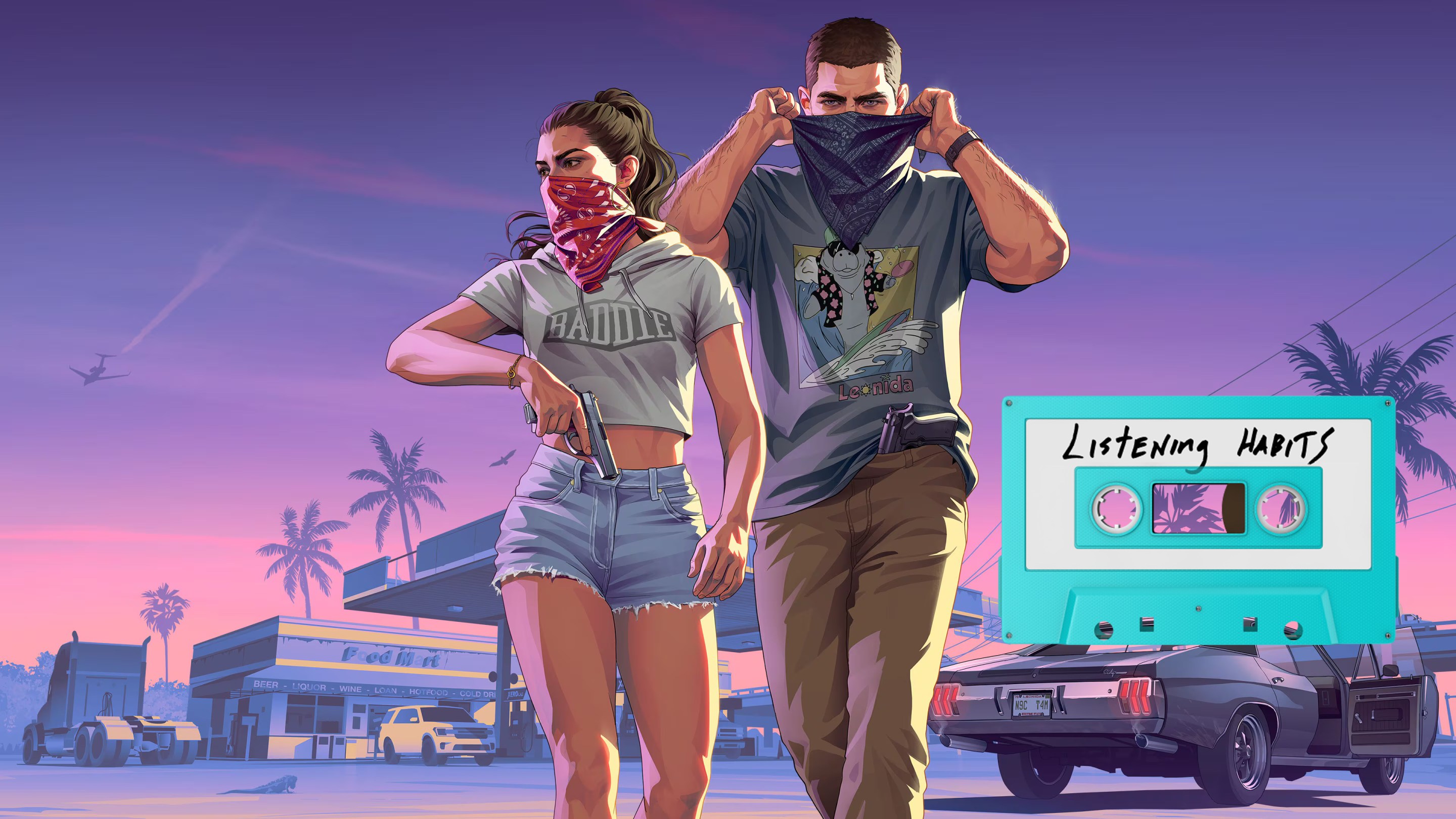
If that is the case, what better time for the arrival of Grand Theft Auto VI, the biggest and most anticipated game of this decade. Alongside AI, this is the thing that can prop up the entire U.S. economy for the next year. It is a true cultural event, and its tentacles are already connected to every facet of popular culture. There's a Miami Heat partnership. There are partnerships with streetwear, and strip clubs, and car shows all over Miami. And with the arrival of a new GTA game, comes the arrival of a new GTA radio.
While regular terrestrial radio has completely fallen apart as an avenue for large audiences to hear and discover the latest new music, GTA's in-game radio is a popular aspect of the game that acts just like real radio, except without paying out royalties. The numerous, realistic, and varied radio stations in the game have been instrumental in introducing kids to music they haven't heard before, both new and old. GTA radio has a documented, measurable impact because it does what streaming playlists never could figure out: provide a contextual basis and an emotional connection to music discovery. Frank Ocean hasn't made an album in a decade, but I would wager to guess part of how he's stayed relevant to a new generation of young people is through GTA V's Blonded Radio, Ocean's own curated station full of his own songs and some of his personal favorites. There were other artist-led stations as well, from Flying Lotus and Detroit's Moodymann, that boosted their visibility to a new audience.
In this post-algorithmic world, GTA VI might be the thing the music industry needs right now. But also, more than providing an avenue for discovering music, this next installment should do what the last one did, and represent the definitive music of the 2020s as the last one defined the music of the 2010s. It is my hope, based on the collaborative names already announced—Bad Bunny, Burna Boy, Trick Daddy, Trina, and (blechh) Charlamagne Tha God—that GTA VI's in-game stations and personalized, artist-curated playlists run the gamut of major melodic rap, hipster R&B, underground rap, experimental pop, glitzy dance-pop, new-school power punk, modern indie sleaze, and all the best music to emerge from this decade so far. Maybe it can even put to bed this notion that we've completely forgotten how to make good music or something. We know for sure there are classic Vice City stations like Emotion and Flash FM that play the best in soft rock and pop, but there is expected to be a dirty south classics station, a modern rap station, an afrobeat and Latino station, and a modern dance music station.
Ironically, GTA's in-game radio makes a substantive case for actual radio, and underlines what a mistake it was to let it go by the wayside. The days of interesting DJs and personas playing the music they like and care about most are mainly gone, but nothing really replaced it. The idea that you can or should choose for yourself—the mantra of the techno-optimist dystopia we find ourselves in now—has overwritten the value that curation and taste-making do actually have, even if you don't always agree with it. Even if it makes you mad or makes you feel old.
It's funny that it takes a video game to fulfill an unmet need: not to rampage and cause senseless violence, but to enjoy the former load-bearing mediums of music and culture, starting with the radio. We know that GTA VI will have the most diverse array of radio stations in the game's history, including stations for metal, backwoods country music, and throwback southern rap. This game is as important to the music industry as anything at this point, and with hints at a Spotify partnership, I think even the business sector recognizes that.
Reader Questions:
Christine:
"A stupid number of my fellow white people will describe their taste in music as "I like everything except country and rap." I feel just knowledgeable enough about country to point them to songs that may give them an appreciation for it. What rap songs would you suggest to play that role?"
The whole "everything but rap and country" thing is one of the oldest bad-faith proclamations about music. It is said by people who are usually committed to whatever negative belief they already have about these two genres. On principle, I tend to disregard bad-faith statements or questions. But, because we have been talking about the importance of human recommendations for music discovery, and because I don't know your friends, let's assume they are open to changing their minds about rap. Usually, the sticking point for people is an inability to relate lyrically, or they are into music that taps into an emotional or energetic level, the way heavy metal or industrial electronic music might.
In the case of lyrics, while rap has a modern reputation for heavy bravado and expensive taste, plenty of the best rap was made by broke, artistic teenagers committed to expressing their own worldviews through rhymes. One of the best groups at doing that was De La Soul, whose fourth album, Stakes Is High, just celebrated its 30th anniversary. For a lot of its runtime, Stakes Is High is about, get this, the encroaching corporatization of hip-hop, the insidiousness of gangsta rap and flashy excess that was taking over mainstream rap in the ’90s, and the threat that rap would shift from a radicalist black art form to a commercial product selling false fantasies to kids. Wacky stuff. De La Soul were loosely affiliated with a bunch of rappers known as the Native Tongues, which included groups like A Tribe Called Quest, The Roots, the Jungle Brothers, and artists like Queen Latifah and Monie Love. Artists that used heavy jazz sampling and rapped a more grounded, afrocentric, intellectual but humorous style.
The Native Tongues style influenced multiple generations of artists, from Busta Rhymes, The Pharcyde, and Digable Planets to Lupe Fiasco, Mos Def, N.E.R.D, Lauryn Hill. You can even throw in early Kanye, Odd Future, Chance The Rapper, and Tierra Whack. They also helped to influence my favorite rap group of all time, Outkast, who alongside their own collective, the Dungeon Family, invented their own style of southern-baked thoughtful rap. The other rappers in DF are also some of the best at introspective rap music: Goodie Mob's first album, Soul Food, is one of the great political statements on the Clinton Crime Bill Era, and while Cool Breeze never became the star he should have been, he essentially created trap music with his debut record East Point's Greatest Hit. And if you're not into listening to people talk about money, then might I suggest Outkast's second album ATLiens, a record all about suddenly becoming famous while being dead broke.
But if lyrics aren't your specialty and you want something that'll musically grab you: this is where early gangsta rap and trap music shines. Dr. Dre is a lot of things, most of them bad, but the man knew how to produce and mix a record. His sonics were incredible, and at his peak there was no one operating at his level.
This is also true of superproducers like the Neptunes, Timbaland, and Kanye. Timbaland's music with Missy Elliott works on just about every level. She could sing, she could rap, and she loved making music to dance and groove to. But even songs you think aren't for you can take a hold of you if given the chance, like "Still Tippin'", "Same Damn Time", or "Sicko Mode."
And this is also the best case for Playboi Carti, a controversial figure in any rap discussion between lyrical rap purists and trap purists. Carti is not either of these things. In fact, what he does is only barely categorized as rap, and maybe even as music. But if you open your mind, what he accomplishes is an outer-space cacophony of sounds and effects over a bed of bass and synths that could make a Victorian child's heart explode if they listened to it.
Carti, Don Toliver, and Lil Yachty are of the generation that was stretching and discombobulating what we previously knew as rap or music, as indebted to Bjork, The Clash, Kid Cudi, and Frank Ocean as they are to southern rappers. And there's something beautiful about that, the melding of genres until the idea of genre no longer makes sense. This is just a small sample of different rap offerings, but I hope you find it helpful in trying to make your case to your friends.
The Best Non-Rap (or Country) Song of The Moment
Has there ever been a better confluence of idea and artist than having Jonathan Richman narrate There's Something About Mary through his songs? That's one of those perfect ideas that you only get one time.
If you would like to contribute a song, a suggestion, or ask a question for future installments, email me at israel@defector.com.