Welcome to Listening Habits, a column where I share the music and musical topics I’ve been fixated on recently.
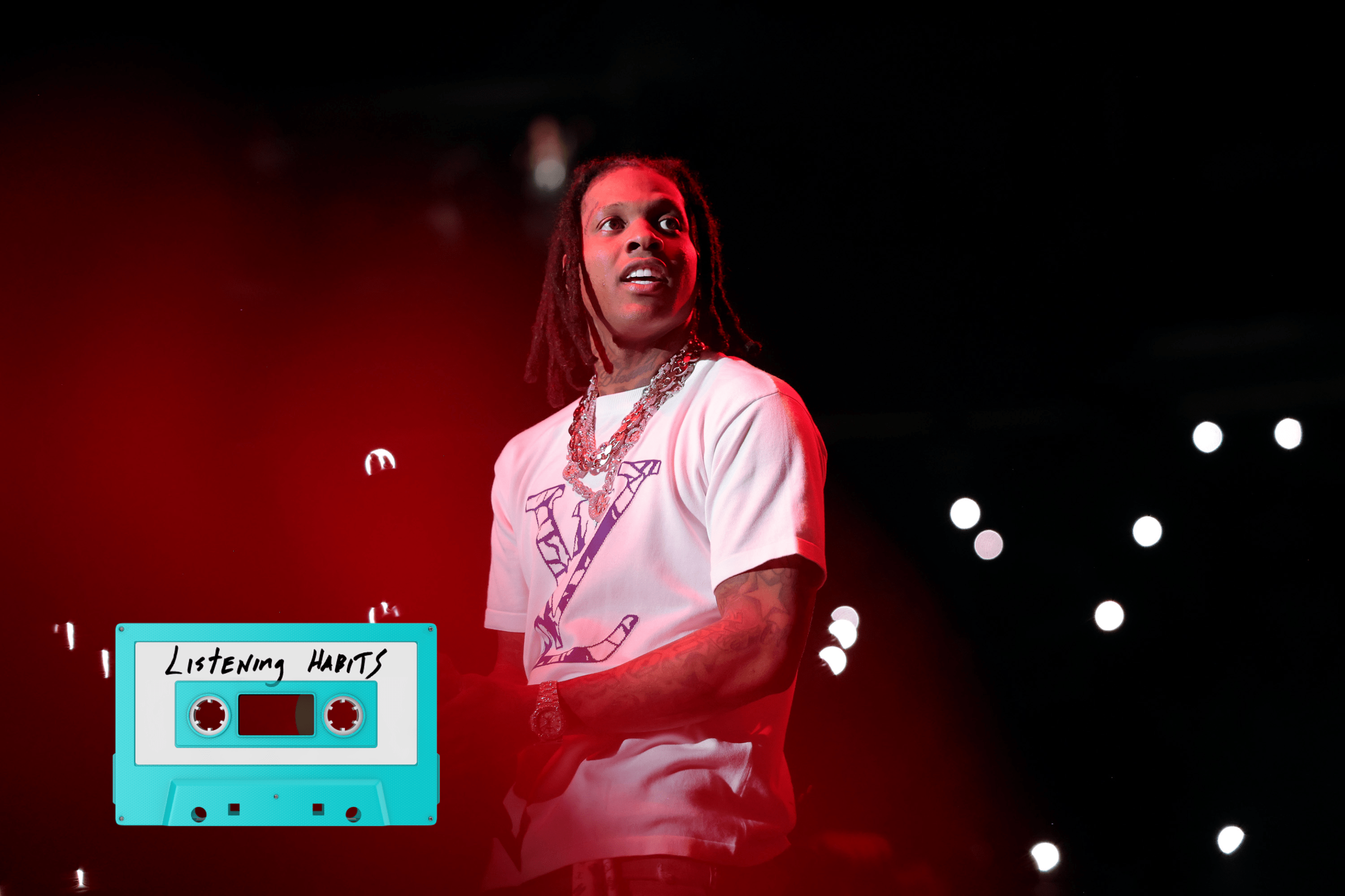
For the last few months, I've been in the throes of reading and watching information about the murder-for-hire trial of rapper Lil Durk. It's a complete circus that seems to have it all from an entertainment standpoint: snitching gang members, rap lyrics and interviews with streamers used as evidence, Machiavellian defense attorneys, an audience of fanboys and stan armies drawing attention to themselves to the point where people think they might be paid actors and so, so many people treating actual human lives and deaths as fodder for the content machine. One of the worst offenders, a British white man named Trap Lore Ross, is a doofy acolyte of the DJ Akademiks school of cataloguing the violent sensationalism of gang activities and volatile rappers under the guise of “investigative journalism.” He has decided that the Durk trial is his star-making turn, like he’s the Woodward and Bernstein of gang rap.
On Sept. 11, Durk was found not guilty on all charges, which was a surprise, but it also reflects that despite law enforcement's best efforts to make rap lyrics justify imprisonment, there is still a burden of proof that's not being met here. I’m not particularly interested in arguing for Durk's innocence or guilt. I have strong feelings about the activities between Durk's OTF crew and NBA YoungBoy's clique of rappers—but I also have strong feelings about our criminal justice system. And watching this trial conclude has not made me feel any better about everything happening outside of the music. I was a kid in the ’90s and I remember being exposed to gangsta rap early, through these bigger-than-life characters like Dr. Dre, Snoop Dogg, Ice Cube, Biggie, No Limit Records, and of course Tupac. Contrary to what a lot of older people would like to believe, the music isn't more violent now than it was, but what has changed is me.
Which is natural. When you're a kid, you think you can handle anything. And the idea of something you shouldn't be watching or listening to has appeal just for that sake. You're too young to have perspective. But even as a kid, I understood that what I was listening to was entertainment—almost comic book-y in its extremity. Everything was over the top—the rap stardom, the music videos, the cartoonish language and violence—which matched my own sense of everything around me. I was an emotionally volatile teenager (a.k.a. a teenager): My emotions felt big, my life felt bigger, the adults and the authority figures felt bigger than I could handle at times. I realize that I was probably unique for having this remove, but not so much so, and because these were artists first, there was always a sense that they understood that they were putting on a kind of performance. Though the line between who you are and who you pretend to be can always blur in dangerous ways.
There was another hip-hop related trial happening concurrently with the Durk circus. A longtime Crip member, Keefe D, became the first person to ever be put on trial for the murder of Tupac Shakur. It has always been sadly amusing to me the ways men in their 60s, as Keefe D is, who once spent their lives dedicated to gang life and somehow found themselves at the center of a major rap music scene, spent their later years revisiting these glory days for whichever YouTube platform would pay them the most. VladTV, Art of Dialogue, take your pick: a lot of old men admitting to or alluding heavily to major crimes committed 30 years ago, without always knowing the statute of limitations. And Keefe D was one of the worst offenders, always happy to relay his experience pulling up on Suge and Tupac with his nephew, Orlando Anderson, and another assailant and firing into their car. He was happy to share that he had no remorse about it either. For Keefe D, Tupac had violated gang business by stepping into that pummeling of Anderson at the MGM in Vegas, and he got dealt with the gang way. There was something more than ironic about seeing him in court, playing the role of senile old man who just wants to be with his grandkids for the time he has left.
But the result of the Tupac trial left me even emptier than the Durk outcome. On the one hand, there are people for whom this decision will provide some peace. On the other, Tupac is still dead, his mother Afeni is dead, Biggie is dead, multiple Outlawz are dead, many of the gang members involved in this whole conspiracy are dead, and there's still no greater truth to be found. That goes for Durk, too. I think the saddest thing about the last decade of gangsta rap is that it has become a side hustle to the real role of street kingpin. That's the case for Pooh Shiesty as he faces his own federal trial. It's the case for Young Thug, who is still struggling after his major RICO indictment. And it's the case for Durk, who, even after beating a murder-for-hire charge, still has a RICO case to contend with. Chief Keef got essentially exiled from Chicago after all the trouble he was getting into, and it became the best thing that could've happened to him. A lot of these guys, because of how depleted the music business is and how direct-to-consumer everything is, don't even leave their neighborhoods anymore. They keep doing the same things they've always done, and it's a big part of why nearly an entire generation of rap stars has died from overdoses or been killed, BloodHound Q50 being the latest. It's grim.
But it is also clear how much murder, violence, and the rap music surrounding it has become this ugly WWE wrestling act for a specific kind of young audience that has both a voyeuristic relationship to it and an authenticity-based demand for more. Durk is an adult who is responsible for his actions, but what does it say that a successful rapper has to dig deeper into the street lifestyle that success was supposed to take him away from? The whole thing is a tragedy of both the endless cycle of violence and gang life and the audience’s voracious appetite for more. And many of the biggest streamers online are the biggest cheerleaders for the bullshit: from Akademiks, who encourages violence and gang activity at every turn while trying to separate himself from it personally, to Trap Lore Ross, who uses this violence to make true-crime content that he can profit from personally. None of them think they have any responsibility in this: They didn't tell these guys to shoot up a block, they simply wanted to profit off and promote them for doing so. And because we are in the Nothing Matters Age, we all just pretend it's perfectly fine and cool to be so desensitized and have no personal morals. It's all part of the same continuum of slop: a country remade in Donald Trump's image. It's crypto coin and chud content farmers and the LeBron Polymarket deal, because how can anyone disagree with making money, amirite??
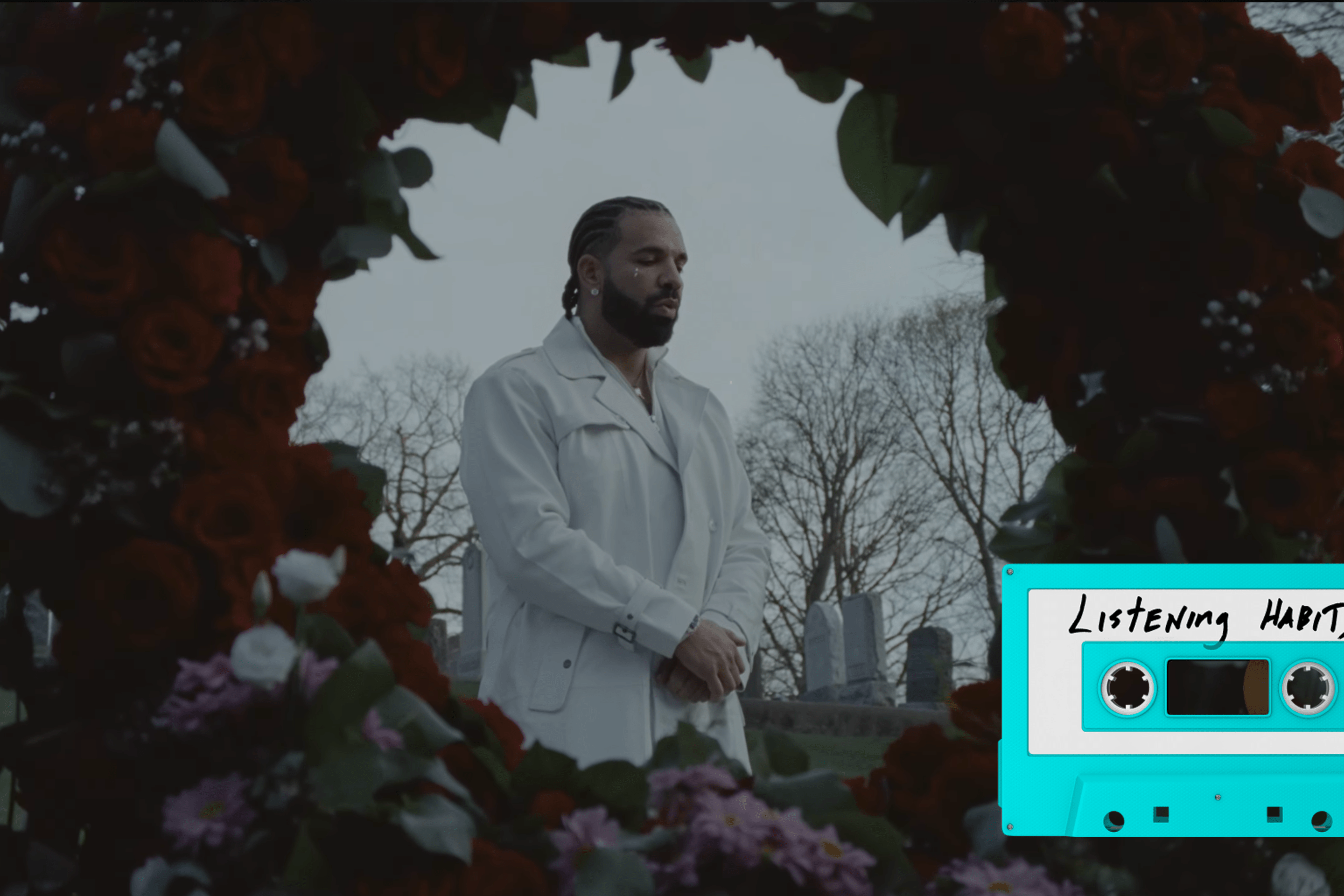
This isn't about music, really. I will never buy into the idea that the music itself is the problem. Rap has become so commodified now that it's never just about music. It's about selling a lifestyle, and that lifestyle is a grim one. If you don't believe me, just look at Drake. He hosted a livestream this week to debut his music-video film FOMO: an hour of various songs, some old and some new, interconnected by the Drake "fantasy" lifestyle. There's the Drake mausoleum in Toronto, which he spends most of this movie in. There are guys with guns throwing up gang signs, there's a lot of alcohol and fancy cars and jewelry and so many women, fresh from some IG baddies page almost assuredly. The Scarface-style mob boss persona is one he takes on and off as easily as the others, whether that's the goofball, or the pop superstar hanging out with Don Toliver and Ella Langley, or the self-deprecating lovelorn simp.
The funny thing about Drake is just how empty he is. There really is nothing deeper going on there. He is everything people say about him, truly. He even makes a "Free Gaza" shoutout sound cynical and meaningless. This is his attempt to make music videos significant and maybe even revive an allegedly struggling genre. But this is not Lemonade. It's not even Clapping For The Wrong Reasons. It's just Drake, selling his favorite product: Drake. Forced to sit in that tacky mansion all day long and sell a lifestyle to his community of streamers and streamer-obsessed watchers. It is content for the perpetual 40-year-old teenager. Look at my jet, look at this Chrome Hearts saddle on my horse, isn't it cool that I go to the club every night? Look at all these hot girls that I'm around. Aren't they so hot? Isn't it funny that I could never trust any of them to love me for just me? Isn't that so funny?
It's silly to actually have strong feelings about this. But there is something Akademiks-coded about Drake lately, and not just because he's been actively using him as a mouthpiece and source of information. Drake is also a perpetuator of gang rap, not for his support of these artists and their music, but because he also covets that lifestyle the same way these white kids shouting gang codes outside the Durk trial do. It's all in the same continuum. But the difference is Drake doesn't want to be them, he just wants to absorb them into his amalgamation. I don't know, I just can't call any of it anymore. "Cold Shoulder" is pretty good though.
The Non-Rap Song Of The Moment
I should've written about Frank's two 2016 albums this year but, to be honest, I'm scared of not being able to capture everything I need to say about them, just by themselves, let alone what it meant to me at the time and to this day. I'm also scared of what I might capture about it. I don't know. There are a lot of unsettled feelings in this week's column.
If you would like to contribute a song, a suggestion, or ask a question for future installments, email me at israel@defector.com.