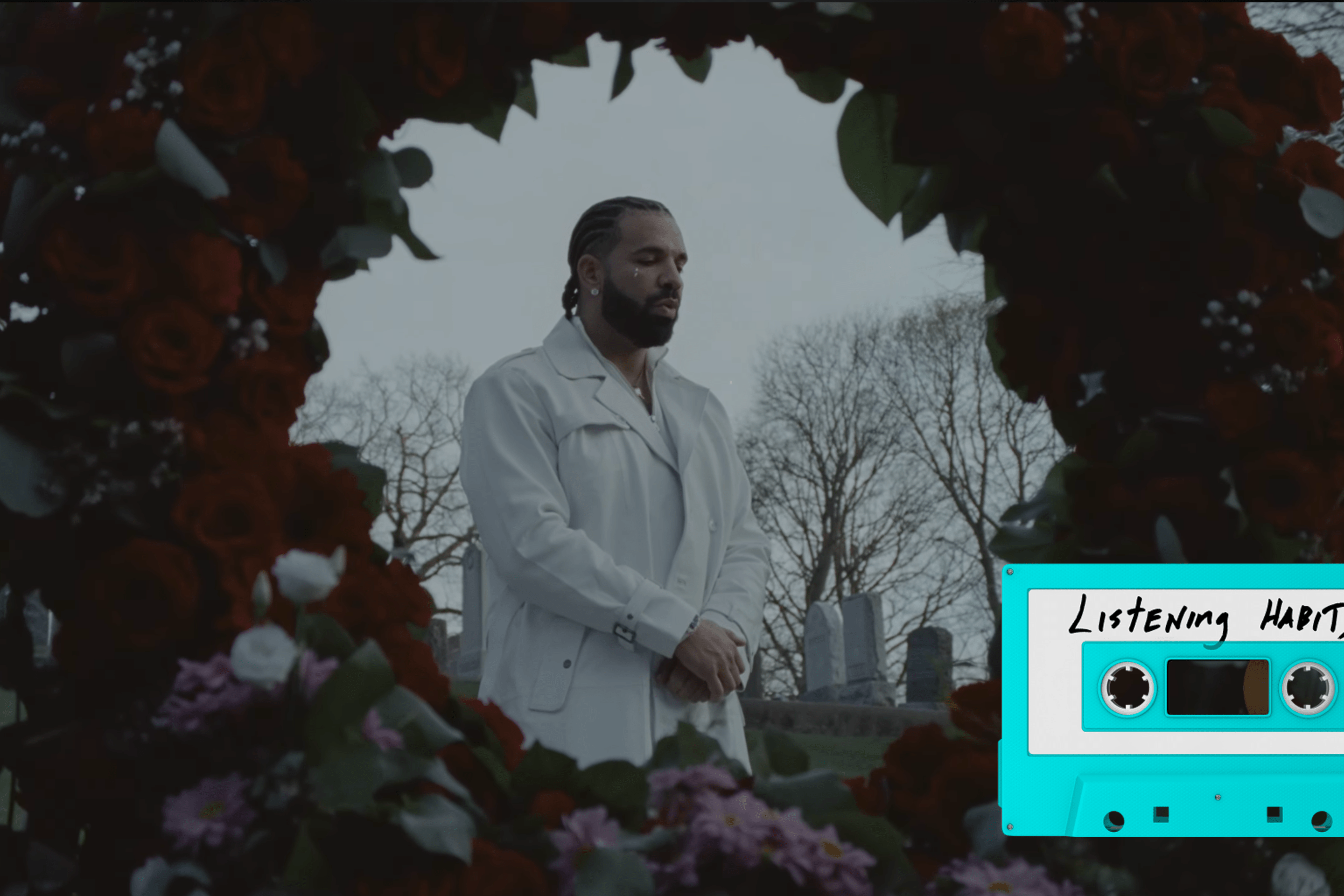

Welcome to Listening Habits, a column where I share the music and musical topics I’ve been fixated on recently.
The rap song of the summer is undoubtedly Yung Miami's "Spend Dat." Produced by J. White Did It, the gloriously maximalist strip-club banger celebrates the joys of spending illegally acquired funds. It is a perfect summer rap record, and is also the perfect pop song for our moment of grift and speculative bubbles. We've all come to understand that the economy is an Oz with no wizard, a field as authentic as the people it has made insanely, criminally wealthy. There is functionally no difference between Elon Musk and your local wallet inspector from an economic standpoint, except for which one gets more attention from law enforcement. A song like "Spend Dat," which is like "We Are The Champions" for scammers, makes for a fitting theme song for the nation at large.
As you might expect, the song's message has proven controversial. The online discourse machine has been working overtime pretty much since "Spend Dat" dropped back in April, and has only intensified as the song has gotten more popular. In one viral story, a mother and daughter got arrested after making a TikTok video set to the record in which they flaunted some handbags they'd stolen. Then, 2000s R&B star India Arie weighed in, piggybacking on a social media post about boycotting the record by warning that "what we eat and what we listen to matters," and saying "not everyone wants to be free." She later clarified that she was not trying to tell anyone what to listen to, just that what anyone chooses to do and consume will affect them.
“What I want is to see people understand the power of words and music and to make choices that are healthy for them.”
— The Art Of Dialogue (@ArtOfDialogue_) July 2, 2026
India Arie addresses the online backlash she received over her comments about Yung Miami’s song “Spend Dat” and also says a lot of the stories coming out about… pic.twitter.com/1GjEbX7OHU
I liked Arie's music as a kid, and she is of course free to her opinion. The same goes for Brownstone singer Nicci Gilbert, who shared her own issues with "Spend Dat." Still, it's pretty rich to act like this is the first ignorant rap record ever made. On top of the standard conservatism and respectability politics that always swell up around rap songs like this, there is an added layer that attaches when it's a woman rapper making one. Women in rap are expected to be proper examples for all women everywhere, while at the same time they are not taken seriously as artists in the first place, and their music treated as a novelty that aims to cater to the sexual fantasies of men. It's the kind of attitude that met a similarly major rap record by Cardi B and Megan Thee Stallion a few years back, a song whose name I shouldn't even have to tell you. When men rap about violence, murder, sex, and drugs, they are granted an artistic license that is rarely given so freely when it's a woman doing it.
Another aspect here is particular to Yung Miami herself. People just do not like her. She has the reputation of being a subpar rapper, the weaker half of the City Girls duo, even though she kept the group afloat when her partner, JT, was incarcerated during their ascent. There are also many questions about that weird dalliance she had with Diddy prior to his fall. She sticks in people's craw, and there is real anger that she of all people ended up with this hit.
But let's pretend for a second that the anti-Yung Miami position is in good faith, that someone might genuinely believe that a hit song could lead to scammer armageddon. Ice-T always had my favorite outlook on the First Amendment: "Freedom of speech, just watch what you say." Meaning that yes, you do have the right to express yourself how you choose, but understand that it may come with consequences. It's called responsibility. Now, is "Spend Dat" a responsible record? Certainly not. But I would argue that it's perfectly fine for her to make it and for people to love it anyway.
I do not think art is completely blameless for whatever influence it might have on people. But to focus blame on art is to deflect from society's own greater responsibilities to cultivate the kind of culture it wants to have. Personally, I have listened to rappers rap about going crazy off codeine, angel dust, and Percocet and molly. I have listened to soooo many rap songs about selling drugs. I have listened to songs about guys who kidnap and rape kids and "throw 'em over the bridge," who spread STDs to women unknowingly, and who participate in all kinds of lewd or even criminal sex acts. I remember Rick Ross's "U.O.E.N.O"-gate. I remember Tyler, The Creator's school-shooter music era. I remember Chief Keef hysteria. I lived through Eminem. I lived through Death Row and C. Delores Tucker (whom Gilbert name-checks directly) providing the conservative framework for complaining about art. Some of these things attracted more controversy than others, but ultimately all of those backlashes were less about music than about people's belief that topics they didn't understand, relate to, or agree with should be banned from art.
Even still, there's always been a different tenor to these conversations when it comes to women who rap. There's the obvious sexist and patriarchal thinking, proffered by men and women alike, but there's also this attitude that women, and especially black women, should be held even more responsible for their content than any other artist. This attitude always rears its head when women rappers take control of narratives that were meant to objectify and subjugate them, going back to at least to Lil Kim and her demonstrative sexuality.
Though it's often treated as a monolith, the range of topics, styles, and approaches among women rappers is enormous. There are so many good rappers who are women, and of so many different varieties. Tierra Whack recently released a great album. Latto has some fun songs on her record. Some of my favorite underground and alternative rappers of the last couple years have been Baby Osamaa, Pig The Gemini, and Karrahbooo. Rapsody stays consistent. Remy Ma is still making records. So is Kim, at times. It's a whole cornucopia out there. The only real problem with "Spend Dat" is that it's popular, which has somehow been treated as evidence of our decaying culture. I would argue that, instead of pointing a finger at a fun single, you could find much better signs of cultural decay, well, literally everywhere else.
More than any other, the lineage Yung Miami should be considered to come from is Trina's. South Florida's diamond princess burst onto the scene on Trick Daddy's 1998 single "Nann." Her full breakout, though, came on 2000's Da Baddest Bitch. I have a distinct memory of listening to that album in the fifth grade and having it immediately rip my scalp off. Trina is one of the gold standards in female rap, particularly in the South. Her blueprint is most evident in the music made by the Southern women who have followed in her footsteps: Latto, GloRilla, JT, and Yung Miami. Trina put her sexuality front and center, but distinguished herself by always making it clear that she was at least as much of a boss as any man who tried to step to her.
You could not outfox Trina. You could not out-hustle her, shake her confidence, or even outlast her in the bedroom. Her records were memorized by practically every black girl I knew growing up, and have endured the test of time. Her attitude and swagger, and her success and staying power, have helped her outshine the man who brought her into the music game (often to his chagrin). "Spend Dat" is cut from that same cloth, a song full of Trina's signature bravado, one that deeply embodies the ethos of the city that both Trina and Yung Miami call home. We Floridians love our scammers. Frankly, I'd much rather hear a song about scamming than another record about gang wars. Scamming can be detrimental, but it can also be fun. And of the scams currently afflicting American society, the criminal activity Yung Miami raps about doesn't even rate.
As long as there has been black art of any kind, there have been questions within the black community about what its content should be. But in terms of the music's aesthetic value itself, content questions are always secondary whether it is a bop or not. I like "Brown Skin," and I stay jamming "5 Miles To Empty." "If You Love Me," "Ready For Love," "Grapevyne"—all top-tier music. It's not because any of it "inspires" me or makes me feel good about my blackness or whatever. It's because they are great songs. And great songs speak for themselves. I believe that good music, no matter the subject or style, rises to the top, even in the streaming age. And yeah, in this moment, people are burnt out on murder and drug-abuse raps, and if this new Future album is any indication, they're also a little burnt out on male-centric trap songs for the club. Yung Miami made a singalong party anthem that may be about boosting and scamming, but is also about celebration.
Rap could use more stuff like that right now. Have you seen the Billboard charts lately? On the rap side, it's pretty much just a lot of Drake songs and a couple Kendrick tracks from last year. There's a staleness in the genre, even outside of charts. It feels as if hip-hop is waiting for a new sound or style to emerge. The legacy rappers, at least the ones who can't sell out a weekend of shows at Yankee Stadium, aren't in any better shape. If they're not making the occasional good single, they're all relitigating their glory days on YouTube interview shows. You could do a lot worse than enjoying the success of "Spend Dat," which is what I would prefer to do. Fast version only.
The Non-Scammer Song Of The Moment
It's Kelela album season. Hold my calls.
If you would like to contribute a song, a suggestion, or ask a question for future installments, email me at israel@defector.com.