Welcome to Listening Habits, a column where I share the music and musical topics I’ve been fixated on recently.
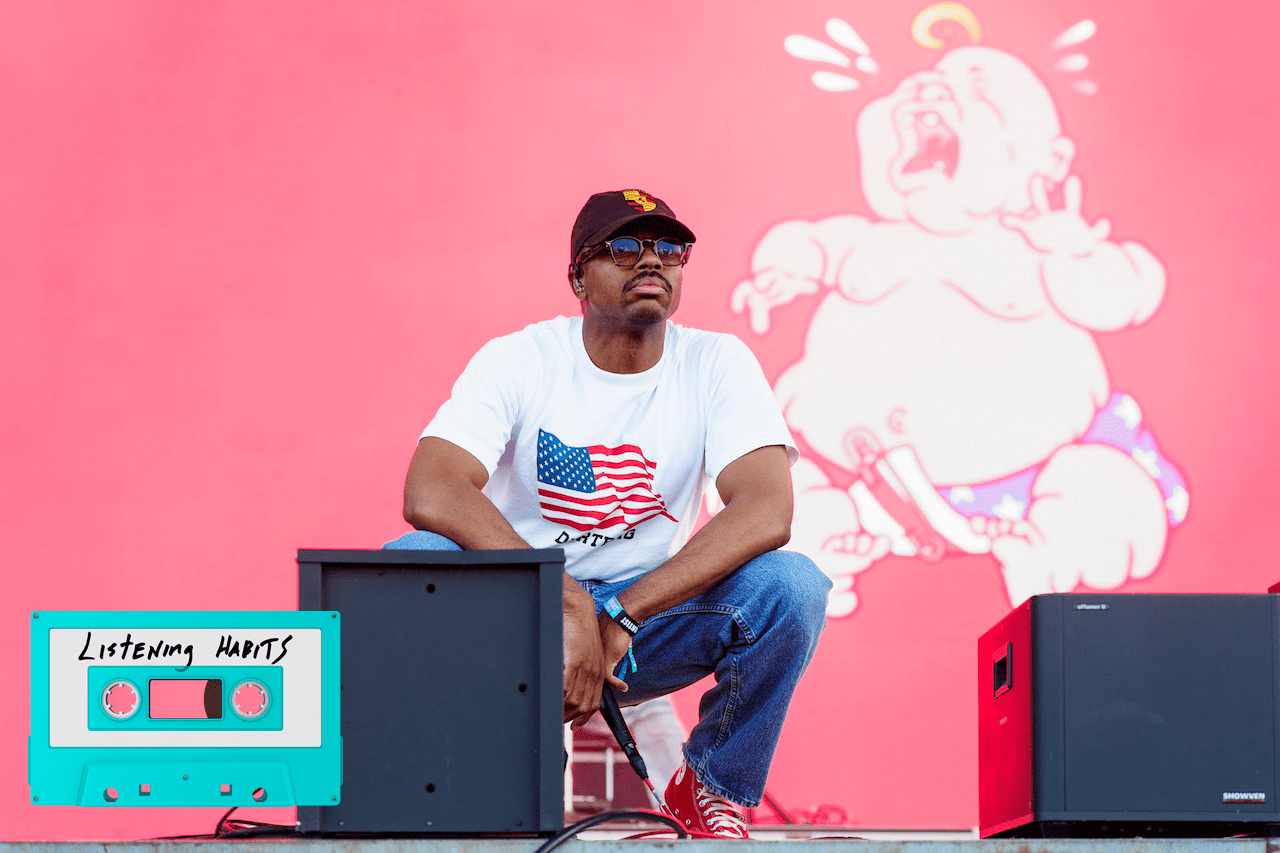
In between spending the last month listening to every single song with "New York" in its title or chorus, I found time to keep up with the latest big album releases. We're only about halfway through, but already this has been a damn good year for music: a mix of quality releases from stars, stalwarts, and new names entering the ring. The new Olivia Rodrigo might be the best thing to come out recently, but this week I'm more moved to consider Cry Baby, the first independent release from rapper Vince Staples.
I've always found Vince a more engaging personality than artist. He's a solid, consistent rapper, and while I've never particularly loved anything he's made, solid consistency is admirable enough in its own right. I couldn't tell you specifically what I find his music—or his TV show—to be lacking, but for some reason his art misses a spark that is always present in his interviews and on social media. Maybe it's because he's still figuring out what kind of artist he wants to be. He's been experimenting for years, branching out from the oft-kilter gang rap he made his name with into genres like EDM and, with Cry Baby, rock.
Unsurprisingly, his label does not seem to have been enthused by all that experimentation. Vince has alluded to bumping heads with label execs over the years, with the label's narrow vision of what a "gangster rapper" should sound like coming up against the more adventurous places Vince wanted to take his music.
It all raises thorny questions about what exactly black art is, or, more specifically here, what it means to be "just" a rapper. Is rapping a siloed thing with set parameters, or is it something more variable and stretchable? Sometimes artists feel limited by the designation of "rapper" and don't enjoy the perceived pigeonholing, as if "rapper" limits creativity and audience reach in a way that a more capacious "artist" wouldn't. In Vince's case, the notion that he's just supposed to make street music forever, stuck being either a gangster rapper on wax or a comedic pitchman in ads, clearly bothered him. His efforts to expand his lyrical topics, to deepen his introspection, and to experiment with genre have been met with pushback from labels and fans alike.
Vince was never an active member of Odd Future, but he was something of a crew affiliate. It's not a surprise, then, that his experiences in the industry bear some strong similarities with other OF acts, most notably Tyler, The Creator. For a few years there, Tyler risked becoming more famous as a meme, an internet troll, than as the exceptional musician he is at his best, and it stuck in his craw. In response, he's spent the last 10 years with a laser focus on cementing his reputation as an artist who takes his craft very seriously. Whatever issues one may have with his late period music or his persona, you can't deny how much Tyler loves rapping and rap music. Yet he too has spoken about the limited and limiting perceptions of what black music can or should be. Drake, Solange, D'Angelo, Erykah Badu, and Andre 3000, among others, have all expressed similar sentiments. Despite the fact that hip-hop culture has dominated pop music and mainstream American identity for a couple decades now, there is a pretty rigid idea of what black music and black art is supposed to be, and especially what it's not supposed to be.
All of that is to say Vince Staples's Cry Baby is a fine record, but it's not exactly groundbreaking. If he does see it as a rock record, it's a pretty generic one. Very N.E.R.D.-core, which is to be expected for a guy his age. It has some of the same pitfalls asother rapper rock records like Lil Wayne's, Mos Def's, or the Neptunes': In trying to make rock music that can still appeal to rap fans, you end up making something bland that appeals to no one. At least when Public Enemy did "Bring Tha Noize" with Anthrax, or when Ice-T and Body Count made "Cop Killer," the point was to be alienating and abrasive, which ironically tends to be more cohesive and appealing.
I understand that these are all artists who want to experiment, and it is totally their right to do so, but maybe the problem isn't that people aren't getting their vision, but that they don't actually have one. This stuff tends to come off like a smattering of reference points that never fully come together. If we're going to have a conversation about the constraints of genre and the limiting perception black art, it has to then be extended to everything else. White people may make rock music now, but we know from history that it is not an inherently white sound or music. You listen to Nine Inch Nails' Pretty Hate Machine, and you realize this "industrial" masterpiece is all crawling with hip-hop break beats, dance, and techno. Public Enemy's music could fit alongside any punk rock show by itself; it's got everything except the actual guitars. Modern R&B today might be more indebted to Radiohead than to Keith Sweat. Frank Ocean is as important to indie rock made today as American Football. The point is, every genre has its border police, but none are actually successful at keeping the music from mixing.
We millennials grew up in a time of MTV ubiquity. It was always on TV, morning, noon, and night. In the peak MTV world, cross-pollination between genres, scenes, and styles was close to the rule, even when we didn't want it to be. While what's left of the music business may not understand that, the artists and listening audience do get it. That is what makes some of the complaints from artists about how straightjacketed they feel within their genre not entirely convincing, and why some of the more obvious attempts at genre experimentation feel like gimmicks. The boundaries are already very permeable, and the audience usually will accept border-hopping, just as long as the actual music is as good as anything else in that lane.
It's by that standard that Cry Baby doesn't completely work. There's nothing there that gives me a new perspective on Vince or the genres he's playing with. He's still a decent musician who makes music that is not quite as interesting as he is as a person. But because he is an artist, I defend to the death his right to make the album he wants. Every artist should be able to.
The New York City Song Of The Moment
I have half a mind to show up to the Knicks parade blasting this out of a speaker over my head like I'm John Cusack in Say Anything.
If you would like to contribute a song, a suggestion, or ask a question for future installments, email me at israel@defector.com.