
Welcome to Listening Habits, a column where I share the music and musical topics I’ve been fixated on recently.
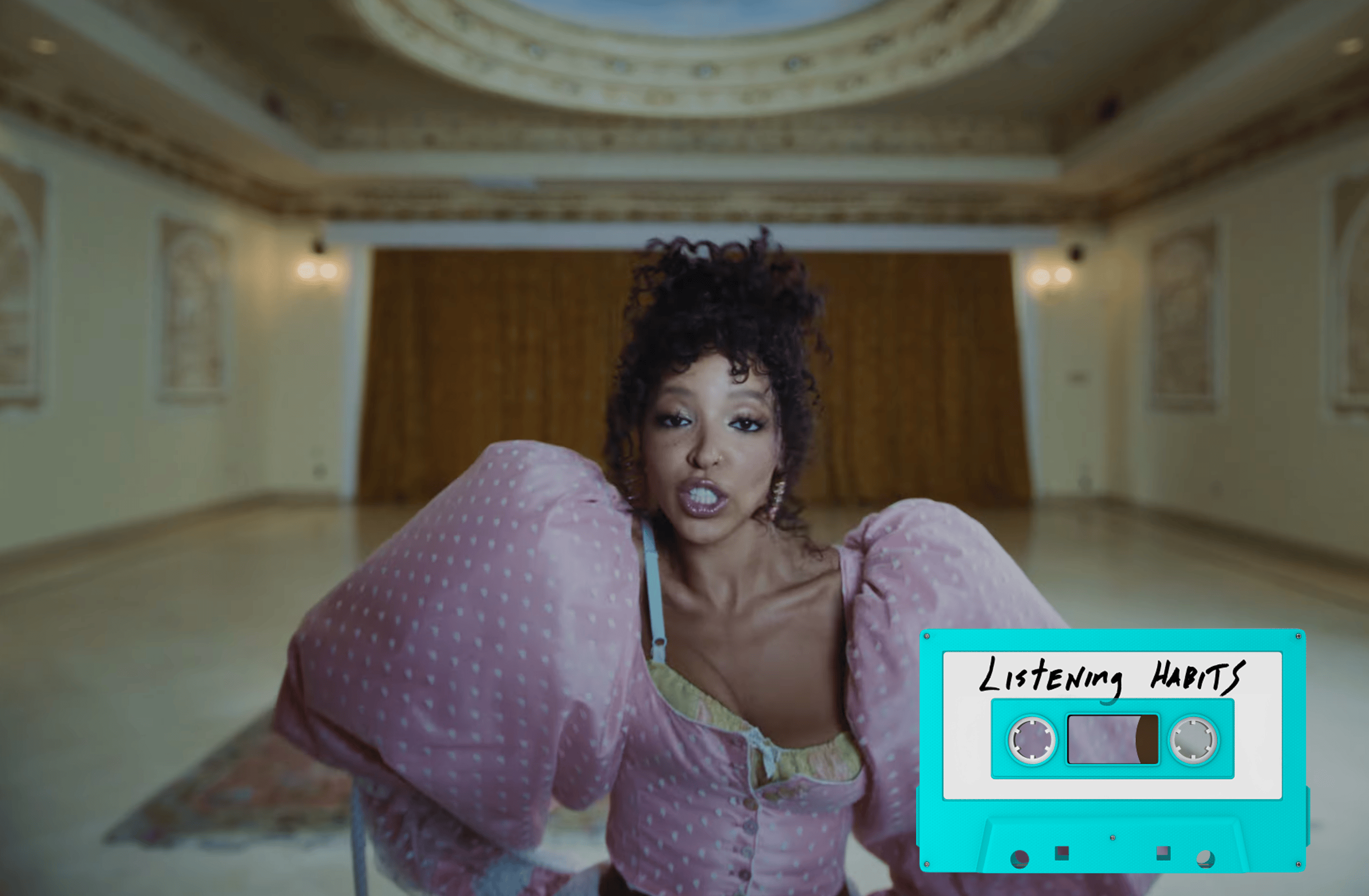
In many ways, Tinashe's career thus far has been a road map for navigating the changing landscapes of music and the music business. As the product of the post-2000 melding of pop artists and hip-hop production—think Britney with The Neptunes, or Nelly Furtado with Timbaland—Tinashe first broke out in 2014, when she made a very classical style of club-first major label R&B. She had good singles, but the style of mainstream music she was making was falling out of fashion, replaced by a more alternative and insular style of pop R&B music, in the vein of Frank Ocean, SZA, Solange, and Brent Faiyaz. How we get from "2 On" to Tinashe's latest album feels legible but also completely unexpected. On Popstar, she defines what pop music for an internet age should be: club music that is postmodern and self-aware about living in an era of phones and people sitting on computers all day, while imploring them to get back outside.
To describe any music of the post-internet age is to describe it as a blend of disparate influences, into a paste that feels both familiar and strange. As indebted to Bjork and Trent Reznor as to Aaliyah and Missy Elliott, Tinashe's last few projects have been experimental, electronic, and heavily infected with club-ready drum and bass. Every pop star making party records right now feels influenced by the same kinds of clubs around the world, starting with Berghain in Berlin. Tinashe is no different, but while those artists still have the unmistakeable sheen of big-budget, major-label pop production and style, Tinashe's feels more closer to the ground and fresh out of the nightclubs.
On Popstar, released this past September, Tinashe toggles between the euphoria and ecstasy of dance, of partying, of traveling, of living and being alive in a world that is increasingly ensnared by the internet. It's an interesting tension, not because she's the first artist to do it—far from it—but like a lot of other pop artists, her success has depended heavily on online phenomenons. "Nasty," from her last album, Quantum Baby, became a viral meme on social media and TikTok, particularly the refrain on the song that goes "Is somebody gonna match my freak?" Similarly, though to a lesser extent, "No Broke Boys" became an online favorite.
On the single of Popstar, "Crash Out," you can feel Tinashe dealing with her own conflicting feelings about the internet: "The American dream is outdated/Now they sitting on the internet hating/Talk shit, can't back it up." This feeling of online malaise shows up on "Nobody Wanna Dance Anymore" as well: "You got a lot of friends, but they don't wanna dance/Too cool with their sunnies and their baggy pants/But I'm dripping sweat, don't need the clout/They got their hands in their pockets or their phones out." How does one contend with needing online notoriety to fuel one's success, particularly as an independent artist, amid the understanding that the same internet also drags down the real-life music scenes taking place?
This is the pervading question throughout music and it's only getting louder as the music industry is hollowed out and artists are only able to thrive based on botting campaigns. Live music is still a great time and artists are finding unique ways to put on shows, but for the most part music is living and breathing online like all the rest of us. Tinashe's Popstar isn't even the only album that wants people to go outside and dance, Miley Cyrus' Bass Persuades is also a dance-music-first, call to arms of sorts that its time to live IRL again.
None of this is necessarily new. As music has become more insular and online in thematics and feeling, there has been a countervailing force rebelling against it. And neither direction's music is better or worse than the other. Guys like MIKE or Earl Sweatshirt or SZA make very post-internet, antisocial music to great effect, and often great popularity, while artists like Tyler, The Creator, Sabrina Carpenter, or Cash Cobain are making music to be enjoyed with and around other people, away from your computer. It is tempting to dismiss one for the other or to say that people simply "don't wanna dance anymore," but really it seems like everyone is trying to navigate a music scene and industry that, like everything else, has been subsumed by technology.
Cameron Winter's concert film from his show at Carnegie Hall has begun to be shown in theaters. On the one hand, this whole experiment feels very A24—a semi-popular New York rock figure that has the blessing of the entire cool kid media industry with a movie directed by Paul Thomas Anderson and produced by Benny Safdie. On the other hand, there is something striking about the attempt to mythologize a real world musical moment in this way. Geese shows tend to be written about like they're a trip to rock mecca or something: a gathering of young people for the sake of seeing music live in cool venues and spaces, but after you roll your eyes, consider that there might be something to it.
Almost no major stars have emerged since 2016. It's Ella Langley and Olivia Rodrigo, for the most part. Definitely no major rap stars. And I'm not into all the consternation and old man ruminating about why. It's more than likely because of our collapsed music industry and refracted music media, as well the ruinous effects of streaming companies. The only way to possibly combat this problem—which we also see in movie theaters and museums and reading and literally everything else—is to incentivize the act of appreciating music. Part of this is already happening with the rise in CD and vinyl sales, and the other way to do this is by championing live music. Not just overpriced concerts to see our favorite artists, but going to local shows, local live music venues, local music showcases. And judging by Hell Gate's Battle of the Bands show that I got to literally be a judge for, there's a real appetite for it even for music no one has heard before.
Things are too ephemeral now; they slip away from you like trying to grab onto water. Tinashe is every bit a representation of the musical middle class, even as one of its more successful denizens. She probably won't get the same Carnegie Hall movie treatment that Cameron Winter received. But there's a lot to love about her latest album, just as someone who appreciates music that makes you move. Popstar is a call to arms of sorts, an urgent reminder that there's still a world out there, beyond our screens, to be a part of and revel in.
Reader Questions:
Israel, I sure hope that Foenem gets a shout in your next music column.
Are you familiar? My Milwaukee-based brother says it’s taken over the city. Maybe it deserves its own blog :)
— Andrew Rudnik
Big fan of Milwaukee's rap scene in general. Mike Mike (especially with Yonaa), Lakeyah, MarijuanaXO, etc. But sure, this is your moment and you all deserve it. Congrats to the Brewers.
The Best Non-Tinashe Song of The Moment
Haven't touched on it but a really pleasant sounding album that was released this year is the joint project from Erykah Badu and The Alchemist: Before The World Blows.
If you would like to contribute a song, a suggestion, or ask a question for future installments, email me at israel@defector.com.