

While many of us can agree men are in trouble, few can agree on the exact cause. America has a masculinity crisis. Men are in trouble. The "masculinity crisis" is real. The male loneliness epidemic has received radically different diagnoses from men’s rights activists, religious conservatives, feminists, and heteropessimists. The manosphere, a loose affiliation of men who hold women in low esteem and value “alpha” behavior over weakness, ranges from hardcore redpilled incels and influencers, like Andrew Tate, to those who focus more on maximizing their own physical bodies, like Bryan Johnson and Clavicular. The blatantly sexist, racist, and homophobic language of figures like Christian nationalist Pastor Doug Wilson, who says women shouldn’t vote, and influencers like Myron Gaines has garnered a fair amount of inquiry and alarm—most recently in Louis Theroux’s recent documentary Inside the Manosphere.
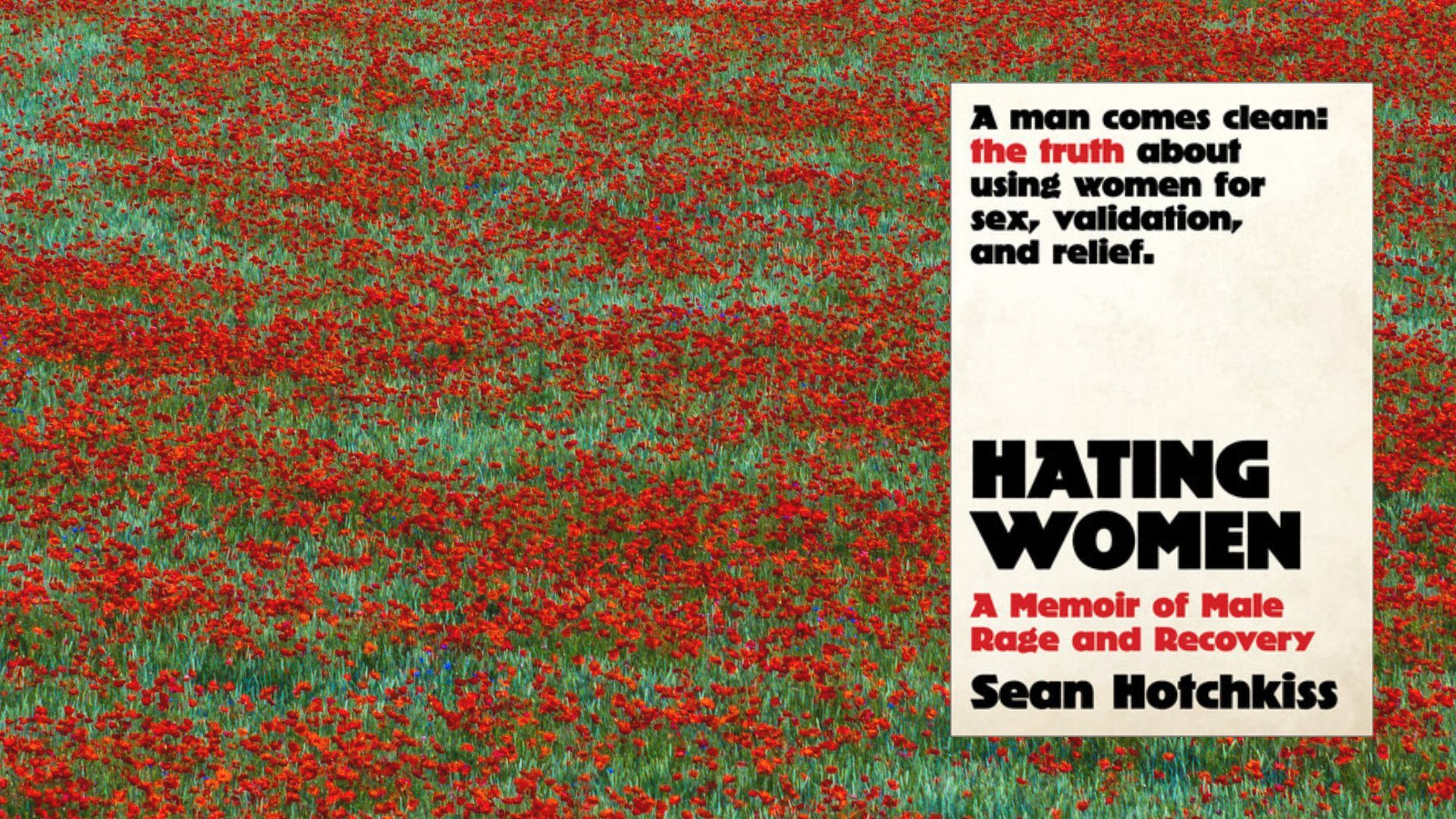
But not all men want to treat masculinity as a math problem that cheapens women. Former GQ editor Sean Hotchkiss has recently written a “memoir of male rage and recovery,” provocatively titled Hating Women. After years of engaging in hookup culture, he’s become a life coach focused on creating positive masculinity.
Hotchkiss joins the chorus of those claiming that heterosexuality is in crisis. Instead of arguing for nihilism, he proposes a kind of radical optimism. Men, he believes, can be reformed. He knows this because he was once the kind of guy who used women for relief. While Hotchkiss never quite seemed to try on the manosphere-inflected world of conspiracy theories and intense fitness, he did enjoy a certain amount of wealth and promiscuity. Yet, he discovers, “women held this incredible power over” him. Porn was his first line of defense in terms of stress relief.
Over time, Hotchkiss began to associate women with “dependency” and comfort. Men end up “using the bodies and souls of women in an unconscious attempt to find relief from [their] own confusion.” In Hating Women, he proposes a solution. It’s a self-help book dressed up as a memoir: one man’s story of attracting women who are desperate—“a hopeless dance, the dance of situationships and misunderstandings, drama and heartbreaks”—and his journey to get free of his dependence on the fairer sex.
The solution, Hotchkiss argues, isn’t soft guys carrying “their Strand tote bags sagging with the weight of their unlived lives and passions.” Women don’t want that either. They want confident men who can initiate. “Attribute it to feminism … or on #MeToo and its aftermath, or on a lack of solid male role models, but many women I speak to those days bemoan the lack of assertiveness they see in their men,” he writes. In a book that often avoids discussing politics, it’s a stark condemnation of the soft guy—and it’s one of Hotchkiss’s more prescient observations. He attempts to find the balance between men eschewing domination while still embracing assertiveness. Too many women, he argues, are tired of guys who won’t make a move.
Hotchkiss also seems to believe in women’s innate vulnerability. Even sex and love writers who espouse semi-feminist talking points—something Hotchkiss dabbles in but never commits to—seem to hold some basic, unshakeable ideas about the spiritual essence of gender. Hotchkiss, for instance, equates femininity and Mother Nature. “Emotional! Unpredictable!" Mother Nature is “the greatest feminine force of them all.”
Here, I must call on Ursula K. Le Guin for guidance. As is often the case, she said things far simpler and earlier than many of even our feminist contemporaries: “I didn’t and still don’t like making a cult of women’s knowledge, preening ourselves on knowing things men don’t know, women’s deep irrational wisdom, women’s instinctive knowledge of Nature, and so on. All that all too often merely reinforces the masculinist idea of women as primitive and inferior.”
This push back on the woo-woo natural instincts of femininity offers an important corrective: the perspective of women. Hotchkiss takes for granted that women are fundamentally different from men. This belief animates a wide array of political undercurrents in our time. But neither men nor women should be treated like children. Men are not from Mars and women are not from Venus. The way that Hotchkiss talks about his past experiences with women (“I disliked Kate and her body for being such a mystery to me, the same way I disliked a jar lid I wasn’t able to unscrew") is not as different from how he talks about his present experiences with us: “Women inherently make us vulnerable. And we hate our own vulnerability,” or “A feeling of wanting to protect and serve women, as opposed to using them for my pleasure and relief.” Yes, he has learned something about the way men subjugate women and why, but we are still fundamentally to him a puzzle to be solved. Even if Hotchkiss claims that "if I understood my pain in its entirety, I would naturally begin to feel it (and heal it),” he’s still searching for the answer to a math problem.
Women are a substance to abuse, femininity is something to pay your debt to, and mothers are objects of aggression. Hotchkiss may need some psychoanalysis to understand transference and object theory. I almost prefer his raucous discussions of fingering and fucking. His grief is a lesson to return to again and again, woman by woman. “Men, as a whole, tend to think we don’t have much going on. But … we realize this is a lie,” he writes. Still, I am not sure if the opposite of porn, marijuana, and Seamless really is ayahuasca, as Hotchkiss asserts.
Few of the social conditions that affect men now are taken up in Hating Women. Incel culture, dwindling economic conditions, nativism, and racial inequity are hardly mentioned at all. Feminism and rape culture are alluded to, but never quite parsed. Yet it is difficult to read Hotchkiss, the man who goes to men’s groups in search of enlightenment and gets sober, go on to tell his girlfriend he really wants to kill her. She is, of course, stunned. He experiences shame, but not enough to keep it out of the book. It’s a stunning admission that feels glossed over in the book’s narrative arc. Isn’t this the crux of the matter, that men are afraid of being turned into a joke and women are afraid men will kill them? There is grace to be had, of course, and forgiveness too, but this is not the kind of evolved masculinity that Hotchkiss is setting out to model. And he knows that. His book wants us to move toward a new cultural standard. The problem is that he doesn’t seem quite sure of what that means. While he no longer treats women like sex dolls, he instead treats them like goddesses. He’s swapping one kind of object for another. As a culture, we have not outgrown the Madonna-whore complex.
Many recent scholars of heterosexuality seem to be reinventing the wheel. We either desperately need traditional gender roles, or we need the salvation of feminism. Men are doomed, or our only hope. Declining fertility and horniness is ruining us—or allowing us to make better choices.
We cannot save men, and they cannot save us. Gender is work we do together, often whether we want to or not. In The Will to Change, bell hooks sets out the challenge, offering a more hopeful reading of masculinity than some of her contemporaries: “Men in pain, in crisis, are calling out. If they were not calling out, we would not know that they were suffering. As we listen to their stories, we hear that they want to be well and that they do not know what to do.”
We must cobble together some provisionary attempts at living together. It’s difficult work. If we want conditions to improve, we must be open to trial and error. We must understand that straightness is a sexuality like any other: beautiful, disgusting, horny, degrading, and tender. Too many sex and dating writers treat heterosexuality like a holy altar instead of simply one option among many. In fact, there are many ways to be straight. Hotchkiss’s most pressing insight is also his most banal: “We were all normal. We were all men. What a goddamn curse! What a goddamn relief!”