

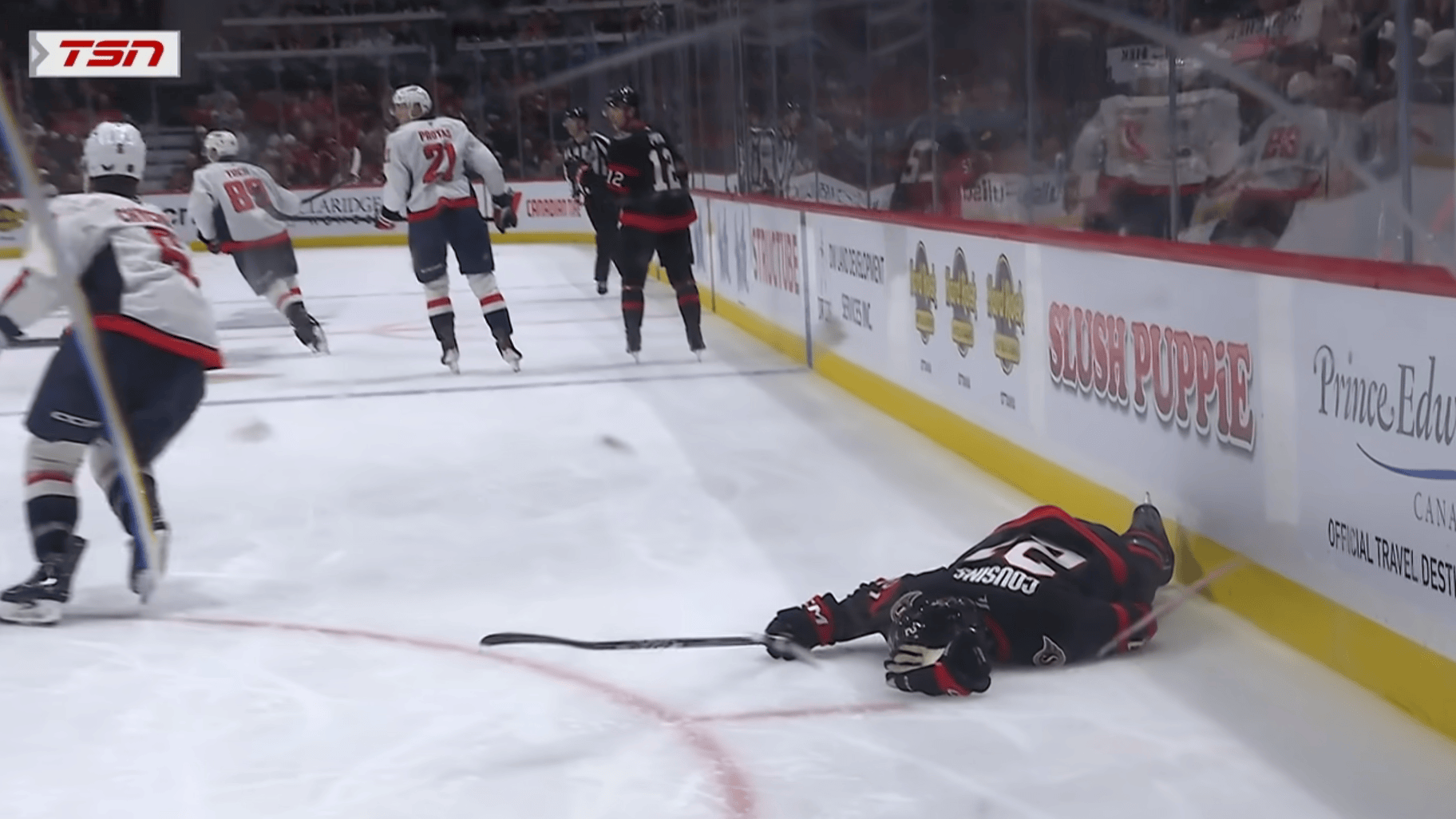
The Capitals beat the Senators in overtime on Tuesday, but the most impactful play of the night was not a goal. Late in the third, with the score 2-2, Ottawa's Nick Cousins kind of casually gathered the puck in his own corner and started to skate up the ice. Before he could do anything with it, however, Cousins got comprehensively bulldozed by Caps defenseman Jakob Chychrun, who sent his opponent's body into horizontal flight against the boards before it bounced limply to the ice. After a review, the refs deemed the hit clean, but Cousins did not return to action. He didn't go to the hospital, but according to his coach Travis Green, "He’s not doing great.”
I have complicated thoughts about this play. It is very difficult for me to resist marveling at Chychrun's spectacular force and its devastating aftermath; it's as real an athletic feat as any skillful dangle. The fact that it was perpetrated on Cousins, a pest so annoying that his peers named him the league's most punchable player last year, only makes it easier to ignore the human toll. But it's also hard for me to see it and not think about Claude Lemieux, among other ex-NHL tough guys, whose brain was donated to CTE research after his death by suicide earlier this year.
The fact that Chychrun's hit was legal gives fans an out to enjoy the violence but simultaneously muddies the waters. It's not as simple as "an illegal hit causes lasting harm and a legal hit is safe." Danger is baked into the sport. It is one of the reasons why we watch it—it ensures high stakes and high emotions. It's just harder to embrace my own natural bloodlust the more I'm reminded of the consequences.
If there is a bit of uncomplicated fun to be gleaned from Cousins's demolition, it's that at 3 a.m. he was awake and willing to indulge his new grudge against a former mutual.
The Caps next play the Sens on Jan. 2. For better or for worse, Ottawa will want revenge.