

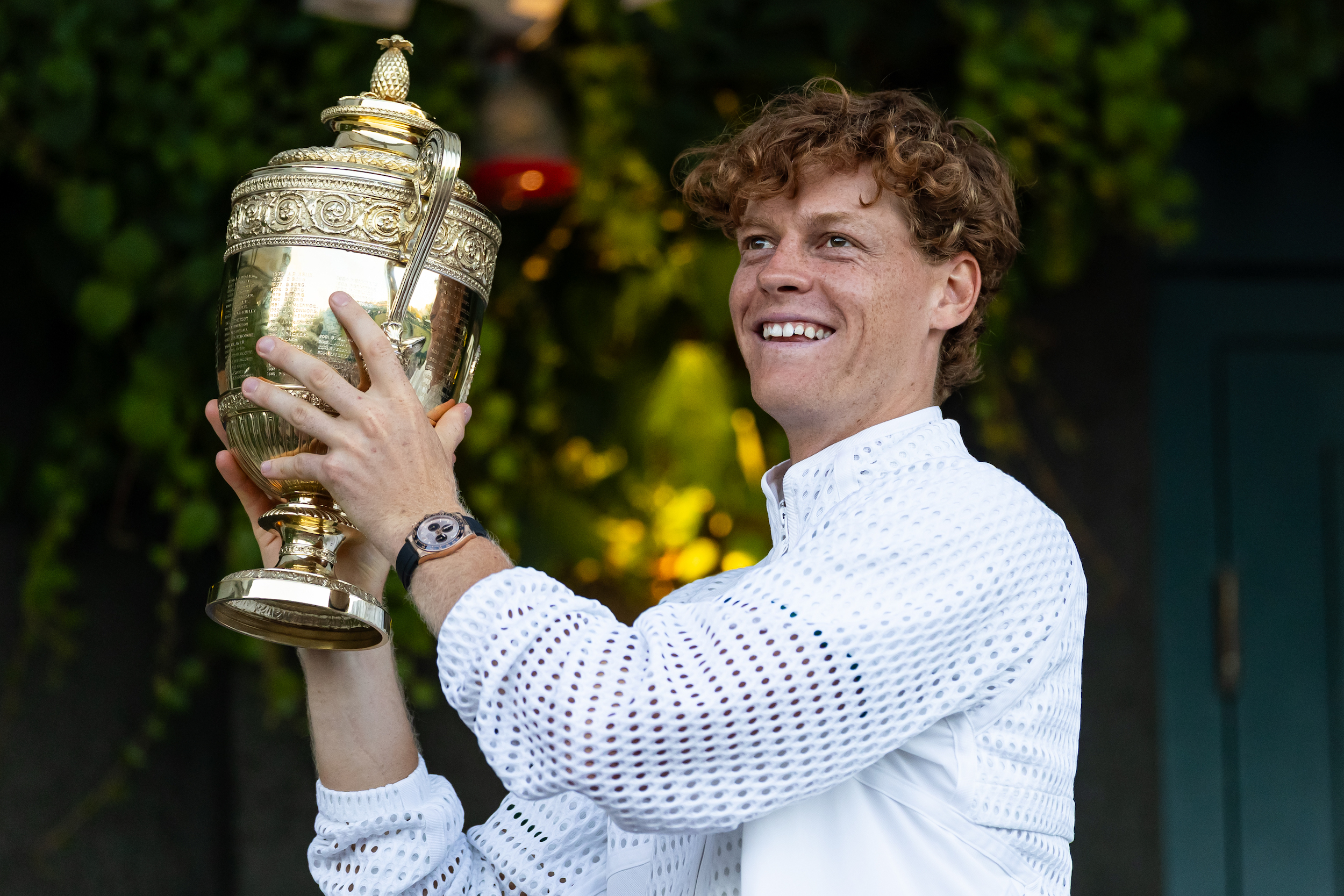
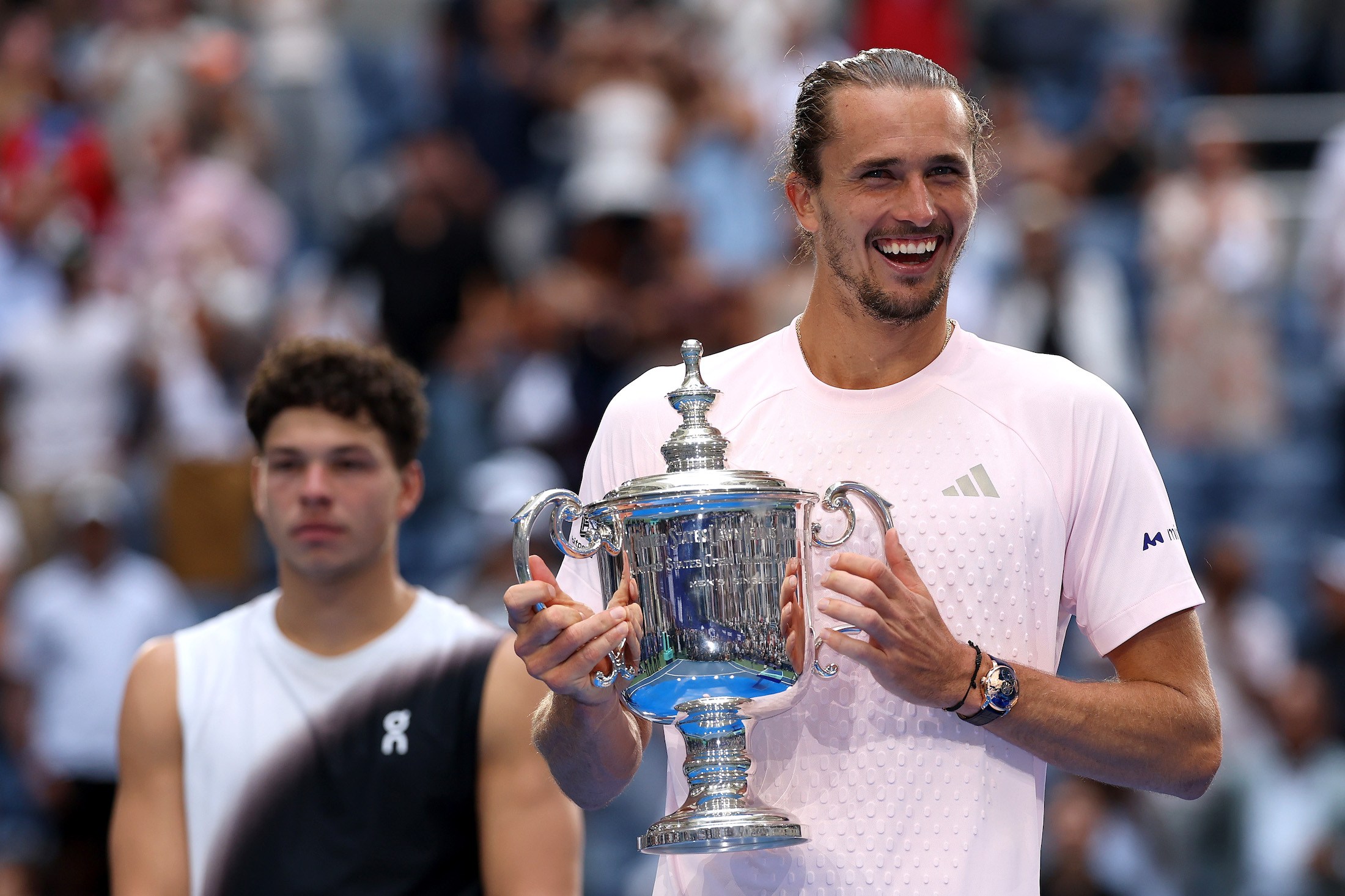
After losing the 2025 Australian Open final, Alexander Zverev was remarkably despondent. The man who defeated him, Jannik Sinner, put both hands on Zverev's shoulders and delivered a pep talk to the sobbing runner-up as the duo awaited the presentation of their trophies. "I think Jannik is better than me at the moment. It's as simple as that," Zverev said in his post-match press conference. "I think I'm serving better than him, but that's it. He does everything else better than me. He moves better than me, he hits his forehand better than me, he hits his backhand better than me, he returns better than me, he volleys better than me."
Many players suffer emotionally after losing a Slam final, and for Zverev it was his third time in that unpleasant scenario, but I couldn't remember the last time I'd ever seen a tennis player sound quite so hopeless. Once a teenage prodigy, Zverev had endured the Big Three era only to be leapfrogged by Sinner and Carlos Alcaraz. They beat him regularly, scooped up all the Slam titles that Zverev sought, enthralled fans, and played with the kind of relentless aggression that seemed to consistently elude Zverev in the nervy moments of a big match. At one point in April, the ranking points gap between No. 2 Alcaraz and No. 3 Zverev was larger than the gap between No. 3 Zverev and me. Nobody would dispute Zverev's claim that Sinner was a world apart from him. Frustration mounted, and late in the 2025 season, Zverev even speculated that tournament directors were tweaking their court surfaces to favor the Sincaraz duo. He has never been one for subtle grievance. Zverev turned 29 this April and must have felt he was running out of time.
After all that heart- and bellyaching, this year Zverev lucked into a Roland-Garros draw unclogged of the tour's three most dangerous players: Sinner (shock loss due to cramps), Alcaraz (wrist injury) and Novak Djokovic (upset by rising star). It was in these somewhat Mickey Mouse circumstances that Zverev, the best of the rest, won his long-awaited first Slam. With that achievement under his belt, a few weeks later he rolled up to Wimbledon, advanced past the fourth round for the first time at the grass-court major, arrived at the final, won the first set in a tiebreak ... and still proceeded to lose to Jannik Sinner, 6-7(7), 7-6(2), 6-4, 6-4, on Sunday. We can grant that Zverev has made appreciable strides, with regard to his forehand and his execution under stress. He still can't yet threaten the regnant duo in men's tennis. This was Sinner's 10th consecutive win over Zverev.
Like many a Wimbledon match between top-ranked men, this final was characterized by quick points and serve dominance. These are two of the best serves on tour, though the players come by it differently. Zverev, at 6-foot-6, has the stereotypical stature of a flamethrower. The distinctive feature of his serve is his ability to maintain high heat while still getting the bulk of first serves into play. Over the last 52 weeks he's gotten a tour-best 72.5 percent of first serves in, which is outrageous considering how hard he's hitting them. Meanwhile, Sinner, who is three inches shorter and has continually tinkered with his service motion over the past few years, has devised one of the most accurate deliveries on tour. He first serves stay perilously close to the lines of the service box, best visualized in this graphic by Matt Willis, and these days he can crank it up to 130 mph with some regularity.
Back in 2022, his serve was mediocre, and he had to really toil from the baseline. By 2024, his serve was excellent. In 2026, it might be heading to historically good territory. Once a groundstroke merchant, Sinner is now inching towards servebot-hood. That's a joke, mostly, but the serve has indeed solved patches of the season when his baseline game has looked scraggly. That includes the first few rounds of this Wimbledon run, too, including his mystifying five-setter against Miomir Kecmanovic in the first round. The typically unshakable Sinner forehand has faltered. But when all aspects of his game are humming, as they were in the last stretch of Sunday's final, he is impossible to cope with. I agree with Willis's claim that we've never quite seen this quality of serve fused to this quality of ball-striking.
That unholy combination will win him many titles on fast surfaces, and it is exactly what bedeviled Zverev today. Both players were unbroken in the first two sets, which they split in tiebreaks. It took Zverev two hours and 42 minutes to locate his first (and only) break point, which arrived in at 3-3 in the third set. On that pivotal point, Sinner came up with a drop shot that caused Zverev to slip, fall, and clutch at his knee; he walked across the court to help his opponent up from the turf. Sinner then held serve, got the first break of the entire match, and served out the third set.
After the match Zverev said that he "overextended" the knee, and that it caused his serve speed to dip, but didn't hamper the rest of his game. For years, Zverev was infamous for playing from a spiritual defensive crouch, hitting passive shots while marooned well behind the baseline, but he seems to have escaped that trap at last; during this final, he stepped into the court and crunched his forehand over and over, striking it as purely as he ever has. He appears to be stripping his game of its most self-sabotaging aspects. But he still can't slide his feet and defend quite like Sinner can, which was crucial in the rare lengthy baseline exchanges in this match. The most conspicuous of those was the 23-ball rally on the penultimate point of the match, which left the eventual champion in a grin:
And it was Sinner who began to read Zverev's serve better over the course of the match, playing around with the depth of his return position, and capitalizing on those scarce opportunities to break in the third and fourth sets, all while remaining untouchable on his own serve. In his press conference after the match, he was asked whether he thought his return of serve was the decisive weapon in both this win and his win over Djokovic in the semifinal. "I think tennis is more about confidence. When you're feeling confidence, you feel that playing tennis is easier," he said. "I always think it's easier to return if you know mentally you can hold serve, so you are a little bit freer to return as good as you can." Sinner should have no shortage of confidence in this matchup: He has now held serve 85 consecutive times when playing Zverev.
The blip of Zverev's Roland-Garros win broke a streak of nine straight Slams won by Sinner or Alcaraz since the start of 2024, but this Wimbledon title restores the regime. It's an odd fact to consider, given that he's barely budged from the No. 1 slot, but Sinner hadn't won a Slam for an entire year before this title defense. His performance at the other events has been immaculate, and he completed a full set of all nine Masters titles this year, but he has suffered a relative title drought at the very highest level. Despite coming into Roland-Garros as an overpowering favorite, he was undone by cramps while on the doorstep of a routine second-round victory, which triggered an entire discourse about his ability to withstand taxing matches in difficult conditions. Because of the weapons described above, he has been able to mostly avoid such matches altogether, sweeping aside the field with brutal efficiency.
Because his one rival is out indefinitely and posting training videos that suggest a slow rehabilitation, Sinner's most significant adversaries on court this summer have been Sun and Time. Some questions remain open. Across his career, Sinner is 0-9 in matches that extend past three hours and 50 minutes. This one he finished right before curfew, in three hours and 46 minutes. I suspect that no one but Carlos Alcaraz can make Jannik Sinner dance for that long, which is one of many reasons we need him back.


![USA's Ben Shelton celebrates his win against Spain's Carlos Alcaraz during the men's singles quarter-final tennis match on day ten of the US Open tennis tournament at the USTA Billie Jean King National Tennis Center in New York City on September 9, 2026. (Photo by Leonardo MUNOZ / AFP) / “The erroneous mention[s] appearing in the metadata of this photo by Leonardo MUNOZ has been modified in AFP systems in the following manner: [USA's Ben Shelton] instead of [Spain's Carlos Alcaraz]. Please immediately remove the erroneous mention[s] from all your online services and delete it (them) from your servers. If you have been authorized by AFP to distribute it (them) to third parties, please ensure that the same actions are carried out by them. Failure to promptly comply with these instructions will entail liability on your part for any continued or post notification usage. Therefore we thank you very much for all your attention and prompt action. We are sorry for the inconvenience this notification may cause and remain at your disposal for any further information you may require.”](https://lede-admin.defector.com/wp-content/uploads/sites/28/2026/09/GettyImages-2293730421.jpg?resize=2880%2C1920)