


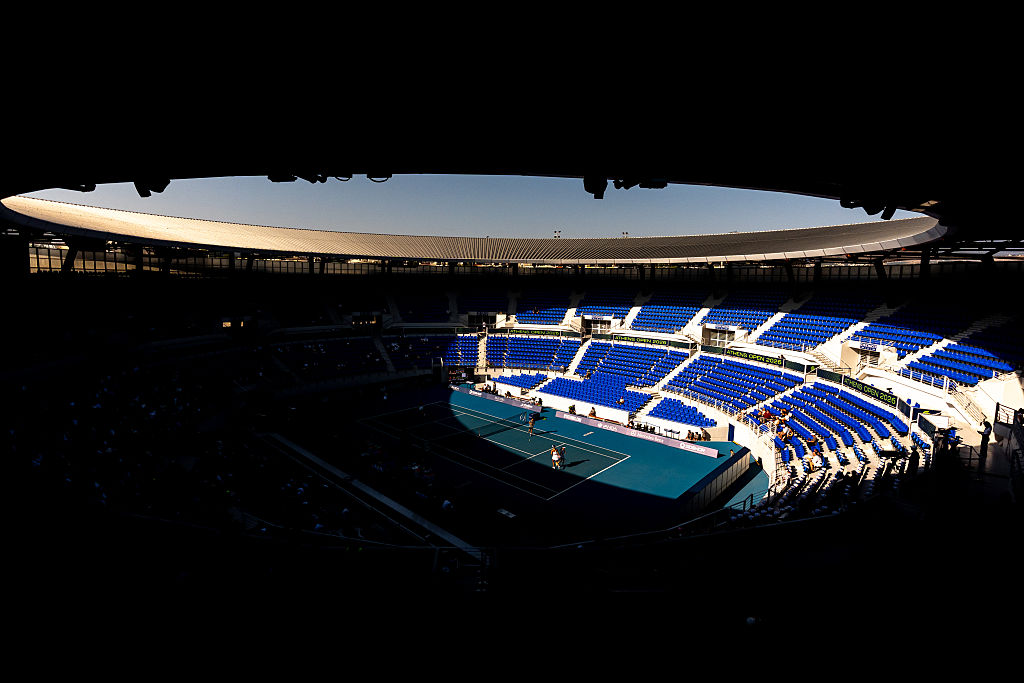
A day after the French Open ended in May, the website tennis.com shut down its editorial operation. The brand dates back to the founding of Tennis magazine in 1965, and though the mag folded in 2022, the website continued to produce news, analysis, and feature articles. At least, until after the clay season. The new site amounts to a scoreboard for ongoing tournaments with tabs for the upcoming schedule and rankings. Endure a long scroll to the bottom of the page and you'll find a link to the news archive: all the articles on the website, still online for the moment.
A scrap of an explanation rested on the second page of an FAQ, stating that the website "evolved into a dedicated scores, and tournament information destination. For the full Tennis Channel experience—analysis, and original programming—visit tennischannel.com or the Tennis Channel app." (Tennis Channel owns tennis.com.)
Tennis was the standard-bearing publication about the game for decades. Pete Bodo, among the longest-tenured and most influential tennis writers alive, spent 50 years of his career there. Bodo wrote magazine profiles at the beginning of his career, getting to know the players and delivering accurate, poignant portraits of them to the public. His 1994 tennis tome The Courts of Babylon is studded with raw, startling anecdotes about players, like Ilie Nastase charging his German opponent in the locker room after a match at the 1976 U.S. Open with a cry of "Fuck you, Hitler!" By the time the site folded, Bodo had shifted to part-time, but continued to write columns and features for tennis.com right up until the end of the website.
Bodo and former senior writer Steve Tignor, both no longer employed to write about tennis, had been made aware of likely changes to tennis.com by their editor Ed McGrogan, who acted as an intermediary between higher-ups and the writers, but the suddenness of the move away from editorial came as a surprise.
"The [new] website debuts, and there's no editorial content," Bodo told me. "It became clear immediately that they didn't want editorial content. All they wanted was to promote gambling and the Tennis Channel." (Tennis Channel features a “BetMGM Desk” before big matches, and frequently shows betting odds.)
Tignor had worked for Tennis since 1998. Like Bodo, he'd written just about everything a scribe could about the game in that time, but with a greater focus on styles and tactics than personalities. He became the point person for match previews and reviews, but also published book reviews, email exchanges with other writers about various tennis topics, and personal essays. His story about how he was hired at Tennis is the platonic ideal of the latter category, a literary look at late-twenties, early-career malaise, complete with the perfect kicker. And a piece on the iconic 2009 Nadal-Djokovic Madrid semifinal, which happened in the midst of his vacation to the Spanish capital, offered both distilled commentary on the defining pattern of the next 15 years of men's tennis and a scene report amidst rapt bar attendees.
"When I did it, someone might've said, 'That's not professional. He's doing it from a bar. What kind of sportswriting can you do from a bar?'" Tignor said. "But I think that's an article that people did like and remember. As a reader, I like that stuff. As long as it's done in some way that's interesting, if you connect with the writer, it's something that goes beyond just the match or the personalities on the court, it gives [off] what that match means to people there, you know?" Old heads advised Tignor to never write about forehands and backhands—too dry, they said—but he always took it as an obligation and challenge to make analysis interesting.
Tignor knew to expect changes when the site relaunched this spring, but felt there was a possibility of writing newsletters for tennis.com from a new URL. "I think they finally decided that they weren't gonna do that. I think they thought they could get enough people to come to tennis.com just for the basics. I think that had been in the works for a little while."
I asked Tignor if the AI Insights superglued to the top of every Google search had dented tennis.com's traffic.
"I don't know," Tignor said. "But it probably has, if it's happened at a lot of other sites. I look up things about tennis, and maybe I would have ended up on tennis.com in the past and I don't now."
"I think they were probably thinking that if they want to do editorial, they can get AI," Bodo said. "I don't think it was a traffic issue. Clearly, everything is going to AI."
Some publications fold because of their inability to adapt from print to digital. If anything, tennis.com was ahead of the curve. In 2005, they launched a series of blogs. Bodo was ready to write some opinion columns, and founded Pete Bodo's TennisWorld on Typepad under the tennis.com banner. Tignor launched the blog Concrete Elbow, which focused on tactical on-court happenings alongside Bodo's more personality-focused writing. "I was one of the very first people on Earth, I think, to be paid for writing a blog by a media company," Bodo laughed.
Though he'd made his bones as a magazine writer, Bodo slipped into blogs with a millennial's ease. He wrote articles at an astonishingly prolific rate, under which fans and writers volleyed comments back and forth that could prove as meaty as the pieces themselves. He engaged with commenters regularly. He fostered the occasional Federer-Nadal fan war. When the publication wouldn't pay for a moderator, he brought on readers as volunteers. Andrew Burton, a commenter, moderator, and writer, told me he spent so much time on the site that his wife eventually asked him to choose between TennisWorld and Twitter as time-sucks (at which point he chose Twitter).
"We had a great run [at TennisWorld]," Bodo said. "I'm very proud of what I did. It was a lot of fun. It took a lot of time, but it was interesting to me. It was a creative, intellectual challenge, and I flourished under it. I've had opportunities to go on TV, and it's always been, I'm a writer, and the less my job is about writing, and the less time I have other than writing for myself, I'm not gonna be a happy person."
The TennisWorld comments were where tennis writers of the future learned about the shape of their fandom. Courtney Nguyen commented on the site before going on to write for Sports Illustrated, spend a decade as a senior writer for the WTA's website, and interview virtually every top player for the WTA Insider podcast. Juan José Vallejo was also a prominent early commenter, years before he co-founded the tennis website The Changeover and wrote for Rolling Stone about tennis in the mid-2010s.
"[TennisWorld] meant a lot, and it really helped me deepen my love for the sport, because I was able to share it with other people and not feel like I was into this niche thing, but that I was part of something larger. At that point in time, that was something I really needed," Nguyen said.
"I was wanting to learn anything and everything about tennis," Vallejo told me, reflecting on his early days as a tennis fan. "I found, obviously, tennis.com, because that was easy to find … Their blogs were awesome. It was the kind of tennis writing that doesn't really exist anymore."
The blogs offered the writers something new, too. "When Pete and I started [blogs] in 2005, both of us had written for the magazine, but you never really heard much from readers. And then when we did the Typepad stuff, you suddenly got responses from people all the time, immediately, good or bad," Tignor said. "You realized that there were a lot of other opinions that were valid and different from yours. Some you disagreed with, but others really made you think. I learned a lot from the good responses. And then when you write personally, people relate to what you're saying."
Tignor said both he and Bodo drew from Vallejo's perspective on Novak Djokovic. He once wrote that the comments even helped push his political views further leftward. Connections came easy on TennisWorld, translating into in-person meetups at tournaments, ticket exchanges, tennis sessions, and at least one baby. "I feel like if this had been any other sport, let's say a mainstream American sport, [TennisWorld] would have generated a generation of writers who would be employed today at different outlets," Vallejo told me. "But because tennis doesn't really employ writers anymore, it wasn't possible."
"Pete and I were both amazed, at the time, at the passion of people," Tignor said. "I think I've written before that tennis was good for comment sections. It's a global sport with lots of fans, but it's very thin. You don't meet a lot of tennis fans—have you ever met a crazed tennis fan in your daily life? Not very often. So the Internet was perfect." The nascent Federer-Nadal rivalry powered countless threads at the time (Tignor saw Nadal as Federer’s equal from the beginning). Bodo's take on Djokovic in 2007—"The Perfect Player," written before Novak had made a major final—is prescient, but also a fascinating time capsule. Access wasn't yet so decimated that Bodo couldn't spend an easy 15 minutes chatting with Djokovic for the piece. Perhaps even more startling, his lede was a gentle dissection of Richard Gasquet, then thought of by some as "Baby Federer."
Van Sias, a longtime tennis fan and journalist, revered the Tennis brand. "Even by the name alone, it's Tennis," he told me. "Tennis, right there, front and center. It is the most prestigious tennis publication, I feel. I'm 53 now, and I started reading it when I was a junior player, getting a subscription with my USTA membership. It's been such a chronicle of the professional game." Sias long wanted to write for tennis.com, eventually becoming a regular contributor to their Baseline website, writing occasional pieces for the magazine, and working a weekend shift.
Tignor recalled a site redesign in 2012 that rearranged the homepage and put an end to the blogs. "I just became my name on a column. Both Pete and I [used to] have our columns on the homepage delineated. That ended. I think it became, actually, pretty hard to find our stuff for a while. They really overdid the idea. Whoever did that redesign just decided that a more uniform, professional web design that didn't emphasize individual names was the way to go." Along with the blogs went the comment section. Tignor remembered him and Bodo trying to preserve the comments, or at least archive them, with no luck.
Over the next decade and a half, tennis.com gradually left behind voicey posts for the types of articles that, as Tignor described, readers could likely also read elsewhere. In 2017, Sinclair purchased Tennis Media Company, cramming Tennis magazine, tennis.com, and Tennis Channel under the same umbrella. Tennis Channel rarely made an attempt to advertise tennis.com on its airwaves. Within five and a half years, the magazine folded. The website leaned into more ephemeral content—the featured article at any given point in a day could be a Steve Tignor recap or preview; it could also be about an Aryna Sabalenka TikTok and include an emoji in the headline. Tignor settled into a more professional style: still analytical, less personal. In 2023, Sias saw his regular work with tennis.com slow down, and the pitching process grow more complicated. Bodo felt the latitude to criticize players or even the tours shrink, the previous freedom complicated by corporate concerns about offending broadcast partners in the ATP and WTA. He added that tennis.com increasingly resembled a fan website and promotional vehicle for Tennis Channel and the tours. "It was not independent journalism, is what it comes down to," he said.
As Nikki Jewell, a consistent commenter and moderator on TennisWorld, emailed me after the site folded: "When I first started reading, there seemed to be more room for distinctive and individual voices, with space to look at tennis and tennis media slant-wise. I miss that, and I wish the site had leaned into that more over time."
When I reached out to former tennis.com editors to ask why the website had gone by the wayside, Ed McGrogan referred me to Jill Dortheimer, Tennis Channel's VP of Communications, who sent the following: "Tennis.com is in midst of a full rebuild and the first priority is to deliver fast, comprehensive match and tournament schedules, scores, draws and data. We are continuing to improve the experience for all fans, so stay tuned." I asked followups—Why make such a clean break from respected and well-known writers? Had AI Insights hurt the website's traffic?—that went ignored. I asked another editor to speak, and they declined.
Neither Bodo or Tignor received contact from people at Tennis Channel. "Not a single thank you, nothing. Radio silence," Bodo said. "The word came down through Ed that they'd gone in different direction, and your last check will be issued in July. Who treats people that way?" Bodo asked.
"Everyone is chasing cheap, easy clicks," Nguyen said. "It's the world of private-equity brain: Everyone is trying to squeeze the most value out of everything without any care or understanding or valuing of what the long-term effects of these decisions are. They don't care. They want to take whatever money they can get out of the thing now, so they can sell the thing and get out. I think that is where those of us who are tennis lifers, who love this sport and want to enjoy this sport until we die and leave it to people to continue to enjoy it, this is where there is a clash."
"There are a lot of websites, Substacks out there, but it's like, to me, if you didn't have the Lakers and the Celtics in the NBA, or the Dallas Cowboys in the NFL," Sias said. "Or if you didn't have the New York Times in newspapers. If you don't have tennis.com or Tennis magazine in the tennis publishing world, then that's a loss for the sport, it's a loss for journalism. It leaves a void. You have a big void out there."
"Tennis.com was an institution," Nguyen said. "Especially for English-speaking tennis fans, tennis.com was kind of your news clearinghouse. It was a place you felt like you could go to and get a sense for everything going on in the tennis sphere. Everything was covered via news articles, opinion posts, match reports, social stuff, coaching carousel—it was all on tennis.com … If you wake up in the morning and want to know what happened overnight, or want to catch up with what happened that week, where do you go? For me, at least, tennis.com served as that."
"Everybody's obsessed with scaling things these days," Bodo said. "When you scale up, you lose control. I had an amateur team of moderators at TennisWorld. Out of the goodness of their hearts and the fun of doing it, they did good moderation. How do you have moderation on X? This whole thing with AI and disinformation now, post-truth life, how do you figure those things out?"
Bodo feels he's done writing about tennis. After more than 50 years and hundreds of thousands of words, the clip is empty, the passion for the sport dulled. Tignor has early plans to start a Substack. "It seems like a very difficult thing to make money on," he conceded. "I think I will try that, and also try to do freelance when I can. It's a chance to go back and do more of the original way I tried to write about tennis, and see whether there's still some audience for that. Maybe the check-cutters are right that there really isn't. But I would still enjoy that. I will say that writing in that original style felt like less of a job and more of a creative experience, rather than just work."
Nearly everybody I spoke to professed a love for the particular kind of writing that used to feature on tennis.com. In its place has arrived so many podcasts and YouTube shorts: both born of a creative instinct, both different enough from writing to never be able to scratch the same itch. "The writers [are] the people who document things in permanent fashion, who archive, who write things that tell the story of what happened," Nguyen told me. "Because, I'm sorry, you're not gonna find a TikTok in 30 years, let alone in 30 months, that tells the story of what happened in Wimbledon 2026.”
If there's a specter of the TennisWorld comment section, it's r/tennis, but the outline of the ghost is pale. A user asked recently where they could read good tennis journalism in the absence of tennis.com, and the second-most popular reply recommended a YouTube channel. Many posts on the tennis subreddit are links to players' social media posts and memes; many comments are a line or two. Users generally don't seem as curious about the game as the glitzy architecture of its marketing. The sport itself has often leaned into that preference, emphasizing its shell instead of itself. Bodo described tennis’s thirst for growth as "raging hunger for crossover success," and said, "It became interesting to people for the wrong reasons." When I asked Bodo for one line to summarize his 50 years in this sport, he arrived at, "I saw something I really loved being transformed into something that I don't love as much."
"What is left for the people who just want to write?" I asked Bodo.
"Nothing. They're fucked," he said, before mentioning the potential oases of books and Substack.
"I know there are good writers who move over to podcasts, because I guess it's easier, or makes more money," Tignor said. "I don't have an interest in talking. There is something about writing about sports."
Typepad shut down in September 2025, dragging the TennisWorld and Concrete Elbow archives into the void. Since tennis.com parted ways with all its writers, links to author archives broke, too. Individual articles remain online, including some vintage blog posts that reran on tennis.com, but those figure only to be found by the curious reader who knows exactly what they're searching for.
After our interview, Tignor emailed me one more reminiscence on the blog days. "Now that I think about it, when we started doing the blogs in 2004/5, I really believed that we had a chance to add a whole new analytical/personal dimension to sports writing that could never fit into a newspaper," he wrote. Those articles may not have met the flashy demands of virality, but at their best, they could sing a fan's previously felt but unarticulated beliefs, teleport a reader from their couch to the press box in a stadium, or get at the heart of a match without sacrificing style.
"I think at the time, I thought, This will be part of how sportswriting goes into the future," Tignor said. "That's not really what happened. People moved away from it. I'm not sure what happened. What do you think happened?"



![USA's Ben Shelton celebrates his win against Spain's Carlos Alcaraz during the men's singles quarter-final tennis match on day ten of the US Open tennis tournament at the USTA Billie Jean King National Tennis Center in New York City on September 9, 2026. (Photo by Leonardo MUNOZ / AFP) / “The erroneous mention[s] appearing in the metadata of this photo by Leonardo MUNOZ has been modified in AFP systems in the following manner: [USA's Ben Shelton] instead of [Spain's Carlos Alcaraz]. Please immediately remove the erroneous mention[s] from all your online services and delete it (them) from your servers. If you have been authorized by AFP to distribute it (them) to third parties, please ensure that the same actions are carried out by them. Failure to promptly comply with these instructions will entail liability on your part for any continued or post notification usage. Therefore we thank you very much for all your attention and prompt action. We are sorry for the inconvenience this notification may cause and remain at your disposal for any further information you may require.”](https://lede-admin.defector.com/wp-content/uploads/sites/28/2026/09/GettyImages-2293730421.jpg?resize=2880%2C1920)