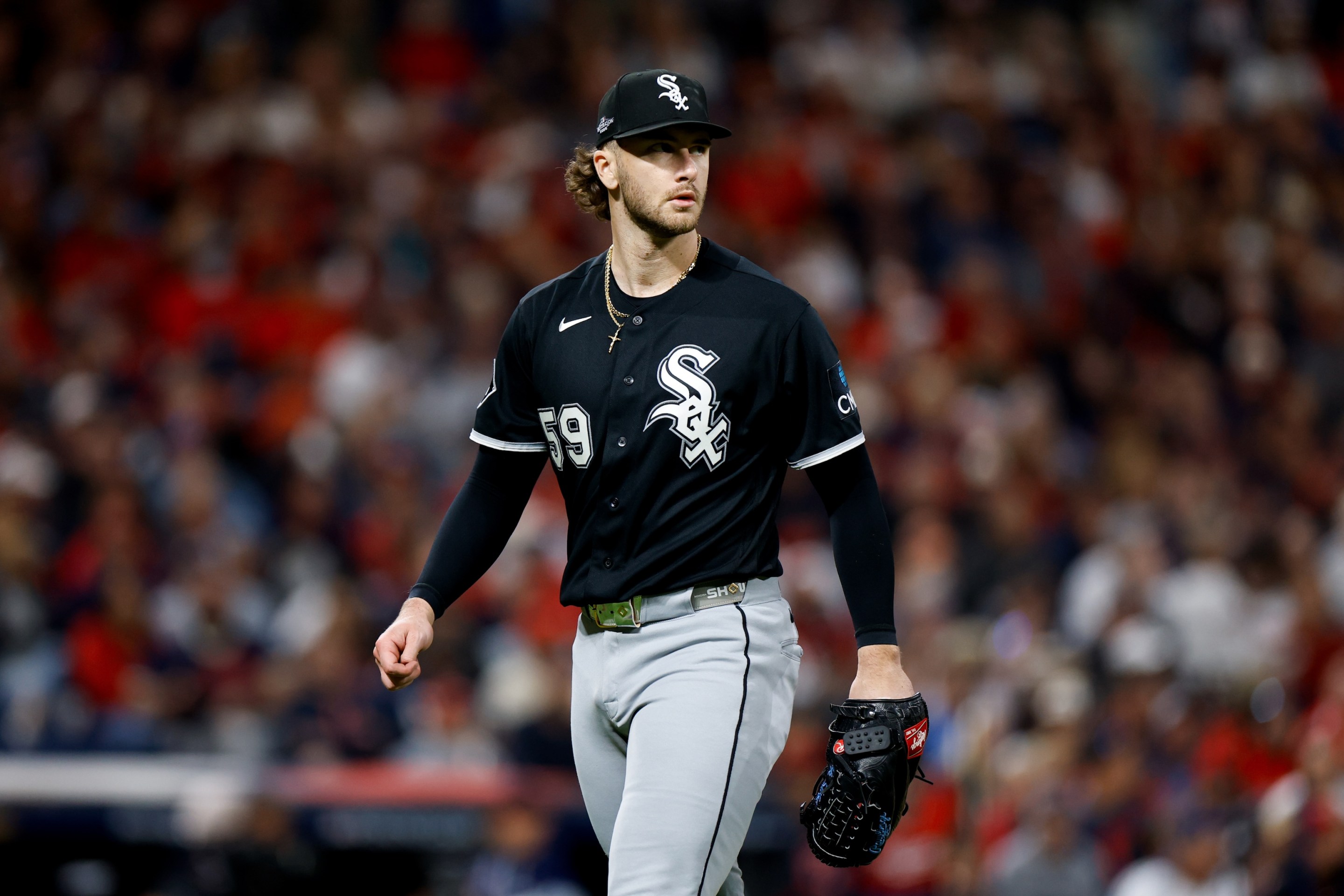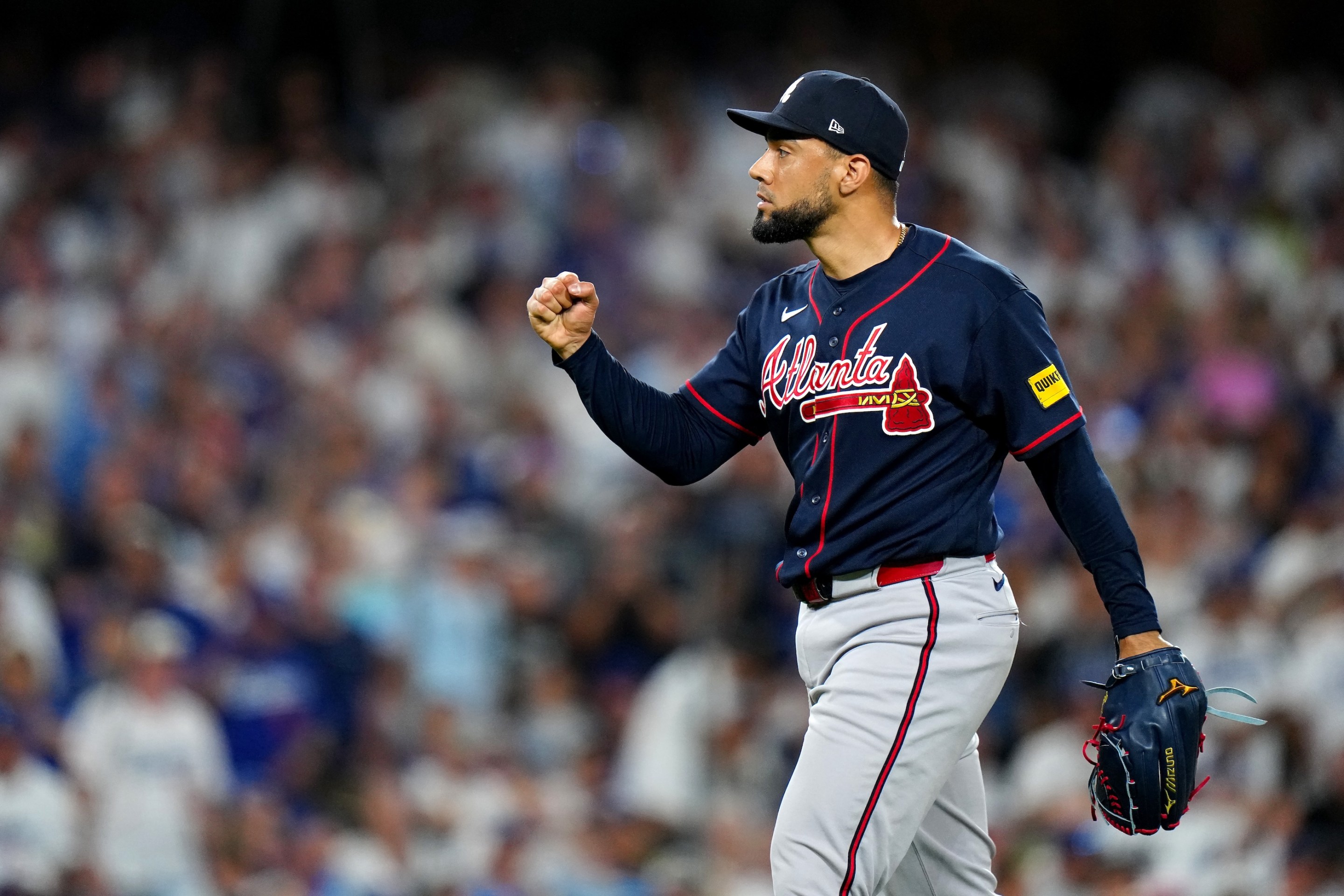

During a Sept. 28 press conference, Mariners president of baseball operations Jerry Dipoto stated unprompted that if he had been fired following this season, it would have been justified. This is an extremely funny thing to say when you have not lost your job, especially when contextualized by your firings of five of your colleagues in the surrounding 48 hours, all of whom you hired. The difference between having your hypothetical firing rendered justifiable and having your walking papers actually handed to you is, uh, the whole dang thing.
This is the sports executive equivalent of If I Did It, an implied admission of guilt issued directly after having gotten away with that shit. Like O.J., Dipoto will not elude fate forever; nobody with his job ever really does. I do find it sort of interesting to consider what he has actually done wrong. While most anyone paying attention to him likely agrees Dipoto has some real bozo moments, I think we may disagree on the specifics. Likewise, we might wish for a different hand at the helm, but for what reason? It's worth considering what, exactly, Jerry Dipoto has done wrong.
The 2026 Seattle Mariners dramatically wretched and quivered their way to a third-place finish in a truly dogshit American League West, scoring the fewest runs they have in a full season since 2015. This year’s squad had some injuries and a bit of bad luck, but that isn’t actually much of an excuse. Those 2015 Mariners, who Dipoto took charge of at the end of the season, needed to give Logan Morrison 500 real major-league plate appearances and employ Dustin Ackley in a serious capacity to have an offense that shitty. Anyway, in the 11 years since, Dipoto saw his title bumped to President of Baseball Operations, and rewarded the M’s by winning eight playoff games, total. The day before Dipoto admitted his firing would be justified, the M’s announced that Dan Wilson would be relieved of his duties as on-field manager. The day after, Wilson’s shitcanning was followed by that of his bench coach, Manny Acta, as well as his first base coach, hitting coach, and infield coach. The hitting was obviously quite bad, and the infield was even worse, owing significantly to JP Crawford’s valiant losing battle with the position of shortstop. There are a wonderful variety of advanced defensive metrics out there, with bitterly conflicting philosophies; Baseball Info Solutions has one, FanGraphs has one, and Statcast has two different ones. No matter which one you prefer, if you stack all the 2026 team defenses up against each other, you will find the Mariners DFL.
Dipoto’s signature moment, if he has one, was probably the 54 percent press conference. In a moment of unfortunate tone-deafness, he went out there and pleaded with fans to trust the math and be patient. This might sound like Jerry apologism, and I promise you it isn’t, but I don’t think he really meant it. Obviously I can’t claim to know what was going on in his head, but the Dipoto I have spent so many years observing has never struck me as a bloodless process-truster. The Jerry Dipoto I have come to know is an old-school gunslinger: a wheeling, dealing, flying-by-the-seat-of-his-pants adrenaline junkie. He will move anyone, at any time. He signed Mitch Garver on Christmas Eve. On his wedding anniversary, he traded for Brendan Donovan. I can easily imagine him getting the shakes when not allowed to transact. He cannot effectively evangelize those patient quant vibes because he does not himself live them because he is, in his heart, a deals pervert.
The 54 percent press conference is often used as a cudgel by Mariners fans who want to see Dipoto canned, but I think that desire is based on a misunderstanding. If the idea is to replace the spreadsheet jockey who only ever works in the margins with the kind of GM who will make bolder decisions, then it strikes me that people might be asking for their imagined version of Jerry Dipoto to be fired and replaced by the actual Jerry Dipoto they already have.
Dipoto was once a very good relief pitcher, which couldn’t really be a more different job from baseball operations. Unlike almost every other player on the roster, relievers do not have the luxury nor the burden of patience. Every pitch can and must be thrown like it is your last, because it might well be, especially before pitching analysis became less driven by results and more by process. The sample sizes are small enough that one bad outing could wreck your stats for the season. It is a job for sickos. I’ve been goofing a lot on Dipoto's speech from September, but if he were still a pitcher, this would be a sensible line of thought. He didn’t get this many years in bullpens, and he never pitched as badly as his team just played. But in a baseball ops job, this is a bit of a self-fulfilling prophecy. A process guy must believe in the process. Fans might want your head, but fans are prone to that sort of thing. Fans called the Dodgers unclutch losers, right up until they started complaining about how the Dodgers were ruining the sport by winning so much.
It's a weird spot to be in as an observer of a team. Most fans don’t like the administration, and I don’t really either, but for the exact opposite reason that everyone else does. Most fans want Dipoto to spend more in free agency, but he won’t, because he likes his job and got the job based on promises that he could build a strong team for cheap; to the extent that he has spent in free agency, it mostly hasn’t worked out that well. This is in part because he mostly operates in the middle tier of free agency, where there is more variance in outcomes. He's a bit more effective in trades, but I find he also doesn’t behave the most logically there. He has built the envy of the league with the Mariners’ pitching development system, yet traded Harry Ford, a top hitting prospect, for a single reliever in Jose A. Ferrer, who subsequently posted a bad ERA and FIP.
Technically, Ford was blocked by Cal Raleigh, but many catchers have gotten away with it in the outfield, and Ford is much more athletic than almost all of them. Dipoto just can’t quit spending a lot on pitchers. The Robbie Ray deal cost a lot and did not work out. The Luis Castillo trade sort of did work out, but I would argue was also bad from a process perspective. If your team can never hit and is unbelievable at pitching development, you should not be buying established pitchers at market rate, whether in free agency or on the trade market, and especially not with hitting prospects.
A more disciplined approach to team building here could serve as the antithesis to the philosophy Theo Epstein employed when building the Cubs in the 2010s. Epstein reasoned that if hitters are less injury-prone, more predictable statistically, and straightforwardly more valuable (i.e. why the season WAR leaderboard is usually led by a bunch of hitters), they were a much more sensible way to spend draft picks. Pitching could be bought later, once a hitting core was developed. This is all true. However, pitchers are much more reliable to develop (especially if you happen to be the Seattle Mariners), and though they break easily, they are almost as fungible as cash. As a catcher, Ford was somewhat blocked from playing time. His market was also limited to teams that needed a catcher. Pitchers are never blocked from playing time, and every team in baseball always needs more of them. Hitters may be more reliable assets, but pitchers are far more versatile. With all this in mind, a team like the Mariners, with limited cash and an excellent pitching lab, might be incentivized to save their war chest for hitters, and only especially reliable ones.
As fans, it is easy to forget that the GM/POBO is not working for us. The primary duty of any job worth having is to keep it, and in this case that is achieved by keeping ownership happy. Dick Balderson drafted Ken Griffey Jr., and he was fired five days after swapping Ken Phelps for Jay Buhner. He did a lot of good for the fans, but the fans do not make personnel decisions. Balderson never held the GM title again. Dipoto is the longest-tenured head of baseball operations in Mariners history. He keeps his job because of his willingness to stay on budget and on message. If he were to be fired as many M’s fans wish he were, the best-case scenario is that the next ops guy might have a better idea on hitting development. However, that guy would still be hamstrung by the owner’s preferred payroll bracket. That guy would likely act with less manic urgency, and would probably stick with someone like Scott Servais. That guy would likely have a 54-ish percent threshold in mind.
This is the tension we all exist in. We don’t get to separate the good from the bad. With Jerry Dipoto, the team gets out from under the Robinson Cano contract and gets amazing pitching development, but also a general antipathy toward the offensive side of the game, and the baseball equivalent of the Jeff Saturday head coaching hire for no apparent better reason than that he felt he needed to do something. When the season goes like it did, he will fire said crappy manager, but also Acta, who was generally well-regarded and was working two jobs in the same dugout.
Change will come for the Mariners front office, and when it does, I won’t mourn it. But I am quite certain the next head of baseball ops will not be Dave Dombrowski with an unlimited payroll. It will be more in the mold of Jeff Greenberg—or, if you want another relief pitcher, Craig Breslow: smart people who will stick to a payroll, make the hard choices, and be hated by the fans so the ownership isn't. People like Dipoto, but with the rough edges just a bit more rounded off.