Not a lot of owners would have let Mike Elias do what he has done with the Baltimore Orioles. This was true in a negative, how-dare-you-sir sense when the team's John Angelos–led ownership entrusted Elias with overseeing a more strategic approach to bottoming all the way out, following a 115-loss 2018 season in which then-GM Dan Duquette traded away every veteran he could before being fired that November. Those deals netted 15 players; of those, only Dean Kremer would go on to contribute positively to a good Orioles team.
Much of that is on Duquette, but also a great deal of time elapsed in there. Baltimore's first playoff appearance of the Elias era didn't arrive until 2023. That was when the best of the prospects he had selected, with the high draft picks that were the reward of those spectacularly abject seasons, came together as the core of a team that won the American League East before meekly bowing out of the postseason in three games. It was easier to see the vision when the Orioles ran a $60 million payroll and won 101 games that year than it was during the half-decade that the team spent splashing around in the toilet, but Elias made sure to emphasize, in the good years and the bad, and in the brisk way that baseball executives emphasize this sort of thing, that the vision was indeed there. During the most fragrant of the toilet years, Adley Rutschman and Gunnar Henderson were still abstract and dreamy around the edges in the ways that even the best prospects are; by 2023, both had arrived as big-league stars on a team that looked like it would go on to win a lot of games.
Even at what now looks like that team's comparatively middling peak, there was the sense that Elias's personal vision of how the team should be run was still being prioritized over the urgency of the moment. That he was able to get away with that surely owed something to how unsettled the team's ownership situation was, and to how little he asked of those owners beyond their patience and faith. The Angelos family improvised several seasons of Succession in public before selling the team to private equity billionaire David Rubenstein in January 2024. A baseball executive's livelihood is dependent on their skills at managing up, and Elias has never wavered in projecting the sort of cocksure executive mastery that pleases the extremely rich. It has to all appearances worked quite well on both sets of bosses.
It continued to work even when the undeniable promise of 2023 began disproving itself, first slowly—there was another winning season with another brief and winless postseason appearance in 2024—and then with alarming swiftness. The Orioles haven't won a playoff game since 2014, and just finished their second straight year under .500 and out of the field. Some of this can be chalked up to bad luck and the protean difficulty of high-level hitting development. Another reason is that once the team started winning games, the pipeline of top prospects went dry; it's harder to find players like that if you're picking where winning teams do, and it hasn't been any easier for Elias than it has for anyone else. And even for a team that gets to pick in the single digits for years in a row, it's not easy. If a few of those prospects miss, and one or two others back up or get hurt, that's just baseball being baseball. If the team doesn't cash in some of those young players' potential (and offload their risk) for more expensive and reliable veteran talent, or surround those developing stars with proven players and useful depth, even a youthful and talented roster can languish. A team can commit totally and get a lot of really difficult stuff right, and still wind up where the Orioles currently are.
Which is stagnant. This year, they attempted risky mid-air repairs on half-busted prospects while watching various other thoughtfully hedged transactions level out around "mid"; the production of their sole free-agent splash, Pete Alonso, helped a lot, but they still finished a distant fourth in the AL East. The rest of the core degraded: Rutschman was traded to Boston at the trade deadline for a passel of teens; Henderson, one of the best shortstops in the game over his first three seasons, improbably burped up the stat line from one of Willy Adames's less thrilling seasons, in part because Henderson, like other Orioles, made a point of playing through injuries. The latest round of ostensibly clever short-term free-agent and trade patches revealed themselves not to be very clever at all. The big exception was Alonso, who was excellent in the first year of a five-year contract, but also no proprietary player development insights or culture hacks were required there. Any non-genius executive could have projected and acquired what Pete Alonso provided this year, provided their owner was willing to submit the high bid.
But if being the high bid on Alonso is another favor that Elias has been afforded by ownership, the backsliding that created that need represents a more worrying indulgence. The issue is less that the Orioles' supply of young sluggers curdled ahead of schedule, and more that Elias's trust in his own process has mostly served to reproduce the same type of flawed players in crippling bulk. The technocratic fantasy of the modern baseball executive is a roster that functions seamlessly as a collection of cheap and interchangeable pieces; the Rays and the Brewers are both good examples of this. That outcome arrived for Elias in 2026 as a bleak but impressively on-brand farce: a bunch of pre-arbitration galoots who shared the same plate approach, right down to the defects; a bunch of fungible starting pitchers and upcycled bullpen reclamation projects; mid-priced, low-term veterans added with an eye toward flexibility and fit rather than upside, all of whom performed exactly as you might expect.
Elias has a very specific pedigree as one of the architects of the Astros' McKinseyfied contenders in the 2010s, and works in ways that owners would naturally be inclined to like. But also his Orioles teams have not won a playoff game. Whatever other analytical and developmental practices he brings, the carrying tool here might be that Elias has had the right combination of guile, vibes, and stinginess to convince both the Angelos and Rubenstein ownership groups that he should be permitted to go on doing what he does. Other stakeholders, starting with people in Baltimore who buy tickets to watch the Orioles play, would naturally be less charmed and patient.
Some of this is the normal irrationality of frustrated fans, but Orioles fans—and Red Sox fans—can overdo it in their revulsion at Driveline-style hitting instruction yet still be broadly correct in assessing what's wrong with the front office. As Tom Scocca noted back in 2025, the feeling of being condescended to by people who aren't very good at their jobs is infuriating in a way that both transcends the usual sports-fan gripes and further inflames them. The insularity of Baltimore's front office, an ongoing problem that Elias said he would address after 2025 and mostly did not, matters much more in this regard than the smugness of his approach, although they're clearly related. That Elias's front offices have been among the smallest in the Majors matters less than how uninterested they have seemed in hearing outside perspectives. None of this discredits what Elias did in building Baltimore's young core, in my estimation, but it does reveal that work as insufficient—a president of baseball operations, seeking to extend his employment, might describe that task as ongoing.
"Baseball operations have been growing very, very rapidly over the last few years, just with the way the game’s evolving," Elias said after the Orioles' season concluded. "And I think with our ownership group now, we have a good opportunity to sort of participate in that growth a little bit more than we’ve been doing. And there’s parts of our baseball operation that I think I could use some different voices and ideas in more than others."
This is certainly what a baseball executive is supposed to say after a losing season; it will only matter if Elias and the Orioles are willing and able to address the problems their past two seasons have revealed. Those problems are not terribly novel, but they are precisely the kind that might be dismissed by an executive who has gotten away with it for this long—one who not only believes his own stuff, but knows that his bosses do as well. The Cobys, Coltons, and Jacksons drafted by the Orioles during Elias's tenure have not yet developed into the players the front office believed they would be; the team missed the playoffs these last two years in large part because the front office leveraged the team's fortunes so confidently on that cohort becoming stars. If Elias and his crew are going to figure out why this all happened, they will need to introduce some new perspectives to what has been a notably stable and small front office, and probably do more of the non-proprietary, non-innovative stuff that good front offices do.
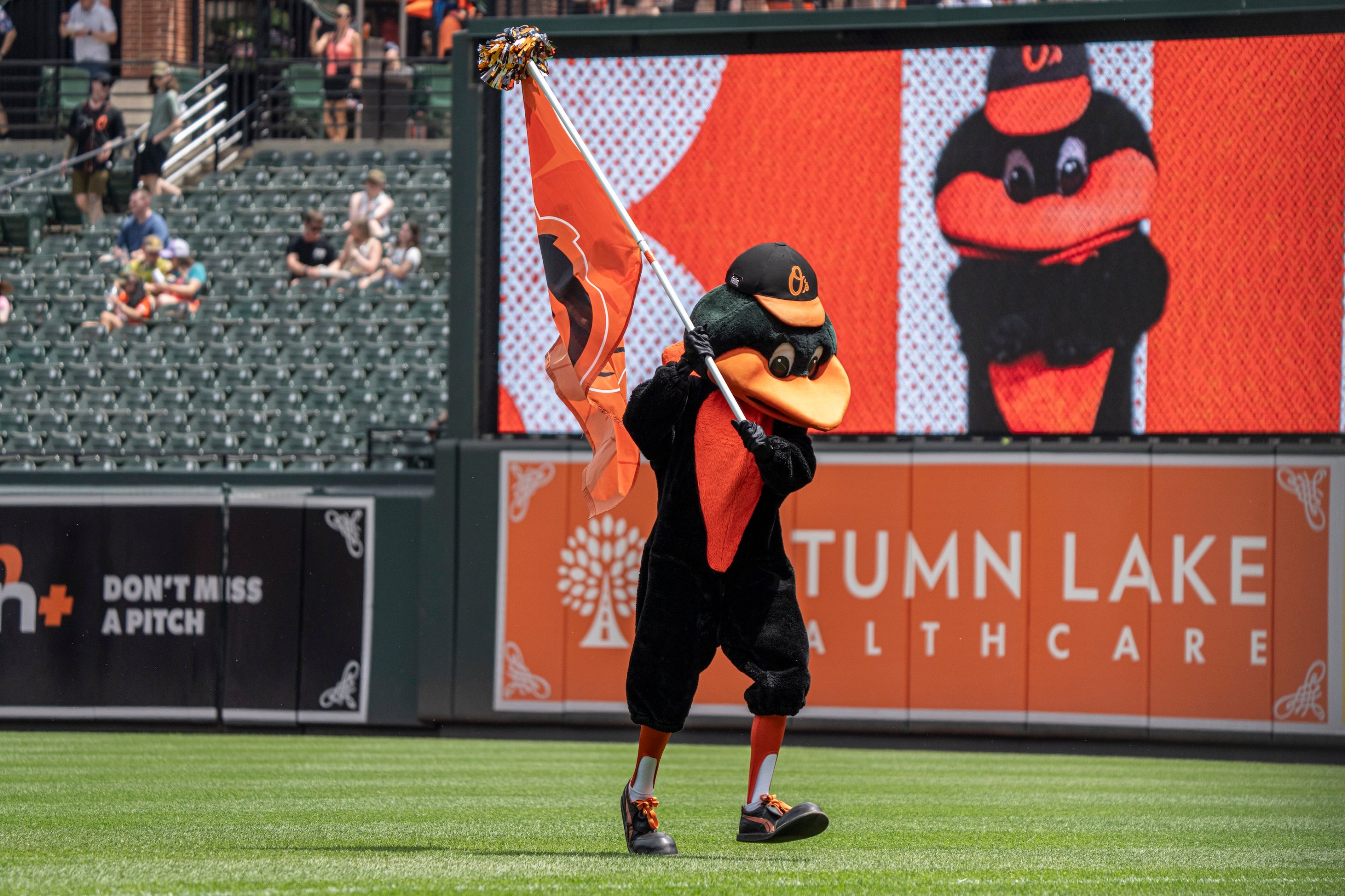
The organization began that work this week with a round of layoffs that hit 16 people, including the team photographer and the person who wears the Oriole Bird mascot costume. If you allow the guy whose job it was to spray fans with water to skate on all the team's offensive prospects being mid in the same way, have you really created a culture of accountability? Those surely aren't the Orioles' only offseason moves, but it makes for a dispiritingly familiar start. You've got some marginal cost savings achieved through a roughly equal amount of bloodlessness and poker-faced bloodthirst, and some familiar assurances delivered with notably familiar assurance—something like more of the same, from people who know exactly how much of that they can get away with.