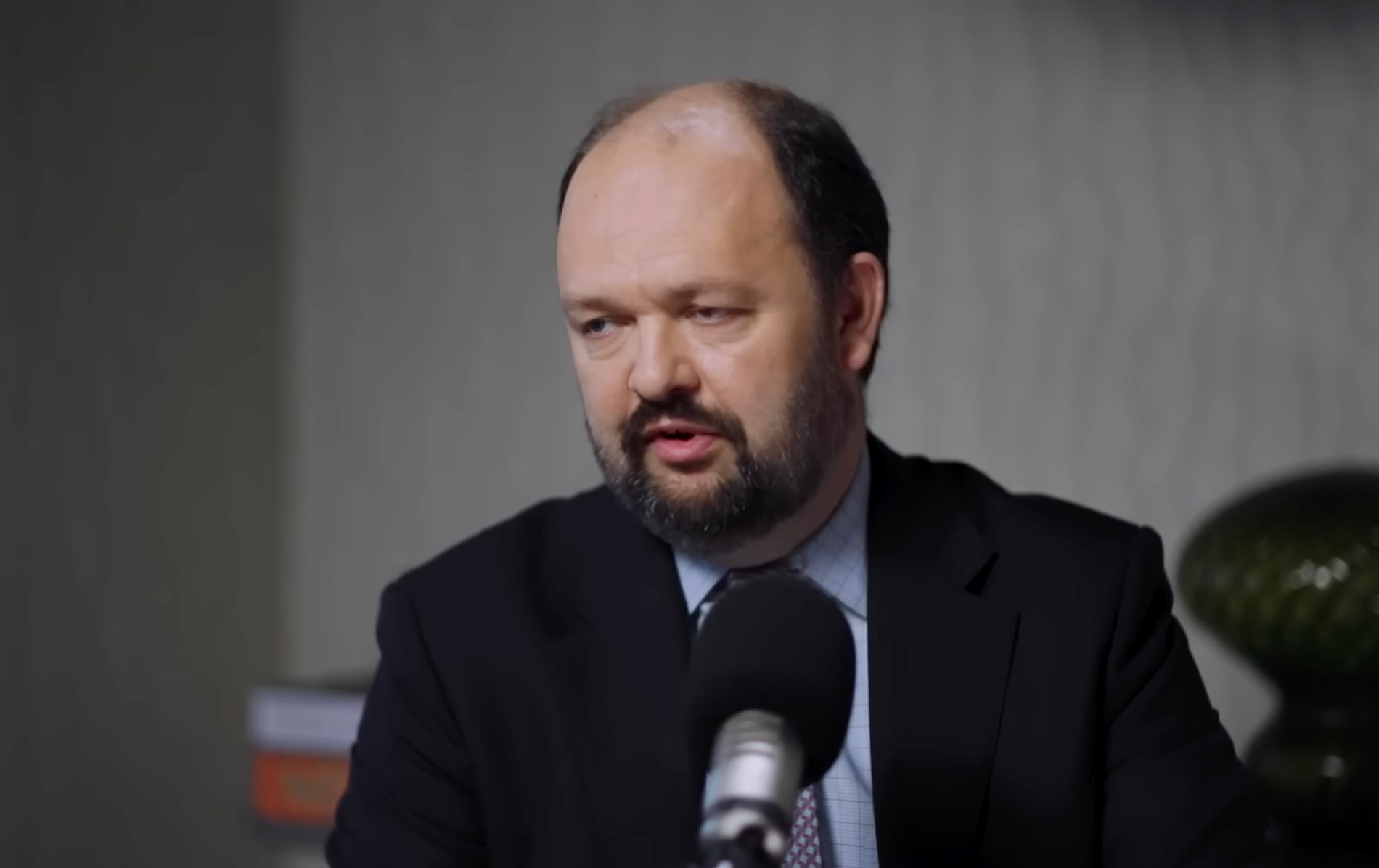


On Oct. 9, the New York Times reported that UFC veteran Tim Kennedy was recovering in the Walter Reed National Military Medical Center after he'd been shot three times while conducting a deadly, murkily defined operation with Erik Prince's private military group in the remote highlands of eastern Democratic Republic of Congo against Rwandan-backed rebel group M23. The constellation of proper nouns in that sentence is staggering, and lights the way to understanding the strange, idiosyncratic state of affairs in one of the most mineral-rich areas of the planet. I am going to walk you through this story, proper noun by proper noun (out of order), in hopes of untangling the messy web.
Democratic Republic of Congo
A few billion years ago, the large-scale geologic province known as the Congo Craton formed. Cratons are geologic provinces that have survived the endless churn of tectonic activity that recycles most of the Earth's crust, meaning they contain some of the most ancient rocks on the planet. In central Africa, the Congo Craton is overlaid by the massive and comparatively young Congo Basin, a sedimentary complex that contains the largest deposit of cobalt in the world, in addition to huge amounts of copper, gold, tantalum, and other valuable minerals.
Zooming ahead several million years, the Congo was the subject of intense European colonization, though the region's imposing natural barriers prevented Europeans from really getting in there and ruining stuff for a very long time. Under King Leopold II, the Belgians inflicted some of the worst atrocities of the 19th century on the Congolese population while ransacking the country for rubber, gold, and copper. Over the next eight decades and through both World Wars, the Belgians murdered and mutilated as many people as it took for them to control and expand the country's mining industry.
The DRC decolonized relatively quickly after World War II, as tiny, war-ravaged Belgium had no way to exert control over the huge swath of territory and its increasingly active independence movements. After considerable upheaval, the country gained its independence and held elections in 1960. Patrice Lumumba had less than one year in power before the U.S. realized that pan-Africanist lefty state control over the mineral resources of the Congo would present some tricky long-term questions, at which point the CIA helped kill him. He was replaced with a friendly dictator.
Since then, said mineral resources have been an object of competition between U.S., European, and Chinese interests. The logistical challenges of extracting these minerals and getting them to market have motivated all parties to do whatever they can to keep the central state as weak as possible. The power vacuum created as a result means that the country has been engaged in what can fairly be termed a low-grade civil war over the past few decades, especially in that remote, mineral-rich eastern region. This brings us to:
Erik Prince
Prince is a member of the hyperwealthy DeVos family, known for its long-running war on American children's cognitive futures and American adults' financial futures thanks to their anti-education advocacy and the pioneering multi-level marketing grift Amway, respectively; they also own the NBA's Orlando Magic. Prince is most notorious for operating Blackwater, a pioneering venture in the fields of private military contractorship and civilian murder. Since he left that company early in Barack Obama's first term, he's kept at his twin passions around the globe under stranger, more integrated guises. Prince has gotten involved in South Sudan, Libya, the United Arab Emirates, and Ecuador, and has worked closely alongside Russian paramilitaries, Chinese state-affiliated conglomerates, and the Donald Trump administration.
Under Trump 2, Prince has been a key player in U.S. efforts to break Chinese control of Congolese cobalt. Trump reached an agreement with the DRC in Dec. 2025 to buy a huge amount of copper and cobalt, resources whose extraction is only possible with the help of a bunch of guys with guns. Thankfully for Trump, Erik Prince's Vectus Global signed a five-year deal worth "several hundreds of millions of dollars" with the DRC one year earlier to "provide security and mining services," per the Times, which, wait, quickly:
The New York Times
The New York Times is a daily newspaper based in Manhattan.
Back to Erik Prince
Vectus is helping ("helping") the DRC on several fronts, notably tax collection. Some of the tax revenue Vectus collects would nominally be funneled to the state and then paid to Vectus as part of the security deal. I think it's helpful to reframe tax collecting, in this case, less as the fulfilling of a civic function and more as a broad license for Vectus to pay for its stay in the country via mafia-style control over the populace.
Vectus is also conducting a bunch of military operations. Against whom? Due to the region's combination of mineral wealth, geographic isolation, and weak state power, eastern Congo is crawling with various armed groups. The most powerful group is M23.
M23
M23 is a Rwanda-backed Congolese rebel group maintaining a low-level insurgency in the border provinces of North and South Kivu. The Rwandan government has been increasingly aggressive in agitating along its western border over the past decade, especially as its economy has boomed thanks mostly to its increasingly close and troubling relationship with the UAE. M23 is Rwanda's wedge, and has been very successful, having captured regional capital Goma in Jan. 2025 and recruited a former DRC president to their side.
Tim Kennedy
Tim Kennedy is a wackadoo UFC veteran who once tried to fight my former boss Tim Marchman and who has made the pivot from being a pretty decent middleweight fighter into a pretty successful right-wing influencer guy. Like me, he is also a podcaster.
Kennedy got in a bunch of trouble last year after a Texas Monthly investigation revealed that he'd been lying about his military record, specifically that he'd been awarded the Bronze Star with valor. Kennedy initially served in the military during the Global War on Terror, then reenlisted shortly after his final professional MMA bout in late 2016. As of July 2025, he was a part-time master sergeant in a Maryland National Guard special operations detachment. He remains the subject of an active investigation for lying about his military service record.
Per the Times, Kennedy was part of a group of Vectus personnel ambushed by M23-affiliated forces in September. Recent fighting has concentrated around the Minembwe Highlands, a strategically important area in South Kivu. Several Colombian mercenaries were killed in early October, and on Sept. 17, Kennedy was part of a three-person group from Vectus accompanying Congolese troops when they were ambushed. A soldier from New Zealand was killed and Kennedy was shot three times. Former Delta Force operator Brent Tucker said on his podcast—these guys all have podcasts—that Kennedy had to wait for around 10 hours to be evacuated, first to Burundi, then South Africa, and finally on to Water Reed.
Walter Reed National Military Medical Center
Under what auspices is Kennedy receiving treatment at Walter Reed? Nobody will say. Space at the National Military Medical Center is (as you might take the place's name to suggest) typically reserved for active-duty troops, though U.S. officials have some discretion to wedge in their friends, which appears to be how Kennedy got in. I underscore this to note that the U.S. has no official military presence in the DRC, though Prince and Kennedy are both close to Trump, with the former's various companies serving as unofficial agents of U.S. policy abroad.
The U.S. policy being carried out is the preferential extraction of valuable minerals, which requires sustaining a low-grade level of violent, quasi-colonial control over the region. The guys the Trump administration has doing that on its behalf are mendacious podcasters and Betsy DeVos's freak brother.