It's almost time for the World Cup. Before the tournament, we'll be previewing each of the top 15 teams by FIFA rankings that made the tournament. Why the top 15? Because that's how many we needed to do in order for the USMNT to make the cut. You can read all of our previews here.
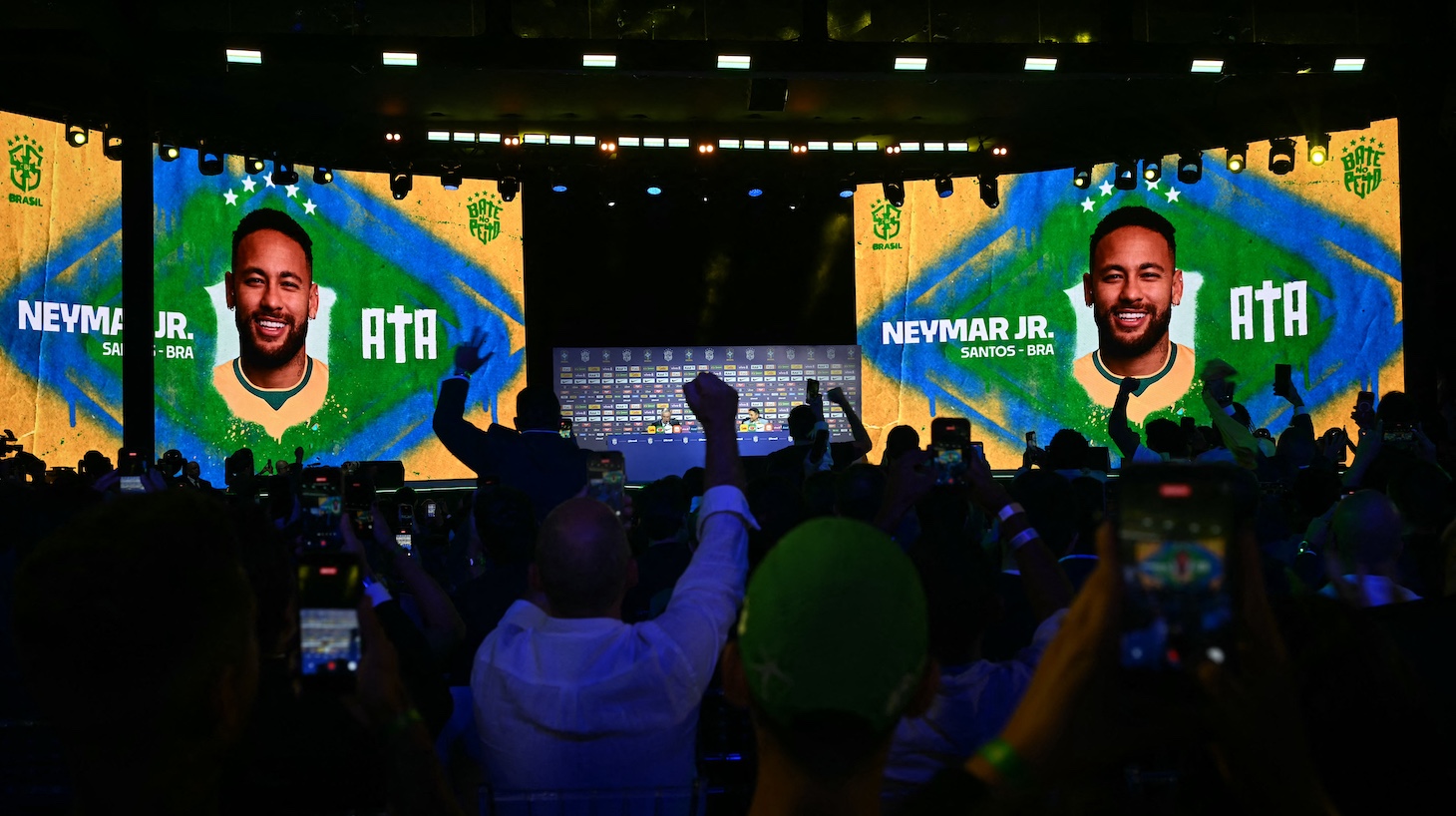
It's quite possible that the best moment of Brazil's 2026 World Cup happened a month before the tournament even started. The day was May 18, the occasion the announcement of World Cup roster. The tension was high, almost all of it weighing on whether or not Neymar, in what would be his first Brazil appearance in two years, would get called up. When manager Carlo Ancelotti did read his name, the country went wild.
Since last we checked in on Neymar, when he left Paris Saint-Germain for Saudi Arabia's Al Hilal in the summer of 2023, things have basically only gotten worse. A couple months after making the move, Neymar tore his ACL in a match with the Brazil national team and missed an entire year. Not long after coming back from that, he suffered a series of hamstring injuries that again kept him off the field. All the time out, coupled with the obscene salary he was pulling down, soured Neymar's relationship with the club. Right when he was reportedly rounding into fitness, the club decided not to register him for the second half of the league season, surely thinking the odds he could stay healthy enough to contribute were low. Eventually, with about six months remaining on his deal, Al Hilal and Neymar announced that they had agreed to terminate his contract and part ways. In total Neymar appeared for Al Hilal in seven matches over a period of a year and a half.
If Neymar's original choice to join Al Hilal signaled something of an end to his serious club career, then the ruinous injuries threatened to spell an end to his playing days altogether. It was no surprise when he had very few suitors coming off his contract termination. With a still broken, unreliable body, and desperate for a place to heal and play and maybe realize his last remaining dream to make the next World Cup, Neymar went to just about the only place that would take him, back home to Santos.
Neymar's return to where it all started was met with an outpouring of affection from fans of Santos, of his, and of Brazilian soccer. What it did not lead to, however, was immediate returns. The bulk of Neymar's first season back in Brazil was marred by ineffectual performances as he tentatively explored the dimensions and limitations of his new body, by inexpert assistance from unremarkable teammates (Santos had just the season prior been promoted back into Brazil's top division, and though they did spend some money to try to build a solid team around their prodigal son, the squad remained threadbare), and by yet more nagging injuries. Santos spent the entire season in and around the relegation zone, flirting with a disaster no one seemed capable of rescuing them from.
Though Neymar's actual play elicited little fanfare, his name still boomed. The big question coming into each international window was whether Neymar would get called up. Each time, Ancelotti declined to bring him in. Whenever he was asked about it, Ancelotti's response was short and consistent: Neymar's talent was not in doubt, but he would have to prove he was physically fit enough to withstand the rigors of the game before Ancelotti would consider him. As had been the case even before the ACL tear in 2023, Neymar's body could not consistently comply with that mandate. He struggled to stay healthy, struggled to demonstrate the persistence of his old talent in more than flashes, struggled to lift a bad Santos team out of the relegation places, and failed to affirm his case for a spot with the seleção.
The nadir came in November. After sitting under an avalanche of criticism of his fitness and his play, with Santos in the drop zone with less than a month left in the season, Neymar had to be substituted out of a Nov. 19 match against Mirassol, a game in which he'd scored his first goal in three months. Reports the next day diagnosed him with another knee injury. The knee was to require arthroscopic surgery, which could very well bring an end to his season and to Santos's hopes of avoiding relegation. Neymar had signed a one-year deal with Santos upon joining, which was just weeks away from expiring. He certainly wouldn't stick around for a season in the second division, and it was hardly a guarantee whether any other serious club would even want to take a risk on him.
Not long after news broke about his knee, new reports said Neymar had decided to go against the Santos medical department's advice by playing out the string of the campaign, putting off any surgery to the offseason. Should his unstable knee receive even more damage, it surely would've killed off his already dwindling chances of making the World Cup roster, and potentially even his career altogether. After all, on the other end of another long injury layoff, and no hope for a swan song with Brazil, what would Neymar even have to play for? It seemed to me at the time that Neymar had seen the end of his career staring him in the face, and, after several years of injury after injury, of hopes kindled and then dashed, of more infamy than acclaim, he decided to risk it all, betting that either he would save Santos's season and get to continue chasing his World Cup dream, or he would go out in a blaze of glory, martyring himself for the one club and fan base that still loved him unreservedly—either fate preferable to the slow fade into oblivion he had been heading toward over the previous two years.
In the end, the bet went his way. Trundling along on a heavily bandaged leg, Neymar was outstanding in the run-in for Santos, leading the team to three consecutive wins to end the season, which put them four points and five places above relegation. The offseason surgery went well, and since then he has enjoyed his healthiest and best form in years. Since mid-November, Neymar has played 22 games and notched 18 combined goals and assists.
And yet, for as well as Neymar has played over the past seven months, his path back to the national team was never a given. His Santos team is still pretty bad, currently sitting just one point out of the relegation zone. His health has still been a little erratic, even if he hasn't missed anywhere near as much time as before. Case in point: he announced a new injury just days after getting picked for the World Cup, and he still isn't healthy yet. He remains a controversial, often distasteful figure, seen most recently when he got into a physical altercation in practice with a young Santos teammate, the 18-year-old Robinho Jr. (yes, that Robinho's son). And on the eve of last month's World Cup roster announcement, Ancelotti still had not hinted one way or another whether he'd seen in Neymar's form what he was looking for, or if in the end he'd start his tenure as Brazil coach with a clean slate, free from the circus that always surrounds him.
Ultimately, Ancelotti called Neymar up, to the clear, unbridled joy of millions of Brazilians. It's important to note that not everyone in Brazil was in favor of the decision. Part of it is well-worn exhaustion over the coddling of yet another misbehaving, unrepentant superstar soccer player who, outside of the context of the sport and its cultural position, seems to stand for little more than the impunity of fame and wealth. A separate, less defensible part of it comes from the same conservative cliches about ill-discipline and pridefulness that tend to dog players of Neymar's complexion and athletic free-spiritedness. In the media especially, so much of the sentiment I saw from sports journalists there leading up to and even after the roster announcement was that Neymar hadn't done enough to represent the country in the U.S. this summer. It's hard to square that notion with the scenes the announcement itself inspired, though. Thousands of Brazilians were sent rapturously into the streets just at the reading of his name. Clearly, more than anyone else on the team, Neymar "represents" something to large swathes of his countrymen that no one else on the team does.
I can't tell you whether or not Brazil is going to win the World Cup. I can say that I don't count them as one of the biggest favorites alongside Spain, France, and Argentina. I can also say that I believe their chances are stronger with Neymar than without him, since even this hobbled, 34-year-old version brings things to the team on and off the pitch that no one else can. Most importantly, I can say that soccer is in a real sense a means to an end, that end being the collective expression of fellow-feeling and representation, as channeled through the medium of an individual or a team. The local response to Neymar making the team is a reminder just how ferociously fans will cling to those individuals.
Who Is Their Main Guy?
That Neymar is still the main guy here isn't really a good thing. The better ages of Brazilian soccer wouldn't have had any need of him. Back when Brazil was Brazil, they constantly churned out creative geniuses and dribbling virtuosos of this sort, and so there would have been several younger, healthier options to provide what a 34-year-old Neymar could bring. But this is not one of the better ages of Brazilian soccer. And in this one, there is legitimately not a single player on the roster who can move and pass like him.
The good thing about Brazil's chances at this World Cup is that I think they can get pretty much everything they need from Neymar without even having to use him much. Even though he remains the most talented player in the squad, I'd be surprised if he starts a single game this summer. He still has his world-historic vision and passing ability, and is still very difficult to take the ball off of in tight spaces, but there's no denying that he is much stiffer than before, is a total liability without the ball, and likely lacks the stamina to contribute at peak levels for anything close to a full match. How, then, could he be considered Brazil's main guy?
The answer there I believe is more about his off-field impact. Neymar is for most of his teammates their biggest idol, a living legend. The prospect of playing with him and for him, of helping him realize the destiny that was once foretold by lifting Brazil's sixth World Cup trophy, has to bring the group a level of excitement and motivation that couldn't be replicated any other way. If Neymar is a galvanizing force within the team, I also think he is something like a shield between the team and the heavy pressure that always accompanies Brazil at a World Cup. Rather than this unproven, leaderless group trying themselves to manage the pressure of Brazil's longest ever World Cup drought, Neymar can stand in as the lightning rod, the focal point that absorbs all the attention and expectations from outside, liberating the rest of the group from facing it head-on. And because he got into the roster by the skin of his teeth after a long absence, I think there's less of a chance that his presence and lack of playing time will create the kind of negative atmosphere that might otherwise come about should a team fail to fluff its biggest ego. Plus, there is no manager better at navigating tricky locker rooms like this than Ancelotti.
The dynamic is quite similar to the one with Lionel Messi and Argentina. Even if Neymar won't contribute first-hand to Brazil's efforts to the same extent as Messi has Argentina's, his psychological and symbolic impact could prove just as crucial here as it has there. In that way Brazil sort of gets the best of both worlds: Neymar can be the main guy, without actually having to be the main guy.
Who Is Their Main Defending Guy?
Though I am bullish on Brazil's chances this summer, I do not expect any kind of return of the old jogo bonito. The team is likely to play a nominally defensive game, built around sitting back without the ball and, after forcing a turnover, trying to maximize the open-field strengths of the attackers by getting the ball forward quickly, without committing too many numbers forward. That being the case, it is good that Brazil can call on the services of Gabriel Magalhães, the best defender in the club game's best defense.
Gabriel is one of those attacking defenders, in the sense that he is always proactively on the hunt for tackles, interceptions, and clearances. He's a master at winning duels, is incredible at both defending and attacking set pieces, and has an uncanny sense for where to dangle his legs and feet in order to block shots. He's also one of the rare elite modern defenders whose reputation is founded almost entirely on his defensive abilities, as he's nothing special as a passer or ball-carrier.
Brazil is likely to spend a lot of time camped out in its own penalty area, inviting opponents to push high up the field and loft balls into the box in search of a goal. From this deceptively vulnerable position, Brazil will play possum. Behind the overconfident adversaries will be acres and acres of space in which the likes of Raphinha and Vinícius can destroy you. And in front of those opponents will be Gabriel, a brick wall of a man, ready to blast apart any attack and let his own team's attackers do their thing.
Who Is Most Likely To Break Out?
The origin stories of champions are often written only after the ending has been finalized. Because of this, those stories tend to be told with an air of inevitability that doesn't reflect the uncertainty felt in the moment. For example, World Cup winners don't always enter the tournament with a clear, established starting lineup or playing style, their victory preordained from minute one. Instead, teams usually have to discover for themselves within the tournament what kinds of plays and what assortment of players best suit their needs, many times doing so only after suffering adversity of the sort that the post facto hagiographies gloss over. One thing I hope Brazil discovers about itself in the coming weeks is that Endrick is the striker who gives them the best chance to win.
I am nobody's idea of a talent scout, and over the years I have chugged the Kool-Aid of dozens of surefire, can't-miss next-big-things who eventually missed. And yet I am once again guzzling every drop of the Endrick Kool-Aid, because I believe he is the truth.
Endrick seems to me to be the long-overdue heir to great Brazilian center forward lineage. In particular, he looks like a reincarnated Romário, a pocket-sized powerhouse with an wild, unrelenting hunger for goals. It's rare these days to find a true striker who is obsessed with scoring, who can dribble his way out of cramped quarters, who likes to run into space and is fast enough to do damage there, and who has the technique to play difficult through balls and cut-backs to teammates. Endrick, though still just 19 years old, is one of the only players of that ilk today.
His rise couldn't have been better timed. After moving to Real Madrid in 2024, Endrick spent a year and a half toiling on the bench, sitting behind the team's famous forward line, with its names too big to drop and its skills too incompatible to mesh. Looking for more playing time in a bid for a World Cup spot, Endrick left Madrid for Lyon on loan in January. There, he once again demonstrated why he is the most hyped Brazilian of his generation.
Brazil's attack is stacked, but its major flaw is its shortage of out-and-out strikers. Thus far in the lead-up to the World Cup, Endrick has not been able to claim that spot for himself. However, if Ancelotti shows himself to be as wise and sensitive to emerging synergies with Brazil as he's always been in the club game, I think he'll see that Endrick could very well be the piece he's been missing to the puzzle he and the team will have to put together on the fly.
Who Is Most Likely To Eat Shit?
Vinícius is one of my favorite players to watch. I enjoy the relentlessness of his game, I admire his unshakable self-confidence, and I greatly respect his commitment to fighting racism in the game. So I don't really mean it as a criticism when I say that part of the "necessity" of bringing Neymar to the U.S. is an indictment of Vinícius.
For as great as Vinícius is, his standing as the best Brazilian of his generation says a lot about how far the country's standards have fallen. I don't know if there's ever been a time where the level of the best Brazilian on the planet has been as low as it is right now. Again, Vinícius is inarguably a great player. But his skill is more about quantity than quality, more about him trying over and over and over again and eventually succeeding rather than being capable of anything particularly unstoppable or spectacular. Scores of better Brazilian attackers have been capable of much higher quality touches, dribbles, passes, and shots, and the best of them all, like prime Neymar, provided both quality and quantity to the highest extent.
You can see evidence of Vinícius's lack of historic greatness in his performances with the national team, which have been almost uniformly mediocre. The Neymar-less Brazil led by Vini has rarely looked even decent. I think you can find another source of evidence in Real Madrid's pursuit of Kylian Mbappé, and the way the managers there (including Ancelotti himself) have tended to prioritize the Frenchman. After two consecutive seasons without a trophy—the kind of dry spell that in Madrid is considered equivalent to the Dust Bowl—we're nearing the point where the club's attacking trio of Mbappé, Vini, and Jude Bellingham will either have to come good or split up. On current form, and in light of each of the three's contract situations, you'd have to say Vinícius looks like the most expendable today.
For all these reasons, Vinícius is the Brazilian who most needs a big tournament. A couple seasons ago he was playing the best soccer of his life, but his momentum has been derailed after failing to win the Ballon d'Or and sharing a team with Mbappé. In the aftermath of that Ballon d'Or result, which he (over-dramatically) considered a blatant miscarriage of justice, Vini tweeted that the world was "not ready" for how he was going to redouble his efforts to demonstrate the magnitude of his talent beyond any shadow of a doubt. Nearly two years later, the world is still waiting, and it might not wait much longer.
How Can They Win It All?
The Brazil that can win the World Cup very likely doesn't yet exist. As mentioned in the Endrick section, the squad is still in search of its ideal lineups, relationships, and patterns. I do believe the component parts are there for a championship-worthy team, and most of all I trust Ancelotti to find it if it does exist. The process will take some work, some hard lineup calls, and it's no guarantee they pull it off in time. But if things do click, they can certainly go all the way.