

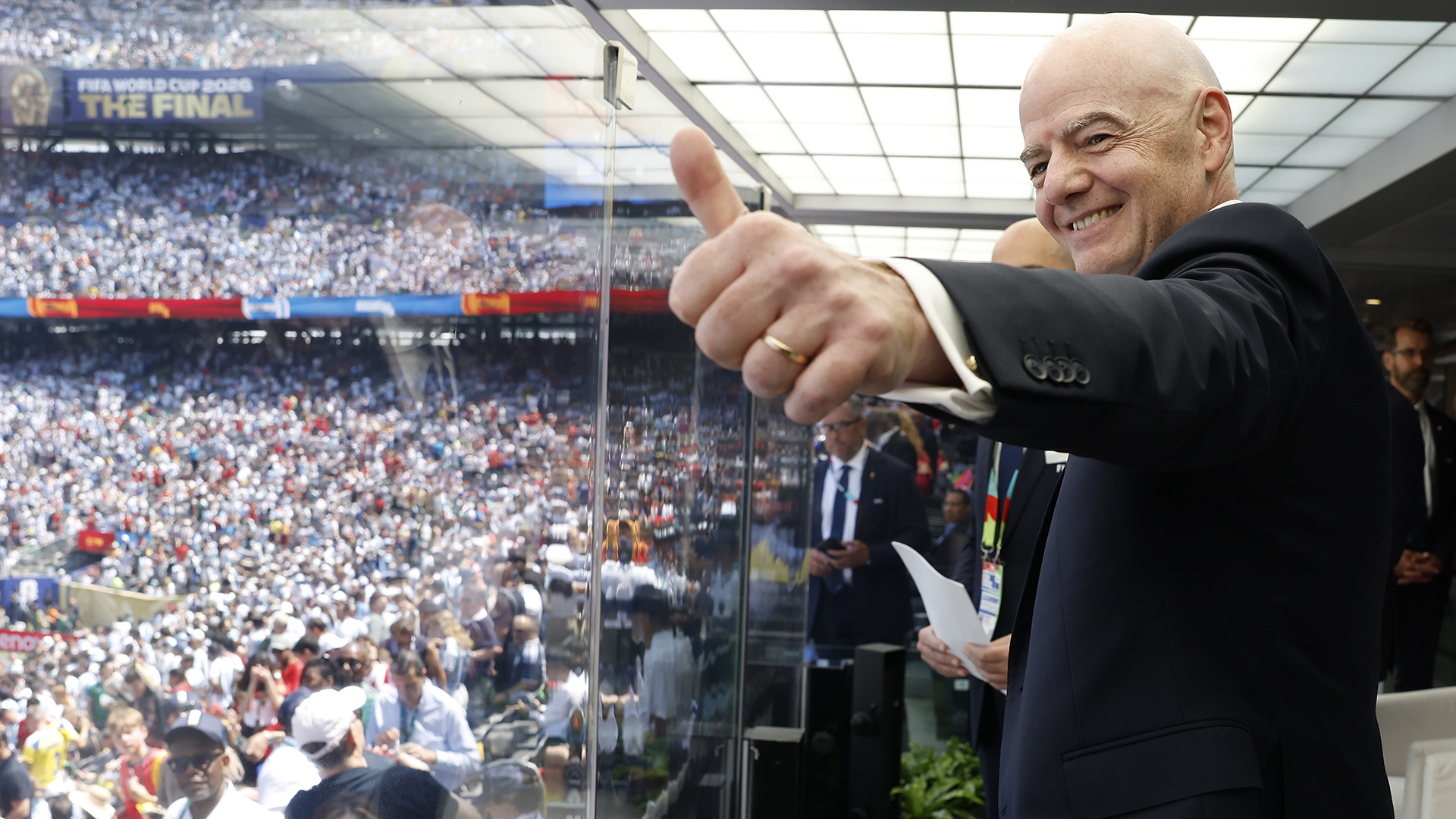
All Gianni Infantino needed was patience. Memory for scandal is short, even in a sport as massive as soccer, and whatever controversies the FIFA president willingly courted during the 2026 World Cup would have soon faded into the background as he won what was going to be an unopposed re-election next March. He could have ridden off into the sunset in 2031 and made millions off the connections built during his tenure at the head of FIFA. That wasn't enough for him, though, and so now the walls are instead closing in, a self-inflicted error caused by greed and a plan to turn the World Cup into a private equity playground. The post-tournament afterglow was short, and Infantino faces opposition from most (but, crucially, not all) corners of the soccer world, his ending looming on a quickly approaching horizon.
UEFA's threat to boycott the World Cup if Infantino went ahead with his investor sell-off was the first domino in a process that ended with Infantino retracting the proposal himself. Since then, it was only a matter of time before the question became what sort of fallout would be in store for Infantino due to his enormous failure. It wasn't surprising that the gears of his potential ousting began turning in Europe once more. First, UEFA responded to Infantino's retraction by saying its leaders had "lost confidence" in him. That phrase served as both a statement of UEFA's enduring disapproval and a further threat, hinting at the possibility of a formal vote of no confidence, which would be the first step in ejecting Infantino from FIFA. Soccer's national and continental associations then followed suit. Wales first made that move on Wednesday, withdrawing its letter of support for Infantino's re-election. England's Football Association soon followed, and the ball kept on rolling from there. Serbia, Sweden, and Finland (which first broached the topic last week) have all officially withdrawn their support. The message, at least from certain parts of the soccer world, is clear: Infantino must go.
Infantino isn't on an island all alone, however. His work in courting smaller associations around the world has built for him a base of support that has held up even in this period of blunder. As of now, Infantino has reportedly received reiterations of support from about 15 nations, including Qatar and Morocco, two World Cup hosts (the former hosted in 2022, and the latter will be one of the co-hosts in 2030). Egypt, Sri Lanka, Lebanon, and Kuwait round out the group of seven nations that have already gone public with their support, with eight others reportedly doing so in private. The big domino yet to fall in either direction is Saudi Arabia, which will host the 2034 World Cup. The awarding of that tournament to Saudi Arabia was one of the bigger controversies of Infantino's tenure.
Still, even with some blocs of pro-Infantino sentiment, this is not going to go away between now and March, and perhaps even beyond if Infantino manages to survive the election. Martyn Ziegler of The Times reported on Monday that there is a growing coalition of countries based in Europe, North America, and Asia that would be prepared to "paralyze FIFA" in order to force Infantino out. (As a side note, Ziegler has done heroic work this past week on this story. His original story in The Times broke the news of Infantino's plan, and he followed that up with news of UEFA's boycott threat and a legible recap of how Infantino arrived at the investor plan in the first place.) A source told The Times that this coalition would be prepared to sit out of FIFA council meetings and would oppose ratification of any FIFA policies enacted while Infantino is still president.
UEFA has also ratcheted things up another notch, sending FIFA a letter outlining possible legal action:
Uefa hereby gives formal notice that it is actively considering legal action, arbitration, and/or regulatory complaints arising out of and in connection with the FFE plan proposed by Fifa and all related matters.
You and Fifa are required to take immediate steps to identify, locate, and preserve all documents and electronically stored information described in this notice that are in your or Fifa’s possession, custody, or control.
These obligations arise independently of any internal retention policy you or your organisation maintain and supersede any routine document destruction or deletion policies that would otherwise apply.
As reported by The Times, the letter's signatories include 14 soccer executives, most notably former Arsenal manager and current FIFA head of global development Arsène Wenger, who gave a statement to Ziegler on Tuesday, clarifying that he was not involved in the FFE plan and that he supports the decision to end the project:
BREAKING: Arsene Wenger says decision to withdraw World Cup sell-off plan "absolutely necessary" pic.twitter.com/fAkMloRDSU
— Martyn Ziegler (@martynziegler) August 4, 2026
What happens now? That's the question hanging over every action taken over the last week. There are, to my eyes, three possible resolutions to this debacle. The first is the simplest: Infantino resigns, and then goes off to still make the millions he was always going to make after his tenure at FIFA ends. The second is that a credible challenger arises ahead of FIFA's elections in March's election. This looked likely at first, with UEFA reportedly considering PSG chairman Nasser Al-Khelaifi as an opponent, but with Qatar's seeming support of Infantino, that no longer seems like a good bet. Another name floated as possible opposition is CONCACAF president Victor Montagliani, who has been at the center of controversies in his tenure there, including a potential role in a sexual assault coverup with the Vancouver Whitecaps. Elsewhere, Sheikh Salman bin Ibrahim Al Khalifa, the Bahrani president of the Asian Football Confederation, is eyed as a potential candidate, and FIFA secretary general Mattias Grafstrom looks to be the institutional choice. (Given how Infantino's tenure has gone, even Grafstrom's full-throated rebuke of his boss might not distance him enough.)
There is a third option, though, and it's the most depressing one. Let's call it the "Ah, well, nevertheless" result: Infantino refuses to resign, the opposition doesn't unify around a single rival candidate, and he manages to get enough votes in March to win re-election for what would be his final presidential term. This is the worst-case scenario for everyone but Infantino himself, save for maybe the associations that still back him. It's also where the supposed threat of a paralyzed FIFA would come into play. Would UEFA, CONCACAF, and AFC band together to make Infantino essentially a lame duck for four years? Would Infantino cave and resign after winning re-election, to leave somewhat on his own terms after scoring one final personal victory? Or would that coalition fall apart as the 2030 World Cup draws nearer?
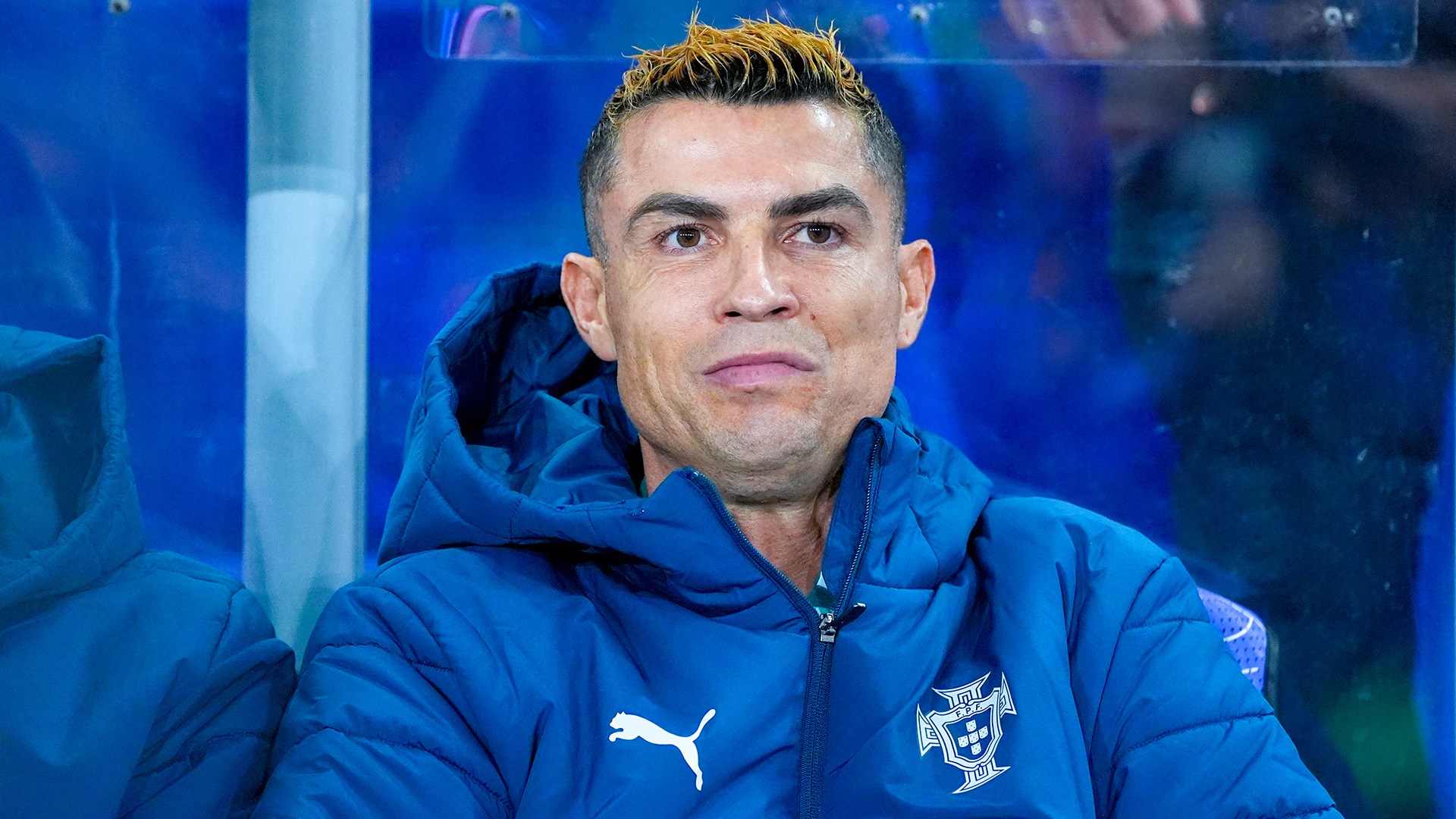
These are the questions that will continue to swirl around soccer's governing body. The one thing that has been unequivocally answered, though, is the matter of Infantino's legitimacy. Despite the issues surrounding the 2026 World Cup—from the ticket prices, to the Cristiano Ronaldo and Folarin Balogun suspension sagas, to the Donald Trump bootlicking—Infantino was a lock to finish out his FIFA tenure on his own terms. Now, thanks to him overplaying his hand, Infantino has created the context for an uprising. Only time will tell if he can pull another trump card out from his sleeve.