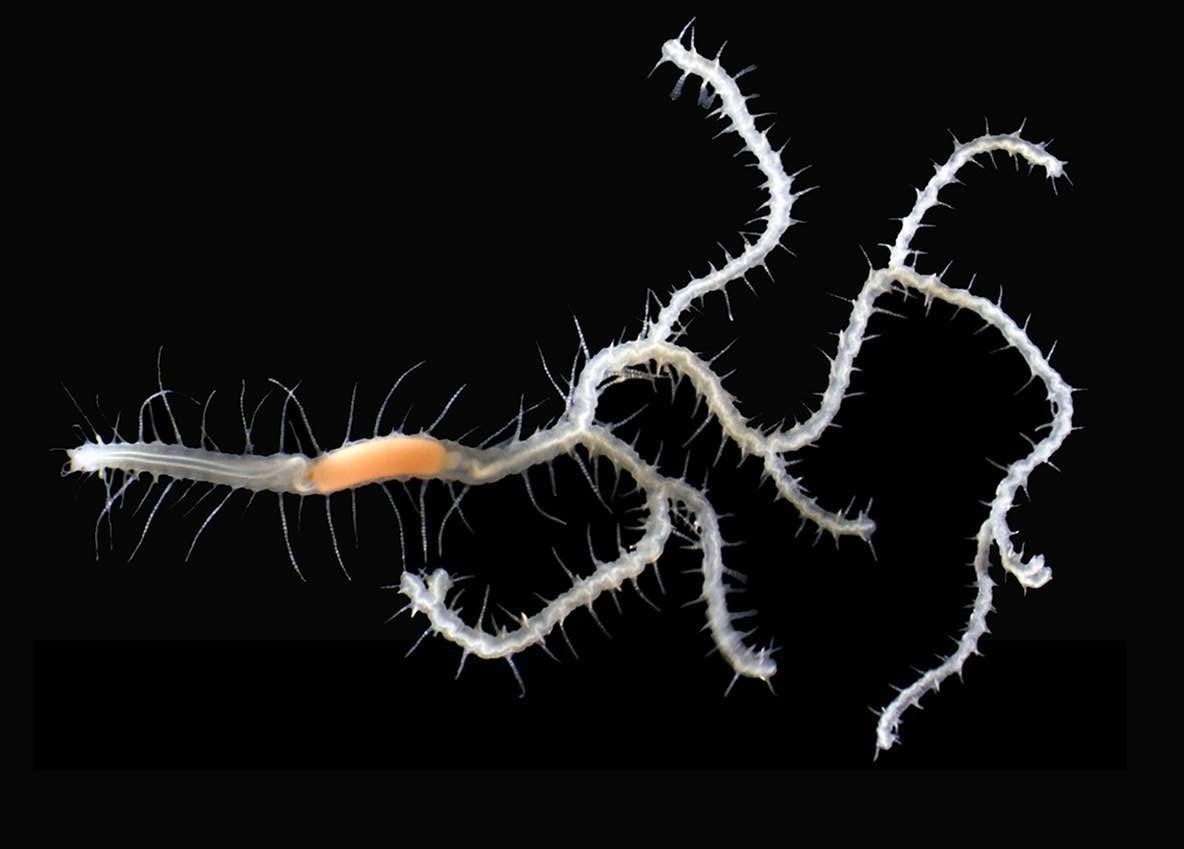


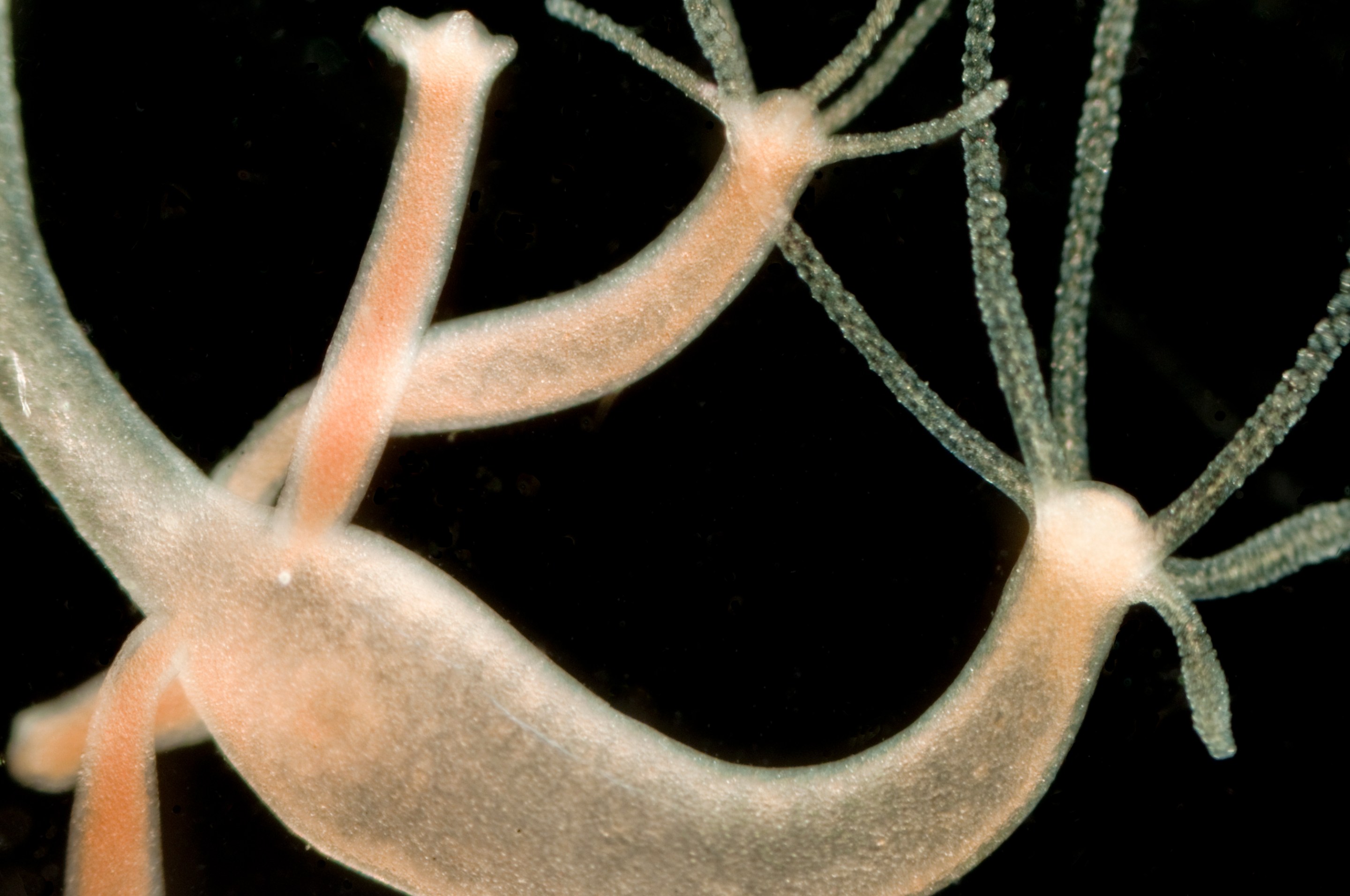
Hydras, the tiny freshwater invertebrates that resemble tentacular palm trees, are often considered immortal. They fasten themselves to rocks with their sticky foot, stretch out their tube-shaped body, and unfurl the stinging tentacles that halo their mouth to catch prey that passes by, an activity they can do ad infinitum if given the right conditions. Although they can be felled by predators or disease in the wild, in the lab, the little animals seem resilient to anything. If you cut off their head, they will simply grow a new one (and sometimes the decapitated head will regrow the rest of its body.) If you mince or dice a hydra, each segment will regrow into a hydra. If you blend a hydra and run the resulting mush through a centrifuge, that mush will reorganize and regrow into a hydra.
But hydras do not just regenerate lost body parts. They regenerate their own cells, turning over their entire bodies in less than a month. In the lab, hydras can renew their cells indefinitely, replacing old and worn cells with shiny new ones. We replace our cells too, but as we get older we start to make mistakes and lose our ability to replace cells that no longer work. But the hydra renews its cells from three different populations of stem cells and makes extremely faithful copies. This means the creature keeps "all its characteristics unchanged for an almost unlimited time," per a 2014 paper. This quality has earned the hydra the nickname "the eternal embryo" and thrust the creature into the spotlight of anti-aging research.
At least this is the lot in life for all other hydras. The brown hydra Hydra oligactis is not so lucky. When the water is warm, the brown hydra defies aging like any other of its ilk. It reproduces by budding, creating clones of itself that pinch off and become new hydras. This asexual lifestyle allows the hydra to reproduce without any signs of aging. But when temperatures dip to around 50 degrees Fahrenheit, according to a new paper in the journal Aging Cell, the brown hydra stops budding and instead produces sperm and eggs. In other words, the hydra transforms and prepares itself for sexual reproduction. But this milestone comes at a brutal tradeoff. After the hydra reproduces sexually, it loses its immortality. It begins to die. Sex! But at what cost?
The brown hydra is only immortal under ideal conditions, when it is being fed and the temperature is right. But when the animal faces stress, such as cold temperatures, it converts to sexual reproduction, which the researchers suggest is an adaptation given that hydra embryos can survive colder temperatures than the adults. The researchers found that in order to produce sperm and eggs, the hydras experienced apoptosis, or programmed cell death. They also found the aging hydras had declining levels of taurine, an amino acid that helps regulate the human body. When the researchers gave the aging hydras taurine, the hydras switched back to an asexual lifestyle, and, by extension, immortality.
According to the researchers, this new paper raises important questions about the genetics of aging, both in hydra and in humans.
According to me, the new paper raises a more important question: Would you rather have sex or live forever? There are certainly pros and cons on both sides, pros and cons whose subtleties I cannot fully discuss without risking an HR violation at my beloved workplace. But perhaps one of you can make the best case for this choice in the comments below. Which would you choose? Carnal relations or eternal sensations? A deathless wish or a breathless squish? Tuck Everlasting, or Cuck Everlasting?