


I can't help but empathize with the heirloom tomato this time of year. The first BLTs have been eaten; the novelty has worn off. Stacked on farmers' market tables like milk bottles in a carnival game, late-summer tomatoes start to look a little worse for wear. Like me, they are often etched with lines from spotty hydration. They're a little busted, a little bruised.
Also like me, they retain in their haggard hides a secret well of great beauty and value. If you find yourself with a surfeit of ugly heirloom tomatoes this summer, there is only one thing to do: Make tomato water.
Tomato water is the purest expression of a tomato—all heart, no husk. It is an excellent way to sneak umami, a word my editor told me I was only allowed to use once in this blog, into salad dressings and sauces and negronis. The water inside of a tomato is packed with glutamates, the savory compounds derived from having a thick ass. Those glutamates are the building blocks of MSG, which stands for Making Stuff Good. The magic trick of tomato water is that it allows you to make things more savory without necessarily making them salty.
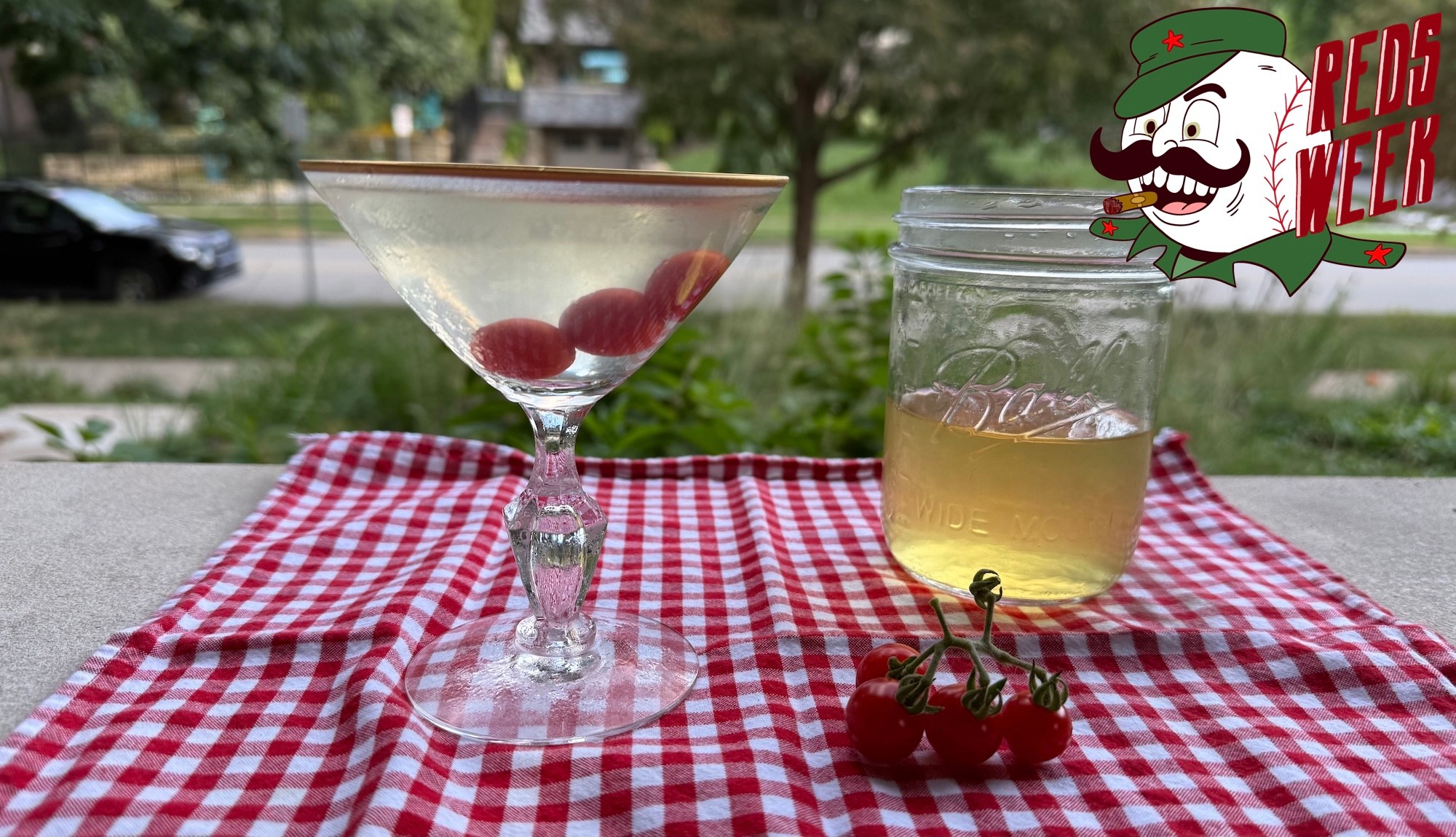
That makes it especially good in a martini. I buy a case of gin every other year so that I can store tomato water–augmented bottles in my freezer for the Lean Times, just like the pioneer settlers. But I also like tomato water tipped into the neck of a Mexican lager (regular or NA), splashed into a vinaigrette, or stirred into a pitcher of lemonade.
Let's drain a tomato!
You will need: a pound of late-summer tomatoes, the uglier the better. You're about to strip the tomato for parts; a beautiful one would be a waste. The kind of tomato matters a bit more. Ideally, you want slicing tomatoes or even cherry tomatoes, which have a higher water content than "paste tomatoes" like Romas or San Marzanos. But if Romas are all you have, don't stress. You can still siphon off their useful fluids. You'll just have a slightly smaller yield.
You may be wondering how many tomatoes are in a pound. I cannot tell you. For big, beefsteaky boys, it might be two. For svelte paste tomatoes, it might be five or six. Trust your gut or just use a kitchen scale. I think everyone should own a kitchen scale, not because it makes you a better cook (it does), but because it allows you to stop washing measuring spoons.
You will also need: a blender, a fine-mesh strainer lined with cheesecloth, and a medium-sized bowl.
Cut off any truly disgusting bits of the tomatoes with a knife, but don't worry about trimming them too neatly. Just hack them into a few big pieces and chuck them in the bowl of a blender or food processor. Blend for about 10 seconds, until you have a coarse puree. Then, pour the whole mess into a cheesecloth-lined strainer set over a bowl.
I can read your mind, and I can tell that you're planning to skip the cheesecloth. You're thinking, I already own a fine-mesh strainer, and it strains things just fine. What do I need with a slip of cloth?
Heed my words: If you skip the cheesecloth, you will not have tomato water. You will have tomato juice. It will be red and opaque with lots of cloudy sediment instead of the translucent, golden hue of plasma. It will make your martini look like a Bloody Mary, and it will make your lemonade look like V8.
Yes, this is primarily an aesthetic concern. But don't you deserve beautiful things? Besides, the fuss will be worth it. Guests will come over and see your spent cheesecloth, wilting over a cabinet pull like a lace handkerchief, and they will think, "WOW. Here is a skilled artisan who manipulates cloth to make cheese, or at the very least, clear-ish liquids." They will be very impressed, and they will try to kiss you.
If you'd like, you can swap the cheesecloth for a nut milk bag. But there is nothing sexy, even conceptually, about a "nut milk bag." Nobody will try to kiss you.
From here, there is nothing left to do but wait. The tomato pulp will take a couple of hours to drain. I give it three. Don't stir the pulp or try to press it through the strainer to speed things up; that is once again the road to Juice. Just wait. After three hours, you should have about 10 ounces of sunset-tinged liquid MSG, to use or freeze as you see fit.
Of course, I think you should use it in a tomato-water martini. I am including the recipe for the martini I enjoy, but you can also just stir ½ to ¾ ounce of tomato water into your preferred gin/vermouth split. I love and cherish all martini drinkers, except for the ones who say things like "Just whisper the word 'vermouth' over the glass."
The Tomato Water Martini
2¼ ounces gin
¾ ounces dry vermouth
¾ ounces tomato water
Stir everything together in a mixing glass or shaker tin over a lot of ice until it is colder than my attitude toward vermouth-haters. Strain into a martini glass and garnish with cherry tomatoes or olives on a frilly little toothpick.
BONUS RECIPE: Tomato Powder
Once you have consumed the martini, you will be steeled for the final task: cleaning out a cheesecloth full of pulpy tomato intestines. Do not throw this out! The heirloom tomato is an object of reverence in our culture, and we must use all of its parts. The pulp can be dehydrated and pulverized into a ruby-red tomato powder, a versatile and appealing spice.
Like tomato water, the powder is a cinch to make. The main obstacle is your patience.
First, glop the drained tomato pulp onto a baking sheet lined with parchment paper. Using a spatula, spread the pulp out into a relatively flat, even layer. Then, let it dehydrate in an oven set to its lowest possible temp: 200°F is ideal; 250°F will do if you check it more often. If you have a convection/fan setting, use it.
Leave it alone and go read blogs for 4–8 hours; the timing will depend on your temperature/oven setup. The goal is a desiccated but unburnt husk of tomato that crumbles easily in between your fingers.
Once you have achieved Peak Husk, remove the baking sheet from the oven, transfer the dried tomato to a spice grinder, and pulse until it forms a fine powder.
Just like that, you have turned bruised, late-summer tomatoes into two useful things. Look at you! You're like Ma Ingalls, drying corn for the prairie cellar! I'm proud of you. You can say umami as many times as you want.