
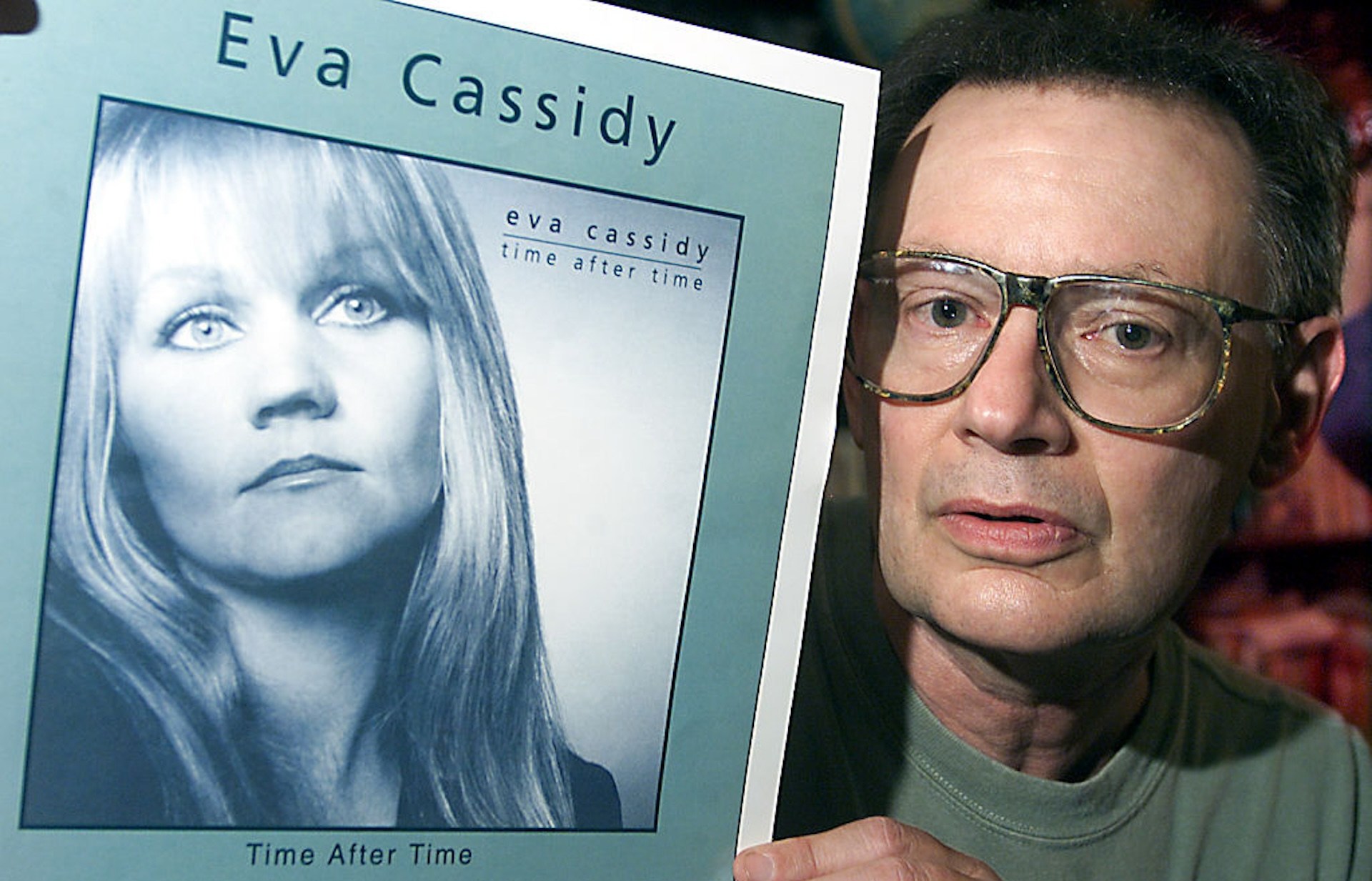
Another new album of old Eva Cassidy recordings, called Jazzed, is about to come out. Cassidy, a peerless D.C. songbird, died 30 years ago next month. Her supply of unheard material ran out long ago. Those who legally control Cassidy's songbook transitioned from merely curating her art, as her label still claims to be doing with the latest project, to altering it. Jazzed gave me the blues.
Cassidy's talent was rare and huge, though it took her dying to get the music industry to notice. And the story of her quiet, relatively anonymous life giving way to massive posthumous popularity the world over is equally amazing. When she was alive and singing, Cassidy was unknown outside the D.C. area, where she was born and raised and stayed until the end. She really wasn't a big draw in her hometown, either. She had a small, hardcore group of local fans who loved her for her pitch-perfect voice and multi-genre musical range, and also for being a serene, sweet soul seemingly as oblivious to her own artistic genius as were all the record-label honchos who rejected her when she was knocking on doors looking for a deal. She paid her bills by working at a plant nursery, not by making beautiful music. Cassidy and her band gigged mostly at bars, never at theaters or music halls. She financed her own recordings, including 1996's Live at Blues Alley, the only solo album she lived to see released.
But right when that record was about to come out, Cassidy began telling friends she wasn't feeling right, and died from melanoma mere months later. Some Cassidy recordings got into the hands of pop influencers in England in the late 1990s, most notably her cover of "Over the Rainbow," and over the next few years she became a phenomenon throughout Europe and then the world. Another big break came when Team USA's Michelle Kwan skated to Cassidy's version of "Fields of Gold" on the way to a bronze medal during the 2002 Olympics.
She has now sold more than 12 million albums, according to Blix Street Records, a small record company based in Gig Harbor, Washington, that got control of Cassidy's songbook from her family shortly after her death and still holds it. And Cassidy's still got commercial life left in her, at home and abroad. Some signs: The Essence of Eva, a documentary from Irish filmmakers Alex Fegan and Malcolm Willis, premiered on PBS this summer. Dave Allen, an Irish heavyweight boxer, used her "Fields of Gold" to soundtrack his dramatic ring walk at Croke Park in Dublin on the undercard of last month's monumental farewell fight from national hero Katie Taylor. A South African theater troupe has traveled around that country for the last few years with a bio-play, The Story of Eva Cassidy, and IN Series, a D.C. dramatic clique, has produced a musical, Chuck & Eva: Songs from the Other Side, built around her too-brief collaborations with go-go pioneer Chuck Brown.
And, not coincidental to her career still showing some vital signs, here comes her label with another record for sale. Not new Eva Cassidy songs, mind you. Just another Eva Cassidy record.
Through the years Blix Street has fought hard to retain its ability to, in the words of a California appeals court in a lawsuit that the label filed against Cassidy's parents, "exploit the rights to the Eva Cassidy audio recordings." In recent press kits, the label cops to releasing "more than a dozen posthumous Eva Cassidy compilations."
To briefly but sincerely be nice to the label, without Blix’s efforts, it's likely no British DJs would have ever gotten their hands on her music and given her career life after death. There would be no plays or documentaries introducing her to new audiences and reminding old ones of her wondrousness. So, sure, the company deserves to be commended and compensated. But how much exploitation of a departed artist is too much? Sometimes, that's a tough question to answer. Not here. Jazzed is too much.
As per its title, Blix is promoting the record as a collection of Cassidy's jazziest recordings, and has her singing over what appears to be both big band and cool jazz combos (oddly, almost no musicians are named in the credits for Jazzed, so it's not even clear if humans are playing).
This follows 2023's I Can Only Be Me, an album that had Cassidy singing in front of the London Symphony Orchestra. Both records utilized what label boss Bill Straw brags are "previously unthinkable technological advancements" that allow Cassidy's golden voice to be digitally removed from the recordings she made with a clique of D.C. players and then placed atop new arrangements of the same songs performed by hired hands the world over. Half of the 10 tracks on Jazzed, and six of the nine songs found on I Can Only Be Me, were also in the Live at Blues Alley set. Cassidy never appeared with the London Symphony, or any orchestra, or big jazz band, when she lived and breathed.
The most offensive track on this latest album of retreads is "Blue Skies," the Irving Berlin chestnut. Producers took Cassidy's voice from the Live at Blues Alley session and brought in somebody named Max Cooper III to sing alongside her. According to press materials, Cooper is a 23-year-old who competed and lost on Season 28 of NBC's The Voice. His vocals were recorded late last year at a Kansas City studio. The results of the Cooper/Cassidy confab are cringy. Cooper comes off as timid and weak next to Cassidy. How could he not?
Then there's "Dancing Cheek to Cheek," with Cassidy's vocals also taken from Blues Alley; "It Don’t Mean A Thing (If It Ain't Got That Swing)," from a 1995 Cassidy appearance at a tavern in Annapolis, Md.; and "Blues in the Night," from a 1995 studio session. All are reimagined here with big band arrangements. Cassidy sounds joyous and bouncy—confident, even—throughout each track.
This is revisionist musical history. Cassidy in the flesh was neither joyous nor bouncy as a performer. For all her god-given gifts, among the more memorable and lovable aspects of her live act came from how reserved and shy she always appeared, even while warbling beautiful melodies or belting out roadhouse blues like nobody's business. She behaved as if she didn't think she deserved an audience. That Eva, the real Eva, is buried deep on this record.
Back to me: I met my wife at an Eva Cassidy show in the mid-1990s, at a suburban pool hall with a cover charge of $3 that was refunded as pool credit. I was crushed by her death and for a time was awed by her career's resurrection. Cassidy's voice still hits me hard enough that I thought I'd want to hear just about anything from her. But the mere idea of Jazzed made it a hard listen. To cleanse my soul after a week of streaming such sacrilege, I sought out the original Live at Blues Alley. I recommend the same for anybody looking for the real Eva Cassidy all these decades after her death. What a great singer she was. What a great record that is. That's how she deserves to be remembered.