

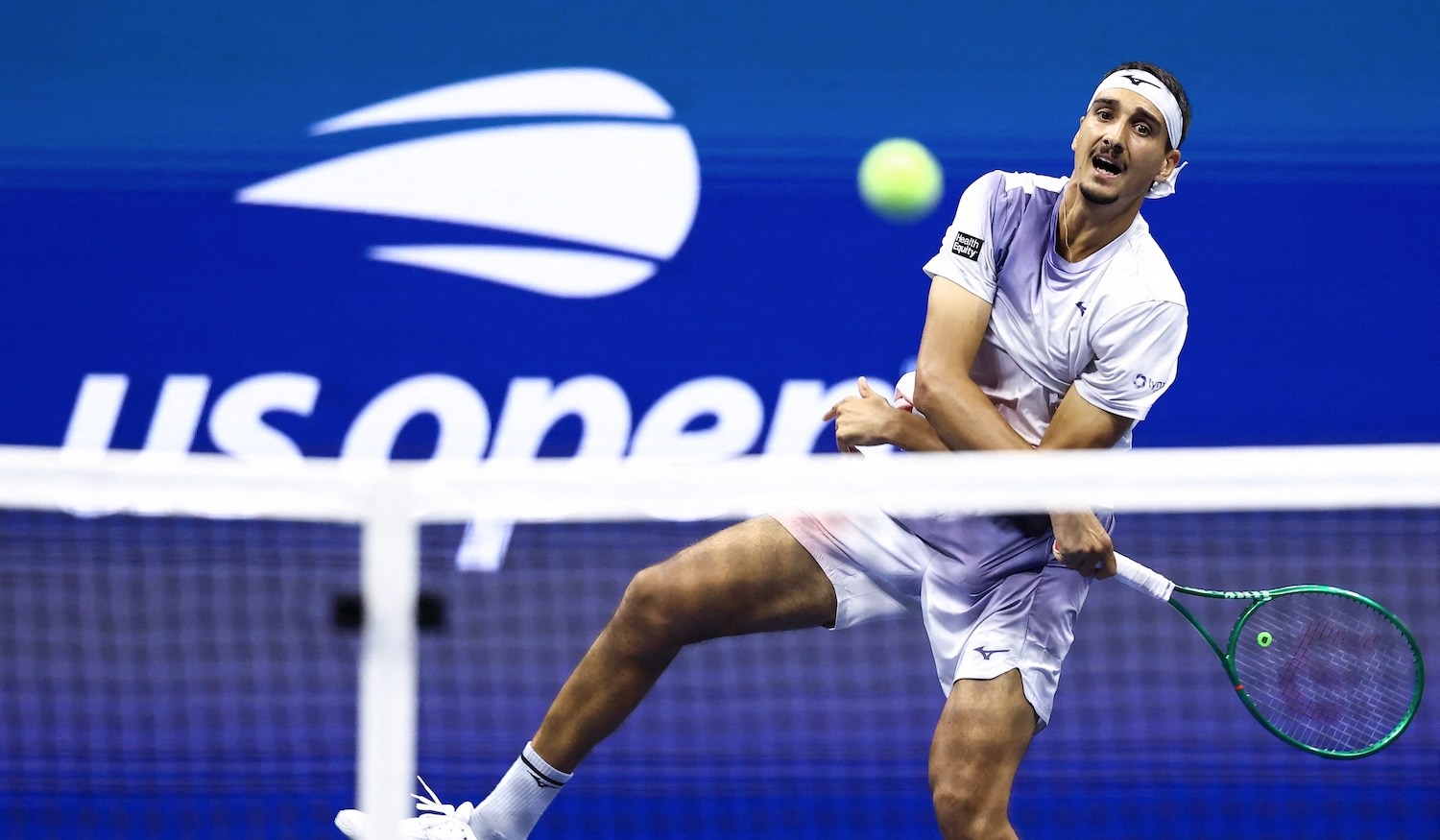
Two hours after Tuesday night lapsed into Wednesday morning in the Eastern time zone, Alexander Zverev served out his grueling U.S. Open first-round matchup against Lorenzo Sonego. The final match of the night was a real thriller, with the top seed and the feisty Italian challenger letting each other have it for nearly five hours, on and on until Sonego stopped being able to hit a backhand with any zip and, at the exact right moment to avoid a catastrophic upset, Zverev remembered how to serve. As he watched a desperate Sonego forehand sail long to seal the match, Zverev raised his arms and stood still, courting the crowd. The tournament's top seed took a moment to soak in the quiet applause of what felt like 500 stragglers remaining in the cavernous, mostly empty Arthur Ashe Stadium.
The first three nights of play at this year's U.S. Open have all gone late. Night sessions are composed of two matches in each of the two stadia—Louis Armstrong, which is good, and Arthur Ashe, which is Arthur Ass—that begin at 7 p.m. ET and end at some point in the wee hours of the next day. By splitting the day's play into two distinct sessions, the U.S. Open can sell more tickets and ensure that at least the first of the two stadium matches begins right at primetime. Every Grand Slam tournament besides Wimbledon does this. However, because this is the U.S. Open and takes place in the U.S., it amounts to sacrificing quality to appease rich people and putting match flow at the mercy of ring light-wielding influencers, and thus is more galling. While not every night will go late and end up pissing everyone off, tennis matches go long all the time; when it happens in one of the late matches, it can ruin everyone's night and tournament in the process.
Everyone except me, that is. If you live on the West Coast, life is good. This shit is awesome. I am persecuted Europeanly all year round, waking up at 6 a.m. Pacific time to watch the Giro d'Italia, watching a good chunk of the tennis season after the fact, and missing half of my favorite team's Premier League matches because I have the immense fortune of living in the best place in the world. But the U.S. Open is the perfect event for me. Play starts at 8 a.m. PT and extends until 11 p.m., allowing Californians to watch tennis the entire time they're awake.
Maybe New Yorkers can't sanely stay up until two in the morning to watch Frances Tiafoe slap his way to a thrilling five-set victory over the power forward–sized Martin Damm Jr., but it's no problem for me. I've watched every night's matches with increasingly guilty pleasure, knowing that while I embody a flimsy counterpoint against sensible arguments about the inhumanity of making players stay up until 5 a.m.—Tennis is a global sport! Won't somebody think of the Australians?—it's not worth it. Please punish me; I'd rather the tennis players get to live.
In Sunday's slate of matches, Venus Williams and Sofia Kenin wound up not even taking the court until Monday, at 12:13 a.m. ET. That was the latest-ever start for a U.S. Open match. Williams and Kenin are both Grand Slam winners, and they were given wild cards and a supposedly showcase night-session match on Ashe in order to honor them. Instead, the scheduling screwed them. Novak Djokovic took over four hours to lose to Mariano Navone, forcing Williams and Kenin to play in front of an almost entirely empty stadium in the dead of night. "I would've preferred something else, definitely," Williams told The Athletic. "I think it wasn't great for either of us, we both tried our best, but yeah. I just don't know any other sport where you have to start that late. I definitely think there's room for improvement there."
One obvious problem is the choice to schedule women's matches after men's matches. Best-of-three, the match format the women play, doesn't take as long; even if the total amount of play across two matches ends up the same, putting the women's match first at least would avoid the brutal anti-spectacle of a post-midnight start.
Another problem is the faff. Between Ben Shelton's victory over Tallon Griekspoor (who turns into a toad when he has a lead) and Naomi Osaka's match with Anastasia Zakharova (who has an insane service motion), the U.S. Open honored Roger Federer by presenting him with his Hall of Fame ring. That's a worthy ceremony for an all-timer, but one that pushed the start of the Osaka match quite late.
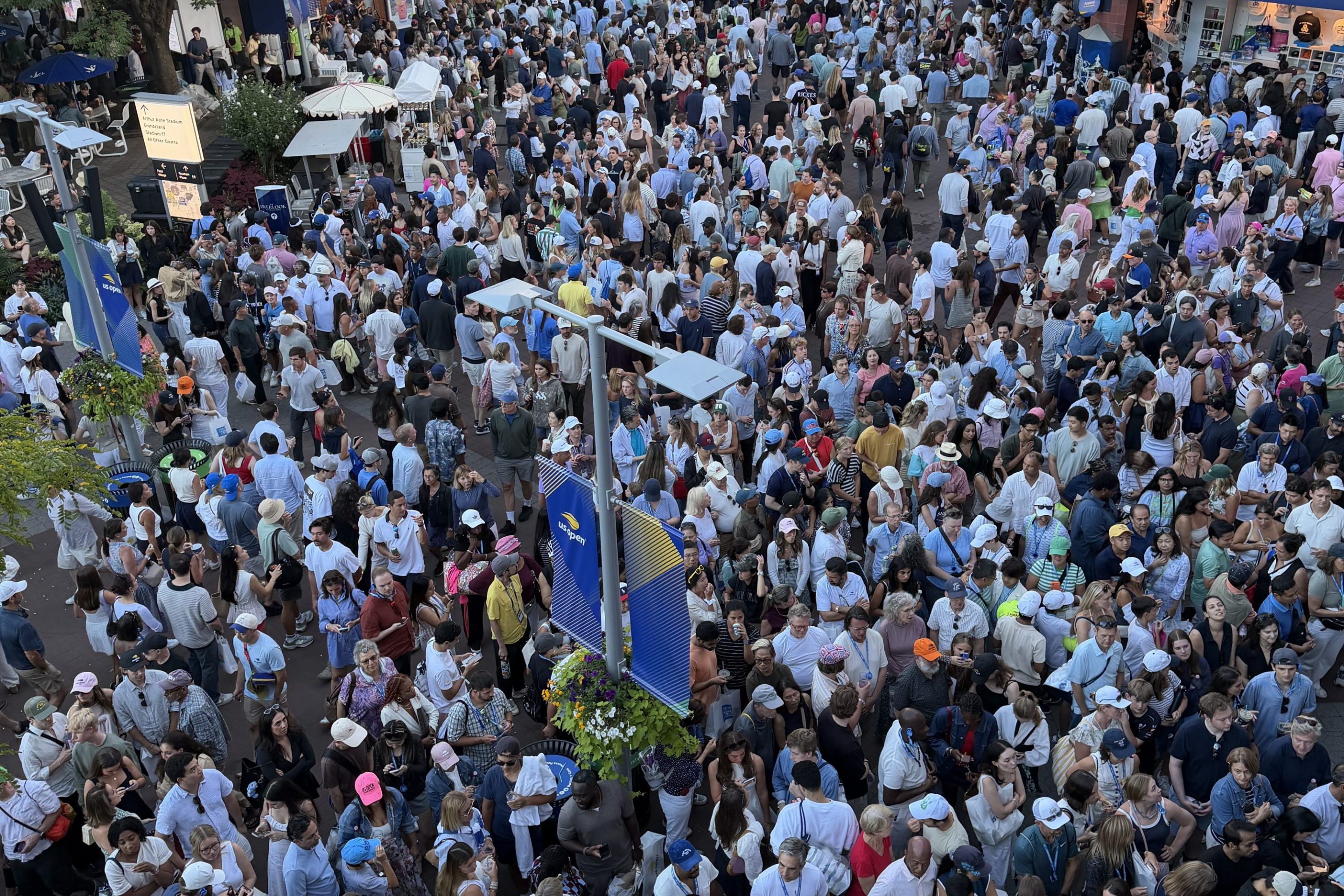
Ashe's cavernousness emphasized another malign feature of the U.S. Open experience: the broader noxiousness of night-session crowds, which has only gotten worse since it was chronicled a few years ago by Giri Nathan. An increasing number of people are coming to the matches not to watch tennis, but to be seen watching tennis. With the stadium hollowed out, these fans' antics were so disruptive to play that the chair umpire had to tell them to knock it off.
This was one of the cringiest things I’ve ever seen live. The US Open used to be an actual tennis tournament https://t.co/1kAYND6VOe pic.twitter.com/c1jbi4lUlQ
— Danny Singer (@michiganboy310) September 2, 2026
Zverev-Sonego was also often disrupted by people talking. When there are only a few hundred people in a stadium with a capacity of 24,000, both players can hear anybody talking at a normal volume. It was annoying to have to watch such a great match in such dismal conditions. Sonego had Zverev on the ropes in the fourth set, getting broken early on only to, as Owen Lewis put it, be inhabited by the spirit of Russell Westbrook for one of the craziest return games you'll ever see. He came within two points of beating Zverev, getting to 0-30 at 5-4, only for Zverev to rediscover his serve at the last possible second. The fifth set carried with it the stench of grim death, in part because Zverev spent it calmly dispatching his opponent but also because everyone had gone home.
LORENZO SONEGO.
— José Morgado (@josemorgado) September 2, 2026
Insane stuff. pic.twitter.com/DrGIdRhHhI
I guess we see here one tiny silver lining: One of the worst parts of these late-night matches is that they prevent the involved players from going to bed until hours later. This disrupts their sleep and mangles their recovery; it also locks them into a pattern of either having to play night matches or sacrifice time to get back on track in the day session. If this ruins Zverev's tournament, it will have been worth it for one night.


![USA's Ben Shelton celebrates his win against Spain's Carlos Alcaraz during the men's singles quarter-final tennis match on day ten of the US Open tennis tournament at the USTA Billie Jean King National Tennis Center in New York City on September 9, 2026. (Photo by Leonardo MUNOZ / AFP) / “The erroneous mention[s] appearing in the metadata of this photo by Leonardo MUNOZ has been modified in AFP systems in the following manner: [USA's Ben Shelton] instead of [Spain's Carlos Alcaraz]. Please immediately remove the erroneous mention[s] from all your online services and delete it (them) from your servers. If you have been authorized by AFP to distribute it (them) to third parties, please ensure that the same actions are carried out by them. Failure to promptly comply with these instructions will entail liability on your part for any continued or post notification usage. Therefore we thank you very much for all your attention and prompt action. We are sorry for the inconvenience this notification may cause and remain at your disposal for any further information you may require.”](https://lede-admin.defector.com/wp-content/uploads/sites/28/2026/09/GettyImages-2293730421.jpg?resize=2880%2C1920)