
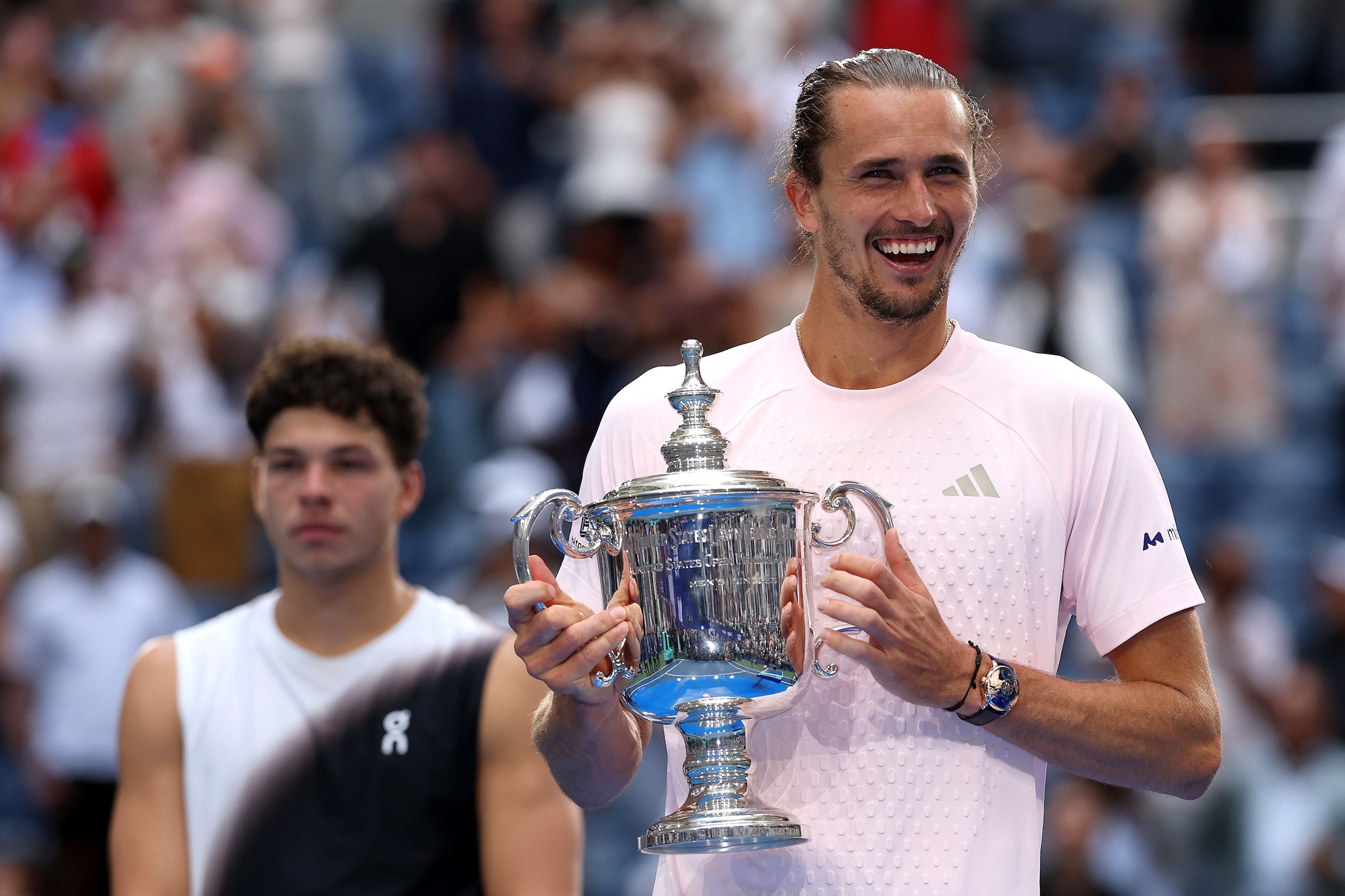
How strange it is to watch a whole Slam and feel as though we learned almost nothing about the true power hierarchy at the top of the men's tour. In Sunday afternoon's U.S. Open final, Alexander Zverev beat Ben Shelton, 6-3, 7-6 (2), 5-7, 6-2. Check the box next to every single boring prediction: At least one tiebreak would be played; Shelton would struggle heroically to return serves; Zverev would play visibly nervy tennis in at least one juncture of the match and captivate viewers with his pre-serve ball-bouncing routines, but ultimately keep owning this matchup and lefties in general.
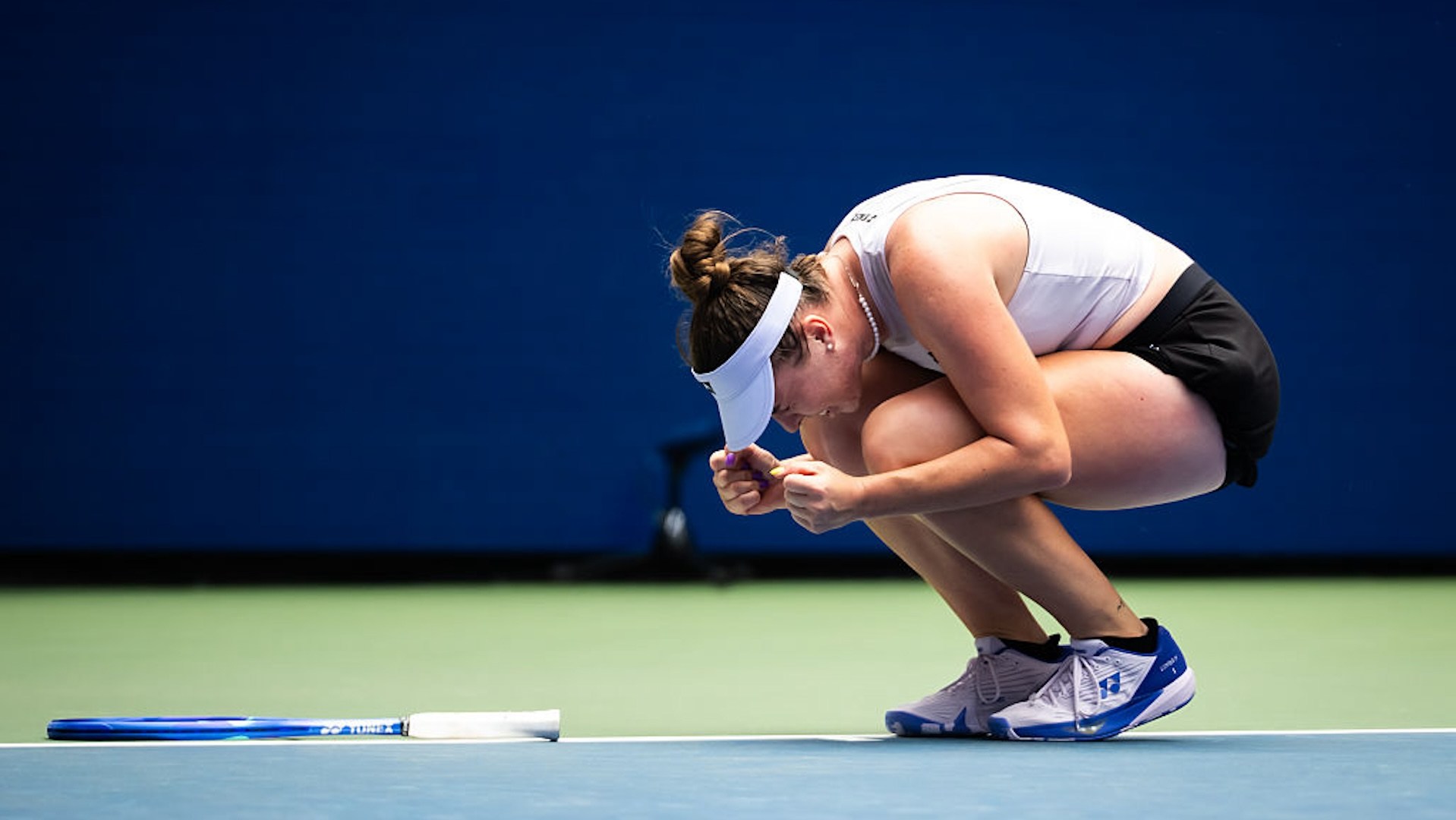
We got all of that. The match was neither an especially compelling spectacle nor particularly predictive of the future. I would be somewhere from surprised to gobsmacked if either one of these players won a Slam next season. The central thing I'll remember about this match is that Zverev did not initially realize he had won it.
If this sounds like a tepid response to Zverev effectively locking up a place in the sport's Hall of Fame in the last three months, first consider the overall context around him—which I wrote about after his Roland Garros title in June, looking at allegations of domestic violence and the media coverage they received—and then consider what Zverev has done on the court in those two Slam title runs. Zverev has beaten two top-10 players, both in the finals of those events: Flavio Cobolli and Ben Shelton, players I already knew he was better than. Overall, Zverev is 2-7 against top-10 players this season, and those two wins make for a historically low figure among players who won multiple Slams in a season, per Lev Akabas.
In neither Paris nor New York did Zverev have to play Jannik Sinner or Carlos Alcaraz, the gatekeepers at the top of the sport, who remain the favorites whenever they are healthy. In between his two Slam wins, at Wimbledon, Zverev reached perhaps his best form of his entire summer. He still lost to Sinner in the final, which feels like the best measure of where these players really stand. If this summer has revealed anything about Zverev, it's this: He is clearly the best of the rest, once you subtract the two actual best.
He was best positioned to capitalize on this rare window of Sinner and Alcaraz's absences from the draw, and he did so, grasping at age 29 the Slams that had eluded him throughout his early career. His breakthrough has less to do with any improvements he has has made this season and more to do with the quality of the field. Thus these two Zverev Slams diversify a three-year period in which Sincaraz has won 10 out of 12. For these two timeless trophies, Zverev can thank the wrist tendon injury that sidelined Alcaraz all summer, the bizarre cramps that paralyzed Sinner at Roland Garros, and the knee injury that kept Sinner from appearing at the U.S. Open at all.
Of course, that version of the story doesn't do enough justice to the man who removed Alcaraz from the draw at this Open: Shelton, who played the match of his life in the quarterfinal. Alcaraz was well below his normal level, and it's unclear how much of that could be attributed to Shelton's play, and how much of it had to do with the fact that Alcaraz was playing his first tournament after four months off with a wrist injury. Regardless of how one wants to allocate that credit, most of the tour clearly cannot deal with even a compromised version of Carlos, so Shelton deserves praise for the feat, and for the recent progress he's made on his game. Unlike Zverev, who is playing more or less the same tennis that he has for years, Shelton's tennis has improved radically in the past season. He is still just 23 years old, his return game and rally tolerance are broadly trending in the right direction, and he has always possessed the stamina for five-setters and long-haul Slam runs.
But as the U.S. Open final showed, Shelton still has key aspects of his game that must improve technically. That backhand will continue to hold him back; Zverev said that he intentionally targeted that wing, giving Shelton little pace to work with, having apparently learned from Alcaraz's mistakes. It was a highly successful strategy—and not a particularly difficult one for future opponents to implement, now that it's out there in the open. Shelton's age is often cited a case for his remaining upside, but I also can't think of any players who became good returners after age 23. In fairness, with a serve like that Shelton's return only needs to arrive somewhere like "average" for him to be a superb overall player. At this moment, though, he's still quite far from average among top-50 players.
After this run, Shelton has lifted his standing within the non-Sincaraz heap. He now sits at a career-high No. 4 in the world. But Sinner in particular is a brutal matchup problem for him, and I'd continue to favor Alcaraz in every future meeting at a Slam. I don't expect Shelton to push either of them at the Slams until he fixes his deficiencies, and those deficiencies are not the kind that lend themselves to easy offseason improvement. Unlike, say, a serve, which is a closed-loop skill that can be practiced without opponent input, tweaking groundstroke technique and return skills might be a more arduous process.
After this Zverev interruption to our broadcast, I would expect the Sincaraz show to continue apace. Though the year's four Slams are over, that hypothetical challenger, the Djokovic to their Federer-Nadal, has yet to reveal himself, if indeed he exists. I agree with the ESPN broadcast, in the immediate aftermath of this U.S. Open final, which involved neither of them: We need those guys back.



![USA's Ben Shelton celebrates his win against Spain's Carlos Alcaraz during the men's singles quarter-final tennis match on day ten of the US Open tennis tournament at the USTA Billie Jean King National Tennis Center in New York City on September 9, 2026. (Photo by Leonardo MUNOZ / AFP) / “The erroneous mention[s] appearing in the metadata of this photo by Leonardo MUNOZ has been modified in AFP systems in the following manner: [USA's Ben Shelton] instead of [Spain's Carlos Alcaraz]. Please immediately remove the erroneous mention[s] from all your online services and delete it (them) from your servers. If you have been authorized by AFP to distribute it (them) to third parties, please ensure that the same actions are carried out by them. Failure to promptly comply with these instructions will entail liability on your part for any continued or post notification usage. Therefore we thank you very much for all your attention and prompt action. We are sorry for the inconvenience this notification may cause and remain at your disposal for any further information you may require.”](https://lede-admin.defector.com/wp-content/uploads/sites/28/2026/09/GettyImages-2293730421.jpg?resize=2880%2C1920)