


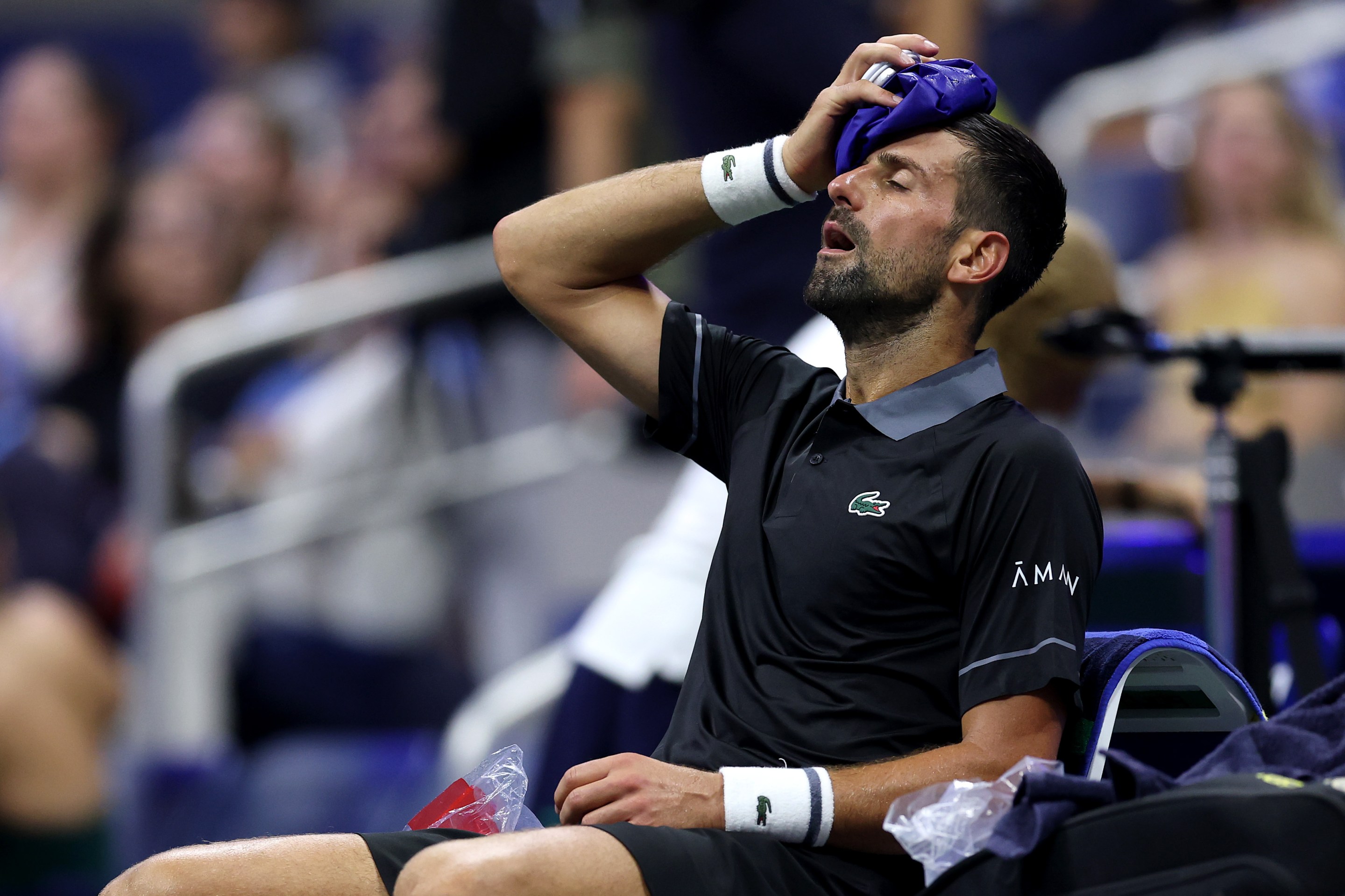
For the first time in over 20 years, Novak Djokovic lost his first-round match at a Slam. On Sunday he fell in five sets to world No. 49 Mariano Navone, a 25-year-old clay-court specialist appearing in just his third-ever U.S. Open main draw. In other words, the sort of opponent Djokovic has made a career of dispatching, even if it did sometimes take him a leisurely five sets to do it.
In this late period of his career, Djokovic has professed his love of the best-of-five format, which affords him time to recalibrate. His comeback after a hot start from a plucky youth has played out so many times that there's an air of inevitability in the stadium as he goes about his business, overcoming his aches and steadying the scoreboard. But this was not the Djokovic of matches past, and there was no air of inevitability Sunday night—just a gruesome scene. The 39-year-old labored, vomited, and cried en route to losing 7-6(5), 5-7, 4-6, 6-2, 6-1.
Not since the 2006 Australian Open—a tournament he'd go on to win 10 times—has Djokovic exited a Slam in the first round. He'd also never lost in the U.S Open’s first round before. But this loss was not without recent precedent. Djokovic had struggled with the heat at the Cincinnati Open in mid-August, losing his first match there to Thiago Agustin Tirante: coincidentally, another 25-year-old Argentine then ranked around No. 50. During that match, Djokovic appeared to vomit and took a medical timeout. After that loss, he referenced an unspecified health condition "that has been bothering me for the past couple of years," making it hard for him to play in hot and humid weather. To the best of my knowledge, that was his first-ever public reference to such a condition.
During yesterday's U.S. Open loss, Djokovic's struggles were more severe. He vomited repeatedly, took pills provided by medical staff, and received treatment on his back from a physio after losing the fourth set. He was not competitive in the fifth set, barely able to serve or move. He wept after holding serve at 0-3, and would not win another game in the match. At the net, he smiled and congratulated Navone, who stayed calm despite the bizarre circumstances, keeping the ball in play and moving his damaged opponent around the court.
After the match, Djokovic told reporters that he was struggling from the fourth game onward. "It's something that I've been carrying, unfortunately, pretty much every match this year,” he said. “Vomiting, throwing up, a serious issue there. Then my whole body starts to collapse, basically cramping and pain. Yeah, the back just gave up in the end, and shoulder, and I couldn't close it out, [leading by a] break up in the fourth."
Retirement can’t be too far out, but this loss misrepresents how much of a contender Djokovic still is. As a part-time tennis player who skips most tour events and pops in for the Slams, he still has an astounding body of work. Before the U.S. Open loss, he had reached at least the semifinals at six of his last seven majors, with his recent Roland-Garros defeat to Joao Fonseca as the one exception. In his ongoing pursuit of a 25th Slam title, he follows a pattern: Beat everyone else in the field, then lose to Jannik Sinner or Carlos Alcaraz. In that regard, this U.S. Open presented a real opportunity for Djokovic, because Sinner is absent with a knee injury, and Alcaraz's form is unknown as he appears in his first event after four months off with a wrist injury.
In the past, Djokovic seemed to relish these lengthy comebacks against greener opponents. Last night, even as he won the second and third sets, he was visibly miserable the whole runtime. "I pretty much despised every moment that I spent on the court for that," Djokovic said, though he noted that he was appreciative of the fan support when he was trying to get back into the match.
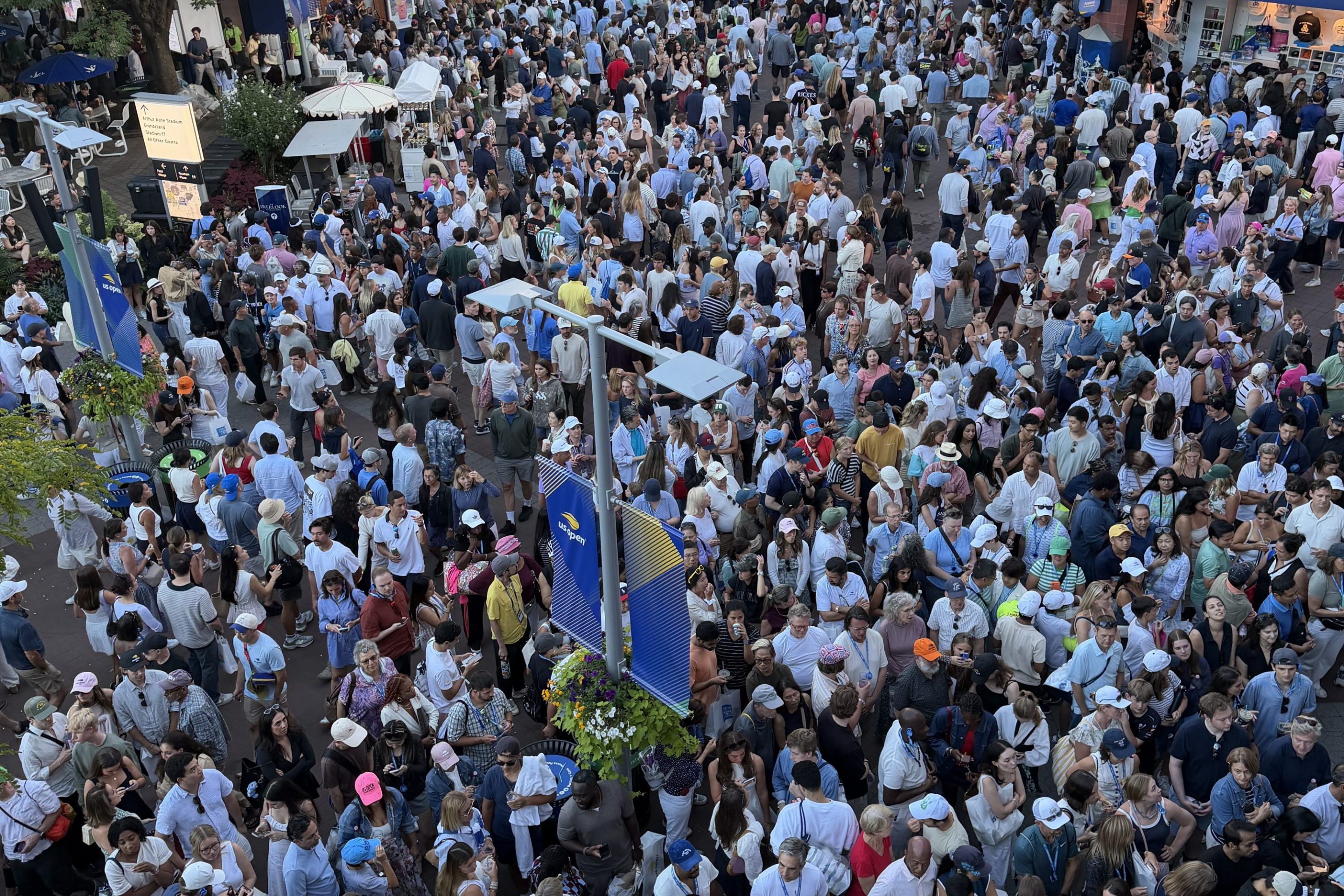
There were indeed supportive moments, but it would be dishonest to say that the whole crowd was appropriately locked in on the agonizing drama unfolding down there, due to the perpetual incongruity between on-court action and crowd behavior in an Arthur Ashe Stadium night session. If an attendee came to this match for the Honey Deuces and vibes, they might have been surprised to find a cursed ancient beast crying and dying. A timeless champion was on the court confronting his innermost demons and the limitations of the human body, and people in the stands were just buzzed and looking at their phones. This culture and this particular tournament are getting pretty weird.


![USA's Ben Shelton celebrates his win against Spain's Carlos Alcaraz during the men's singles quarter-final tennis match on day ten of the US Open tennis tournament at the USTA Billie Jean King National Tennis Center in New York City on September 9, 2026. (Photo by Leonardo MUNOZ / AFP) / “The erroneous mention[s] appearing in the metadata of this photo by Leonardo MUNOZ has been modified in AFP systems in the following manner: [USA's Ben Shelton] instead of [Spain's Carlos Alcaraz]. Please immediately remove the erroneous mention[s] from all your online services and delete it (them) from your servers. If you have been authorized by AFP to distribute it (them) to third parties, please ensure that the same actions are carried out by them. Failure to promptly comply with these instructions will entail liability on your part for any continued or post notification usage. Therefore we thank you very much for all your attention and prompt action. We are sorry for the inconvenience this notification may cause and remain at your disposal for any further information you may require.”](https://lede-admin.defector.com/wp-content/uploads/sites/28/2026/09/GettyImages-2293730421.jpg?resize=2880%2C1920)