

The American League Championship Series is every bit an American League production, which is to say that it is not for the dilettante, or anything close to an easy watch. It is for people who choose to view sports in their leisure time as penance for past misdeeds rather than as a reward for past service. You don't sit back and enjoy it passively; you may not enjoy it at all. Instead you lean in with clenched fists and teeth in full-lock grind, because this is the business that you and they have chosen, and the aesthetic you and they have embraced. One of these teams is going to play in the World Series, and far more concerning for you lightweights, it could still be the Cleveland Guardians.
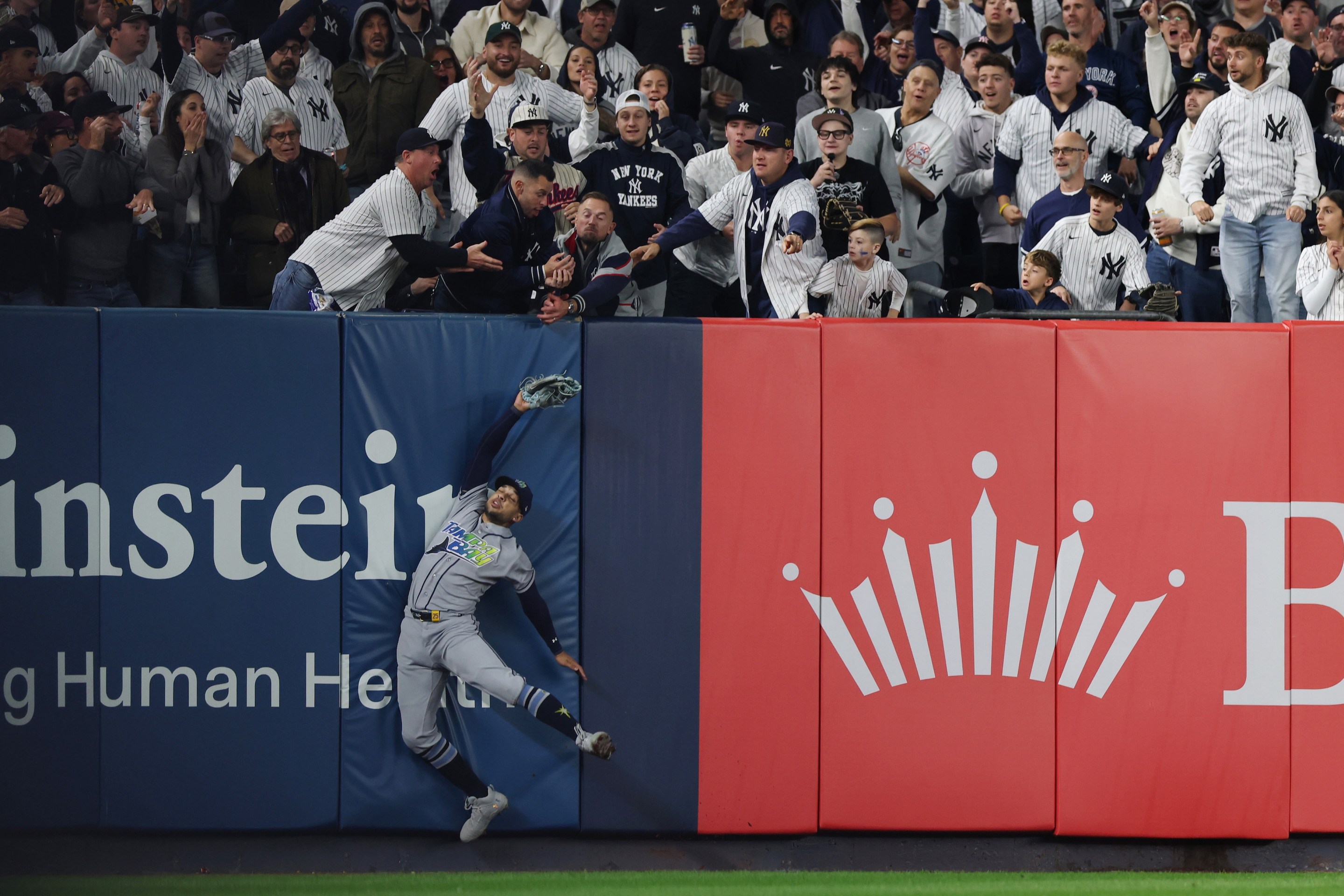
The American League, you see, is not the Tampa Bay Rays, the perennially competitive team defined by pluck, platooning, and small contracts. Their calling card is more than those low payrolls and zeal for doing the things everyone else dismisses as Little League nonsense. They have been the fourth-best team in the sport over the last two decades, and this may well be their most complete team yet. They win because of their seemingly indomitable pitching, a roster full of opportunistic multi-tool players whose talents mesh delightfully and whose shortcomings somehow do not clump up in unsightly blobs, and perhaps also due to the cool multi-colored Devil Rays jerseys they wear sometimes, which recall their franchise origins, and specifically to the part when religious groups claimed they were honoring Satanic influences and were taken seriously enough that the franchise dropped the Devil for good.
They are the best team in the American League, but they are their own thing. The American League, this year, is actually much closer to Cleveland, a sometimes-hard-to-watch surprise team that really isn't that surprising. They won 13 fewer regular-season games in winning their benighted division but, like Tampa, Cleveland got a first-round bye and all the advantages that come with it. They are in the ALCS after having earned it—inelegantly, perhaps, and in uniforms that hearken back to a time when the only colors in the world were navy blue and red and fonts were something only runty graphic designers understood. But they earned it all the same.
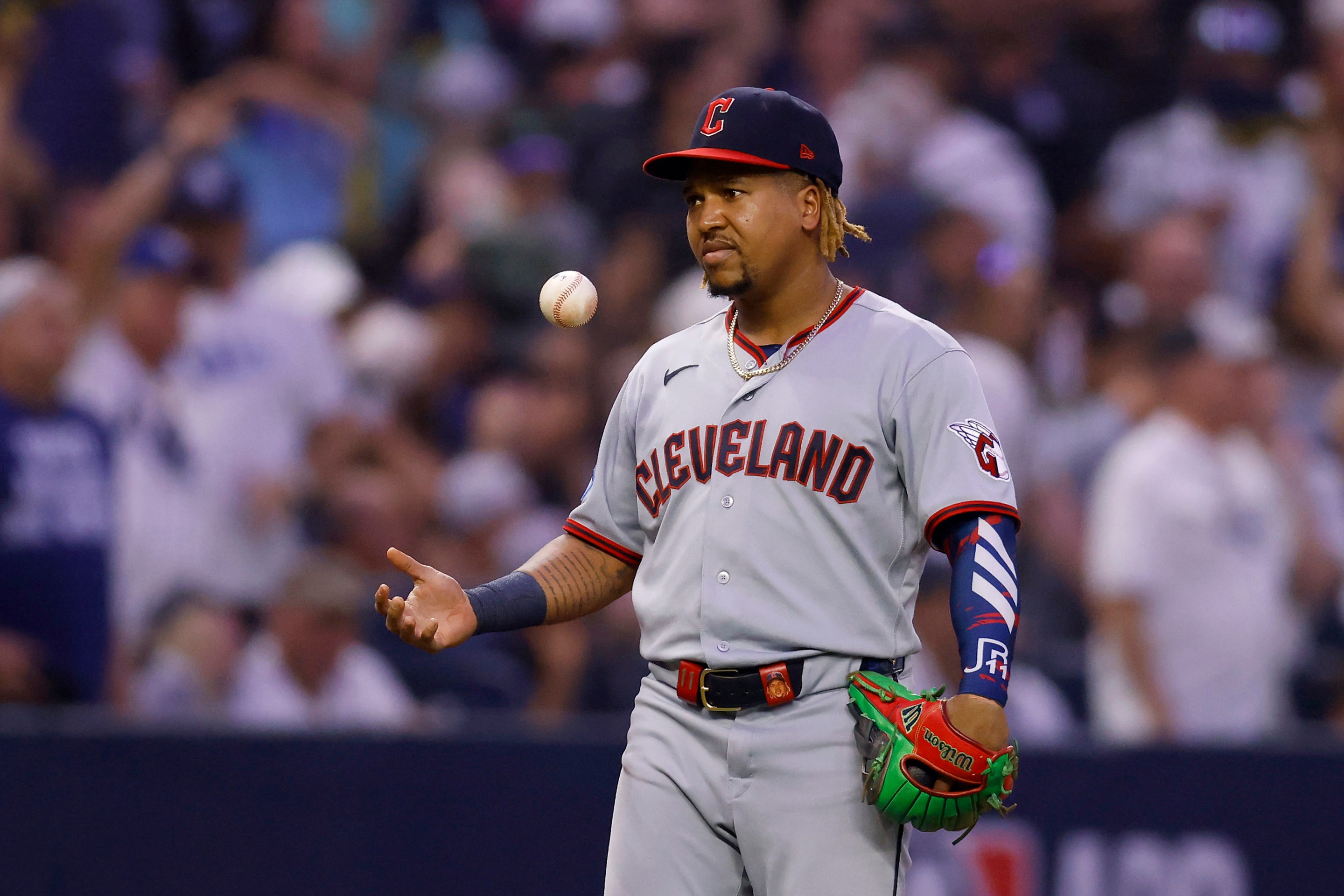
In short, the ALCS is a thing of mutant beauty, a statement of defiance for those who don't get life as they want it but life as it actually is. And Game 2, which turned on two fielding gaffes in two minutes and a one-pitch starter, was entirely representative of the broader experience. Those gaffes came from Cleveland's best player, Jose Ramirez, a Hall of Fame candidate who accounted for the entirety of the opposing team's offense thanks to one defensive brain spasm and two hard-hit balls that scooted between his legs in successive at-bats. The one pitch was Freddy Peralta's fastball, which he threw in nearly every count and situation to all of Cleveland's hitters until they showed the ability to do something about it, which in this case was never. Tampa won, 3-1.
The game turned in the fourth inning, when Ramirez watched Chandler Simpson's high chopper just long enough to forget that Victor Mesa Jr. was running to second with an eye toward an uncovered third base. Ramirez, who was already shaded toward the middle of the diamond, never caught up and Mesa arrived at third standing up on a ball that traveled maybe 100 feet, while the absurdly fleet Simpson reached first safely.
Four Parker Messick pitches later, Ben Williamson hit a purposeful but seemingly controllable grounder off the lip of the fauxgrass in Tampa's infield; the ball stayed down, while Ramirez's glove came up, and shot between his legs, which after 150 years of baseball still the most embarrassing way to make an infield error. Mesa scored the game's first run on the play while Simpson took third and Williamson second. One pitch after that, Liam Hicks smoked a carelessly aimed Messick slider into right-center to score Simpson and Williams and essentially end the game's capacity for tension.
That last part was cemented by Peralta, who had been punished for past crimes of some kind by being traded from the Brewers to the Mets before the season and was tormented in all the Metsiest ways before being traded again at the deadline to Tampa. This is baseball's version of a last-minute reprieve from the governor, and Peralta pitched with the freedom that can only come from escaping the Mets. Or, anyway, he pitched as if he was determined to be the Fastball Freddy of old, and that he was, with oak leaf clusters. Peralta threw the heater on 72 of his 99 pitches over six innings, his highest percentage in any game since 2019. He threw it often and with shocking purpose, averaging 96—2.5 mph over his regular season average—and firing one in against Jo Adell in the fifth that was measured at 99.4, his fastest recorded pitch ever. As pitching coach Kyle Snyder explained it to reporters later, "some of it was in the moment and realizing it was a bit more power than art. Or all power, limited art."
Ahh, the American League encapsulated, with allowance for a very fluid definition of art.
Cleveland did get a run in the seventh off reliever Ian Seymour on a two-out single from the poshly named Chase DeLauter, but Seymour and closer Bryan Baker got the last seven Guards in order to close out the job. Two of those outs came on successive line drives by Nathaniel Lowe and Travis Bazzana, aimed first at Williamson and then shortstop Taylor Walls. This reinforced Cleveland's night in general—inelegant, futile, and sometimes both, with no power or art to speak of.
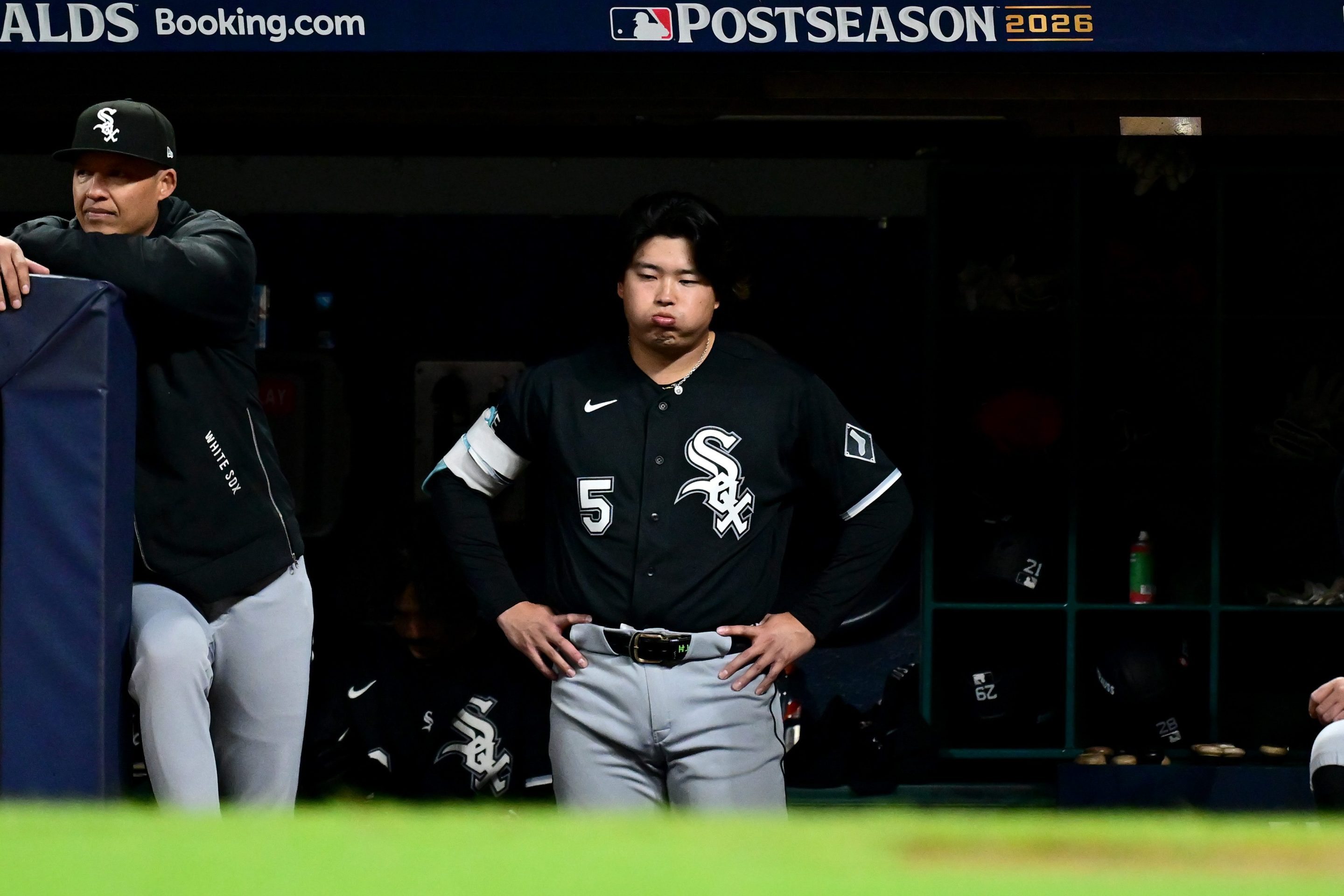
But the Guardians are not just an odd lot. They are an odd lot that dies hard, as any White Sox fan still face-chapped from Saturday's strikeoutpalooza can attest. Winning the AL Central may not mean much to the rest of us, true, but it does suggest that Cleveland possesses unnatural levels of forbearance, and also it beats the hell out of winning the AL West. Whether that's enough to beat the zig-not-zag bunch from Tampa is not yet proven. This series may be the definition of puppy love—which doesn't matter to anyone but the puppies—but who doesn't like a good puppy story? Other than you, that is, you coal-hearted American League–loving swine.
The shakeout from all this is a series that's tied at a game apiece as it heads to Cleveland for the weekend, and the promise of five more games just like these. The American League does not honor pedigree or momentum but grind. And five more games of this is what we should get, because not everything should be elegant and crystalline. Sometimes baseball has to look like used and crumpled tinfoil, and whoever can make the most passable origami swan out of it wins.