It's almost time for the World Cup. Before the tournament, we'll be previewing each of the top 15 teams by FIFA rankings that made the tournament. Why the top 15? Because that's how many we needed to do in order for the USMNT to make the cut. You can read all of our previews here.
If Brazil is the technicolor standard-bearer of soccer brilliance at the World Cup, then Germany is Brazil's monochromatic counterpart, a country that never fails to produce enough talent to be a serious threat every four years. Except, it appears, over the last two tournaments. Germany went out of the group stage in 2018, the first time the country had failed to advance past the first round since Quite Literally Hitler Times (1938), and then repeated the feat in 2022 to really drive home the doldrums. Throw in a couple of disappointing finishes at the Euros, and Germany enters the 2026 World Cup trying to recover its identity and traditions.
The good news for the team's fans is that the Germany side heading to North America is good, possibly even great. The good news for everyone else is that the squad seems like one more cycle and some pruning of fading talent away from truly reclaiming its spot at the top of the heap. For every 23-year-old like Florian Wirtz or Jamal Musiala, there is a 40-year-old Manuel Neuer or a 33-year-old Antonio Rudiger. It's a team caught between the past and the future, and that tension is present on all levels of the field.
This is not to say that Germany enters the World Cup absent an identity on the pitch, though. Under Julian Nagelsmann, Germany focuses on possession and death by a thousand steps. The side will try to out-pass, out-run, and out-shoot everyone it comes into contact with. For the most part, the results have been encouraging: a fourth-place finish in the 2025 Nations League and a quarterfinals exit in Euro 2024 (at the hands of the eventual champions) is better than Germany had produced in years. Germany enters the 2026 World Cup planning to win it, of course, but one senses that the real goal is to just play like Germany ought to once more, and in doing so, return the side to the level of aura that has defined it for the better part of a century now.
Who Is Their Main Guy?
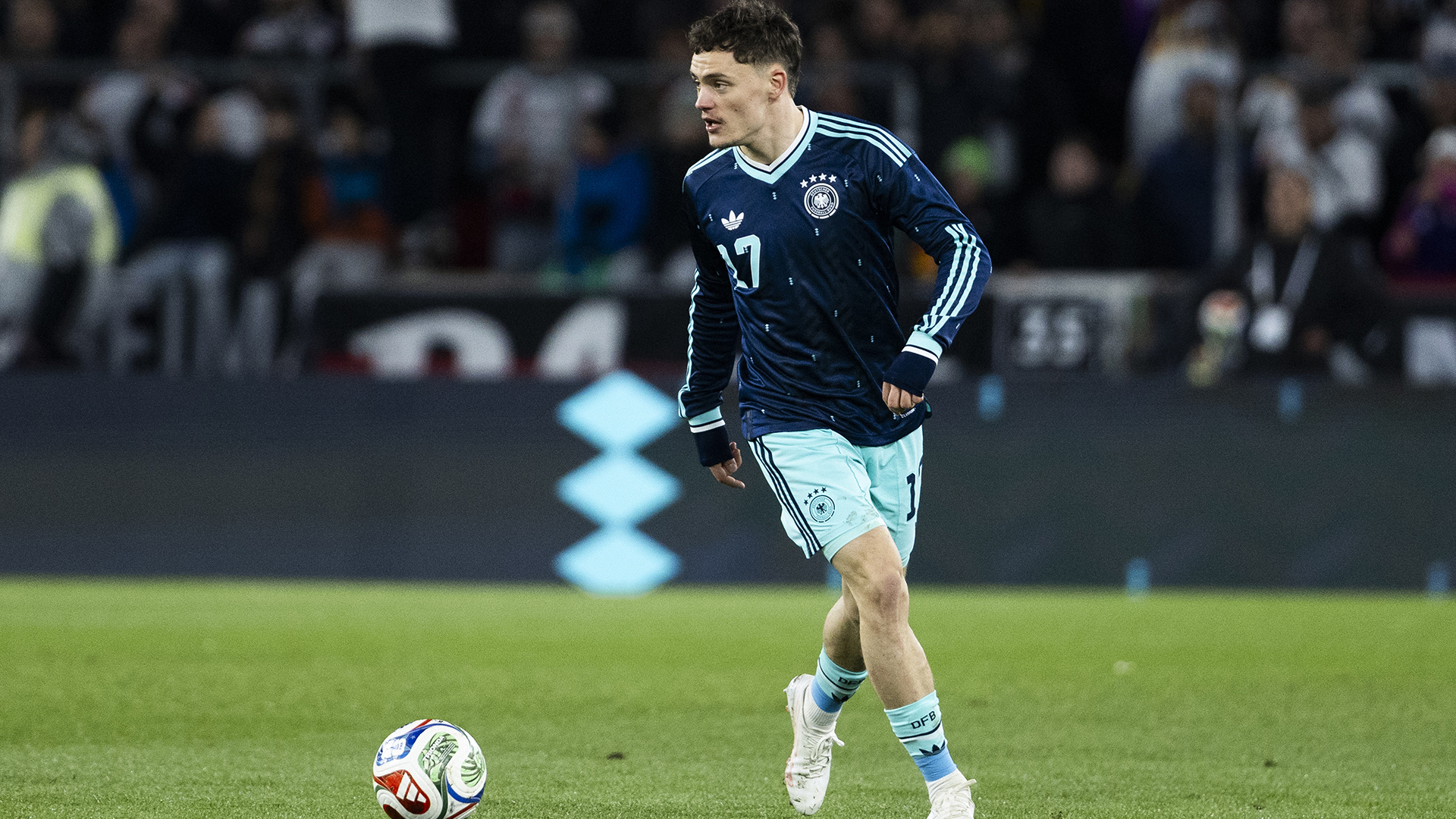
I promise I am not exhibiting Liverpool bias when I say that Florian Wirtz is Germany's most important guy. OK, maybe it's a little biased, but stay with me. Despite a debut season in England that can be described only in terms like "middling," "disappointing," or "flop," Wirtz will come into the World Cup as the main attacking lever for a German side in search of international relevance. Given his performances in World Cup qualifying, Wirtz seems up to the challenge, even if the counting stats might not show it.
One goal and two assists in six games isn't anything to write home about, but watching Wirtz control the transition game for Germany, picking out Leroy Sané on the opposite wing or using Nick Woltemade as a wall for give-and-gos is delightful. And despite only tallying five goals in the Premier League this season, Wirtz has shown with the national team that he can still score with the best of them, picking up a brace in a March friendly against Switzerland that surely did more for his confidence heading into the World Cup than the entirety of the Liverpool season:
Wirtz will have to be more of that guy for Germany than the guy he's been at Liverpool, but there should be little doubt that he can do it. Playing either from the left and cutting in or, more likely, in the center, Wirtz will be called upon to create magic alongside Sané and Musiala. Germany is balanced in attack, so Wirtz won't have to do it all himself, but given the run of form he has been in for his country lately, it wouldn't surprise to see him fully shake off his down club year and perform at the level his country needs from its most creative playmaker.
Who Is Their Main Defending Guy?
Germany's defense will have to rely on several pieces getting in sync to cover for the fact that there isn't a single standout defender on the World Cup roster. Instead, this is a backline full of simply solid defenders, and that makes it hard to single someone out. The center back pairing of Bayern Munich's Jonathan Tah and Borussia Dortmund's Nico Schlotterbeck is just as liable to put out fires defensively as it is to needlessly start some of its own. Joshua Kimmich, a mainstay as right back for the Germans for the last decade, offers what he always offers when playing away from his regular midfield position: solidity up and down the field, but nothing to gasp at.
So, by process of elimination, the most exciting player in defense is Leipzig left back David Raum. Raum is a bit of a late bloomer. Though he moved to Leipzig from Hoffenheim in 2022, he didn't fully establish himself as a key part of his new team's plans until last season, and only this season did he truly elevate his game for club and country. Domestically, Raum scored three goals and assisted seven more from left back, and he also started five of Germany's six qualifying matches, notching a goal and two assists.
The 28-year-old will provide a lot for Nagelsmann's side, both in attack, where he is often looking for interplays with the left winger as well as crosses into the box, and in defense, where his pace and work rate allows him to cover great distance, a valuable trait especially since Kimmich on the other flank isn't quite as mobile. In his first international tournament as a starter, Raum will likely have to play a big role for Germany to reclaim some of its past glories.
Who Is Most Likely To Break Out?
Jamal Musiala does not need to break out. He's one of the best young attacking midfielders in the world, plays for global superclub Bayern Munich, and is broadly considered a superstar-in-the-making. Nevertheless, it still feels like Musiala's greatness hasn't yet been fully appreciated, and this World Cup feels like the time for him to finally make the leap into pure superstardom. After becoming one of the youngest German players ever to play in a World Cup last time around, Musiala now enters as a key contributor for a German team ...
... or so you'd think. It's hard to say exactly what Musiala's role will be in Nagelsmann's system, given that Musiala has not played for Germany since March of 2023. He broke his fibula in the Club World Cup last summer and missed the first half of the Bayern season, returning in January and slowly working himself back into fitness. Though he didn't light up the world once back from his injury, Musiala is still Germany's most talented attacker, and in Serge Gnabry's injury absence, there is a slot for him along the attacking midfield line, either centrally or out wide.
There might not be a frame of reference for how Musiala fits into this team, but he has every tool in his kit and therefore should be able to work his way into a position of prominence. I am especially curious to see how much freedom Nagelsmann gives him to dribble down the wings and try to pick out cutbacks into Woltemade, Wirtz, and an on-charging Leon Goretzka. Musiala is so difficult to cover in open space that if Germany can isolate him against over-matched right backs, he should be able to wreak havoc. If Germany is looking to go into the knockout round for, shockingly, the first time since 2014, Musiala's return could be a big factor.
Who Is Most Likely To Eat Shit?
OK, so the real answer here is also Florian Wirtz, but I'm being told I have to pick someone else, so let's go with Bayern Munich midfielder Leon Goretzka. The 31-year-old will have a big role as the most experienced central midfielder, but his best days are definitely behind him. When Goretzka first charged onto the scene, lungs bursting, he was a do-it-all midfield whirlwind for Schalke who earned the ire of his club's fans when he, at the age of 25, moved to Bayern Munich on a free transfer. No matter, though, because his talent was clearly there, even if the production never quite matched his potential. After all, a 6-foot-2 machine of kinetic energy should have been an attacking luxury for the biggest club in Germany, and yet he was forced to mold his game into something less jagged and more refined.
He never quite got there, though, and his struggles in recent years have seen him excluded from the Euro 2024 team on home soil (Germany bowed out in the quarterfinals to eventual winner Spain). Other than that, his only international tournament experiences are the two World Cup group stage exits (2018 and 2022), as well as Euro 2021, which saw Germany go out without winning a knockout match.
It's unfair to pin all of Germany's malaise over the past four tournaments on Goretzka, yet he is a perfect cipher to unlock the mystery of why soccer has become a game where 22 men play and Germany does not win. He's physically unmatched, and yet clumsy both with the ball and in pursuit of it. He's hotheaded to a fault, and no longer young enough to excuse it. Of anyone on Germany's squad, Goretzka feels like the most likely to earn a red card, even though he has quite literally never done that. He is a contradiction even within himself, and that makes him riveting and frustrating in equal measure. Could he anchor a defensive bulwark that brings Germany back to the forefront of international soccer? Germany will bet on it, but I think he's just as likely to be a key cog in the machine of failure continuing to roll on in perpetuity.
How Can They Win It All?
Germany is the first team we've previewed so far that has a legitimate shot to win the thing, even if the country's world ranking of 10th isn't terribly impressive. Not much has to go particularly right for Germany to pull this off. If Wirtz continues to play as he usually does in national team colors, and Musiala incorporates himself back into the mix smoothly, that should be more than enough attack to get through the group and early knockout rounds. Beyond that, Germany has enough talent and experience to, in theory at least, not crumble under the pressure of another tournament exit before at least the semis. I don't expect the Germans to go all the way this time, but for the first time since Mario Götze shot Germany to its fourth World Cup title in 2014, there does seem to be a light at the end of a very privileged tunnel here. If it doesn't happen now, it will happen soon. Germany will be back, and there's little anyone can do about that.