It's almost time for the World Cup. Before the tournament, we'll be previewing each of the top 15 teams by FIFA rankings that made the tournament. Why the top 15? Because that's how many we needed to do in order for the USMNT to make the cut. You can read all of our previews here.
The most successful side of the last two World Cups is France. That's a title that winning the tournament and coming oh-so-close to repeating earns you. But which is the second most successful side? If you picked Argentina, the other winner, I wouldn't push back too hard, especially since the Albiceleste lost to the eventual champions in 2018. Instead, though, I'd argue that it is Croatia, home to only 3.8 million people, that has punched so far above its weight that it should be considered the second-best-performing World Cup team over the past eight years.
In 2018, Croatia came out of relative nowhere to make the final, and though the grueling journey (two penalty shootout wins and an extra-time victory over England on the way to the final) robbed them of the needed juice to keep up with France in the end, the ride was enough for Luka Modric to claim the Golden Ball at the tournament and, later, the Ballon d'Or. It was a magical run, to be sure, but I'd argue that the country's 2022 campaign was in some ways even better. Despite bringing an aging roster to Qatar, Croatia managed to navigate a tricky Group F, finishing ahead of pre-tournament dark-horse candidates Belgium and Canada. The checkered side then went back to the penalty shootout well, beating Japan in the round of 16 and, shockingly, dispatching Brazil in the quarters. The end of the run came one round earlier that time around, with a 3-0 loss to Argentina in the semis, but in total, Croatia played in all but one match across the two tournaments. That era will go down as Croatian soccer's best generation ever.
Would you believe it if I told you that the momentum has not really slowed down since then? Despite another four years on the tires, Croatia enters the 2026 World Cup on the back of a near-perfect qualification campaign; the side only dropped points in a 0-0 draw away at Czechia and walked into this summer's tournament with only a 3-1 friendly loss to Brazil hanging over as a negative result.
Now, can Croatia channel the magic a third time? It's not impossible, but just getting the 2026 World Cup with such a dominant showing in qualifying is enough, in my eyes, to consider this group one of the most impressive international squads ever. Another deep run in this World Cup, though, and we'll have to reevaluate just how good a small country can be.
Who Is Their Main Guy?
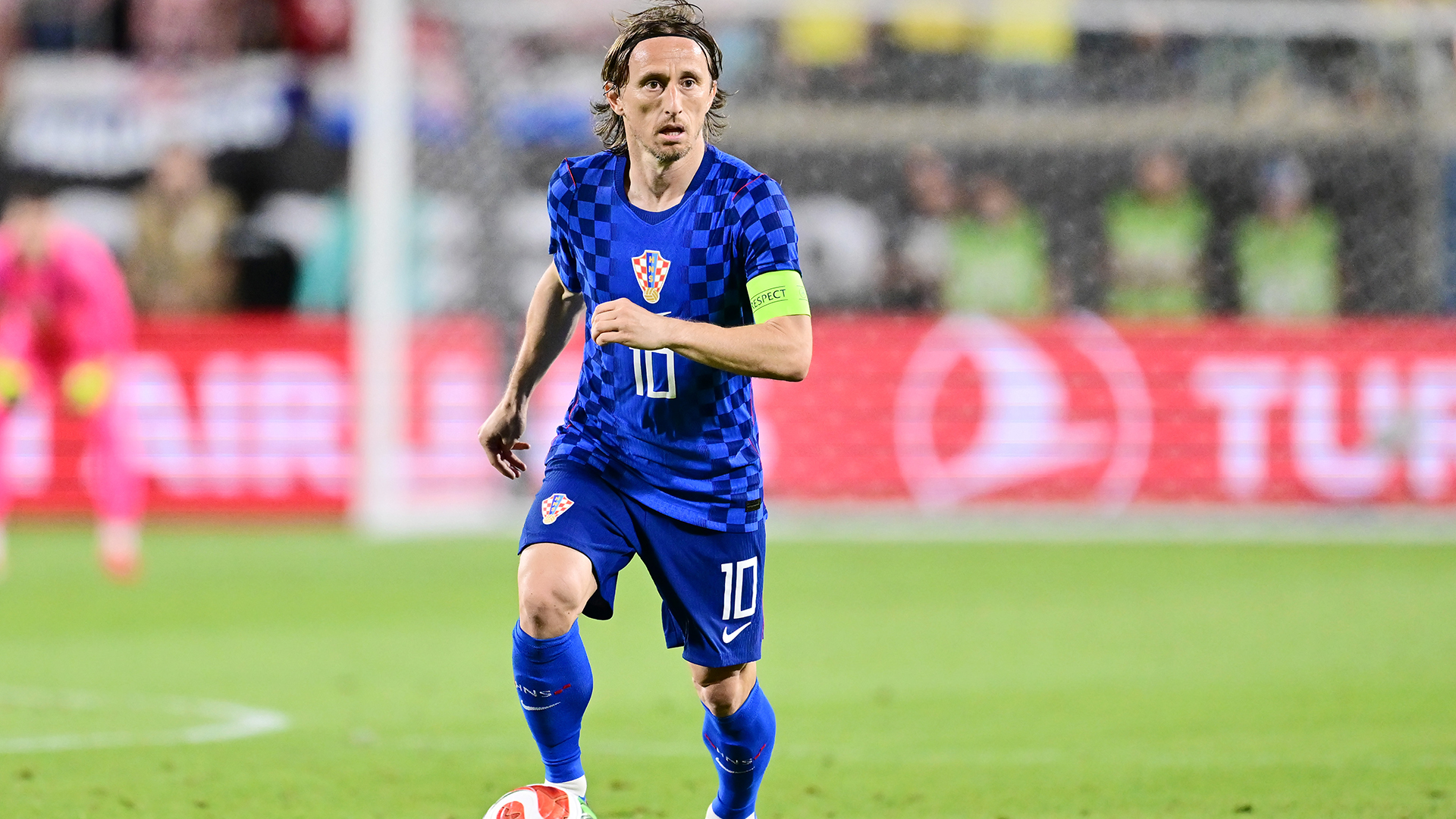
It feels insane to me that in 2026, the answer to this question is still Luka Modric. In many ways, it is not Luka Modric; the 40-year-old will not dictate the way that Croatia comes and goes at the World Cup to the same extent as before, and he might not even play more than half of the country's minutes at the tournament. The almost-as-old Ivan Perisic is probably more important in attack, alongside 34-year-old Andrej Kramaric, and there's some young blood that might be a tournament cycle away from truly ascending.
But! It's Luka freaking Modric. That he's still playing at all, and likely starting, is a miracle in itself. Last time around, it felt like Modric was getting a well-deserved swan song after leading Croatia to back-to-back top-3 finishes in the World Cup, and yet here he is, four years older, and all that's changed are the lines on his face and the color of his club jersey: Modric left Real Madrid, finally, last summer, and played 34 league games for AC Milan. Serie A is certainly nobody's idea of a retirement league, but 40-year-old Modric playing so well there maybe isn't the best counter-evidence.
Anyway, Modric at 40 is not much different from the Modric at 32 that took Croatia to the 2018 final. Sure, he can't run for days on end anymore, but his technical ability has not diminished, and few players in the world are scarier when they receive the ball and have enough time to lift their head to scout for potential recipients of an inch-perfect pass. Modric remains a set piece threat, and no one in Croatia's history has won as much. Having him on the field for a fifth World Cup can only boost the side's chances. I'd be willing to say, with some confidence, that this will be Modric's final international tournament, but I also would have thought that after his disappointing 2024 Euros. It's possible that Modric is in fact eternal, but on the off chance he is not, I will enjoy every second of getting him back, advanced age and all, on the World Cup stage he has made his own over the last eight years.
Who Is Their Main Defending Guy?
Won't someone please let Josko Gvardiol just play center back? Though the Croatian defender is only 24 years old, that has felt like the eternal question of his young career. Versatility is valuable, of course, but for both club and country, Gvardiol has often had to play left back out of necessity, and the results have not improved much from when he got bodied by Lionel Messi at the last World Cup.
Sorry, just had to watch that again. Anyway, Gvardiol might finally get to cement himself as Croatia's best center back and in fact one of the best young center backs at the World Cup. That's thanks to Croatian manager Zlatko Dalic's fiddling with a three-at-the-back system that would allow Gvardiol to put his versatility to good use without sacrificing the team's defensive solidity. Playing as the left center back in a back three would allow him enough room to maraud up the flank when needed, while also having trust that he will be there to back up Ivan Perisic on the left side of defense.
Gvardiol will likely have the toughest task out of whatever trio of center backs Dalic rolls out there, and if the system breaks down anywhere else, he will likely be shunted to left back in a back four. If Croatia has to make that adjustment out of necessity rather than tactical desire, then so be it. Gvardiol has proven he can adjust. It would be a shame, though, because I'd love to see the 24-year-old get a chance to show that all of the hype he had coming out of the last World Cup is justified, if only when he's playing his best position.
Who Is Most Likely To Break Out?
It perhaps speaks to the solidity and experience of this Croatia side that there is not a clear candidate for a breakout. The only player under the age of 28 to score more than one goal in qualifying was Franjo Ivanovic, and he is only a stand-by for the World Cup, so picking an exciting young attacker is out of the question. (Como's Martin Baturina is one to watch for, though.) Instead, given that Croatia will fiddle with a back three at the tournament, let's go with the player most likely to anchor the center of that backline: Tottenham-via-Hamburg center back Luka Vuskovic.
The 19-year-old is huge (6-foot-4) and powerful, and he already has experience starting for Croatia, as he did in the 3-1 win over the Faroe Islands that stamped the side's ticket to the U.S. He also scored his first international goal in a 2-1 win over Colombia in March, so Dalic is clearly fast-tracking him into some playing time and, possibly, a key role in its hopes to make at least the semifinals for a third straight World Cup.
Vuskovic is not only a precociously strong defender, with good understanding of the spaces he needs to cover and a scary ability to win most of his duels in the air (where he boasts an eye-popping 69 percent success rate), but his massive frame also makes him a good target in attack; he scored six goals in 28 Bundesliga appearances for Hamburg this past season. It's possible that Dalic goes back to the 4-2-3-1 that Croatia played for most of the World Cup qualification cycle, and if so, Vuskovic will likely be the odd center back out. But given the lack of true fullbacks on the roster, and the way that three-at-the-back frees Gvardiol to play at his roaming best, I wouldn't be surprised to see Vuskovic in the starting XI for all of Croatia's matches.
Who Is Most Likely To Eat Shit?
I feel bad singling out Ivan Perisic here, but the 37-year-old PSV winger might have to make the most sacrifices for gametime of anyone on the roster. If the team sticks with the back three, it leaves Perisic's only real fit positionally as left wingback, and while he still works as hard as anyone on the planet, his physical tools have greatly deteriorated a this late stage of his career.
Perisic can still whip in a hell of a cross from the left, and can score, but I worry that he will be caught out of position and without the pace to get back in defense. Croatia's group stage draw did him no favors there. The country's first match is against England, where Perisic will likely have to deal with Bukayo Saka, and Ghana also has Antoine Semenyo to contend with. I'd go as far as saying that how Perisic does in those two matchups will go a long way in deciding whether Dalic will be able to use the three-at-the-back formation or not, and a swap of system mid-game might kill off a lot of Croatia's potential momentum. No pressure, then, for a 37-year-old natural attacker trying his best to play an all-around game; it's only the fate of the entire system that relies on you, Ivan.
How Can They Win It All?
It's hard to pencil in Croatia for yet another run to the final four. The same roster that made those two magical runs is still mostly intact here, and there just might be too many miles on these tires to do it again. But I also thought that was the case at the last World Cup, and Croatia proved me wrong, so I wouldn't bet against them. To me, the country's best shot is for that three-at-the-back system to work out, as it puts the best combination of talent on the field and gives Modric enough room and targets to do his thing. Allow that to happen a handful of times, and suddenly Croatia could be back on its familiar turf, the semifinals of a World Cup.