

On the night of May 10, 1968, the most storied night in the last century of French of civil unrest, nearly 40,000 students faced off against policemen in the Latin Quarter of Paris—one of the largest crowds the city's swelling protest movement had yet assembled. Famously, cobblestones were torn up from the streets to erect barricades. By the time morning broke, hundreds of demonstrators had been beaten bloody or arrested anyway. That same evening, the Cannes Film Festival opened with a ceremony hosted by retired actress Grace Kelly, Princess of Monaco, and a screening of a restored edition of Gone With the Wind.
That juxtaposition quickly led to calls for the festival’s suspension. On May 18, after a week of resistance from Cannes’s organizers, a group of filmmakers and guests led by the directors Francois Truffaut and Jean-Luc Godard held a press conference demanding a closure. “There isn’t one film showing the problems going on today among workers and students—not one, whether by Forman, myself, Polanski, or Francois,” Godard said. “There are none. We’re behind the times. Our student comrades set an example by getting their heads bashed in last week.”
There were grumbles in the crowd at this, and Godard’s patience snapped. “We’re talking solidarity with students and workers, and you’re talking dolly shots and close-ups!” he yelled. “You’re assholes!”
The festival shut down the next day. Within weeks, thanks to the announcement of an election and shows of force by French president Charles de Gaulle and his supporters, the protests would peter out. And within months, Godard would release his next film, Sympathy for the Devil, an experimental documentary about the Rolling Stones recording the titular comment on their times. It also featured vignettes about a bookseller who reads passages from Mein Kampf in front of a pair of Maoist hostages as the camera pans across shelves of pornography; black militants who sexually assault and kill a group of abducted white women while reading passages from Eldridge Cleaver’s Soul on Ice; and a young woman who answers questions from an interviewer while walking through the woods:
“Are drugs a poetic creation that can be carried right down to the end of its metaphor?”
“Yes.”
The woman’s name is Eve Democracy.
Alejandro González Iñárritu, as it surely pains him to know, is not Jean-Luc Godard. He has, though, taken up the same immortal question Godard seems to have asked himself in 1968: In trying times, does the artist have a moral responsibility to be insufferable?
His $180 million answer to it, Digger, is by critical consensus a disaster at least as large as the environmental cataclysm it depicts. The critics are wrong. Improbably and annoyingly, Digger, another undeniably flawed and pretentious reflection on art and crisis, is one of the essential films of the last quarter-century and one of the defining artworks of our political era.
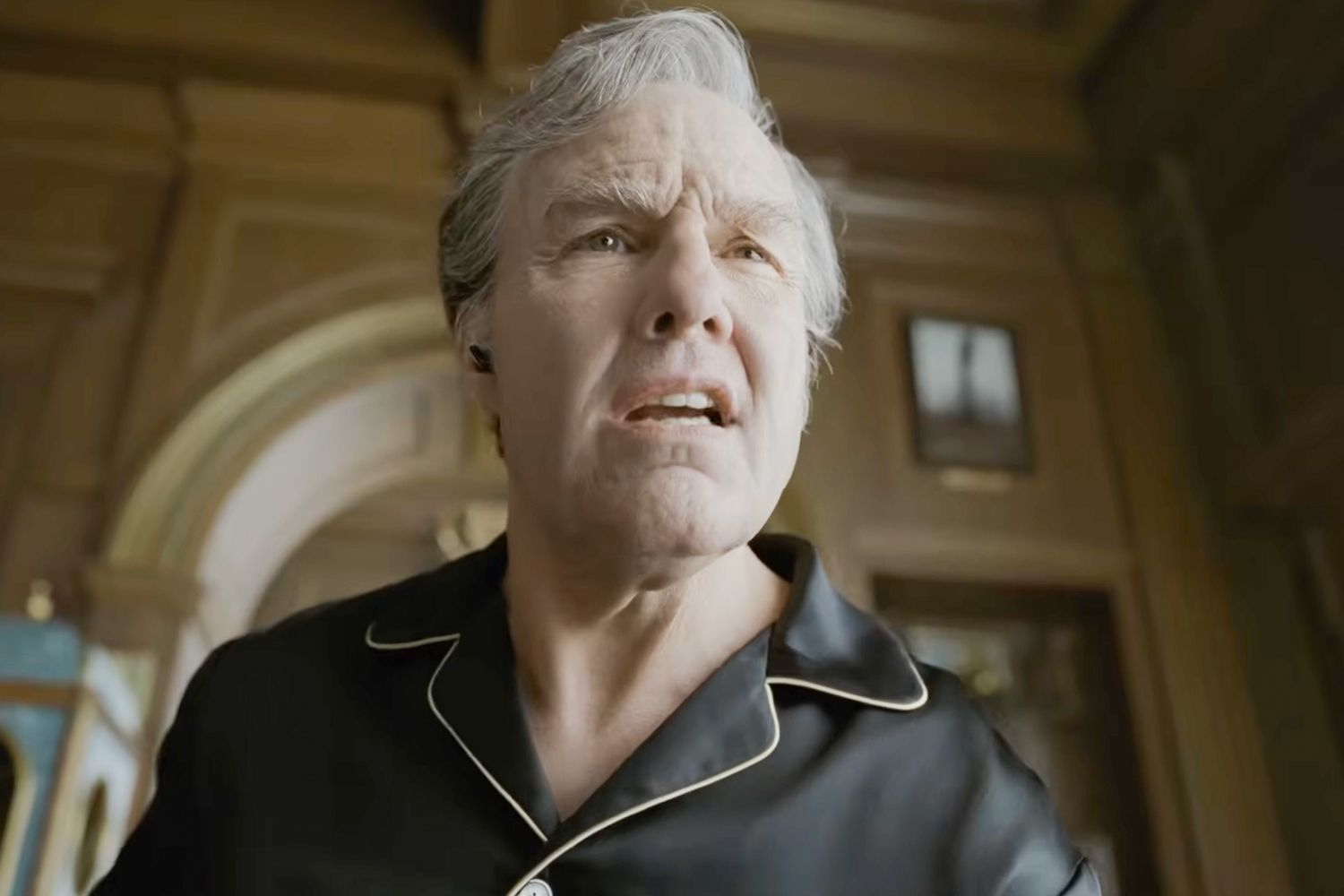
Iñárritu’s achievement here is all the more remarkable given how poorly the film begins. Digger Rockwell is a leathery old oil tycoon—played by the 64-year-old Tom Cruise in heavy aging makeup and prosthetics—living in wood-paneled, baronial splendor with an ark’s worth of taxidermied animals and a cat, Maggie, so diseased that she would look happier and healthier mounted on a wall herself. His fussing over her is rudely interrupted by a dispatch from one of his company’s scientists, based at his company’s drilling operation in Greenland. Evidently, a crack in the ice he’d been warned about—only “ten times the size of my dick,” he scoffs—has expanded dramatically. Predictably, he waves this off. Just as predictably, things get worse: A large ice shelf breaks loose and floats toward Europe. A collision with Norway, he and an irate President Compson (John Goodman) are told by Environmental Safety lead Nirav Ganesh (Riz Ahmed), will create a tsunami sure to kill hundreds of thousands across the continent.
The meeting Compson convenes to address the situation includes a minister who speaks in tongues while delivering a prayer against secularism, and a square-jawed contingent of military brass. They want to bomb the shelf. “I got a tomahawk so accurate, it can shoot the tits off a Russian ballerina from halfway around the world,” one says. “Please,” Compson cuts him off. “There are women present!” They all look around. There are no women present. They all laugh hysterically. It’s decided that the impending disaster will be covered up.
After about half an hour of this, by the accounts of many who’ve seen Digger in public, audiences tend to split into three camps. There are viewers who don’t mind that they’ve bought a ticket to an $180 million Saturday Night Live sketch and settle in to enjoy the remainder of the film. There are viewers who begin looking, a little sweatily, for ways to redeem the thing: Cruise’s performance is admirably committed, for instance. Then there are viewers who begin looking for the exits.
And then, as Digger and Compson gaze out over an open vista outside Digger’s estate, everything freezes. A tree falls as though it’s made from plastic. A giant forehead emerges on the horizon as voices from somewhere complain about how finicky these miniatures have been to work with.
The speculation that Digger is secretly a musical wasn’t so far off the mark. Digger is, in fact, a film about the rehearsal and performance of an elaborate, high-tech play: a goofy satire in the style of Don’t Look Up called Fossil Fools. The character Digger Rockwell is being played by the self-serious actor Curtis Markson, worked up over the shallowness of his material and over his daughter, whose flight has gone missing in the middle of a “Category 6” storm. But Kenny, a producer who’s been studying his performance carefully, played by the reliably unnerving Jesse Plemons, offers to help with the second problem: His private intelligence company can pin down her location with nothing but her phone number.
The show goes on. The shelf hits Norway, Europe is in chaos, and Digger goads a baffled Ganesh into denouncing him and his company before Europe’s Parliament. Then Digger takes the stage himself.
Before a surreal chamber of literally gray European bureaucrats and politicians, who are shouting and sputtering with rage, Digger delivers a swaggering diatribe about the hypocrisy of his critics. “You want to charge up them cell phone batteries so you can gawk at your TikTok and your YouTube!” he roars. “You want energy—energy so that you can ask AI to solve the very same disasters that it’s fueling! You want freedom—freedom to bask in the comfort of your unsustainable lives!”
This goes on for 10 minutes. As Digger lopes around the chamber in a one-shot, someone beans him in the head with a shoe. People pull out their phones. He keeps going. “What would happen if I stopped drilling?” he asks. World hunger, economic collapse, Chinese and Russian domination—he sketches out a parade of horribles and leaves triumphantly, only to be told that an even larger ice shelf has broken off and is headed for the United States. A deranged Compson—dying from rectal cancer, naturally—briefly contemplates nuking China before being told launching the weapons will require reading instructions. It’s decided that the shelf will be bombed instead. The bombs have “Suck It Nature” printed on their sides. After the bombing, the shelf splits into multiple shelves.
At this point, Markson can’t take any more and stops the rehearsal again. The script, he shouts at the director Hannah (Sophie Wilde), is all wrong: Details are being flubbed for comic effect, Digger has been flattened into a simple clown, and the horrors of the tragedies being portrayed are being trivialized. That’s satire, Hannah shoots back; the play exists to mock the selfishness and idiocy of Digger’s generation and console those living in the aftermath of the disasters he caused. It’s here that the viewer realizes that Digger Rockwell was a real person, and the events of Fossil Fools, outlandish as they seem, actually happened. Kenny, the producer, is actually Rockwell’s very rich nephew—backing the play, he explains as he breaks up the fight, to give the public somewhere to put its justified anger toward the Rockwells and the destruction they’ve caused. “I put a gazillion dollars into this production to remind people that it happened, because we were all oblivious when it did,” he says. “Amused to death, absorbed in our pointless arguments, enthralled by our own opinions, just like you two right now. You’re both right. You’re all right. Now what?”
The show goes on. Digger winds up stranded on an oil rig with his family. The White House has cut him off. They’re running out of food. He scatters Maggie the cat’s ashes, bids a goodbye to the play’s young Kenny, and jumps to his death into the ocean. Markson learns his daughter is safe. The curtain falls, the audience cheers and cries, and the actors celebrate. A voice comes on over a PA: “Level 4.” The audience pulls breathing masks from under their seats and begins filing out of the theatre into flooded streets. Cars and bodies are piled up. Soldiers and tanks are patrolling the scene. Drone squadrons are flying overhead. The skies are dark and the world is dead.
The audacity of all this aside, most of what Iñárritu puts on the screen is solid at the level of filmcraft. Fossil Fools’ dreary, dollhouse-like settings are great and part of an overall look that owes less to Dr. Strangelove (an obvious thematic inspiration) than to the washed-out palettes of Roy Andersson and Terry Gilliam’s absurdism. The faces on Compson’s cabinet of morons are shot too closely for comfort; their expressions are wonderfully cartoonish and ugly. Elements of the play’s sound design—creaking chairs, the family shovel Digger’s guests trip over loudly, drops of leaking water falling portentously into buckets—are as suitably unsubtle as its message. Similarly, the score those effects meld into every so often, from Cosmo Sheldrake, is loudly comic and unsettling at once. All of this works.
The rest is a mixed bag. As Markson complains, Fossil Fools, which takes up most of Digger’s runtime, really is hokey and stupid. It’s intentional, but that only makes it slightly easier to watch. Even Digger’s “real” characters like Markson are barely characters, given how little time the film explores the world outside of the play. In and out of Fossil Fools, Iñárritu’s script and story—co-written with a team of long-time collaborators and the playwright-screenwriters Sabina Berman and Jez Butterworth—serve Sandra Huller, who plays Digger’s half-sister Emma, poorly. Though she runs a renewable energy company, that figures less into the plot than one would expect, and Huller spends most of her time straining to match the histrionics of the characters around her.
On the other hand, Ahmed is basically fine as a climate nerd from central casting; Goodman, as Compson, pulls some of the most incredible faces of his career; and Cruise is a wonder. As ageless as he might labor to be off the set or leaping from building to building in the roles people actually pay to see, he drawls and strides and clutches his huge belt like a genuine, plucky, beguiling old bastard here—or, perhaps, like Curtis Markson straining to play a ridiculous character he doesn’t want to play.
This is the thing about Digger: Each twist raises a thicket of nagging questions those who haven’t been put off by the film might be sitting with for days. How closely does the Digger of Fossil Fools resemble the actual Digger Rockwell? What really happened with the ice shelves? The events as rendered in Fossil Fuels are exaggerated, but as the end of the film indicates, clearly not by much. Most vexingly of all, what are the audiences for Digger supposed to make of the audience in Digger? Digger’s monologue before the Europeans, for instance—what are Fossil Fools fans getting out of Digger castigating their forebears? Do they believe the defense he makes of himself, or do they recognize it as self-serving given all the film hints has been done—in their world, like in ours—to cover up environmental damage and frustrate political action?
Iñárritu has described Digger’s monologue, rewritten some 70 times, as the heart of the film, and there’s been some speculation that Fossil Fools was the original film before he thought better of it. “I’m trying, through Digger’s speech, to say that we are all part of this madness,” he told IndieWire recently. “That there are no good people or bad people.” This is wrong, of course, and the film wouldn’t be worth all that much, all told, if it were reducible to an exposition of Iñárritu’s confused understanding of climate politics. To his enormous credit though, Digger is something far more novel and interesting. It is an angry and heavy-handed film about making angry and heavy-handed art, one that expresses an extraordinary amount of open contempt for itself and its audience. But what galls Iñárritu the most isn’t that we use smartphones and the internet in the midst of our consumption-driven environmental crisis. It’s that we’ve invested ourselves in the idea that our crisis will be resolved on our screens, large or small. It’s contempt not as hatred but as pity, pity for all who still yearn to see our villains pilloried, mocked, and denounced from soapboxes as though any of it makes a difference in a world that is nonetheless being destroyed.
Digger is inarguably a deeply cynical, indulgent, and smug film. But so was Birdman, Iñárritu’s tedious and similarly meta meditation on how depressing it is to make art when Twitter and superhero movies exist. That effort, rapturously praised, cleaned up at the Oscars. Digger won’t, and it’s likely Iñárritu would be faring better with critics if he’d made the kind of big-message comedy they’ve taken a shine to in the years since: something impish and mordant about the wealthy pecking each other apart or allegorically getting bested by the underclasses, the kind of film that asks little to nothing of its viewers beyond the recognition, in case they didn’t know, that inequality exists.
For all that’s been said about how these times are impossible to satirize, they’ve been a boom time for satires of all stripes. In his fight with Hannah, Markson suggests that there’s a strange self-satisfaction in the presumption that one’s enemies are idiots, even when they’ve defeated you. While this is true, many of our enemies really are idiots. And it’s been a gift to hacks. The fact that one can’t improve upon the Gulf of America saga, or Pete Hegseth getting the troops juiced on testosterone and canning the “beardos” and “weirdos,” hasn’t stopped many from trying. But what Iñárritu appreciates shrewdly is that even the zaniest satires derive most of their power from reason. Converting a political argument into a farce with fart jokes is the work of the intellect; the act of presenting it to an audience proceeds from a faith that they can make abstract sense of what’s being said and perhaps from an expectation that their understanding will matter, somehow, in the world. If reason ceases to matter—and Iñárritu seems sure that it has—the satire loses everything that makes it distinct as a mode of fiction, though that’s not to say that it loses all of its value as art.
The fallen world Iñárritu leaves viewers with is one where the fascists have won, the air is unbreathable, and cities have finally been claimed by the seas. It is also a future where people don filtration masks, step over bodies, and wade through sewage to see live theatre made by human beings. There’s a glimmer of hope in that, perhaps, if viewers feel they need it. But one of the darkest quandaries of the film is the matter of why Hannah has been given the money and resources to stage Fossil Fools in the first place. It is entirely possible and perhaps probable that Kenny, and the unseen powers that his intelligence service almost certainly works for, see the play as a way to mollify and pacify the public. But it’s also possible, even more chillingly, that Kenny is entirely sincere, that as wealthy as he is, he cannot understand his own role in the political and economic structures that have immiserated people he genuinely believes he cares for, and may lack the power and agency to do anything but stage a play even if he does. If so, the world of Digger is a world so irretrievably ruined and so dominated by impenetrable systems that peons and the guilty scions of capital alike are fully impotent—with no recourse to anything but art as emotional catharsis.
These are the ideas that close the final film from Warner Bros. as an independent studio. A few days after Digger’s release, the company finally completed its long-gestating merger with David Ellison’s Paramount Skydance. “Paramount and Warner Bros. shaped over a century of culture,” he or AI wrote on Twitter that week. “By combining them, we aren't rewriting history—we're equipping these iconic studios with a more powerful engine.” The deal has put tons of film and television production under one roof: Along with the Warner movie studios, the resulting Skydance Corporation has inherited HBO Max and major channels like Discovery and the Food Network and also runs both CNN and CBS News. And it was financially backed with $40 billion from David’s father, Larry Ellison, the co-founder of Oracle and a major donor to Donald Trump and the Republican Party.
“David holds nearly all of the voting rights for the Ellisons’ voting 77.5% control of the new company,” Forbes reported earlier this month, "but nearly all the money is actually Larry’s.” One argument David has made to those concerned about this is that he, personally, has also backed the Democratic Party. All the money, he implies, just about cancels out in the end. It’s a bad argument. It also doesn’t matter. The merger has been blessed by all the relevant institutions. A lawsuit brought by Democratic state attorneys general has been settled. The deal is done.
What’s to be done about it? None of the reporting about the conflicts of interest at hand and the mismanagement of CBS News made a difference. Neither did the columns and commentary condemning the acquisition. It’s not obvious that corporate consolidation will be a focus of the next Democratic administration, if we happen to have one soon. Maybe there’s another deep, dark comedy critiquing media dynasties to be made—the last one, which you can still watch on the Ellisons’ HBO Max, was very good. It earned many deserved plaudits from critics, won many deserved awards and made everyone involved a lot of money.
Iñárritu, for his part, has lost Skydance nearly $250 million. He didn’t mean to, and it’s half a drop in the bucket of their overall financial picture. But he did it in the course of saying something that might be more costly to the Ellisons, their peers, and their beneficiaries if enough people listen: Everything will collapse unless the wealthy and the powerful lose more than art alone can take from them. He’s right. Now what?