
The best players make basketball look simple. The effect is mostly illusory, a byproduct of their size and skill warping a complex game, though there's something to the idea. In essence what a star does is make the game easier for their team and more difficult for the opponent. It's not rendering anything simple exactly, more like adding to or subtracting from the bevy of available options for, respectively, one's team or one's opponents. You can only do simple stuff if you have the best players.
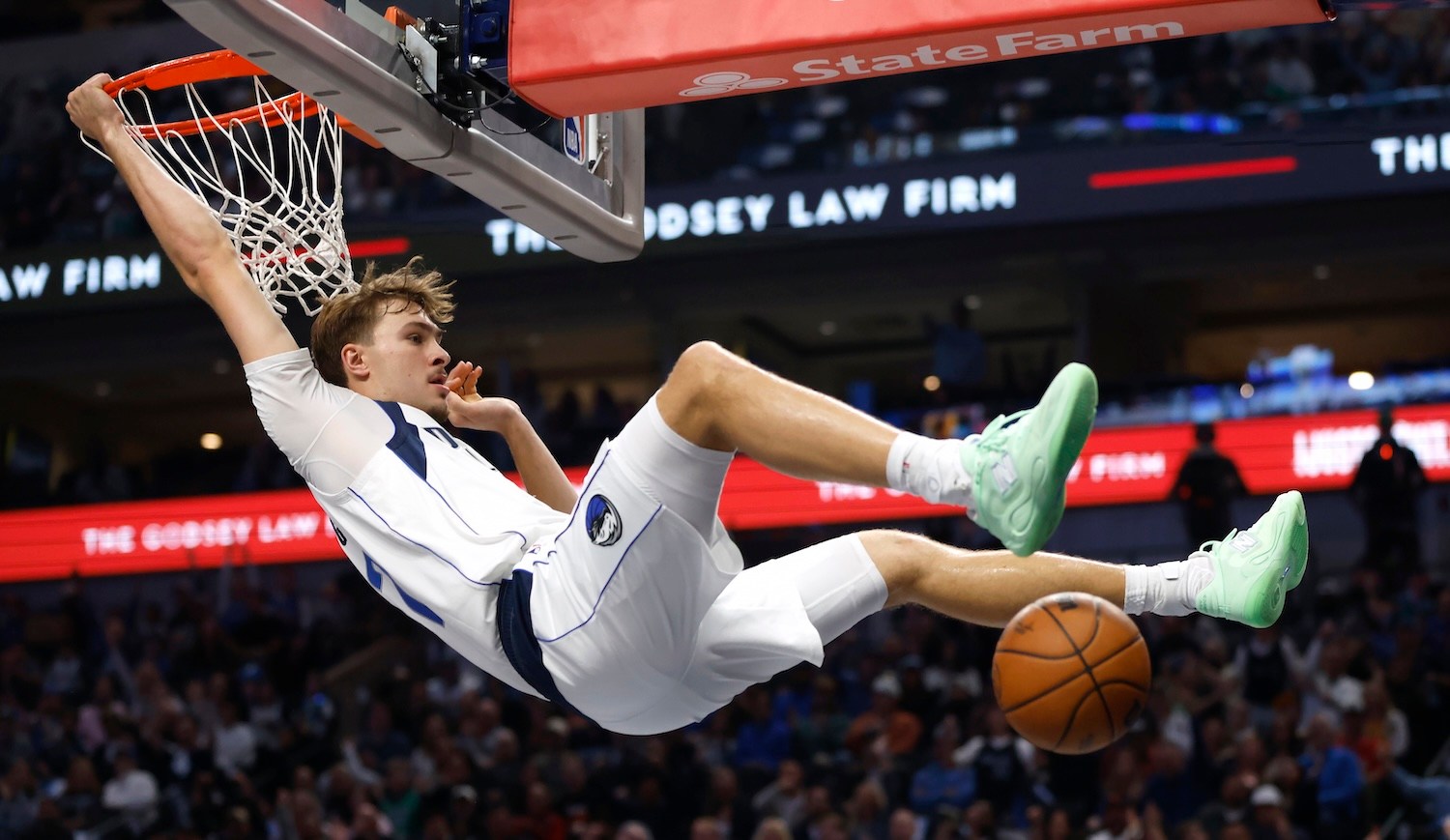
Cooper Flagg is one such player. Watching him dominate the Indiana Pacers Monday night, I was struck by how simple it all looked for the 19-year-old. With his Dallas Mavericks trailing by 10 coming out of halftime, Flagg made a point of taking and nailing three straight midrange jumpers, shots he can get to anytime he wants. Three times the cockroach (complimentary) Pacers dodged getting squished and made their way back into one-possession range; with the game on the line, Flagg calmly got the rock and went to work.
Flagg wound up with 43 points on 25 shots in 39 minutes, 10 rebounds, six assists, and four stocks, all on the second night of a back-to-back. He played the entire fourth quarter and hit all eight of his free throws. He turns 20 next week, and is at most a few months older than the youngest draftees in the rookie class after his. He's taken to munching PB-and-Js at all times because he's still a young growing boy. Something interesting is happening in Dallas, somehow, which all comes down to Flagg's undeniable superstardom.
Flagg had a great first season, of course, winning Rookie of the Year over a perhaps more statistically compelling Kon Knueppel on account of how obvious it was he was the better player. But last year's Mavs were awful by design, setting for observers the tricky task of imagining how and whether Flagg's production would fit into a winning context. Clearly the guy scoring 51 points against the Orlando Magic on a Friday then 45 against the Los Angeles Lakers the following Sunday was going places, but Mavericks coach Jason Kidd had the power forward–sized Flagg playing point guard, trying to lose, and sharing the court with Marvin Bagley III and John Poulakidas. With tanking rendered structurally irrational by changes to the NBA's draft lottery and the Mavericks short on future first-round picks, some adjustments would have to be made.
The main difference I see this year in Flagg is his confidence. He knows he can make any play on either end of the court, and he's finally asserting himself as often as possible. Flagg is flying into passing lanes and driving hard into mismatches, eating up any free space given to him.
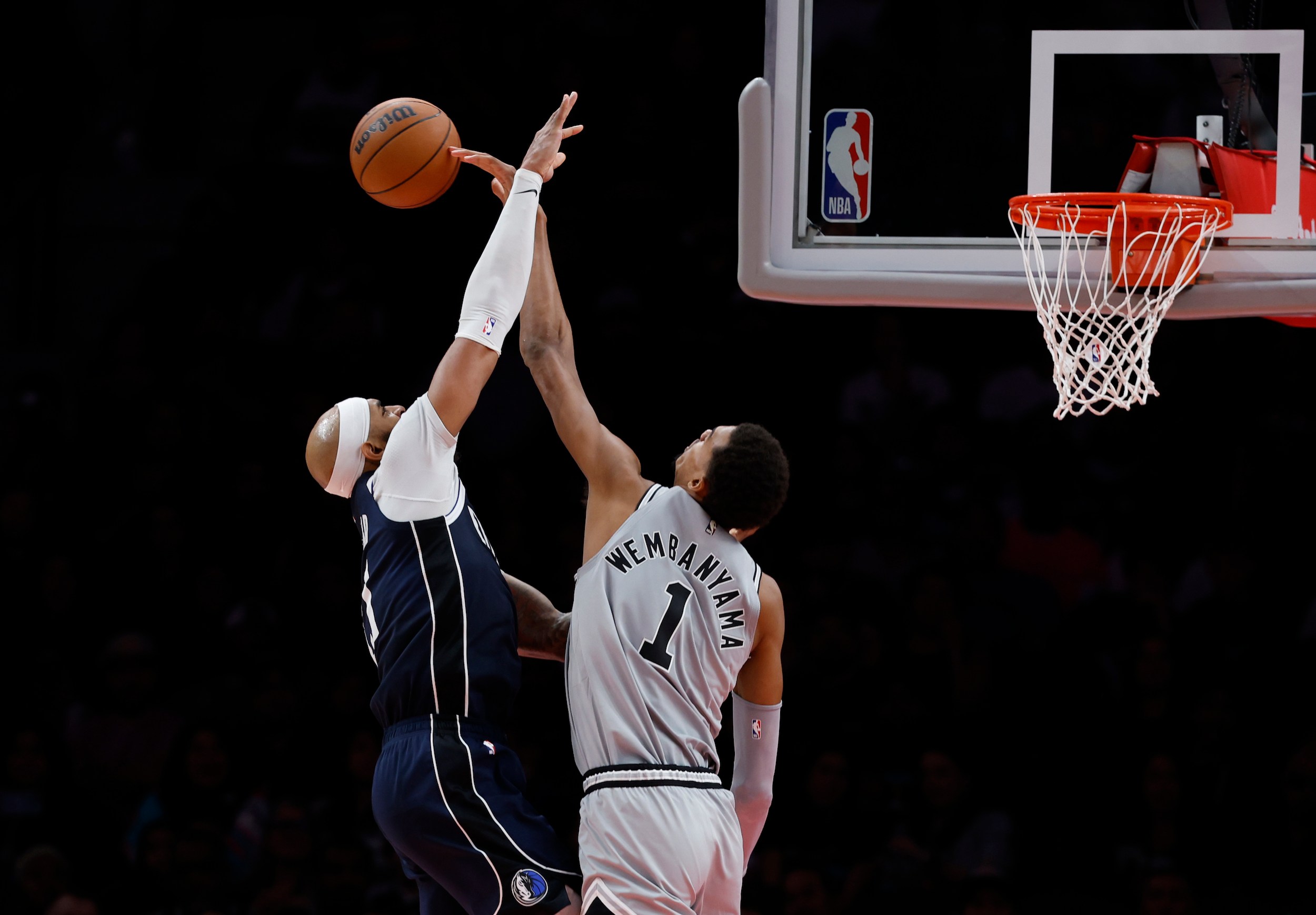
One slight surprise last season was his work as a defender. Flagg profiled as a do-it-all wing destroyer, someone who would make tons of plays on that side of the ball, but as a rookie he didn't quite have the appetite for it. This season, he's gleefully causing chaos as a help defender. You can see this most cleanly in his five-steal, three-block masterclass against the Miami Heat a few weeks ago, when he rotated into blocking Giannis Antetokounmpo at the rim and then closed out and got a fingertip on a would-be go-ahead Andrew Wiggins three at the end of the game.
In between those plays, Flagg was also taking charge of every offensive possession down the stretch. The Mavericks played in and lost the most clutch games of any team last season; this season, they've won tight ones in Miami and against the then-undefeated Houston Rockets at home, both of which featured Flagg making clutch buckets in the midrange.
What's fascinating here is that Flagg's game is still pretty clearly unformed. He is shooting 29 percent from three-point range, again, and has some of that wonky early–LeBron James shooting form, where he seems to shoot better on the move than from a standstill. He's getting better at getting to the basket, best evinced by his 7.2 free throws per game, and he's tossing far more assists this year (6.9, up from 4.5) despite no longer playing as a point guard. Strangely, the smoothest part of his game is the midrange jumper, which makes him a difficult player to analogize. Is he turbo-mode Grant Hill? Undersized Real Hooper Giannis? The Michael Jordan of Paul Georges?
Let's return again to the idea of simplicity. What makes Flagg special is that he's running around making every play and flashing an increasingly sophisticated game while towering over everyone else at his position. Watch enough hoops and you start to learn that a player's listed height doesn't tell the whole story. Flagg measured in at a hair under 6-foot-8 in the spring of 2025, coming out of Duke University, and allegedly grew an inch or two this past offseason, but figuring out his exact specs only gets you so far. You have to watch him glide past bigger guys and destroy smaller guys to see what makes him such a problem. Indiana's Pascal Siakam is, in a technical sense, "bigger" than Flagg, yet he looked physically overmatched last night.
With a 7-4 record as of Tuesday, Flagg's Mavericks are one of the stories of the early season. Dallas's team-building situation is mildly incoherent, seeming to be pointed in several opposing directions at once. They're a strange team, led by, in Flagg and Kyrie Irving, two players who are 15 years apart in age, with a permanently injured third-best player (Dereck Lively II), and several high-profile reclamation projects playing the best ball of their careers. They have no first-round pick in next summer's draft, and they owe swap rights in 2029 and '30. They have the 11th-ranked offense by offensive rating and 10th-ranked defense by defensive rating, without any distinguishing statistical echo that points to a unique style.
It doesn't all add up. Or rather, it wouldn't, were it not for the presence of Flagg. The game is easier for everyone when he's on the floor, unless you have to guard him.