

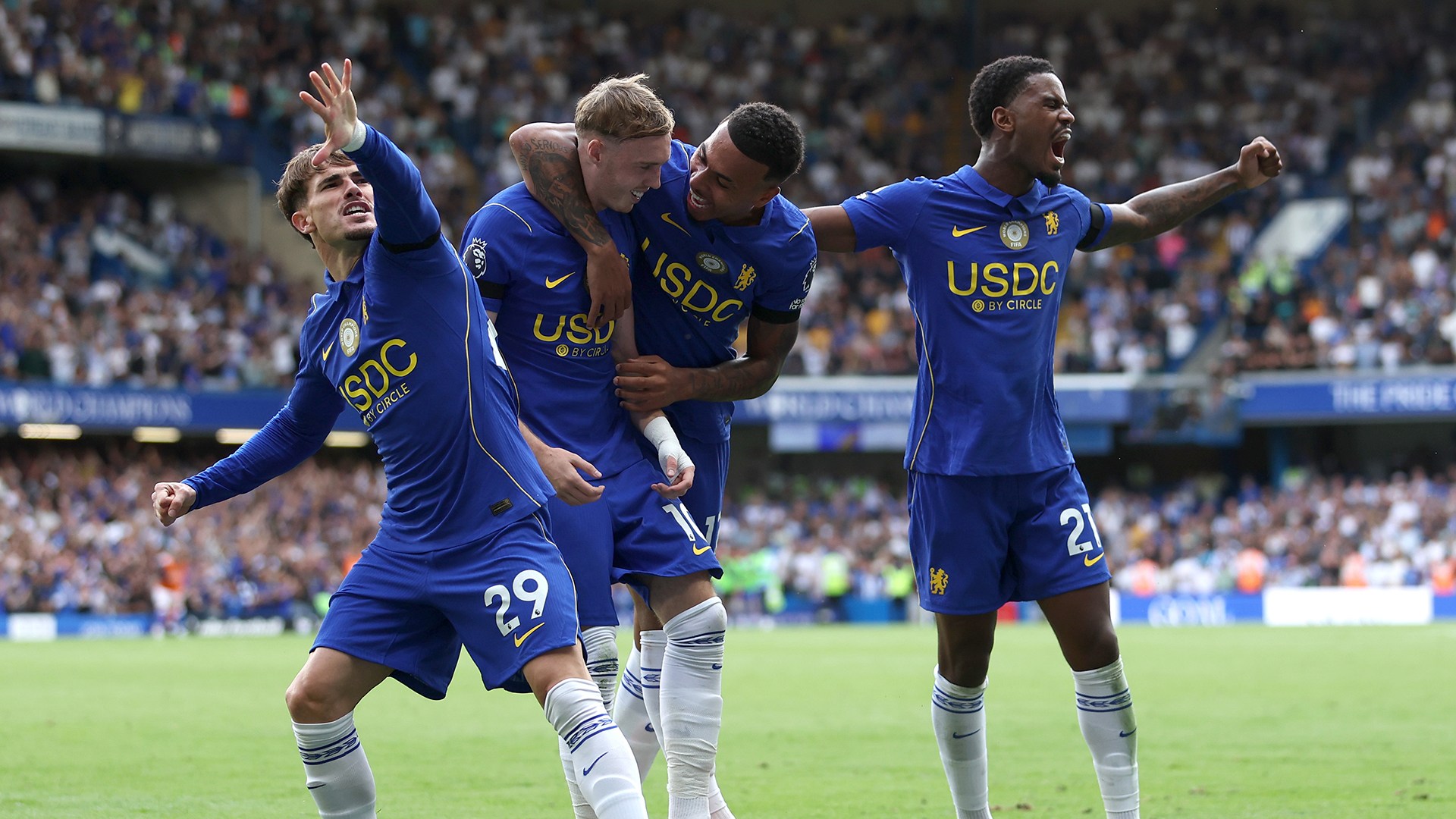
Two matches into a new Premier League season is the perfect time to overreact. One match is a fluke; three matches feel too real. Two matches, however, give an overeager observer just enough pattern recognition to make claims that far exceed reality. This is doubly true if a club has shown quality and frailty in almost equal part. Therefore, after two barnstorming wins and/or two near-collapses to open the 2026-27 campaign, I feel confident in saying that Chelsea is great, doomed, and a work in progress.
Really, how you feel about Chelsea will depend on how you feel about life. For an optimist, the club beating last year's 11th- and 8th-placed teams to start the season, the former away from home and the latter at Stamford Bridge, is a beautiful start to the Xabi Alonso era. On the flip side, Chelsea's inability to see out either game without letting the opponents back into them is a pessimist's fantasy, a red klaxon blaring over Chelsea's lopsided roster construction and a manager who, while highly regarded, is coming off of a high-profile flameout. The boring and most correct feeling is probably somewhere in the middle, of course, but that's no fun. What is fun is Chelsea Football Club as it stands after two matchweeks; similarly to last season's Liverpool, the Blues have declared themselves as the main event for neutrals, a must-watch whirlwind of chaos that might leave Chelsea fans needed heart medication.
Against Fulham on matchday one, Chelsea jumped out to a lead after just 31 seconds via a Cole Palmer assist to João Pedro, but then allowed Fulham to equalize in the 23rd minute. Goals four minutes on either side of halftime (one by new signing Morgan Rogers, and the other a flip of the first, with Palmer scoring and João Pedro assisting) gave Chelsea its final tally, but the side could not see out the 3-1, conceding a second to Fulham and weathering a barrage for over half an hour. The three points eventually secured, Chelsea set out to fix one more problem (bringing in Aston Villa's Emiliano Martínez at goalkeeper to replace Robert Sánchez, who had a howler against Fulham for the equalizer) and then hosted Brighton this past Sunday.
If the Fulham game was messy, then the Brighton game was a real debacle. Once again, Chelsea scored early, with Roméo Lavia finally scoring his first goal for the side in the fourth minute. Unlike against Fulham, the Blues then piled it on, scoring a second (Rogers assisting Pedro Neto) and a third (João Pedro) in the first 32 minutes. However, just like against Fulham, the shutout wouldn't hold, as Brighton took those three punches to the chin and got to work. Three minutes after Chelsea's third, Malick Yalcouyé scored a banger for his first Brighton goal, allowing the Gulls to go into halftime with some semblance of hope. That semblance turned very real after a dominating 20 minutes of second-half play, and Brighton scored again in the 63rd minute, thanks to Pascal Groß deflecting a ball off of João Pedro and into the net. (It counted as an own goal.)
If there has been an encouraging sign for Chelsea, even with these defensive shortcomings, it's been Palmer's play. Three seasons ago, he was a real Player of the Season contender, scoring 22 goals and assisting 11 in his debut campaign with the first-team. Since then, his performance has dropped season-by-season; he scored 15 and assisted eight in 2024-25, and then bottomed out last season with just 10 goals and one solitary assist as he battled multiple lower body injuries.
Palmer did lead Chelsea to the Club World Cup title in the summer of 2025, winning the best player award with five goal contributions in six games, but the 2025-26 season kept him out of England's World Cup squad. In many ways, this season then serves as a referendum. Is Palmer the star he looked to be in his first season, or did he peak early as an attacker for a side which had few options of his quality?
So far this season, Palmer has looked every bit that star. On top of the goal and assist at Craven Cottage, he was the best player in Chelsea's 2-0 League Cup win midweek against Luton Town, and then he scored the dagger against Brighton in the 74th minute, charging with the ball until uncorking a perfect left-footed, near-post shot:
With a motivated, healthy, and productive Palmer, Chelsea can surely afford some defensive miscues, and even though Brighton made the scoreline a dicey 4-3 with a 95th-minute goal, it was Palmer's goal that truly settled affairs. Chelsea might need a lot of that going forward; while possession doesn't necessarily signify domination, Brighton's 75 percent share of the ball did translate to plenty of chances once it began mounting a spirited comeback from 3-0 down. The Chelsea optimist would argue that they didn't need the ball after so thoroughly blitzing Brighton's goal in just over 30 minutes, but the realist believes that Chelsea can't keep letting its overmatched opponents find real footing. Trust me, I sat through that last season with Liverpool, and eventually, the wheels will come off.
Premier League seasons are too long to live so thoroughly on a knife's edge, and Chelsea will need to sort out ball control and defensive solidity before long. And Chelsea will have some more midfield weakness if it does go through with the sale of Enzo Fernández to Manchester City, barring any reinforcements before the transfer window closes on Tuesday.
Still, though, this is a promising start to Alonso's tenure as the boss, and at the very least, his 3-4-2-1 formation, the same that won him the Bundesliga at Bayer Leverkusen, will provide plenty of goals and action. Given where Chelsea was last year, with a manager not long for the job and a 10th-placed finish in its future, there could be worse fates than challenging for a Champions League spot while playing incredibly entertaining matches. It might not be a title-challenging season in the long run, but Chelsea has been so far off that specific pace that just sprinting back onto the scene at the top third of the table might be enough to consider this a success.