
I have tried over the past year and change to find a succinct way to tell this story and instead only keep coming up with longer and more elaborate versions. So: Way back in law school I read a lot of John Buchan novels. If you are not familiar with John Buchan, know that he wrote a series of thrillers, one of which was made into a Hitchcock movie, and that he was also Governor General of Canada. Reading Buchan was not the first time I had heard of him; when I was a small child, I had a set of E. Nesbit books published by (I think) Puffin and in the back pages they would advertise other books for young readers and Buchan was basically always in there along with, I’m pretty sure, H. Rider Haggard’s She, which paints a somewhat strange picture of what Puffin thought small children needed, book-wise. The John Buchan books are actually pretty good, even if Buchan himself was just as high on British imperialism and its associated tenets as his day job might lead you to expect.
I can’t remember why I started reading Buchan, but I suspect it was because I found him at the used bookstore I went to in those days, which mostly sold books from the estates of dead professors and was staffed by an astonishingly handsome guy whom I once overheard on the phone with a friend saying, “Yeah, we broke up because she wanted to start a family and I wanted to start a revolution.” It was one in a line of great bookstores I have known, and also I enjoyed the vague feeling of cosplaying as a well-educated white guy from the ‘50s, the kind of guy who would turn to John Buchan in his leisure hours. I chain-smoked, which really sold the bit.
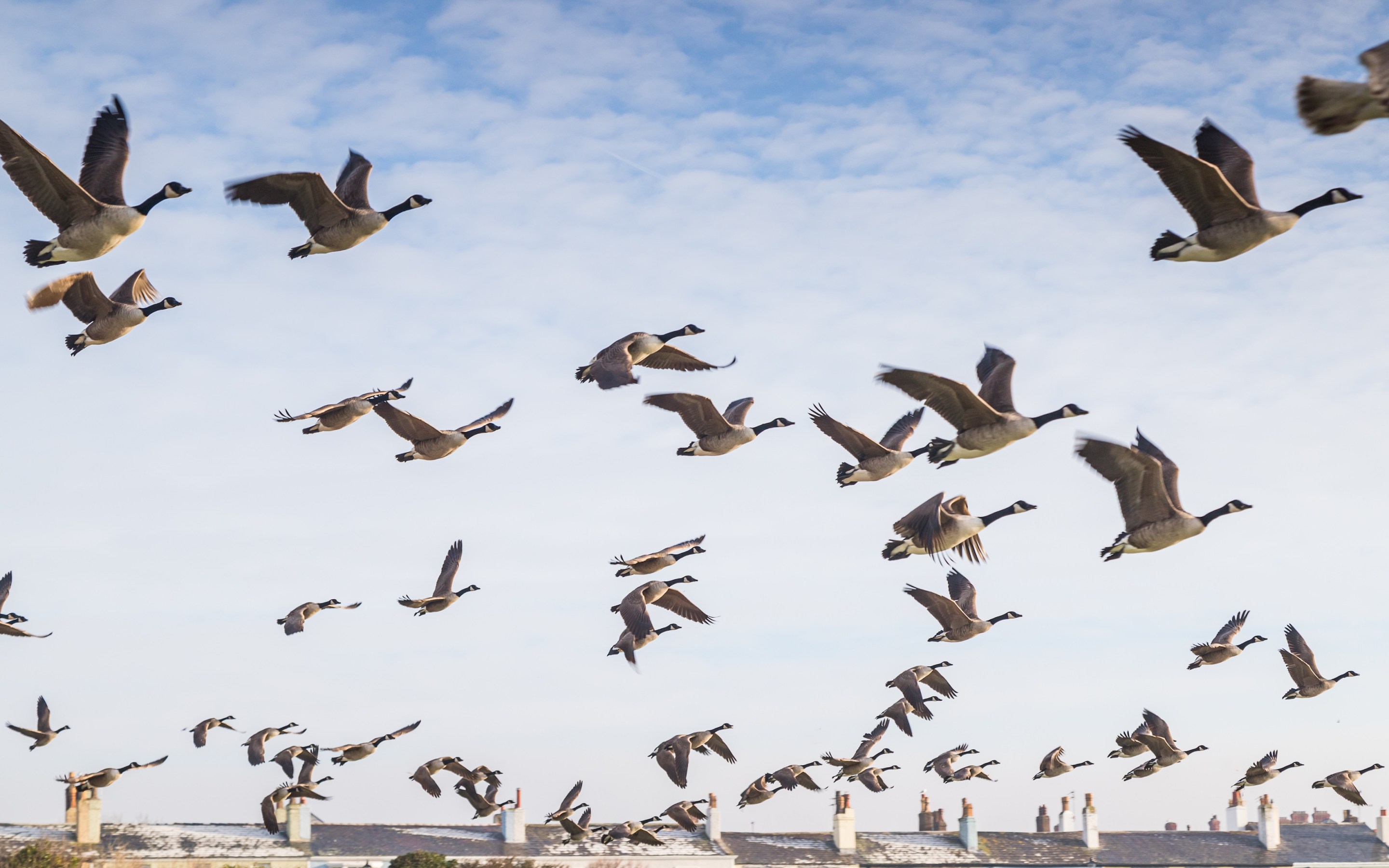
I read the Buchan books and liked them, if not as much as the advertisements in Puffin had led me to believe I would. Maybe you had to be a small child. But I read them one after another, checking them out of the university library from a section in the stacks where I never saw anyone else, taking them on the bus trip upstate to spend Christmas with my grandmother. In my recollection it is late at night at my grandmother’s apartment, snow on the ground outside, and I am reading one of these books and I am stopped dead because I am reading a sentence I have read before. It is a sentence describing the beauty of some birds—I remember them as geese—flying in a way that invokes the evening sky and the black wings against it, followed by a very prosaic but also precise rendering of how much fat these birds put on before winter or how far they can fly or something.
I had read someone making fun of that sentence before and I needed to know where.
It wasn’t enough for me to simply believe that I had read that sentence and its beat-beat-thud somewhere—I needed to track it down. I was haunted by the thought that I might have made it up, that this sensation I was experiencing late at night in Rochester, N.Y., of sharing an affectionate laugh across the years at John Buchan the bird lover, was imaginary. I looked through all the books I owned that I thought might have referenced it and I hunted out other books that I had once owned but discarded from the libraries; I searched the New Yorker archives when they finally went online. I never found it. Every couple of years, I would try again and get nowhere. Eventually I made peace with the idea that I would never know.
Except now I do. It’s in the first full paragraph of J.D. Salinger’s Seymour: An Introduction, a novella I read so many times as a kid that even its throwaways lodged themselves in my memory.
This is the actual text, in which the narrator addresses the reader:
“You’re a great bird-lover. Much like a man in a short story called ‘Skule Skerry,’ by John Buchan, which Arnold L. Sugarman, Jr., once pressed me to read during a very poorly supervised study-hall period, you’re someone who took up birds in the first place because they fired your imagination; they fascinated you because ‘they seemed of all created beings the nearest to pure spirit—those little creatures with a normal temperature of 125°.’ Probably just like this John Buchan man, you thought many thrilling related thoughts; you reminded yourself, I don’t doubt, that: ‘The goldcrest, with a stomach no bigger than a bean, flies across the North Sea! The curlew sandpiper, which breeds so far north that only about three people have ever seen its nest, goes to Tasmania for its holidays!’”
I first read a J.D. Salinger novel when I was 12 or 13; I borrowed The Catcher in the Rye from my roommate at summer camp in the Inland Empire. I knew that he was a famous writer and it was a famous book; I had a vague sense that I was doing something virtuous in reading it. And I was immediately hooked. When I came home I read the rest of them, including Seymour: An Introduction. After the age of 16, I never read them again.
Before Twitter became primarily a place for fascists to memorialize their grievances and bots to go in search of prey, one of its minor functions was the polyphonic and baroque investigation into whether affection for a particular book constituted a “red flag.” It sounds stupid written out like that, because almost anything taken out of context and stripped bare of nuance does, and also it was stupid. Sometimes stupid things are fun or interesting or meaningful in some way. What I am trying to say is that I read and enjoyed and also made fun of a lot of those investigations, and also that one of the books reliably presented as suspect was Catcher in the Rye.
Despite my Salinger phase, I never felt moved to come to the defense of Catcher in the Rye, or Salinger more generally. Similarly, the news that he was a creep, which was less news in a traditional sense and more a filtering into the wider consciousness of facts that had been known for a long time but to which some of us (me) had failed to give proper weight, had almost no impact on me. It is depressing how many famous sensitive men are creeps, but I didn’t feel any particular pang about Salinger being one of them, even though I had read and re-read and re-read his books when I was a 14-year-old girl.
I thought of Salinger as something that I had, at a developmentally appropriate stage, read and loved, and then outgrown. To defend them when they were criticized would have been like defending nose-picking because I picked my nose as a kid. It is probably easier to take this stance because I am not a man. Loving Salinger as a teen girl meant a not-very-arduous but constant effort at overcoming psychic distance, just like with a million other cultural products I could name, but it also meant that when I was done I could just let the current sweep either it or me away.
If this detachment had lasted, I wouldn’t be writing about Salinger at all. But last summer, while browsing the truly excellent used bookstore near where I live (it is less precious than the link makes it seem), I pulled off the shelf a hardback copy from the early 1960s of the book in which Seymour: An Introduction shares space with Raise High the Roof Beam, Carpenters. If you went through your own Salinger phase, you know exactly what this book looked like, the Salinger iconography in some ways more fixed than Coca-Cola, all that blank space and the cover font that always makes me think of the gilded fake bamboo frames my (not Asian) grandparents used on a series of Japanese prints.
Seymour: An Introduction was my favorite Salinger, which says a lot about me because it is objectively the worst Salinger, the one where he is not so much writing a novel but putting down his thoughts about life, the one where his embarrassing lack of authorial distance from the recurring Glass family tips most nauseatingly into idolatry. The current era of literature has led me to expect from my autofiction a cryogenized main character, the closeness created by shared identity negated by a sanitary detachment in the narration, but Salinger, having given his narrator a different last name but several extremely Salinger-like qualities, has none of that compunction; the narration is the opposite of freeze-dried, is a Cinnabon half-eaten by a toddler and left to sit in the sun.
Surprise! As the bile of the previous paragraph may suggest, I’m more emotionally enmeshed with this book than I would like to admit! What I learned by pulling the book off the shelf and finding the John Buchan reference is that Salinger has been living rent-free in my mental crawlspace the whole time. I might have been able to dodge this revelation if the book hadn’t been the answer to my own personal, decades-long mystery, if it hadn’t turned out that it was Salinger I was laughing with across the years. But instead I had to confront just how much I learned from a book that I have, to say the least, mixed feelings about. Leaving still unknown how much of what I think of as my individual taste I acquired from other, even more dubious sources.
A theory I have held for a long time is that certain works of art so expand the field of what a poem or a movie or a novel can do that the original work of art with its specific weirdnesses disappears from memory. Sometimes it happens on a culture-wide basis. Every movie that came out at least a year after Pulp Fiction carried some mark of Pulp Fiction on it, even if only in the soundtrack. I saw Pulp Fiction in the theater and loved it, but I don’t remember it now as a movie, I remember it as a set of style options. David Sedaris has become the most annoying kind of old guy, but I think of “Parade” in Barrel Fever as a foundational text for almost all of my favorite writing on the internet.
Sometimes it happens to people one at a time, in the privacy of their childhood bedrooms, reading a book that came out before they were born. Two years ago I would not have said that J.D. Salinger influenced me, but the truth is that reading Salinger influenced me so much that I became nose-blind to it. Twisting self-referential sentences, the address to the reader, a sideways jocularity—things that I thought were in my writing mostly because of the way my brain worked and also because they were the lingua franca of contemporary blogging, turned out to be mostly things I had stolen from Salinger.
When I am trying to write, I am mostly trying to interrupt the autopilot of my brain. Left to its own devices, my brain does not observe the world and put those observations into words; left to its own devices, my brain emits a burbling stream of other people’s observations mashed into formulaic and predigested prose. I don’t think I’m alone in this. A million years ago, I was tutoring a small child tasked with writing a poem about spring, and she wrote about buttercups but did not have, as far as I could tell, any idea what a buttercup looked like—she just knew it as a flower that other people associated with spring.
It is a whole process, the interruption of mindlessness. But reading Salinger or, really, glancing at Salinger reminded me that it is a process I only have access to because of other books I have read. The first time I read Henry James, I was completely blown away—I hadn’t known that you could write down thoughts like that, that you could access the space between what people were saying and what they were thinking, or the fluctuation between moments of thought. It felt immediately true, like it was something that I had always known about the world. But I don’t actually know if it was something that I already saw in the world or if it was something that I only became able to see because of reading Henry James.
Seymour: An Introduction had a major chord version of that—I hadn’t known that you could write like that, dodging the main point all over the page in a series of digressions that ultimately turned out to be the story. I didn’t know, and then once I did know I forgot where I got it from, and none of it was any more inherent to me personally than it would be if I tried to write all the time in the style of General William Tecumseh Sherman.
I don’t know if I would have found the Buchan sentence funny if I hadn’t been taught by Salinger that it was funny, that the change of register was a comic thing. It is easier than it ever has been to obtain formulaic prose, the advent of the LLM turning the purely handmade version of even blithely and unadventurously clunky prose into a kind of prestige item, the written equivalent of the Shaker chair, and the algorithm makes sure that everything you find even a little bit funny or perceptive or novel is served to you 10 million different times with only minor variations. But there is still no way to predict when someone else’s description will let you see the birds with new eyes, even long after you’ve forgotten their words.
It is maybe malpractice to have written all this without rereading Salinger, without, at the barest minimum, rereading Seymour: An Introduction. But I got a few pages in and I had to stop. It was too painful.