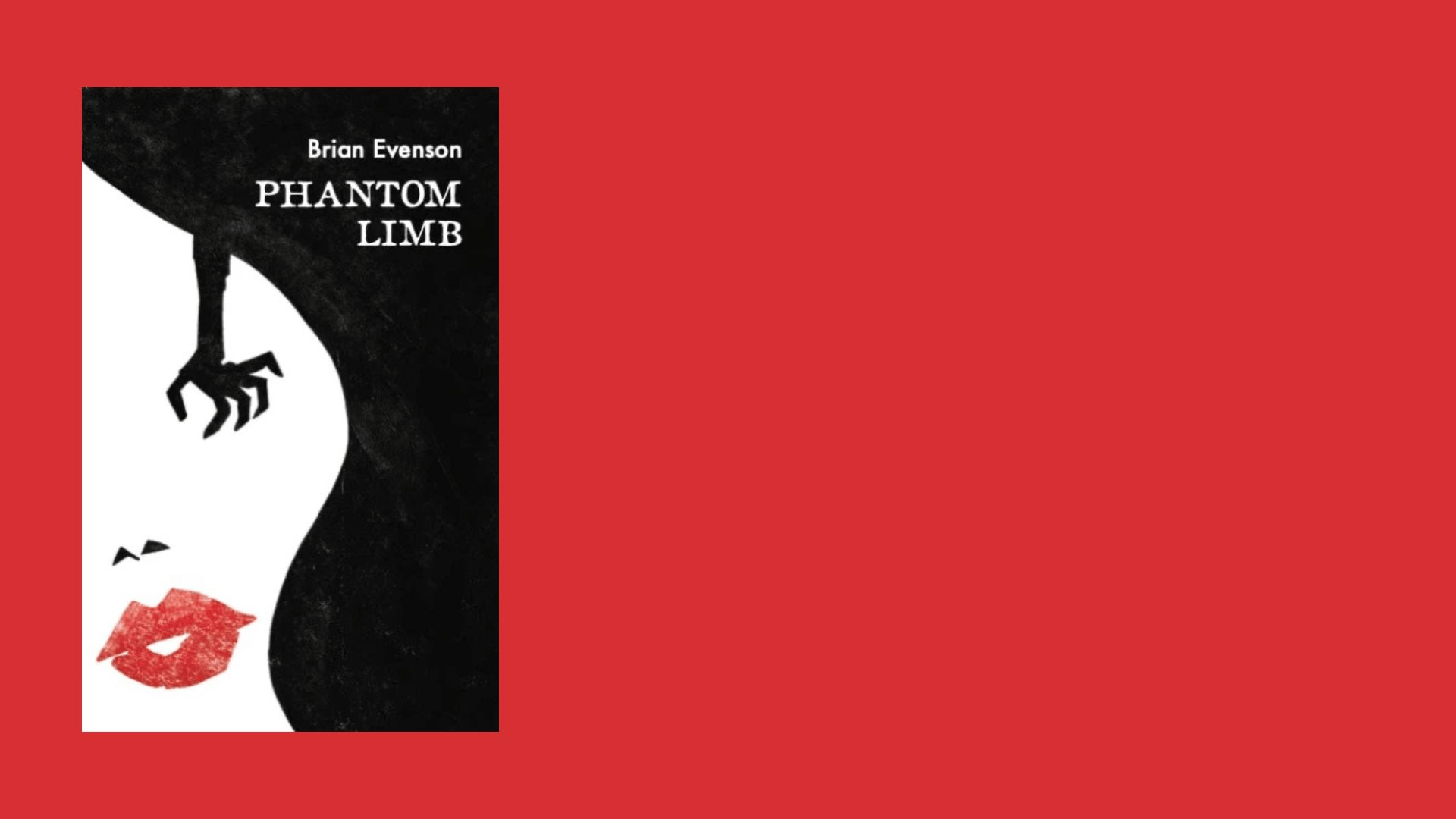

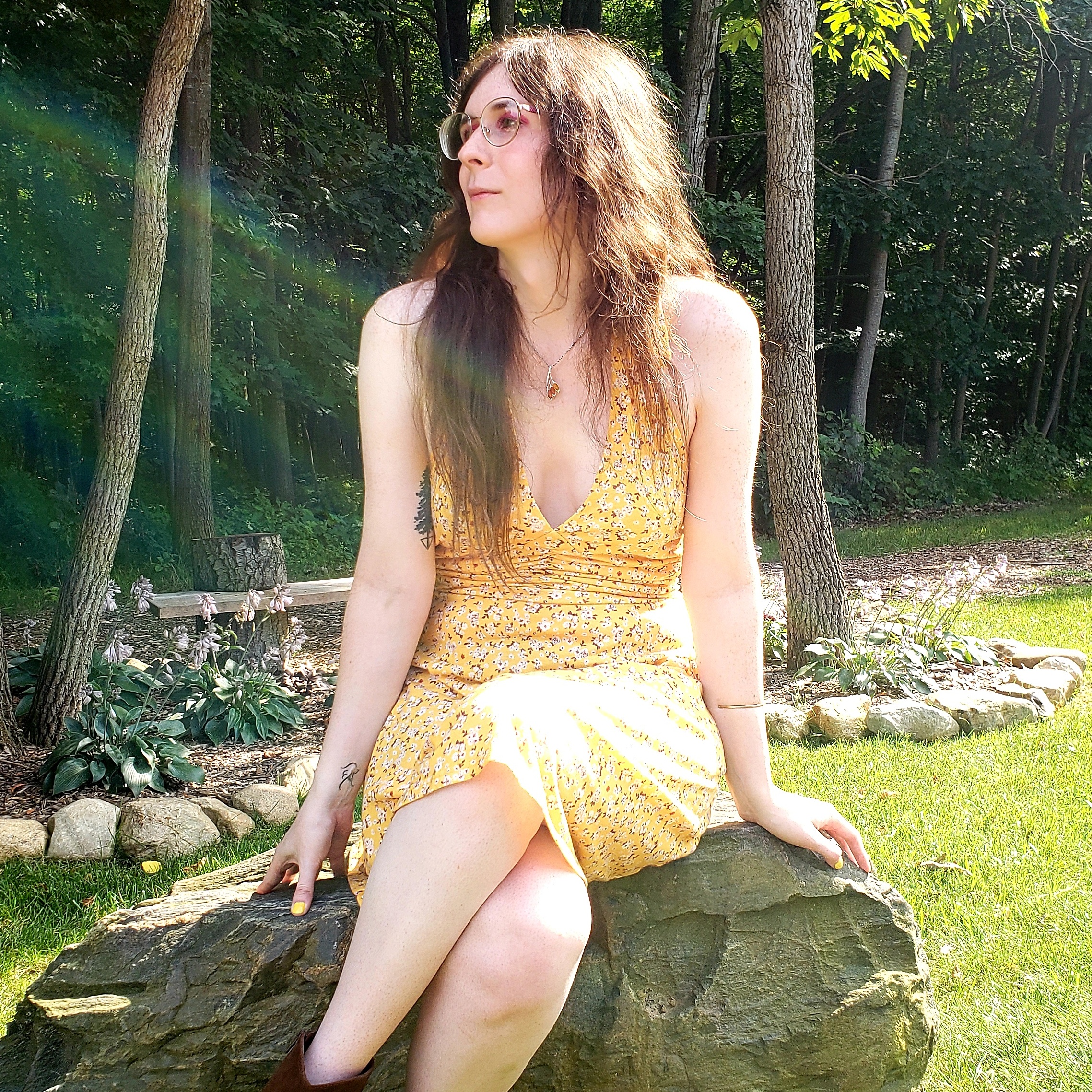
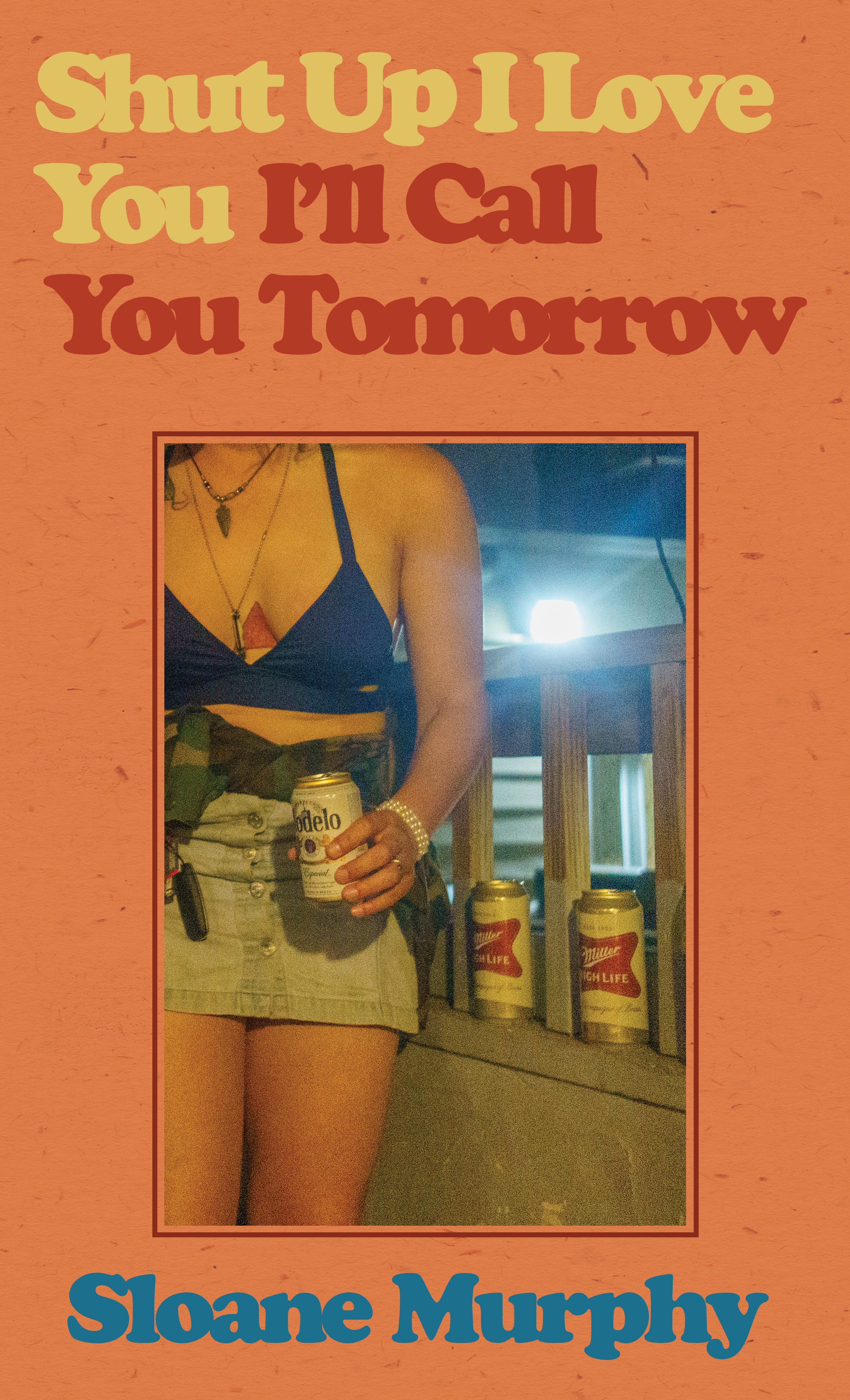
There are two recurring trans women named Carolina in Sloane Murphy's short story collection Shut Up I Love You I'll Call You Tomorrow. One's nicknamed North, and the other's nicknamed South, but nobody can seem to keep track of which is which. "Most of the time she just responds when people call her South," one of the stories says about North, who's the elder of the two. "At least no one was calling her Old Carolina."
This is just one of the details in Murphy's debut that reminded me of the best Hold Steady albums, where casts of lushly described, hard-partying outsiders self-destruct during nights that feel as exciting as they are dangerous. The big difference is that the women in Murphy's stories are trans, which means their stakes are even higher.
Edited by Emily Zhou, who wrote 2023's essential short story collection Girlfriends, Murphy's Shut Up I Love You does for Trans Chicago what Zhou did for Ann Arbor and Brooklyn. This book announces a talented young writer who crafts stories with a vivid sense of time and place, filled with recognizable conversations and sly humor, punctuated by a willingness to stare at the abyss. But while being trans in 2023 was no great shakes, Murphy's collection arrives at a time when the alarm bells ring even louder—when we can't even watch sports on TV without seeing political ads from one state or another trying to demonize us, trying to tell people we don't deserve to live as we are.
It feels bleak out there, and Murphy's stories reflect that atmosphere of cruelty. But they also document a moment when more and more young trans people are taking the plunge, forming real-life communities, making art, and helping each other survive. There's a push/pull between those two truths in Shut Up I Love You, and Murphy explores both the power and the limits of caring for each other in a hateful world—the act of holding hands at the bottom of a ditch, to use an image she mentioned at a Q&A in Brooklyn last week.
"I kept trying to come back to, 'Someone should actually believe in the future,'" Murphy told me in August while I was visiting Chicago. She was carrying a copy of Nelson Algren's The Man With The Golden Arm when I met her, and she chain-smoked hand-rolled cigarettes as we talked at a sidewalk table outside a pool bar off the Brown Line. Our conversation has been edited for length and clarity.
I've only ever had the very touristy Chicago experience. I grew up in Michigan, and we'd come on vacation. But how would you define the Chicago trans girl community, or at least your own experience of it?
Fairly drunk. Especially in the last couple of years, fucking massive. There are so many girls moving here it kind of scares me. But mostly, it's just a bunch of really industrious, weird girls who are really invested in doing a big thing together most of the time, and that's really fun and beautiful. Like, baseball here is a produced event. Everybody has a fucking walk-up song. There's consistent free burgers and dogs that a girl just brings and starts cooking and hands out. Everybody in this town just kind of wants to do a bunch of stuff, and then is not all that interested in telling you about all of the stuff they're doing, if that makes sense.
Like, the more you get to know someone, the more you find out, oh, they have this weird thing that they're really passionate about?
It’s more like, if you ask any girl who's behind a big Chicago thing, she'll be like, "Oh yeah, I do that. What's up?” There's not a lot of interest in social capital. There's more just interest in “I do this thing, and I do it really well, and I work hard at it.” Everything written about Chicago is, “Everybody here is mostly just obsessed with working,” and it's awesome. It's the greatest place ever.
When you mentioned it kind of scaring you, how many people are moving here, is that just a reflection of how, in a 200- or 300-mile radius around Chicago, this is one of the only places now to do the thing?
It's not even the 200- or 300-mile radius around Chicago. More and more, it's just, this is a big city that is still relatively affordable for transsexuals. Moving to New York, you need a lot of money to do that. Moving to Seattle, you need a lot of money to do that. You can still maybe find an apartment, or at least a room in an apartment in Chicago for 600, 700 bucks. So we are more and more receiving—I don't know about the other cities and their portions of the transgender diaspora or whatever you call it—but Chicago gets a lot of the brokest ones, it feels like. Four years ago, I felt like I knew everyone, and now I occasionally go to things, and I'm like, “I've never met you before in my life, and there are 25 of you.”
How long have you been here?
In Chicago, either seven or eight years. I forget.
Are you from Missouri?
Yes, I am from a tiny suburb outside of St. Louis, Missouri.
Are you now, or have you ever been a St. Louis Cardinals fan?
Yes, sorry. Cardinals and Sox.
Last night was my first ever Sox game.
It's the best, isn't it?
It was the best until they blew the lead.
Yeah, I was mad on my couch.
I was happy I saw the home runs, and I was happy I saw the ballpark all packed. I still had a really, really great time. I was just mad because I’ve really fallen in love with this team this year.
Oh, they're gorgeous. They're so fun.
Lately they've been frustrating me more. It's very up and down.
When they're good, they're so good. They’re a bunch of 20-something boys and they’re having fun. Luisangel Acuña, if you read this, get in contact.
My boyfriend is hardcore Sox fan.
God bless. So he’s having a great time right now because two years ago it was so bad.
I think he sort of enjoys leaning into the pessimism a little bit, but then you can tell, even when they were terrible, if they just put together a two-game win streak, you could just see it, that he couldn't stay pessimistic about that team.
The funniest thing about the Pope being a White Sox fan is, as a woman who was raised in a Catholic household, they do have a distinct Catholic quality, where it's just like “Everything's bad, but we have to have faith.” The White Sox are a team to pick if you like suffering.
In defining Chicago trans girl culture, you mentioned a lot of drinking, and that comes up in the book again and again. What's the deal with that?
What's the deal with alcoholism?
Yeah, what's the connection between being trans and drinking a lot?
I mean, for me personally, it's just fun. I enjoy it. It's one of the ways to momentarily forget how everything sucks. I don’t know. Addiction is really heavy in trans girl communities because there's this thing that I kind of term No Futurism. It's a big thing in the book, characters having it and arguing against it. It is something that I definitely subscribed to when I was a younger person, and drinking is part of that because it is obliterative. When you drink really heavily, you're not thinking about the hangover tomorrow, because you're thinking about how there will not be a tomorrow.
There's a part in The Man With The Golden Arm that I love, where Algren’s describing this really heavy drinking night after Frankie and Sparrow kill a heroin dealer and take his roll, and they respond to having more money than they'll ever have in their lives with “We're going to the bar, and we're gonna blow this entire thing.” And there's a line in that story that is like “It was a night where every man felt for some reason that he would never have to go to work again at all.” When tomorrow I have to wake up into a world that fundamentally does not want me to exist, it's kind of fun to have eight beers. That's kind of how I justify my own drinking.
I was thinking about Craig Finn as I was reading this. I think it's partly the recurring characters, but also the drinking and the drugs and the specific sense of place.
Yeah, I made my editor listen to the first three Hold Steady albums and a selection of songs off others with parentheses like, “So basically, I want this story to feel like the horns of this song.” My friend Lucy got me really into them a couple of years ago, and then I started writing one of these stories, and I was listening to “Knuckles,” and I thought it would be really funny if a trans girl tried to get other people to call her Freddy Knuckles.
I love when a girl has a stupid fucking name. If I ever meet a girl with a stupid name, I'm like, “Of course you are.” One time, a girl introduced herself to me by saying, "Hi, my name is Cheese.” She had a whole other name, but I knew her for two years and the only thing I ever called her was Cheese. Love you, Cheese, if you're reading this, wherever you are. But yeah, because I did that on the first story, I just kept listening to Hold Steady songs. It has that fundamental drunkenness in its prose. And if you read my book, you should listen to The Hold Steady while you do it. It'll add something to it.
There's this thing with the recurring characters, and Freddy is an example of this, where in one story, from one point of view they do seem kind of pathetic, and then you sort of pan the camera, enter in at a different angle or something, and then there's a more sympathetic view of them. You find your way into their inner life.
A whole thing that I was thinking about in these stories is, there is the experience of going to a party, and you're having a bad night, and you're looking at people you know and you're like, “She's got it all figured out.” And then you see her three nights later, and she's too drunk, and you're like, “She has nothing figured out.” Most of the different viewpoints is every girl in the story describing her friends either as “She’s pathetic and I’m better than her,” or “She has more of her life figured out than I do.” And then you go to the girl who has everything figured out, and she’s having an inner monologue about how she has nothing, all of her life is fucked, and she has no idea what she’s going to do tomorrow.
I would love for you to show me a woman who has never been the girl puking on the side of the street. And if you met that girl on another night, she would probably be the smartest person you've ever talked to.
I wanted to ask about “Pretty Girls Get Treated Better,” because I think you read the first few pages of that story, and it's like, “OK, this is the protagonist.” And then she goes to this party and is a complete bitch. It's always really exciting for me to read a story about a trans girl who's a complete bitch, and I was curious how you approached writing that one in particular.
I think I really just wanted to write a story where the main objective for me was to try and make yourself puke with how mean you're being, and really take every thought that you've ever had about other people that you've immediately said, “That's a thought that is not nice” and really try to interrogate it all the way. I wanted people to be their worst selves, and that story was just “Let's pick a girl on the worst fucking night of her life, and it's all internal, and it's all a problem she's causing herself, and still try and have a little bit of a sympathy for her.”
I at least hope that people don't come out of that story really hating Sybil, and they recognize Sybil's really that worst anti-feminist voice in your fucking head. But she let it take it over, and maybe one day she won't. I do believe that Sybil gets better eventually, probably after Megan breaks up with her. But yeah, in the grand tradition of writing a trans girl who sucks, that's mine.
What was your writing journey like over the course of this book?
So I was kind of convinced that I was going to be like Chicago legend Henry Darger. He was a janitor, and after he died, they went into his one-room apartment and they found hundreds of thousands of words and drawings about a fantasy world inhabited by 11-year-old girls called the Vivian Girls. And he just kind of did it and put it in a drawer, and no one knew about it until he died, and now people talk about it. And I was working a shitty job, and I had written half of a shitty novel in college, and then I kind of started writing short stories for something to do because I had a warehouse job where a lot of it was me sitting around waiting for deliveries. So I had a shitty notebook, and I just kept being like, "What about that conversation I had with Blank last week? Let's try and write a short story about this.”
Something I've written down is “Writing about sex?”
My thoughts are, the sex shouldn't be fun.
Why?
It’s more interesting if it's bad sex. Lots of people have had good sex. Lots of people have tried to write about good sex. I don't think I'm particularly good at writing about the good sex that I've had. I was part of this thing where it was a reading series and a conversation about writing about eroticism, and a fair amount of the other people on the panel were talking about how sex is this thing that you use to reveal yourself to another person, and I fundamentally don't think that's true. It's very easy to lie during sex, and the ways we lie to each other during sex are more interesting to me than the ways that we reveal ourselves during sex. The impulse to fake an orgasm is so much more interesting than just “I had an orgasm and it felt great.”
I wanted to ask about the story “Circles,” too—where you're writing about the scene from the perspective of an outsider, or someone who's seeing it with fresh eyes. I was wondering how you approach thinking about this thing that you're very much a part of, and then asking, “What does it look like to be experiencing a version of this for the first time?”
When you're inside of a thing, it feels like, “This is the entire universe.” And then you go outside of it. I mean, we are kind of like the lords of our shitty little mountain, or the fucking queens of our shitty little mountain. I don't know. I got gendered with it. But I've had friends of mine from St. Louis or other towns come in, and I noticed there's an impulse in myself: “I want to show off Chicago and how cool Chicago is, and then look, everybody knows me and I'm cool here.” But then when you do that with someone who has known you forever, they are like, “Girl, you're full of shit. I've seen you puke.” Those stories are really fun for me, because I am constantly in awe of the love that trans women can have for each other, and I am also fascinated by how cruel we are to each other, and how these little bits of social currency mean so much because the only thing you have is being a cool girl in a bar. When you take that away, who is that person?
Have you come to terms with the idea that, you know, next year or something, there's a 16-year-old trans girl in Iowa or somewhere who reads this book and is like, I'm going to go to Chicago and I'm going to all of a sudden be in the middle of this story that I really love?
I worry about her. If I could say anything to that girl, I would probably say, "So the story you're going to be in the middle of is ‘Circles,’ and you're not gonna have fun at that party.” Yeah, that's kind of terrifying. [Laughs]
It's a contradiction that I find interesting, because I think what you're saying is true, and at the same time, “I'm going to move from my place that has zero trans women to a big city, and I want to meet a lot of trans women and make a lot of friends and party with trans girls”—I think that is a good thing to encourage.
I will never tell anyone to not do that. It's a thing that I'm constantly at war with myself about. It would be so easy for me to be jaded, and I am jaded, but also I am fairly certain that being jaded is a bad thing to be. That's what “The Beer Drinkers vs. The Puppy Mill” is about: how easy it is to be like, all of these young girls are moving here, and they're so excited to be a part of something, and you’re looking at them like, “In three years, you're gonna be so sick of this.” And you can't really tell them about that. You're going to find five or six people you can stand, and you're just gonna hang out with them in three years. But until then, the trans girl bar night is the thing you look forward to every week.
The last story feels like a really conscious choice, to have this girl who has completely dropped off the map, and then to have her be saved by this woman that she has a really complicated past with, but also a lot of love with.
I hesitate to call her saved. I kind of hesitate to call either of them saved, because I think a big part of that story is that both of them are at the end of their rope when they have that conversation. But I think, at the end of the day, all I have are the women around me who consciously choose to spend time with me in a regular, meaningful way, and I wanted to write a short story where that's all they were left with, and they kind of decided, “Well, this isn't that good, but it's enough.”