

There’s a Terry Pratchett quote I love, about how all contemporary fantasy is written under the influence of The Lord of the Rings. “Tolkien has become a sort of mountain, appearing in all subsequent fantasy in the way that Mt. Fuji appears so often in Japanese prints,” Pratchett wrote. “Sometimes it’s big and up close. Sometimes it’s a shape on the horizon. Sometimes it’s not there at all, which means that the artist either has made a deliberate decision against the mountain, which is interesting in itself, or is in fact standing on Mt. Fuji.”
I think this holds true for all genre fiction; there are giants of the genre, who introduced basically all of the tropes, fully formed, and anyone working in that genre is constantly in conversation with those tropes. Every ghost story is in communion with Henry James; every haunted house owes a debt to Shirley Jackson. This isn’t necessarily a bad thing. Cliches become cliches for a reason, and it can be rewarding as a reader to spot the influences.
We are primed to expect the expected, just by picking up a ghost story in the first place. “Ghost stories might not all use the same words,” Malerman has one of his characters observe, “but they all sound like the same words because it’s the ghost we think about, not the words.”
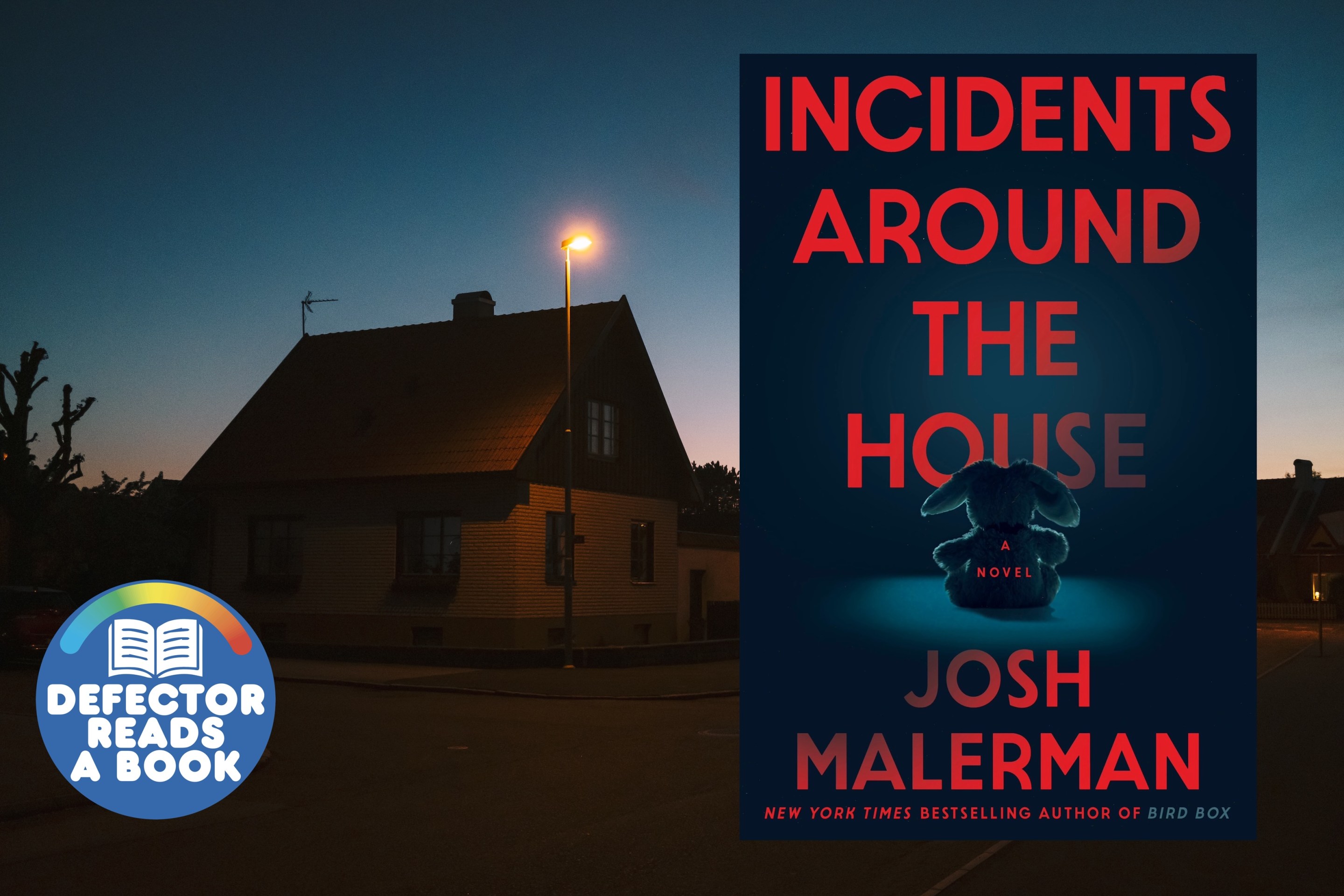
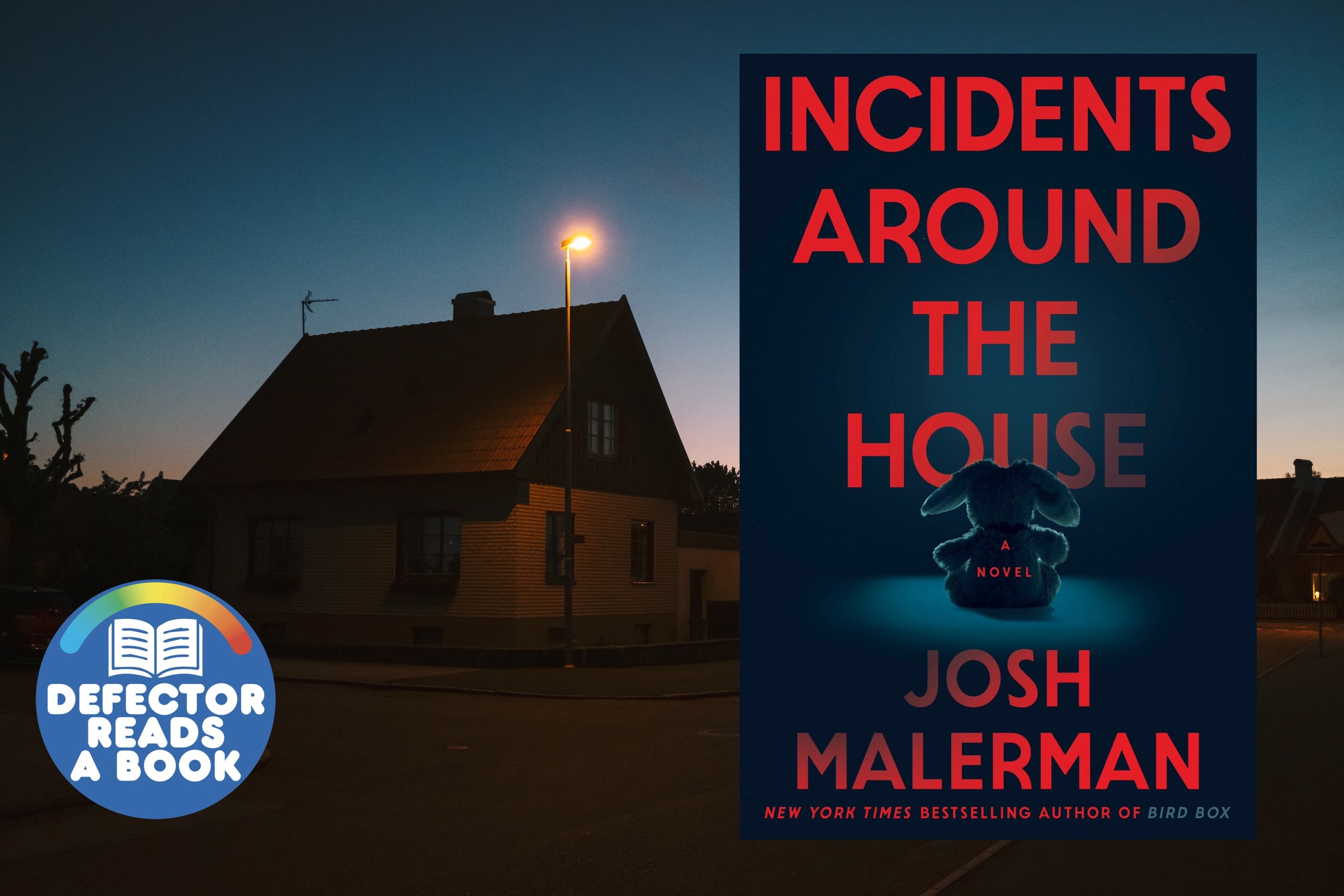
But the thing that provides the frisson in Incidents Around the House—which is not quite ghost story, not quite haunted-house story, not quite demonic-possession story, but a little bit of all three—and made it such a pleasure to keep turning pages, is that it throws out the classic genre conventions nearly wholesale. I think I’m a fairly well-read horror fan, so I came to this book thinking, I know how this works, and I absolutely did not.
Trope: We must wait a while to meet the ghost. Incidents: Other Mommy is mentioned in the book’s fifth sentence. Trope: Nobody believes the main character(s) that they saw a ghost. Incidents: Other people can and do see Other Mommy. The party scene where she comes downstairs for the first time was the moment this book made me sit up straighter, understanding that the traditional rules don’t apply here. Trope: The haunting is confined to a person or place, so we as a reader understand that when a scene takes place elsewhere, we are being given a breather. Incidents: Sorry! There are no “safe” chapters. Other Mommy can go anywhere and be anyone.
This is the story’s biggest strength, and the reason it had me nervous to leave my bed when I was reading under the covers with all the lights off (and for my love of horror I am not usually a “gets scared” guy). The tension is set to 9 at all times, no matter where and when the setting. “It’s weird because the sun is bright,” Bela says at one point. “And I feel like we’re talking like people do at night.”
The fun for the reader is in trying to spot the clues that Other Mommy is in play before she hits you with the jump scare. Between the child narrator—a hit or miss mechanic with, let’s be honest, a lot of misses—and Other Mommy’s ever-growing capabilities, it’s not always obvious. But it was always satisfying to solve.
While reading Incidents I was several times reminded of another modern horror novel with similar hype, Paul Tremblay’s A Head Full of Ghosts. In that book, a teen girl is maybe possessed, maybe mentally ill, and once a reality TV show gets involved, she is maybe the victim of the producers’ willingness to manufacture drama. It plays around with the genre’s conventions in much the same way as Incidents, but Tremblay tweaks and revels in them where Malerman consciously and actively discards them. “Think of all the stories and TV shows centered around stuff like this,” Daddo says, acknowledging that he’s consumed all the same horror movies and books as you or I. The difference between that classic fiction and Other Mommy’s world? “There isn’t anybody to call” for help.
Where Ghosts luxuriates in its ambiguity, which I found a little too clever, a little too smug, a little too unsatisfying, Incidents, by making its malevolent force basically all-powerful and possibly indomitable, can only ever end one way, if it’s willing to obey its own internal logic. And it is! The ending is brutal, but it follows from the premises. Other Mommy wins. The good guys lose. They tear open their metaphorical hearts in an emotionally scarring last-ditch effort, and it does nothing. They were targeted for basically no reason other than that they were there, a bleak randomness painfully familiar to real life. What’s scarier than that? - Barry Petchesky
Brandy Jensen: I trust everyone is super well-rested after having calm and peaceful sleeps while reading this book.
Barry Petchesky: I’m struggling today, but that’s because I party so hard. I’m Daddo by day, Ursula by night.
Brandy: Two people incredibly equipped to parent!
Kelsey: McKinney I want to admit that I finished this book three days ago and have had nightmares every night since! My heart rate has yet to recover from the high and constant tension of worrying which of my loved ones could be Other Mommy.
Barry: Georgia is Other Mommy! Don’t let her into your heart. I’m curious how much horror everyone here reads, and whether it usually scares them, and where Incidents ranks there. I’m a big horror guy but I usually appreciate it more for the craft. This book had me legit spooked.
Albert Burneko: I read horror all the time, and in most cases it doesn’t really scare me—not due to my being a Tough Guy (I’m not one) but because I’m usually paying too much attention to the author’s choices and their scare-generating techniques to really connect with the scariness. Incidents didn’t really scare me either, but it sure stressed me the hell out. I had to put it down during the part where the parents get drunk at the family friend’s house. But also, I was euphoric pretty much the whole time? I dunno how that works. But it’s just such an inventive and well-told story. I was the Vince McMahon meme from first page to last.
Kelsey: No!!!! I am a huge horror baby. I’m scared of almost every jump scare and had only read a few horror books before this. New to this and SCARED OF THIS.
Brandy: I am not very well-read in terms of contemporary horror. Mostly I’ve read a lot of classic Gothic fiction, which isn’t really scary as much as atmospheric. This definitely creeped me out. Hits different when the monster isn’t the haunted legacy of European Catholicism but an actual demon with an upside-down face.
Kelsey: I really want to discuss the layout and structural choices in this book. My edition had a little warning page that informed me that dialogue would be indented and exposition not. There are no quote marks in this whole book and very little quote attribution. It’s basically formatted almost like a screenplay.
Barry: I’ve read Bird Box by the same author and he absolutely writes like he’s looking to get optioned by Netflix. I didn’t mind the layout choices here with dialogue; I think it probably made the whole thing a little more propulsive to read. Also, my brain always kind of cheats and my peripheral vision spoils what’s further down the page, so it was useful for me not to be able to cheat and see Other Mommy coming a few paragraphs down.
Brandy: Barry you mention this in your intro, but it really is the case that part of what makes this such a legit scary read is that Other Mommy could be anywhere, in any paragraph. Once you realize she’s at the park there aren’t any safe places for your brain to take a little rest. Malerman just never lets up. When I started reading and saw it was a child narrator (which I generally find annoying) I was like okay, this will be some metaphor for how the world is a terrifying and incomprehensible place for children but nope, the adults see Other Mommy too.
Kelsey: I really was so jarred by Other Mommy’s appearance at the park. My instinct, which I assume is based on tropes, was that Other Mommy would be tethered in some way to the house. But of course not! An invisible friend knows no bounds! One of my little cousins, when she was a toddler, kept asking her parents “Who is that lady?” after they moved into a new house, and so for the first act I was thinking about this and how scared her parents were and they couldn’t even see the lady!
Barry: OK now I’m scared again. Brandy, like you I was worried that this book was going to be nothing but metaphor. For a bad marriage or whatever. There’s obviously some of that. (“Why do you think there’s ‘Other Mommy?’ It’s because this Mommy is shit.”) Do you think it was too heavy-handed with that? Not cohesive enough? I’m generally a baby-brained reader so I am more satisfied when Other Mommy is just a horrible mean demon than when she’s either punishment for or manifestation of Ursula and Russ’s issues.
Albert: I really appreciated Malerman’s constant undermining of the idea that Other Mommy is a metaphor. Metaphors are not scary! Demons with upside-down faces are scary. They might draw some of their scariness from the real-world shit they can symbolize, but they’re a billion times scarier when they actually exist within the story.
Brandy: I did find it heavy-handed but mostly because of how Malerman introduced those ideas—by way of long monologues delivered either directly to or near a child who would be totally incapable of understanding what is being said to her. Do not speak to your haunted child this way!
Barry: The bedside monologues are interesting to me. They’re sheer exposition and they’re awkward as hell, but I enjoy considering the idea that some of them, maybe all of them, were Other Mommy in disguise. We know at least one of them was: the first time “Ursula” mentions her infidelity to Bela, and then real Ursula walks in. (It’s also interesting that Other Mommy knew about that. Possibly implying that Bela knew about it.)
Kelsey: I really did not like the Ursula subplots. I found the entire B-plot of her having this affair and the late reveal to be a little rushed. That’s silly, but I think the child-narrator really limits what Malerman can do here. As an adult reader the clues that Ursula is having an affair are incredibly heavy-handed, which I think they would have to be for a child to have any kind of understanding of that. I kept imagining another version of the book that wasn’t as limited by the first-person perspective of the child.
Barry: I go back and forth on the ending—it’s tough to stick landings on these types of stories—but I think I’m satisfied that Bela’s paternity and Ursula’s general messed-upness did not cause the haunting, as I expected and feared it might, but maybe just made Bela more likely to say yes to Other Mommy. There’s a lesson in here: If you have dark secrets, keep them balled up inside you forever.
Brandy: Something I did appreciate is how, by the end of the book, every character is rendered helpless and ignorant in the way a child would be. Nobody knows what to do, there is no adult coming to save you. All you can do is have a very justified tantrum.
Kelsey: I also really loved that their solutions were all solutions that felt unsatisfying as a reader. Bringing in some random spooky guy, having a seance, and telling your child all your secrets are all ideas that make sense, but that I do not believe would actually do anything to help you with an upside-down face demon. It’s satisfying that Malerman knows this and plays with it. A surprising and very fun one-off to me was when they went to the Catholic priests who were basically just like “get out of our house.” Okay.
Brandy: I was surprised it took so long for Daddo to finally start Googling some shit. That would be my first move.
Barry: When they hired Brian, the paranormal investigator who seemed to have all his shit together, and he just turned out to want to see a ghost and then peaced out, I laughed so hard. That’s some shit that doesn’t happen in ghost stories but would absolutely happen in real life.
Brandy: Yeah that guy was hilarious. A fun surprise that he just left, but also another good example of Malerman thwarting expectations. He reached out to Other Mommy’s horribly elongating face without any physical consequences. I thought for sure she was going to eat him. Which also gets to another question I had about her abilities in the material world: It’s taken as a given that she killed Ursula’s boyfriend, but how much is she actually able to do in terms of physically harming people? We don’t see any murders happen.
Kelsey: Perhaps because my introduction to Incidents Around the House was the terrifying trailer for the Other Mommy movie which was foisted upon me without my consent during the previews for The Odyssey, I began the book with a quite simplistic idea that Other Mommy was a kind of shapeshifter who looked exactly like Ursula. This, however, was very wrong. Other Mommy is much scarier than that. She has an upside-down face. She is very hairy. She is only Other Mommy in that this is the name she takes to make herself more appealing to our narrator. I think part of what really scares me about Other Mommy—and part of what I will say I think works particularly well because of the child narrator,even though I didn’t like that—is that her abilities and powers are so unclear the whole time. Did she murder that guy? Can she murder? How far can she go? Anywhere? We don’t know! The horrors of Other Mommy are endless.
Barry: Here is where I’d like to issue an apology to Ashley Feinberg, who pointed this out to me after I said it in the intro post earlier this month, and to all our readers: The book never actually says that Other Mommy looks like Mommy at all! I was absolutely bamboozled by the movie trailers.
Brandy: It’s hinted that she can look like her, no? When they first go stay with friends those people think they see Ursula in their bedroom when she’s actually outside.
Barry: Yeah, she can take on other people’s forms, but we never actually get a good description of her baseline, chilling-in-Bela’s-room form. I do like the brief glimpses we get: when her eyes are on the side of her head, for example, or during one visitation, Bela just says “and her face looks crazy.” That’s an effective amount of “leaving it up to the reader’s imagination.”
Albert: My sense of what Other Mommy looks like mirrored the pattern in her interactions with Bela, where often she would start out looking and talking like someone familiar, and then both her appearance and the things she was saying would start to… drift. So like I pictured (and maybe Malerman actually describes this? I can’t remember) her facial features just kind of… starting to drift around independently on her face. That fucked me up pretty good.
Brandy: I did not appreciate the bathroom scene. I would like my ability to go to the bathroom at night without fear returned to me, please.
Kelsey: Fuck. The bathroom scene really got my ass!! I was hollering. And then when she got really big afterward? I didn’t like that at all. Too scary.
Barry: I submit to the group an Ashley Feinberg theory: That Lois Anthony during the book’s final chapters was actually Other Mommy, and the whole “ruin Bela’s innocence” plan was her plan to destabilize the family so much that Bela would finally say yes. I don’t think I buy it but it’s intriguing to me. The plan did kind of come out of nowhere.
Kelsey: Hmmm. The Lois character is a really good “real life” choice by Malerman, I thought. Something weird is going on in our house? Who is the spookiest girl we know? Get her over here! But I don’t know that I like this theory solely because there is all of that allusion to Other Mommy being one wave that is moving kind of weirdly. And as far as the book tells us, Other Mommy cannot be in more than one place at a time. A theory I have, though, is that Other Mommy is that tiny dog. I do not trust the little dog!
Brandy: The seed for that plan was somewhat planted by the mysterious conversation Lois had with Grandma Ruth at the motel, which is eventually revealed to be the information about Bela’s paternity. But I do like the idea that by the end of the book everyone is Other Mommy, if only in the sense that they are all subject to her will.
Albert: Yes! By the end of the book she has fucked them up so bad that basically everything they do just weakens Bela and makes her more vulnerable. That’s good demoning.
Barry: I think I need to sit for a while with Kelsey’s suspicion that Milky the dog was Other Mommy. Other Milky!
Kelsey: When Milky was licking Bella’s face? I was like NOT NOW OTHER MOMMY!
Brandy: Do not give Barry more reasons to hold small dogs in contempt!