
Call it the Orson Scott Card problem. You want to recommend a piece of sci-fi to a friend, but you know that if you do, you'll have to include the disclaimer that the author's politics are diametrically opposed to your own, and you find them downright objectionable. You truly love the book, and you think your friend will love it too, but you wonder if you even want to bother with the whole rigamarole the disclaimer requires.
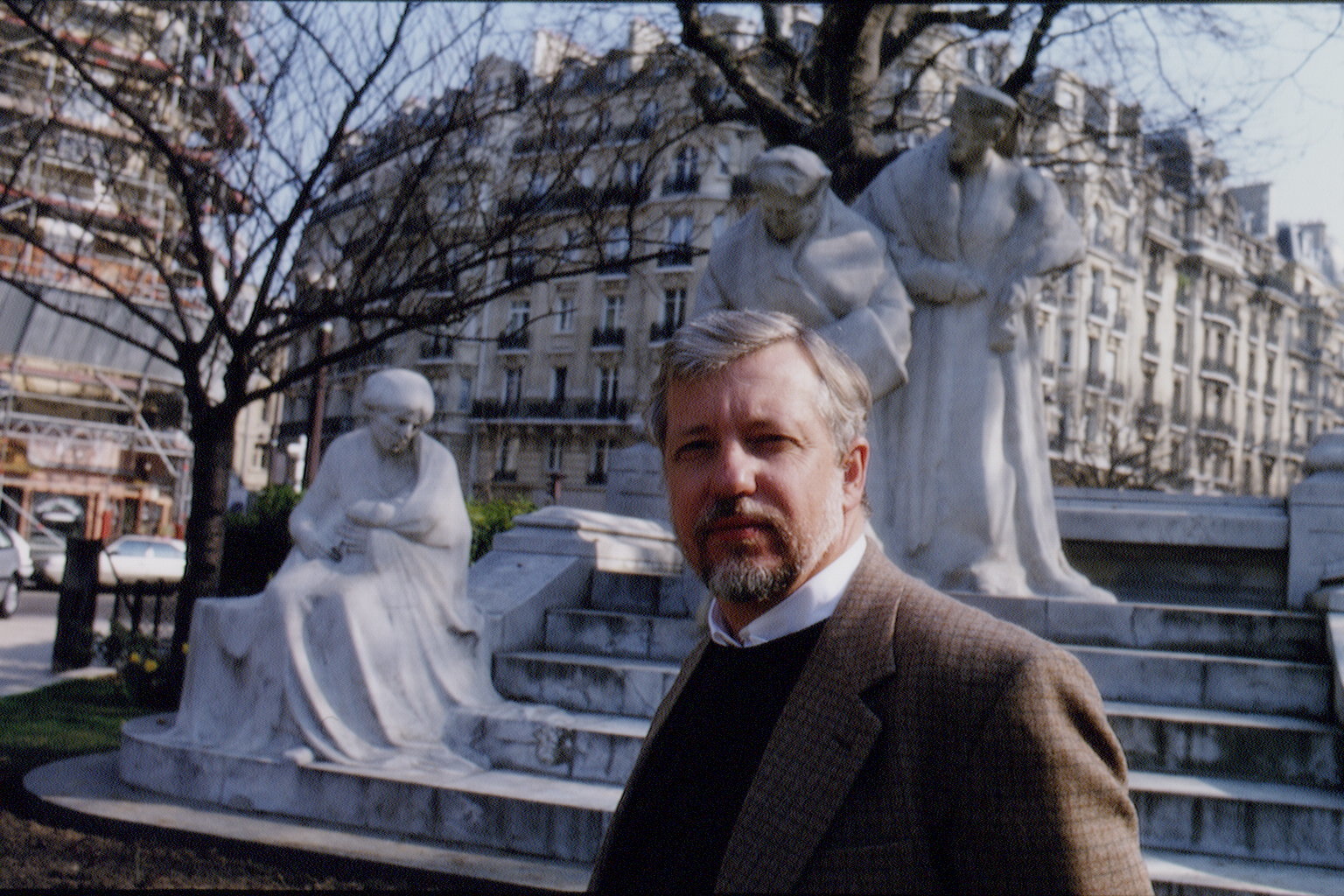
The best way I can describe Dan Simmons, who died last month at age 77, is as someone who got driven crazy by watching too much Fox News after September 11th. Not one but two of his future-set novels feature as major plot points a Global Islamic Caliphate. One of those, Flashback, is basically one long rant about how the American left would ruin the world if they gained power. Not that Simmons didn't have some taste issues before—Song of Kali, his World Fantasy Award–winning first novel, has some moments that read decades later as stunningly racist—but late-career Simmons was at times totally unredeemable.
This is a shame, because his best work belongs with the greats of fantasy, horror, and sci-fi. Summer of Night is a tighter, more satisfying version of Stephen King's It. Carrion Comfort is a brick-sized epic about psychic vampires that reads as breezily as a trade paperback. The Terror, which inspired the well-regarded show, is for its first three-quarters a brilliant and non-supernatural speculative take on a real doomed Arctic expedition.
Simmons played around with metafiction in ways that, if they didn't always work, were always interesting. His Ilium and Olympos feature a batshit conceit: What if future humans turned themselves into the literal Greek Gods and moved to Mars and reenacted the Iliad and resurrected scholars from our time to document it? And also there are robots from Jupiter, and Shakespeare's Caliban is real. Drood is a historical thriller featuring Charles Dickens's madness-inducing obsession with one of his characters, who may or may not be real. The Fifth Heart puts Henry James and Sherlock Holmes together to solve a mystery in Washington, D.C. It's often very silly, but whatever can be said of Simmons, he committed to the bit.
All that stuff (besides The Terror, which I truly love) might be an acquired taste for non-genre fans. Which brings us to the entire purpose of this blog: me telling you to read Hyperion, and then you coming back later and saying thank you.
Hyperion does not hide its inspirations. Quotes from Keats, whose poem fragment lends the book its name, litter its chapters. Jack Vance and Pierre Teilhard de Chardin are referenced by name. The entire book is one large frame story, the individual tales of seven pilgrims, a Canterbury Tales of the Ekumen. It is the obvious work of a voracious, small-c catholic reader, bringing disparate sources and philosophies to bear on the big questions of love, death, and redemption.
Our seven are seeking the mysterious Shrike, a menacing, quasi-organic creature who is said to grant one wish to pilgrims, but also oversees the Tree of Pain, on which it impales its victims for an eternity of hell. Each character gets their own turn in the spotlight, sharing their past and explaining what they will wish for. A Catholic priest of a dying religion who must suffer unknowable pain to prevent a resurrection. A faith-questioning Jewish professor seeking a cure for his daughter, who is inexorably aging backward. A politician who is willing to destroy humankind in an act of ecoterrorism, or perhaps just personal revenge. A soldier in love, trying to prevent a war. A poet looking to complete his life's work, who believes the Shrike is his ultimate muse. Each tale stands by itself as an exploration and celebration of some aspect of humanity. Despite the sci-fi setting, Hyperion is at root an imaginative, sympathetic portrait of people, and should speak to any reader.
The book ends just as our pilgrims reach the Shrike. The Fall of Hyperion completes their story, and then two Endymion books extend its themes and some of its characters into the wider universe. I think you can live without the last two, though I enjoyed them. And I think there's no reason for me to advise on the second one, because once you've read Hyperion you'll demand the direct sequel. It's a genuine achievement in sci-fi, using one of language's oldest literary structures to push the boundaries of what the genre can say about what it means to be human. It was always bound to long outlive its author.