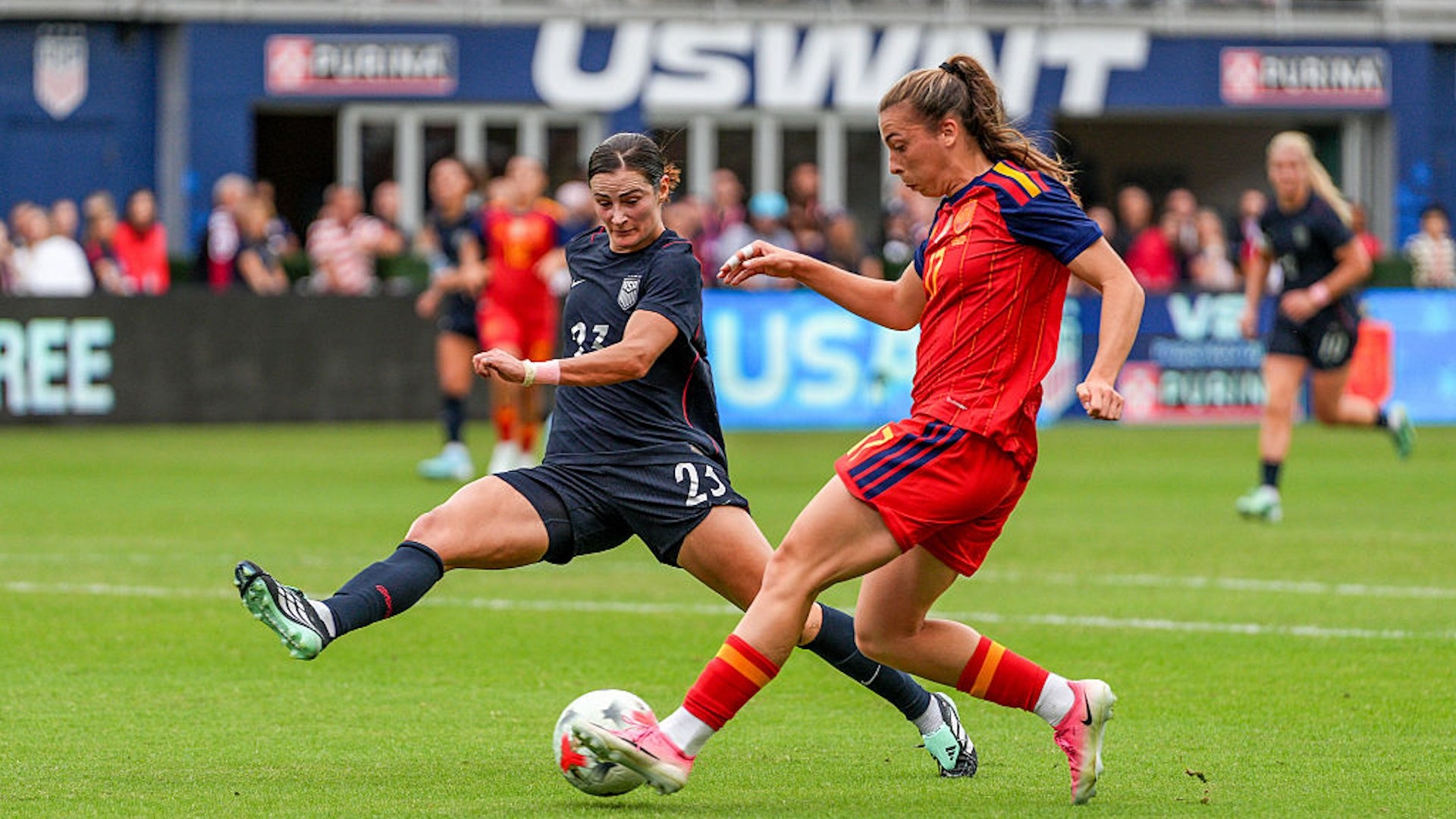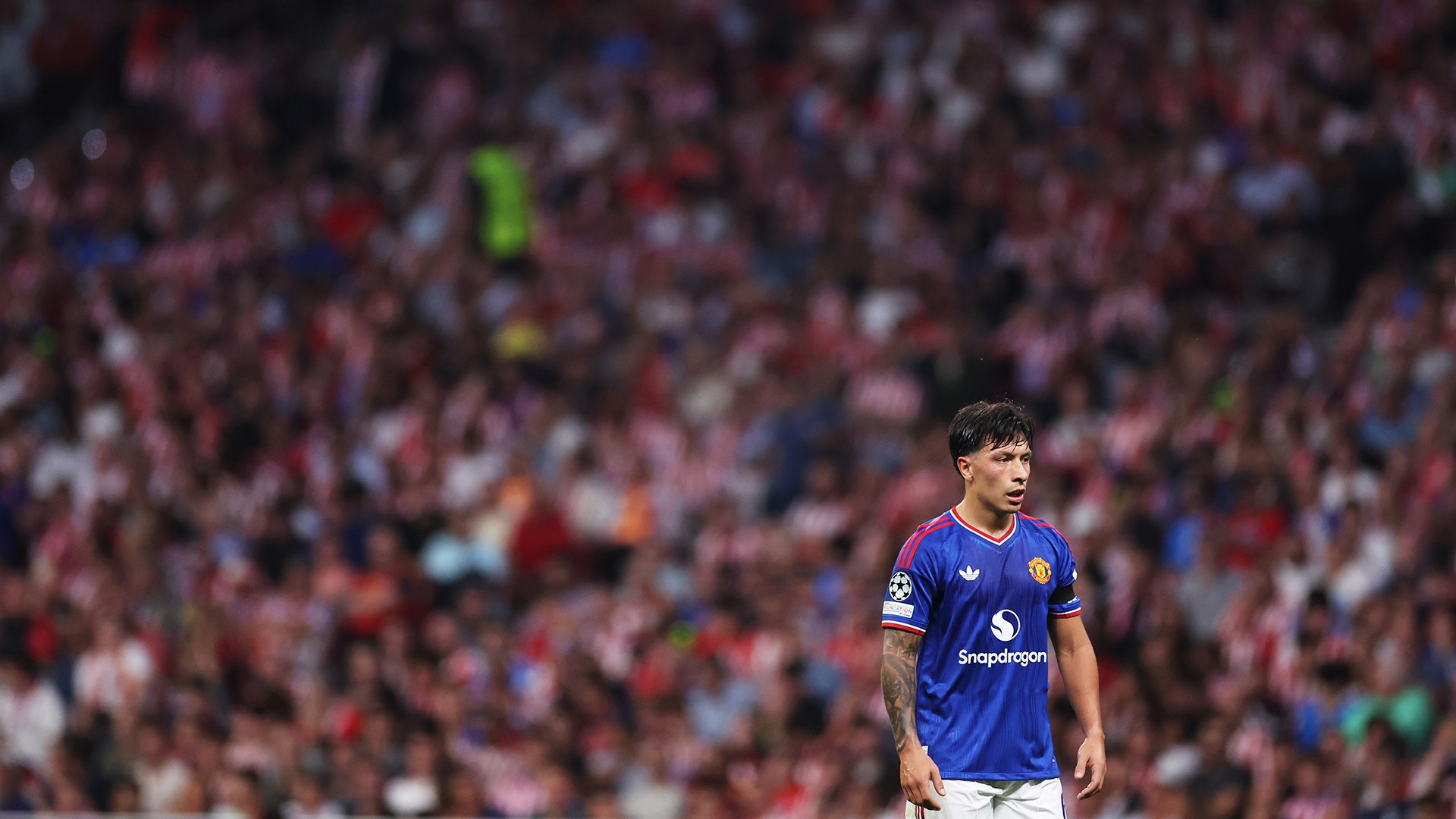
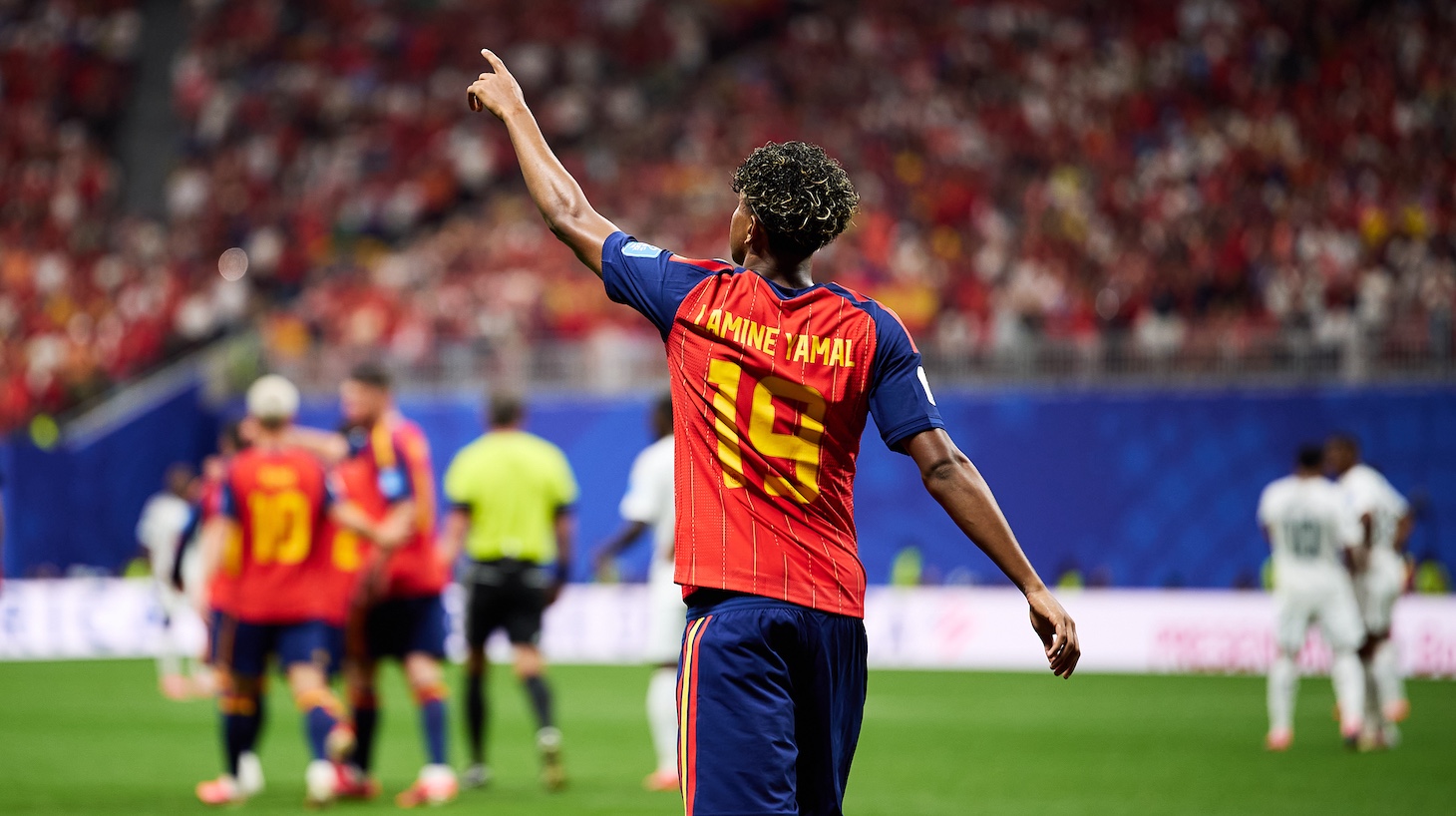
There's really no such thing as a "team." If you've ever come across a guy in an Argentina jersey playing with a soccer ball at the park, and watched as he managed about three clumsy kick-ups before accidentally toe-poking it down a hill (by the way, next time you see me out like that, feel free to say hi!), then you too know that what matters in this game isn't the shirt itself, but the body inside it. As such, it's no surprise that the "Spain" that played Goliath in the monumental upset against Cape Verde bore little resemblance to the "Spain" everyone considered one of the big favorites coming into this World Cup. Spain is only really Spain when Lamine Yamal is one of the guys wearing that particular shade of red laundry, and Lamine did not start the Cape Verde match. He did start Sunday's match against Saudi Arabia, though, and wouldn't you know it, Spain immediately looked like Spain again.
As a Barcelona fan, one of the things I've come to know and love about Lamine is that he's one of those players who always brings a special fire to big games. Coming into what was his first proper introduction to the World Cup, you could tell Lamine was determined to assert himself in the match, at the tournament, and in the world's broader consciousness. It took only 30 seconds to see evidence of that yearning for protagonism and of the sizzling talent that earns him it.
Collecting the ball out on his favored right wing 30 seconds in, Lamine sized up his closest opponent and watched as two panicked help-defenders sprinted over his way, looking to provide aid to their doomed teammate. Lamine began to weave his way inside the field, then chopped back outside, and then with a shrug of his shoulder flung that nearest opponent to the ground after he'd attempted to challenge him physically. When that felled foe scrambled back to his feet, Lamine showed him the ball as bait, then skipped past the tackle when the defender lunged in for it, and then with his weaker foot whipped in a venomous cross that a Saudi defender managed to clear away. In less than a minute of play, it was already obvious that Lamine was on one. Less than 10 minutes after that, Lamine put the ball in the back of the net to give Spain the opening goal.
Spain entered the match with a completely different energy than it brought to the Cape Verde game. They looked determined to recapture as soon as possible the swaggering form and confidence that have defined La Roja over the past couple years. Lamine's mere presence probably played the biggest part in bringing that intensity and the razor-sharp attacks it led to, but it wasn't only about him. If a team is only as good as the players who comprise it, then a player is only as good as the roles and relationships they have within that team. And it was by giving his players better roles that fostered better relationships that manager Luis de la Fuente was able to help his best players look more like themselves.
Spain's biggest strength is in the middle of the park, where you'll find the two best midfielders in the game, Rodri and Pedri. However, the lineup De la Fuente played against Cape Verde didn't make it easy for his midfield maestros to dominate in the way they're accustomed to. Having Fabián Ruiz accompany that pair against Cape Verde meant Pedri had to play further forward than is optimal. Pedri's true power is only unlocked when he is fully unshackled, allowed to roam every inch of the pitch and influence the game in every phase. Forcing Pedri to stay between the lines is a little like buying a copy of 2666 to use as a doorstop. Sure, it can do the job, but there's probably more you could be getting out of it.
Against Saudi Arabia, De la Fuente sat Ruiz (a very good player, it should be said) and put Dani Olmo into his place. This let Pedri play freer, which improved his performance and Rodri's, and let a more committed between-the-lines specialist like Olmo better connect the midfield with the forward line. Then, by flanking striker Mikel Oyarzabal with Lamine and Alex Baena—the latter coming in for Gavi, a natural central midfielder whom De la Fuente for some reason had played on the wing in the previous game—Spain's efforts in the final third were much more frequent, dangerous, and effective. Oyarzabal was the match's outstanding performer, which testifies to the team-spanning value of playing your best players where they like to play. Oyarzabal is by no means the most gifted Spaniard, but when given the right surrounding context, he can be the Spaniard who shines brightest. The Basque striker was the one whose excellent assist teed up Lamine for the opener, and he followed that up by chipping in two goals of his own during the torrid 15-minute stretch that put the match to bed.
It wouldn't make much sense to talk about this game as a whole, since it was for all intents and purposes over after what FIFA's detestable ad break has forced us to call the first quarter. When Lamine scored in the 10th minute, and Oyarzabal scored in the 21st and then again in the 24th, it felt like the crest of one of those tidal waves of play that can drown an opponent in one big rush. But instead of seeing just how big that wave might get, Oyarzabal's goal led directly into a momentum-killing hydration break. Instead of continuing in that flow state, Spain came out of it aware that they had already done enough to win, and therefore didn't really need to tire themselves out by keeping up the pre-break intensity. Indeed, three of Spain's four goals, and 11 of the 22 shots they took over the course of the match, came in that first quarter. The rest of the game was about managing their energy ahead of what by all rights should be a long summer.
What Spain's widely divergent two outings at this tournament should prove is that this team can be one of the best, but only in certain circumstances. For one, the best possible Spain will need to have the best possible versions of Lamine, Pedri, and Rodri. So far, so good. In addition, the team could really use some strong showings from that trio's surrounding cast, in order to help those three maximize their talents and to maybe spell them when they are unavailable. The jury is still out there. The good thing is that Spain really only has to be Spain by the time the knockout rounds come about, where they will meet rivals capable of testing them seriously. And if lifting the World Cup trophy is a matter of becoming a winner, rather than already being one, then Spain showed on Sunday that it does have the kinds of players for it, and that they appear to have started down the path to get there.