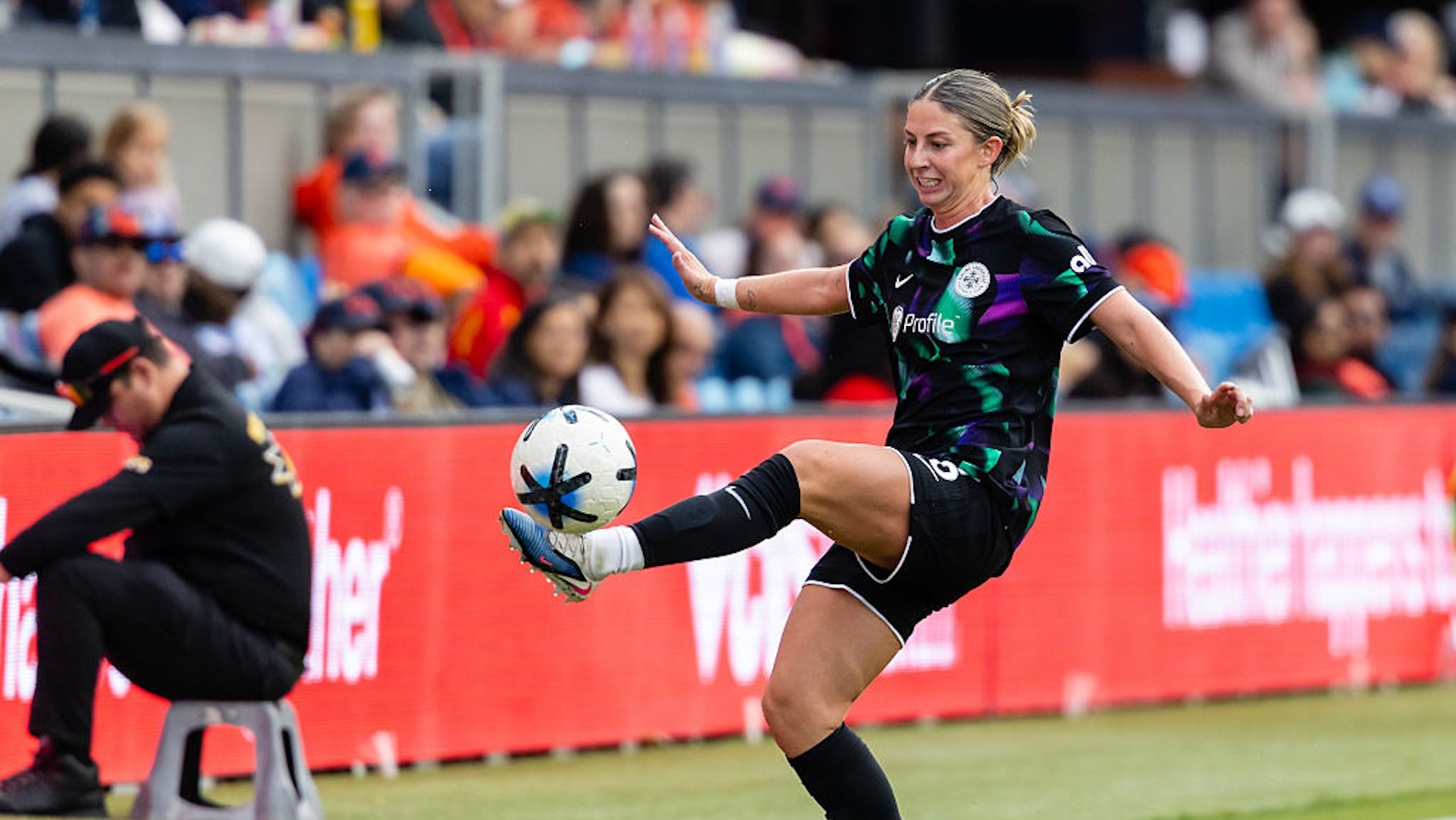

Given the circumstances, Iran has played extraordinary soccer in this year's World Cup, equalizing not once but twice with New Zealand in a 2-2 result, and displaying robust defense in a 0-0 draw with Belgium, as keeper Alireza Beiranvand made a save that should go down as one of the best of the tournament. The Iranian team has accomplished all of this despite being legally barred from staying in the United States to rest after their games; Donald Trump's administration has forced the squad to return to their training camp in Tijuana immediately afterward. One might expect that triumphing over these restrictive conditions would be cause for celebration among members of the diaspora community who have shown up to watch the games. So why, before their games against New Zealand and Belgium, was there a cascade of boos at the Iranian national anthem?
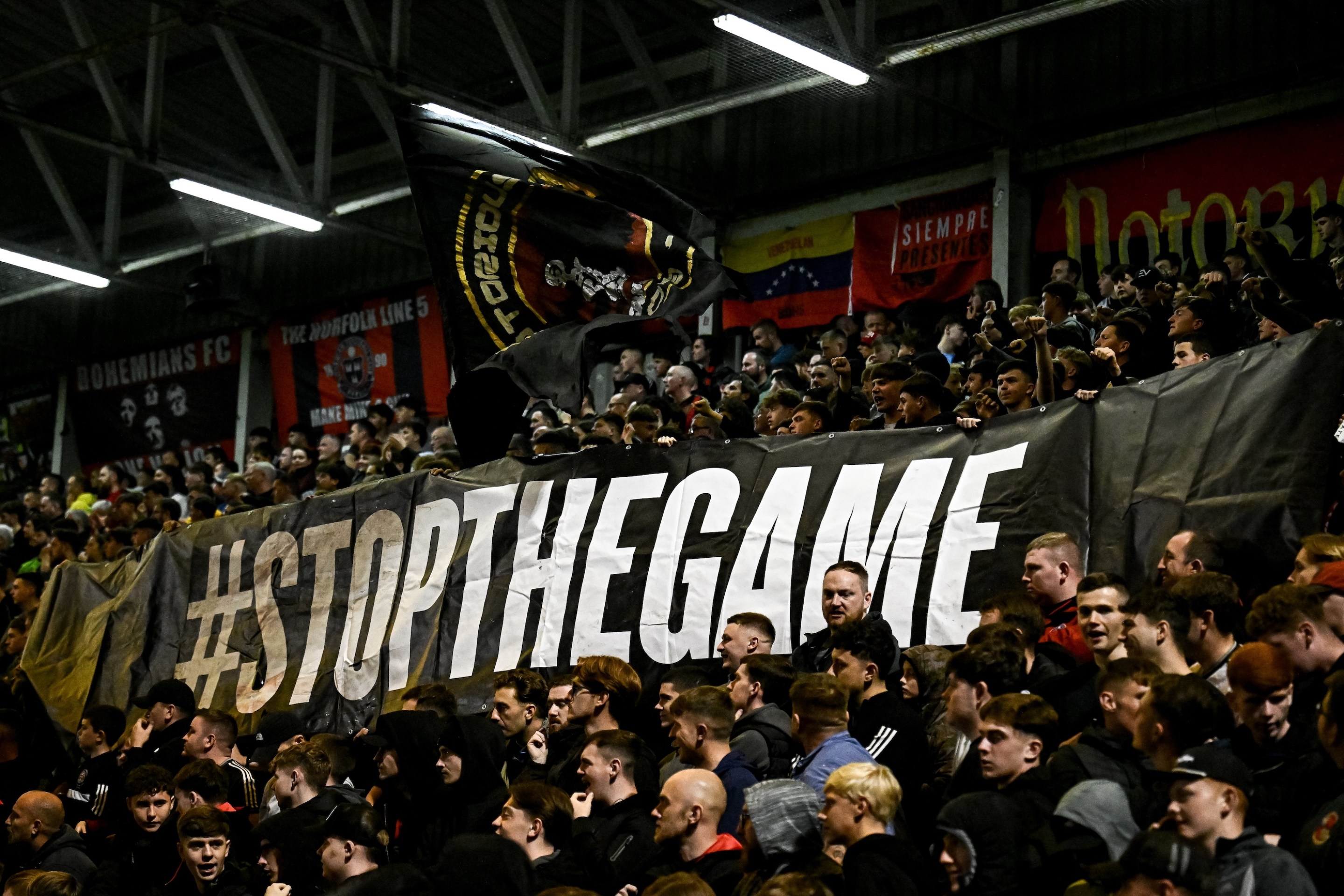
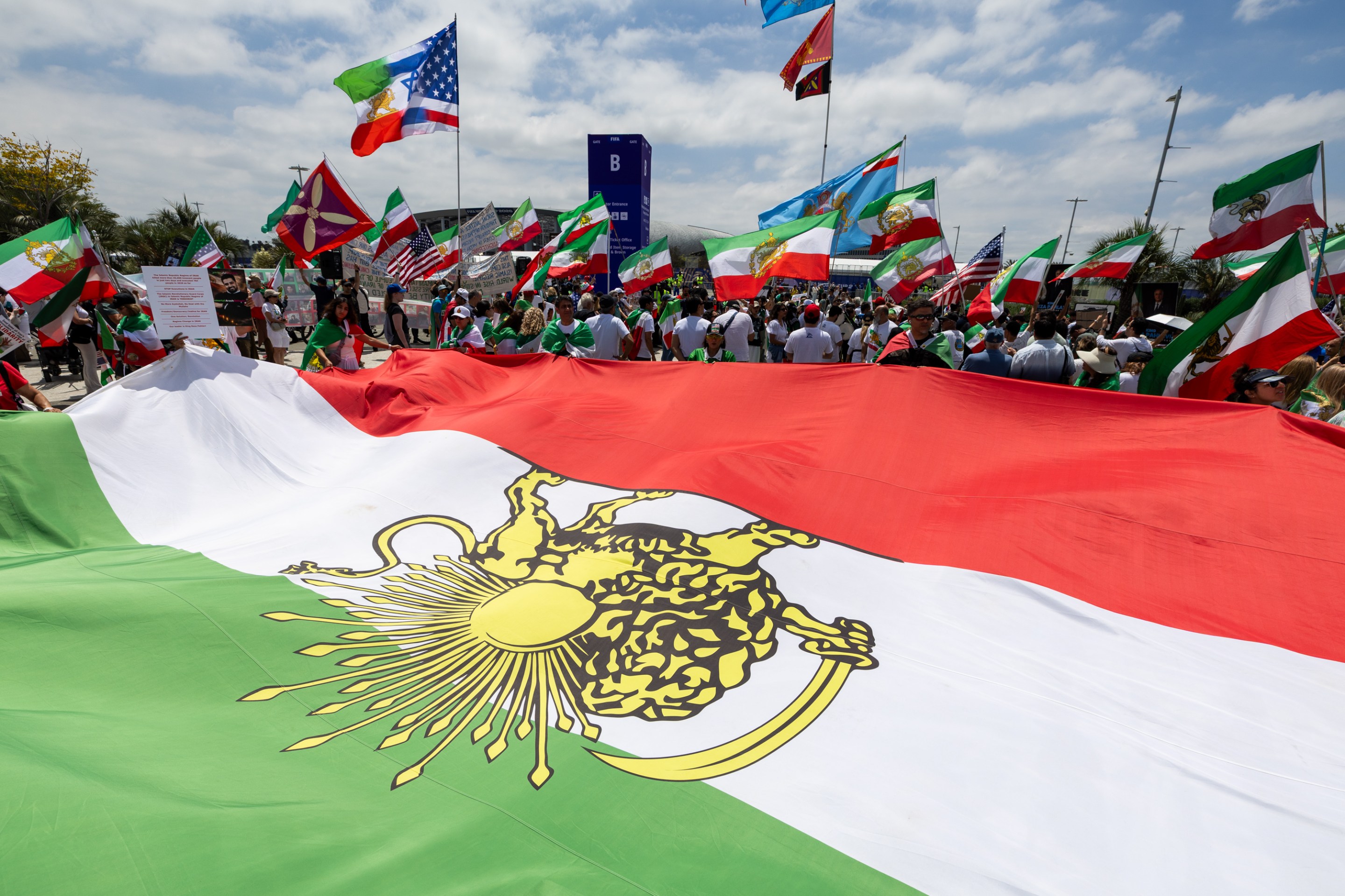
Iranian-American demonstrators have shown up to the Iran men's national team's games not to protest FIFA's lack of action to protect the team, but to disavow the nation's very presence at the World Cup, and to cheer on their opponents. These protesters have accused the team of being agents of the Islamic Revolutionary Guard Corps, agents of the Ayatollah, agents of the Iranian regime in general. One protester who had purchased a ticket to the New Zealand-Iran game said that he and others would boo during the anthem, so that those voices "will reach all the way to Iran."
Iranian monarchism, advocating the restoration of the Shah's rule in Tehran, has gone from functioning as a fringe movement to having substantial purchase with the Iranian diaspora over the past two decades. The movement's leader, the late Shah's son Reza Pahlavi, has become a stalwart advocate of military intervention in Iran especially within the past few years. His advocacy of war against his own country has been rewarded with attention by close Trump allies like Sen. Lindsey Graham, who was seen wearing a "Make Iran Great Again" hat while meeting with members of the Iranian diaspora and Israel's ambassador to the UN earlier this year.
For its part, the Islamic Republic has been backing the national team to the hilt amidst the background of war. While at first barring the team from attending the Cup in protest of the war, the government has since presented the team's playing on the enemy's land as an ideological victory to complement their military one. Mohammad Bagher Ghalibaf, Iran's chief negotiator, used Beiranvand's save as a metaphor, posting it with the caption, "This is how we protect our land."
While many of the demonstrators against the Iranian team have brought up the government's deadly crackdown on Iranian protesters in January, others have honed in on FIFA's reported ban on waving the monarchist flag inside the stadium. Noor Pahlavi, granddaughter of the last Shah, accused the camera crews of cutting away from people waving the monarchy's flag, and thereby "bend[ing] over backwards to protect the Islamic Republic." One popular monarchist Telegram channel derided the "bastard [Gianni] Infantino," the FIFA president, as having "sided with the mullahs."
The movement bolstering the leadership of Reza Pahlavi has been the spearhead of this current round of protests, but it is not new to the World Cup. Iran's presence has been protested by diaspora activists on every occasion that the nation has qualified for the tournament since 1998, the first time it did so after the Pahlavi dynasty was overthrown in the Iranian Revolution in 1979. Typically these protests have been marginal; even Iran International, the Saudi-backed opposition TV news channel, noted in its sports coverage how united Iranians around the world felt in 1998, when the nation made it to France after a 20-year absence from the tournament, then beat the U.S. 2-1 in Lyon for the team's first-ever World Cup victory.
But the 2022 World Cup represented a turning point for such protests. The tournament hosted in Qatar took place amid nationwide protests over Mahsa Amini, a Kurdish-Iranian woman who reportedly died of a brain hemorrhage after being beaten by morality police for having improper hijab. Many prominent Iranian opposition activists at the time called for the men's national team to be expelled from the tournament over the government's actions, and opponents of the Islamic Republic both inside and outside the country publicly cheered for the U.S. and England as they each defeated Iran in their group.
Iranian opposition networks commented on nearly every move the team made, as opposition figures demanded the team's members disavow the Islamic Republic and support the protesters in public. The players' singing of the national anthem was pilloried, and Iran International's coverage singled them out for celebrating their goal against Wales, when at the same time Iranian protesters were being fired upon in Zahedan. (How the team was supposed to know this while on the field was unclear.) Each player was accused of being an agent of the "clerical regime," despite defensive midfielder Saeid Ezatolahi publicly mourning his boyhood friend, who was murdered by a police officer, after their match against the U.S. "You want me to have sympathy with these male football players," Voice of America Farsi presenter Masih Alinejad remarked on PBS, "who never, never stood up for women in Iran?"
Over the past few decades, there has been a deep radicalization of the Iranian diaspora, aided by reportedly hundreds of millions of dollars from Saudi coffers being poured into the Iranian opposition media landscape. The monarchy restoration movement, the ideological banner of most Iranian opposition media, has used Iran's place in the sports world as an arena to continue to push criticism of the state, and to exacerbate more crises.
This past March, the Iranian women's national team refused to sing the national anthem before a game against South Korea during the Women's Asian Cup, eventually leading to the defection of seven members after a presenter on Iranian state TV threatened them with punishment. There were calls for the Australian government to offer them asylum and protect their lives; one of those calls came from Trump, who had just begun to bomb Iran. After the Iranian government intervened and insisted that the players would not be harmed, with the Foreign Ministry accusing the Australian government of taking the women hostage, five of the national team's members decided to return to Iran.
The monarchist movement, which had adopted the women as "Lion and Sun girls" in reference to the emblem on the Shah-era flag, spread rumors online that the women's families had been threatened with death by the Islamic Republic. This led protesters in Australia to attempt to lay down in front of the team bus in order to stop it from leaving for Iran. As the bus went to the airport, a truck waving flags of monarchist Iran and Australia attempted to violently ram the vehicle carrying the players multiple times, with video from inside the bus showing staff and players yelling in fright.
Although Reza Pahlavi's office called for peaceful and organized protests at the 2026 World Cup by turning one's back to the anthem, Iranian diaspora protesters have been seen accosting Iran fans entering the stadium and cursing out players on the pitch. This kind of atmosphere has also been fueled by the Israeli government, which has used its official media organs to condemn the Iranian team, with its official Farsi-language account calling the Iranian squad the "Mullah's team," and similarly demanding that the monarchy's Lion and Sun flag be elevated, with one post after their match with Belgium reading, "The national team without a nation is just a uniform."
The 2026 protests of the team have been smaller than those of 2022, prompting much less debate within the larger Iranian diaspora than four years ago. Support for the American-Israeli war against Iran has dropped precipitously as it became clear that neither nation intended to free Iran from the so-called mullah regime, and actually wanted to engineer the collapse of the state in order to seize its natural resources.
The protesters outside the stadiums now represent a section of the diaspora rapidly spinning out, chanting for Israel Prime Minister Benjamin Netanyahu to "finish the job," and expressing their hopes to Israeli reporters that their country will be liberated after "47 years, or 1400 years, depending on how you count it," referring to the Iranian Revolution as well as the entire existence of Islam. As Iran prepares for its final group-stage match against Egypt on Friday, one that will decide whether it makes history by finally reaching the knockout round, these political nuisances will continue to seek attention for grievances far outside FIFA's scope, all while the association neglects what is very much within its power: doing literally anything about the Trump administration's vindictive treatment of a World Cup team.