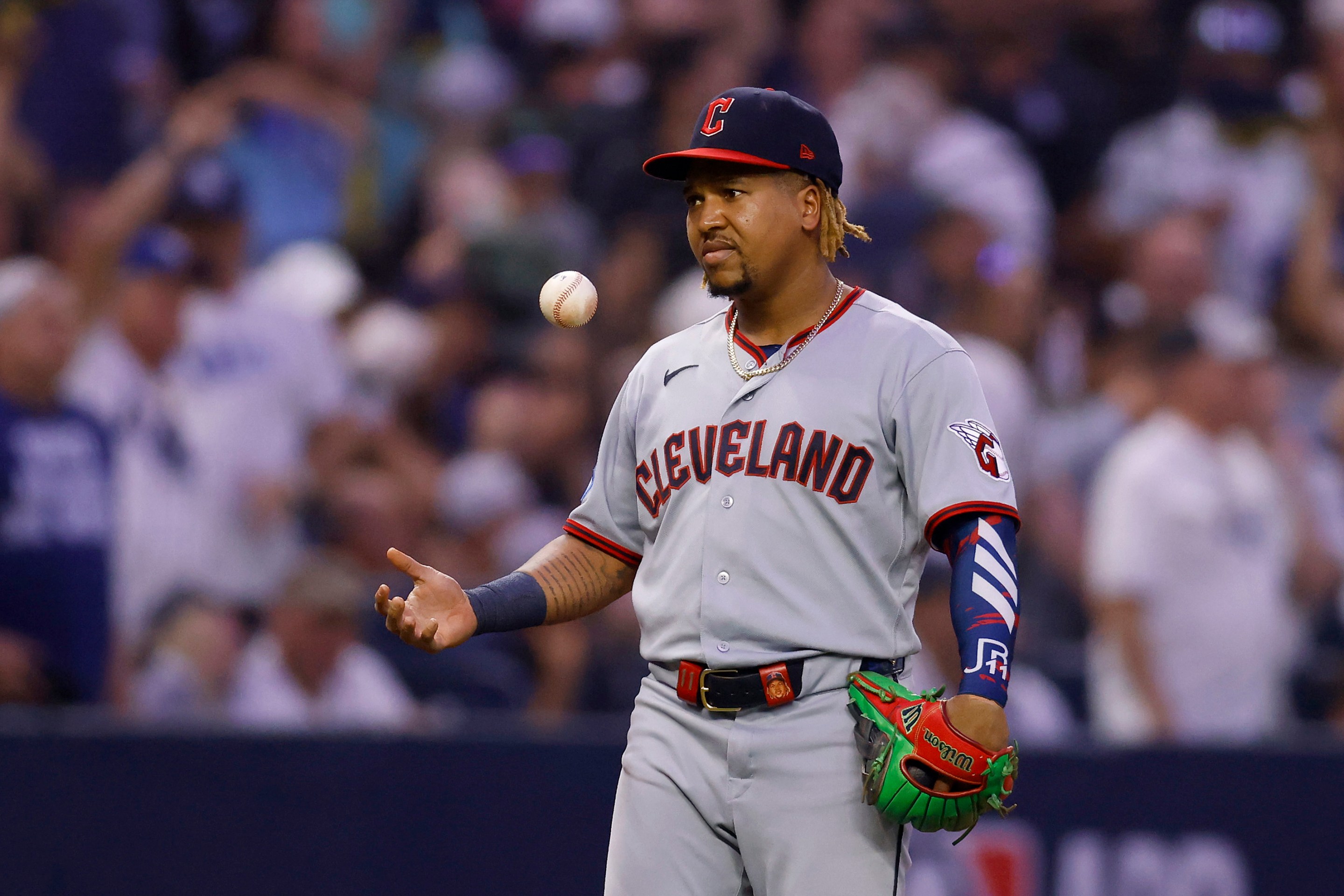

On Sept. 10, ProPublica published a story by reporter Gus Garcia-Roberts detailing how Pittsburgh Pirates center fielder Oneil Cruz avoided prosecution after a traffic collision in the Dominican Republic, in which he rear-ended a motorcycle, killing all three passengers. The crash occurred in Cruz's hometown of Nizao in the Peravia province, on Sept. 21, 2020; at the time, Cruz was 21 years old and still a prospect.
While an initial press release from the public prosecutor's office stated that "according to investigations, the accused had ingested alcoholic beverages prior to the accident," prosecutors never raised the subject of either alcohol or intoxication at Cruz's arraignment. A Pittsburgh Post-Gazette article from five days after the crash reported on the discrepancy, with a spokeswoman from the public prosecutor's office stating that Cruz "smelled of alcohol," but due to a "procedural error," no official sobriety tests were performed. By the time Cruz was called up to the Pirates' big-league squad for the first time in 2021, the story was broadly forgotten.
Garcia-Roberts's story details how Cruz came to face no charges related to the incident. Garcia-Roberts spoke to the families of the victims—19-year-old Daniela Perez Garcia, 20-year-old Deby Beato Charles, and 20-year-old Yohan Saba Mercado—all of whom withdrew their charges. According to his reporting, Cruz's family, while he was still in custody, reached out to Dominican businessman Santo Caraballo as a fixer, on the advice of a trainer. Caraballo, who had political connections, reportedly helped persuade the families of all the victims to accept a cash payment in exchange for withdrawing any legal claims against Cruz. In interviews, each family details the emotional fallout, and how they accepted the payments, which totaled roughly $66,000, due either to deceit, financial pressure, or pragmatism.
The charges against Cruz were never pursued; he remains the Pirates' starting center fielder after switching to that position from shortstop in 2024. At present Cruz is having his best offensive year in the majors, while the Pirates, despite their best winning percentage since 2018, boast a 1.5 percent chance of squeaking into the playoffs. It is difficult to imagine what formal consequences Cruz could face now, either legally or professionally, for an incident six years ago for which he was arraigned but never prosecuted. (When Garcia-Roberts reached out to the Pirates, the team said it had "addressed this matter more than six years ago based on the information available and the outcome of the legal proceedings.")
But Cruz's story should be read in conjunction with a second ProPublica investigation, also by Garcia-Roberts, that went up that same morning. "The Dominican Baseball Factory" details how predatory moneylenders or "prestamistas" like Caraballo exploit the Dominican Republic's broken prospect system to take money from prospects' families. The baseball industrial sector played a pivotal role in covering up the fatal crash: Even as a prospect, everyone knew who Cruz was, and the people who initially helped his family pressure the victims into dropping charges were trainers; one of those trainers had connections to two of the victims' families through baseball. Caraballo launched his career as a prestamista after helping Cruz, and he would eventually become business partners with baseball Hall of Famer David Ortiz, often leveraging Ortiz's name in negotiations.
The second piece raises a much larger issue that underpins Cruz's case, that of the fundamental brokenness of the Dominican Republic's prospect system. That issue is one that can in theory be addressed with reforms, though the parties with incentive to push for changes have a lot less money and power than the ones benefiting from the corruption. All 30 MLB organizations maintain training facilities in the Dominican Republic and engage in the practice of offering handshake deals to preteens; Ortiz himself has worked to block potential changes to the system. Perhaps that's something else to think about heading into next year's labor negotiations.