

The postgame press conference can be a valuable tool for head coaches. It's a venue where they can stand up for their players, or call them to account. It offers them a place to work the refs in the hopes of earning more favorable calls in the future. Sometimes, it's just an opportunity to release some bile. Those use cases apply across all sports, but college football is unique in how it can turn late-season press conferences into a stage on which coaches have to sing for their supper.
Politicking has always been a part of a college football coach's job description, but the demand for such performances has grown exponentially with the establishment and subsequent expansion of the College Football Playoff. It used to be that you'd have to listen to one or two coaches of a one-loss team make his case for a trip to the national championship game, but with 12 playoff spots now on the line, there's no shortage of opportunities to make appeals to the selection committee.
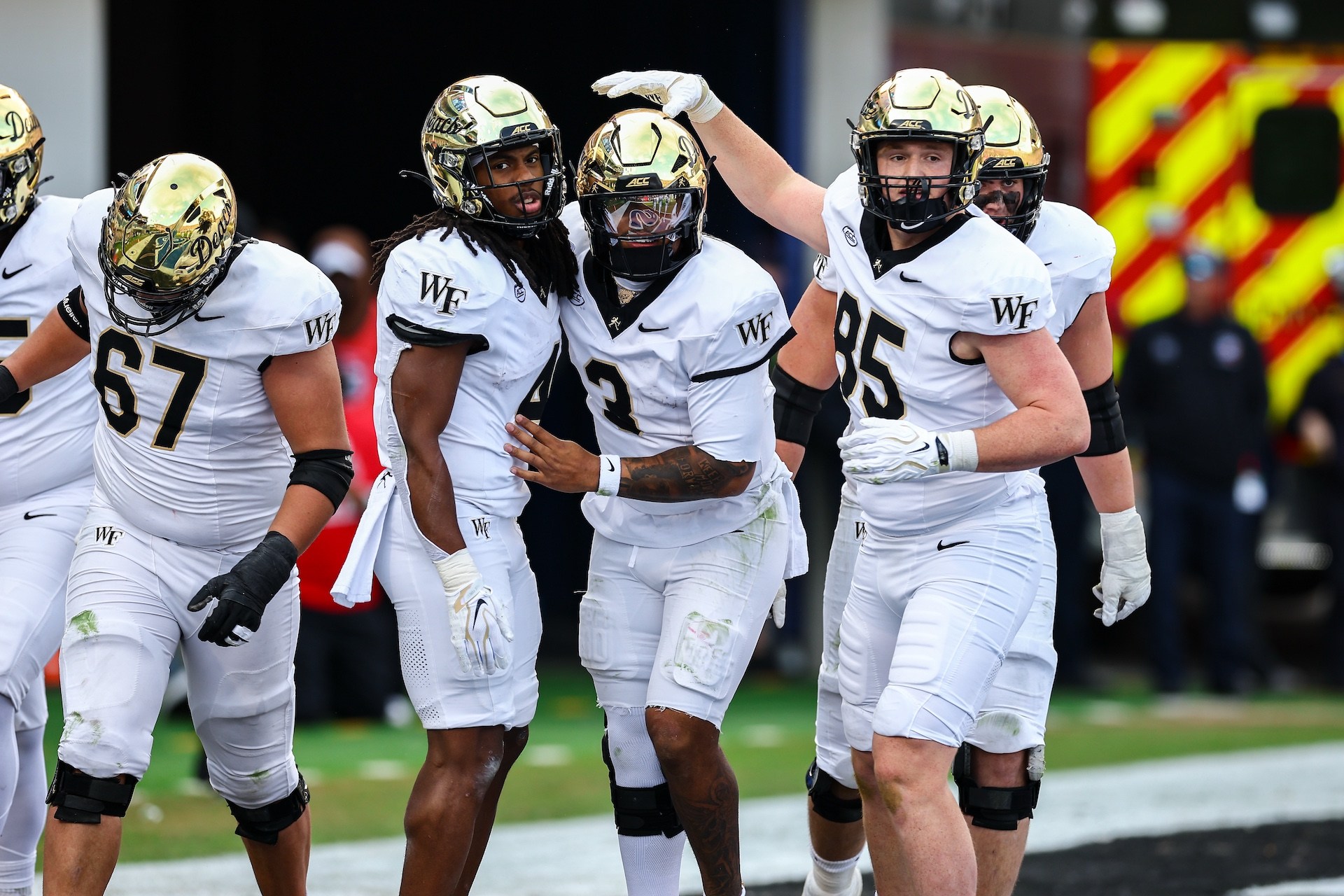
Rivalry week ends up being the last chance for many programs to make their on-field and off-field cases to the committee. This process goes a little smoother after a big win, when a coach has immediate results with which to talk up his team's championship mettle. USC's 9-3 record doesn't look like one that belongs to a playoff team, but after demolishing UCLA by a score of 45-10 on Saturday, head coach Lincoln Riley was at least able to plead his case without blushing. "I doubt there's been a bigger top-10 victory on the road anywhere in college football this year," Riley said after the game. "I don't believe there's 12 better teams, but the committee has some tough decisions to make." That is perhaps a bit rich coming from a coach whose team has a 17-point loss to Wisconsin on its résumé, but Riley was in a much easier position than his counterpart at UCLA, Bob Chesney.
The Bruins were 10-0 and flying towards the playoff before following up last week's humiliating loss to Michigan with Saturday's destruction at the hands of USC. This put Chesney in one of the funniest positions a coach can be forced to occupy: talking up the virtues of his team immediately after everyone saw them eat heaps of shit. "I look across the board at the teams that we've played, and the way that we've played, and the belief that we have, and the toughness that we've displayed, the adversity that we've faced and overcame—I think those are all things that a championship level team is built with," Chesney said after Saturday's loss. Now this is the good stuff. Only in college football can a coach whose team just spent two weeks displaying their total lack of toughness, belief, and ability to overcome adversity be forced to sit behind a microphone and trumpet all of those characteristics for the sake of the committee. Luckily for Chesney, his team was still able to back into the Big Ten championship game thanks to Oregon's upset loss to Washington, meaning that the Bruins' playoff destiny will depend entirely on whether they can beat Indiana next weekend.
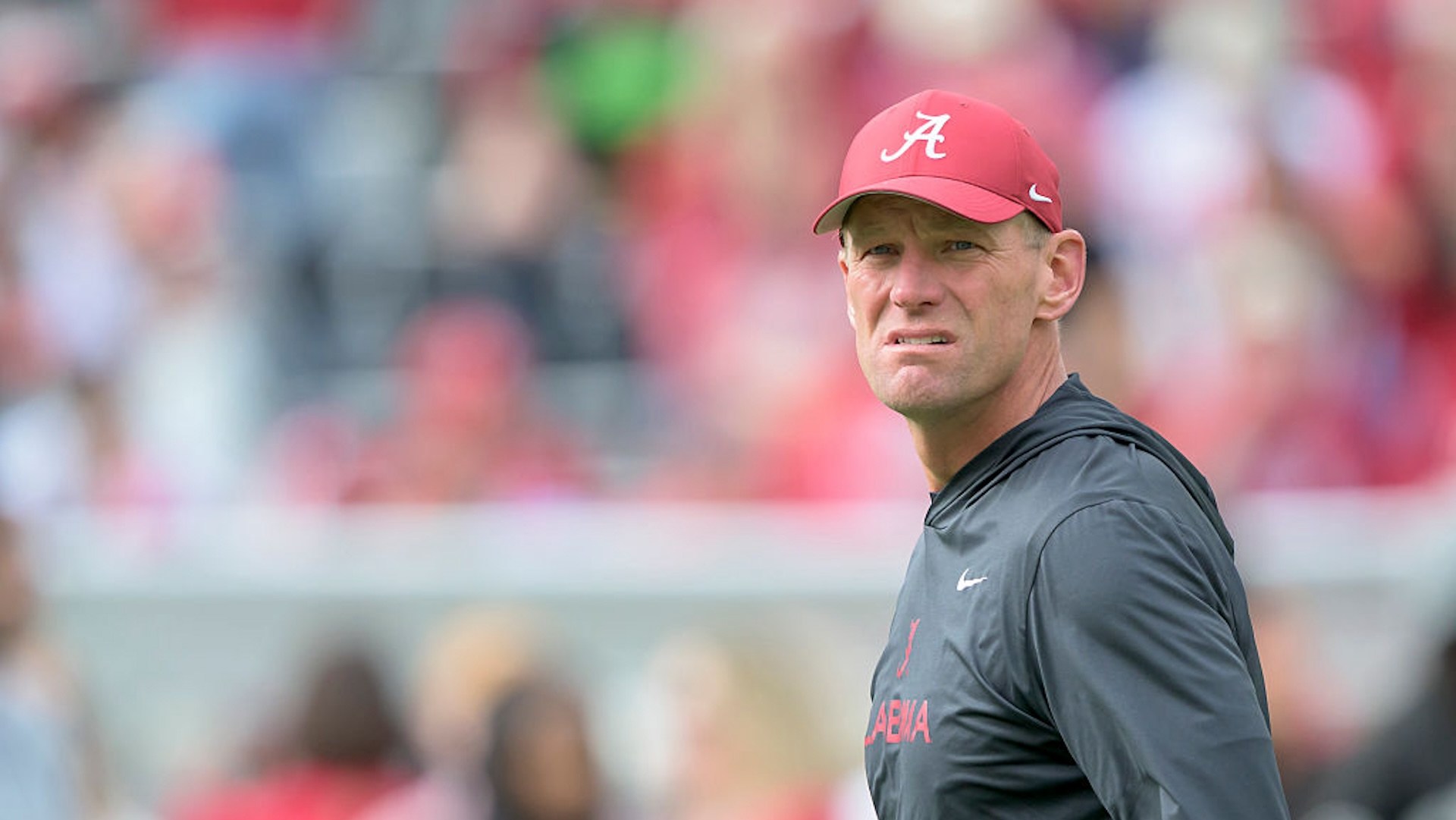
Kalen DeBoer isn't so lucky. His Crimson Tide team fell to 9-3 after suffering the most humiliating of rivalry week's upsets, a 30-23 loss to the unranked Auburn Tigers. When asked after the game what his message to the selection committee would be, DeBoer offered a stilted answer: "Well, I know what type of team we have. We have to put four quarters together there. Um, you know, um, you go through the grind of the season, and obviously [Auburn] beat the No. 1 team in the country, too. So, you know, their record is a pretty solid record for what the league has, and overall."
It's easy to feel jealous of college football coaches, especially when they are at home collecting tens of millions of dollars from universities that fired them years ago. But there are at least some moments when the nature of the sport makes their lives unenviable. One of those moments is Kalen DeBoer stuttering and stammering through an answer about how, uhh, it's not actually that bad that his team just lost the biggest game of the season because, ummm, Auburn is actually pretty good, when you think about it, and, uhh, let's not forget that they beat Georgia that one time.
Thankfully, there will be a lot more of this in our future. Once the playoff expands to 24 teams, every season is going to end with the coaches of various four- and five-loss teams telling us all about how their squad deserves a playoff berth despite having just turned the ball over four times in a 24-point loss to their biggest rival.