

When I called up my grandfather Irwin Miller last fall, I asked him if he felt his age. “Uh, no, probably 94,” he said, laughing as he shaved off three years. “The body feels 97, the head doesn’t, thank goodness—I think my memory’s pretty good.”
I call my grandfather Papa, and his memory was more than pretty good considering he was born before the Great Depression. Last November, I wanted to ask him about a big moment in his life: the year he graduated from his New Orleans high school and set out on his own.
“Growing up in Louisiana, LSU was the only college I thought about,” he told me. His first day was unceremonious: “My folks drove me to Baton Rouge, they dropped me off and said, ‘Good luck and goodbye.’ That was the way things were in those days.”
Papa started at LSU in September 1944, just a few months after D-Day. He was able to go to college during World War II because he was just 16 years old, too young for the military draft. With so many men off at war, most of the undergrads at LSU were young women. “It was pretty easy to get dates in those days—girls outnumbered us two to one,” he said. “The odds were great.”
The social scene on campus, for Papa and his dates, revolved around LSU football. It wasn’t just about the games in Tiger Stadium on Saturdays. Going into the weekend, there was always a big dance party, and on Saturday afternoons the school staged Broadway-style shows. While the lead-up to the games was spectacular, the football wasn’t. In 1944, Papa told me, LSU won just two games. His memory was spot on: The Tigers went 2-5-1, with wins over Georgia and archrival Tulane, a tie versus Alabama, and losses to everybody else.
The season wasn’t a total bummer. LSU did have a promising freshman quarterback, a player who’d eventually be enshrined in the Pro Football Hall of Fame. “He was in one of my classes at LSU, and I saw him the first day of class,” Papa said. “I never saw him again until the finals, and he made an A. So that was Y.A. Tittle.”
Tittle died in 2017, so I couldn’t grill him about his poor classroom attendance record. But the truth is, LSU’s star quarterback was a bit player in the story my grandfather really wanted to tell me. His strongest memory from the 1944 season came from a game that November against Georgia Tech. “It was a night game, like most games,” he said. “It was a bit cold, and as I also remember, it was rainy.”
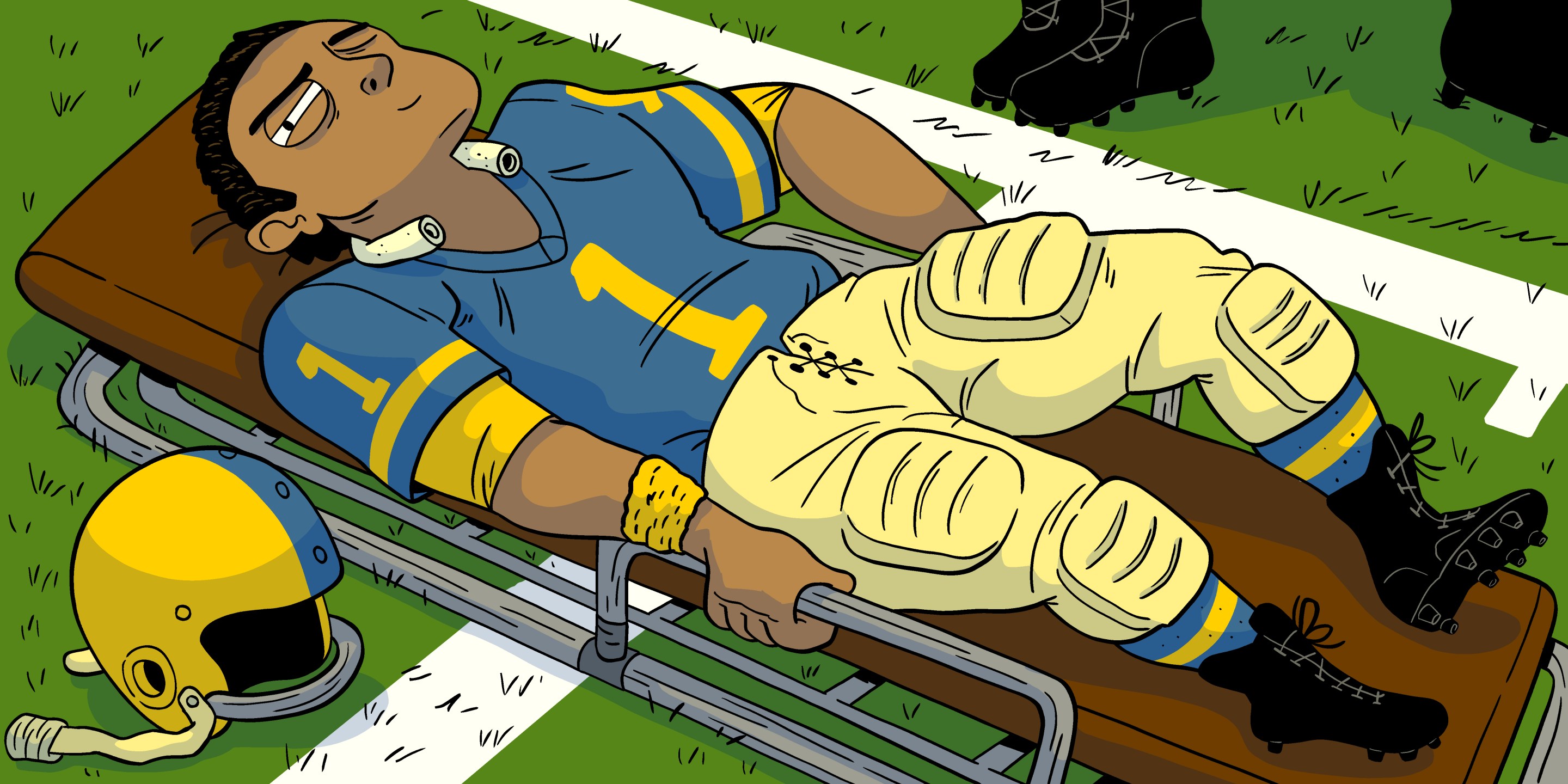
In the fourth quarter on that cold and rainy night at Tiger Stadium, with the game extremely close, a Georgia Tech player went down injured. Papa said some trainers came out on the field, and carried that player off on a stretcher. “Meanwhile, the whole Georgia Tech team was lined up against the sidelines,” he said. “When they got almost to the sideline, they put the stretcher down, and they rolled him off the stretcher, and he was still on the field.”
Papa says all of this happened in a flash: the sideline, the stretcher, the player rolling off the gurney and onto the field. When the ball was snapped, the guy who’d supposedly been hurt didn’t stay on the ground. Instead, he booked it for the end zone.
“He got up, caught a pass, went over the goal line, and beat LSU,” Papa said.
My grandfather saw this trick play more than 80 years ago, and it lodged in his brain forever. “It was so different from anything I’ve ever seen before,” he said. “To see something like that, how can you forget it?”
When Papa told me about this strange football memory, it got stuck in my head too. As soon as we wrapped up our phone call, I set out to learn as much as I could about what happened that night in Baton Rouge. What I ended up finding was a much bigger story, about gridiron chicanery and ethics and a century’s worth of players hiding in plain sight.
This story was adapted from an episode of the sports history podcast Replay Booth. You can listen to the audio version here.
Growing up in the 2000s, Scott Blair was a soccer player. When he switched to kicking footballs, eventually becoming the punter and placekicker for Georgia Tech, he wanted to feel like more than just the guy who booted the ball through the uprights. So Blair was thrilled when he got his chance to try something new: In 2009, the Yellow Jackets started practicing an elaborate fake, a play where he would get to throw a pass.
Blair felt certain that his head coach, option football devotee Paul Johnson, would never call for the fake in a real game. But that September against Clemson, on fourth down and 13 at the 34-yard line, his moment arrived.
“We knew we were basically going to send the offense on, and then once we sent them on, we were going to switch and run the play,” Blair told me.
In the stadium and on ESPN’s telecast, “the play” looked like total confusion. The Georgia Tech offense was scrambling to get off the field, and the kicking team, including Blair, was running on.
What the crowd, the cameras, and the Clemson defense didn’t notice was that one player on the Georgia Tech offense—wide receiver Demaryius Thomas—hadn’t run completely off the field. That was the trick: Thomas was hiding out near the sideline, just like the player my grandfather had seen in 1944. But for the play to work, Georgia Tech’s kicker needed to do his part. For one play, Blair had to be a quarterback.
“At that point, it’s almost like you’re not there anymore. You’re kind of living out of body,” he said. “You didn’t even have time to think about it.”
Blair took the snap, cocked back his arm, and floated the ball—I mean, really floated it—30 yards down the field. It couldn’t have worked any better: Thomas, who’d been left totally unguarded, caught Blair’s heave and scampered in for a touchdown.
“I mean, that was a dime,” Blair said when we watched the video together over Zoom.
“It was a pretty good throw. I mean, it wasn’t a quarterback throw, but it got there,” Paul Johnson told me.
I reminded Johnson that he’d been a little less charitable back in the day, calling the throw “a duck.” He laughed. “Well, I don’t want to take away Scott’s moment.”
When I told Johnson that my grandfather had seen another Georgia Tech team pull off a sideline hideout play in the 1940s, he said his knowledge didn’t go back quite that far. But Johnson’s fake field goal had still been more than 20 years in the making. He said that in the 1980s, when he was an assistant at Georgia Southern, Valdosta State had run something similar against them. “That’s where I first saw it and thought about it,” he said.
Paul Johnson’s variation used the field goal unit’s chaotic-looking scrambling as a kind of diversion. While the Clemson defense focused on all the players running into the formation, they didn’t notice that Demaryius Thomas remained just barely in bounds. “When you’re running on the field goal team and everybody’s coming off, guys get mixed up,” Johnson said.
By the time Clemson figured out what’d happened, Scott Blair was in full celebration mode, running toward the end zone with his fist in the air. “The one thing I never ran through in my mind of running that play is having to kick the extra point after. That’s probably the hardest my heart ever beat,” Blair said.
He made the extra point, and he won the game with a short field goal. Regardless, that one trick play was the highlight of his career. It’s the kind of moment that stays with you—just ask my grandfather. Or ask Paul Johnson, who got victimized by a hideout play in the 1980s and stored away the memory for decades. Or ask former NFL wide receiver Andrew Hawkins.
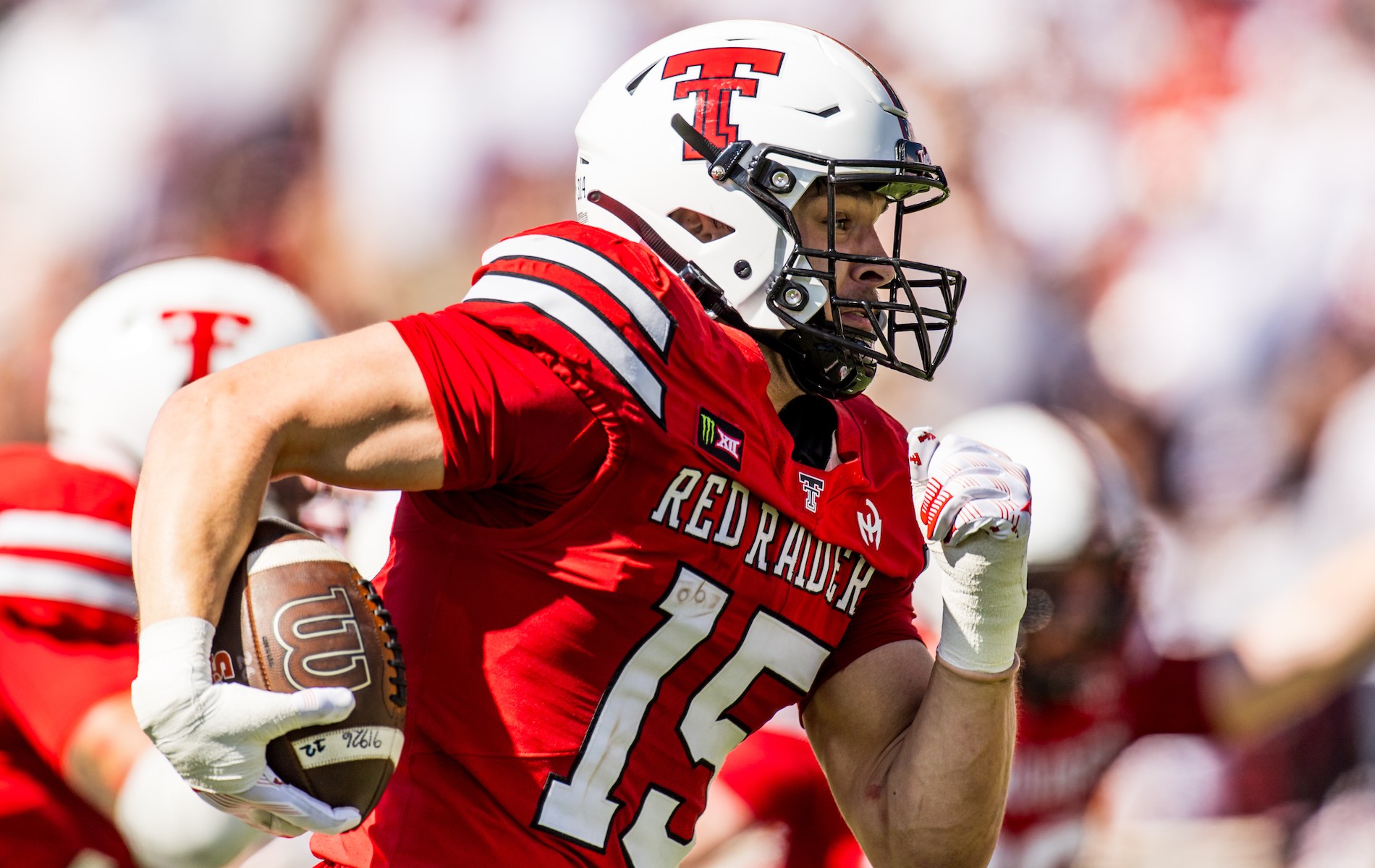
Hawkins, who’s now an NFL analyst for ESPN, signed with the Cleveland Browns before the 2014 season. The coaches who helped bring him to Cleveland were offensive coordinator Kyle Shanahan and wide receivers coach Mike McDaniel. “Very early, and I’m talking about conversation one, they made it very clear: Nobody’s like us,” he told me. “Not like in a we’re different kind of way, more in a we’re better kind of way.”
Shanahan and McDaniel are now considered some of the sharpest minds in football, but back then they had a lot more confidence than experience. Hawkins was skeptical. “Everything they did was different, [starting with] the offseason where we didn’t touch a football, probably for the first four weeks,” he said. “But then as camp came around, as preseason came around, as the season came around, it all started to come together.”
While everyone bought into this new Browns regime, there was one major complication: the team’s rookie quarterback, Johnny Manziel. Hawkins told me that Manziel was an “incredible person,” but “he wasn’t ready to be a professional quarterback.” Manziel’s teammates knew he wasn’t studying film, but he was a talented passer and runner, and before he’d even played in a game he had the top-selling jersey in the NFL.
As the 2014 season got underway, fans and media—OK, mostly Skip Bayless—were pushing for Manziel to get on the field. Going into Week 3, Shanahan and McDaniel came up with an idea, a way to respond to all that pressure and show off their play-calling genius.
“I remember that week, them saying, Hey, Johnny, we’re gonna get you in here. This is the kind of plan, and everyone on the offense being excited about it, like, Yo, are we really gonna do this? This shit is crazy,” Hawkins said. The plan was for Manziel to sub into a game and do something completely ordinary: hand the ball off to a Browns running back. When that play was over, he’d go to the sideline. That’s when the fun would start.
In Hawkins’ memory, the Browns coaches told the players that “everyone has to be an actor here.” As the team’s leading wide receiver, his job was to be a decoy—to stand on the opposite side of the formation. Shanahan and McDaniel gave themselves roles, too. They were going to act like Johnny Manziel—their famous rookie quarterback, who was already known for being kind of a flake—had just screwed up big-time.
For the Browns, showtime came in the second quarter against the Baltimore Ravens. First, Manziel came in the game and handed the ball off. He then jogged right back off the field as the starting quarterback, Brian Hoyer, jogged back on to replace him. As Manziel approached the sideline, McDaniel stood in front of him with his arms spread wide, looking exasperated.
It seemed like Manziel was out of the game, and getting chewed out. But the player and his coaches were in cahoots. Manziel was near the sideline, but still in the play. The Browns’ version of this trickery came with an additional twist. Manziel had his back to the action, which meant he couldn’t see the snap. It was up to Shanahan to give him a signal: It was time to run.
Everything worked perfectly. Manziel, who’d been left completely open, streaked down the sideline as a receiver and caught a 39-yard pass from Hoyer. The Ravens’ defense was totally bamboozled.
But these were the Cleveland Browns—naturally, there was a problem. Running back Terrance West wasn’t set on the play, so Cleveland got flagged for illegal formation.
Given that the penalty was totally unrelated to the whole hideout scheme, I asked Hawkins if the team got angry with West for spoiling their fun. “I think being upset with Terrance is a privilege that we knew as a team we hadn’t earned,” he said. “That’s something Tom Brady and the Patriots could get pissed about.”
Cleveland, which is holding steady with zero Super Bowl wins as a franchise compared to seven for Brady, ended up losing that game to the Ravens by two points. And although they showed progress under Shanahan and McDaniel, they’d finish the 2014 season with a record of 7-9. While the Browns may have missed the playoffs, they did at least get a good anecdote.
“Even the fact that we have that video and we get to tell the story about what that week was like and being a part of that play is more than enough for the guys that were there, and I think we knew that in the moment,” Hawkins said. “Like, I can’t believe we did that shit, and I can’t believe it actually worked.”
The thing is, it really shouldn’t have worked. Forget the unrelated penalty on the running back. The Browns’ entire hideout concept was illegal.
There are some ways to camouflage yourself on a football field that are totally within the rules. One of them is having a running back crouch behind his offensive line.
Rulebook-wise, it’s also OK to lie on your stomach in an end zone that’s painted the same color as your jersey.
Then there are the plays I’ve been describing, where someone hides out along the sidelines. In both college and the pros, that is punishable with a 15-yard penalty.
The college rulebook lists the hideout play under the heading “Unfair Tactics,” saying that “no simulated replacements or substitutions may be used to confuse opponents.” The NFL, meanwhile, has outlawed sideline sneakiness since the opening week of the 1954 season. The player who inspired that rule change was a Los Angeles Ram named Skeet Quinlan, who flummoxed the Baltimore Colts by hiding “just inside the out-of-bounds line.”
The next day, NFL commissioner Bert Bell demanded that the play be banned. That rule is still on the books today: An offensive player cannot line up within five yards of the sideline in front of his team’s bench.
Bell thought the hideout play had crossed a blurry line. He believed that hiding out on the sidelines was not just gamesmanship. Rather, it was so deceptive and so conniving that it needed to be illegal. In 1954, he told a reporter, “This kind of thing will never happen again if I have anything to say about it.”
That kind of thing has happened again, repeatedly. After that Browns game in 2014, the NFL office did acknowledge that, by rule, Cleveland should’ve been whistled for unsportsmanlike conduct. That left me a little confused: Why would a couple of brilliant offensive coaches like Kyle Shanahan and Mike McDaniel draw up a play that was clearly illegal?
Hawkins is pretty sure he knows the answer. “They knew it was against the rules,” he told me. “Their mindset is, make everyone else earn their paycheck. Make these refs make a decision. Let’s see how well they know the rulebook.”
Sometimes, the officials do make the call, like when the Eagles and Seahawks both tried and failed to get away with running hideout plays in the early 1980s. But a lot of the time, the referees are just as confused as the defense, and don’t see what’s going on until it’s too late.
That was the case in 2009, when Georgia Tech threw that touchdown pass on a fake field goal. A few days later, the Atlantic Coast Conference’s head of officials said the play “should have been flagged and nullified” because of its “intent to deceive.” I asked Paul Johnson, the play’s architect, what he thought about that. He kept his answer very brief: “Yeah, well, all I remember is it counted.”
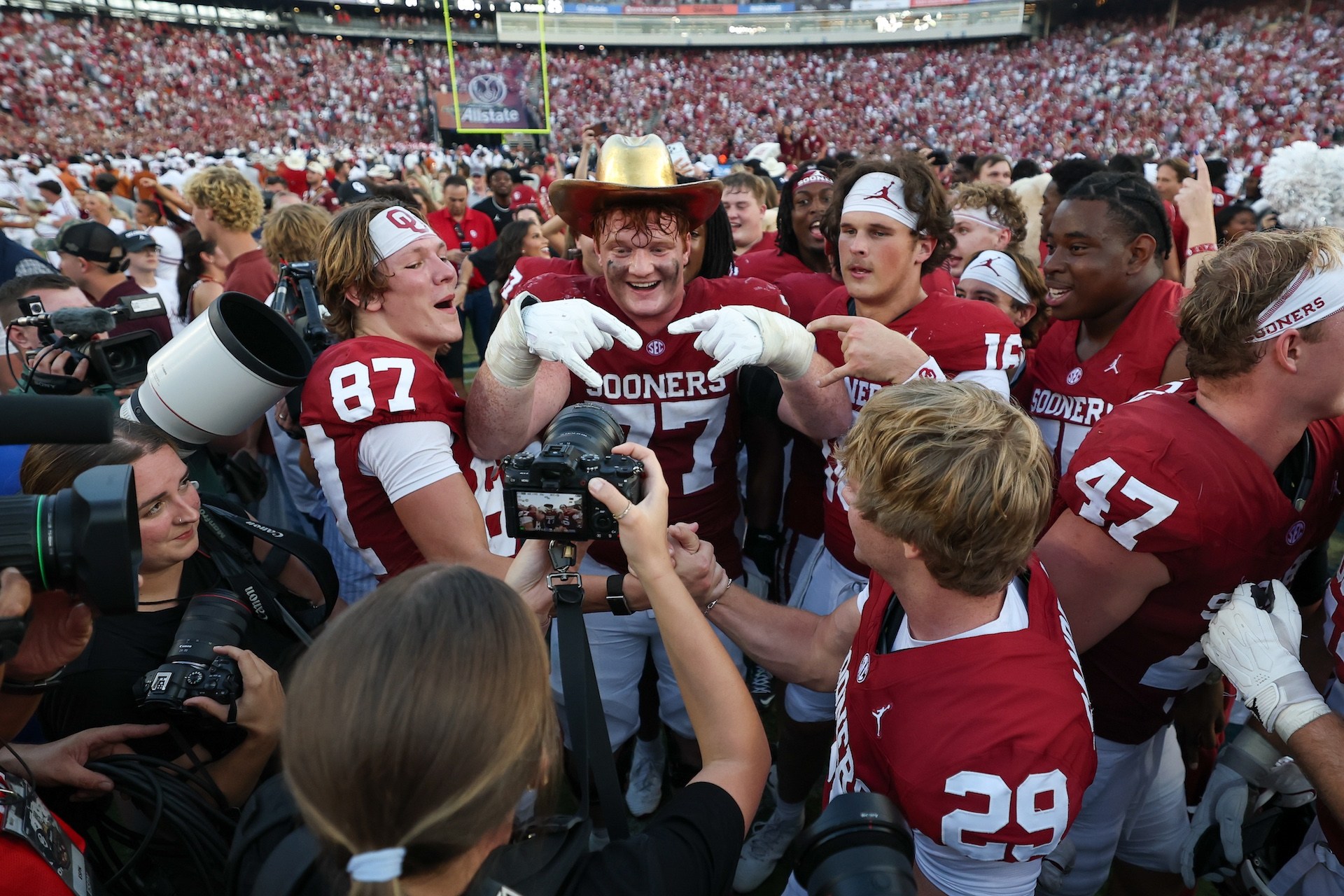
Hideout plays are still getting drawn up, and still counting. Last year, Oklahoma scored a touchdown against Auburn that the refs shouldn’t have allowed. Lane Kiffin also pulled off a hideout play at Ole Miss a few years back. When Jon Gruden talked about it with quarterback Jaxson Dart, Gruden couldn’t conceal his delight. “That is freakin’ cold-blooded, man. Is that shit legal?” Gruden asked. Dart’s stammering response: “I don’t, I don’t—yeah, I mean it worked.”
That’s a pretty good summary of the hideout play: Is that shit legal? Well, it works.
The fact that it does work, even to this day, is why the writer Rodger Sherman has called it the perfect football crime. “By the time the touchdown has been scored and the game is over, they got away with it, they’re drinking beers on the beach,” Sherman told me.
Every great heist needs a master plan, and a master planner. So, where did the hideout play come from—who invented it and why? The answers to those questions go back to the creation of American football, and a man who wasn’t known for drinking beers on the beach.
Amos Alonzo Stagg was born in 1862, seven years before the first American football game. As a student at Yale in the 1880s, he was named to the first collegiate All-American team. But at first, Stagg didn’t think he’d find fulfillment on the field. His goal was to become a minister.
In his book The Spirit of the Game, Paul Putz wrote that Stagg ultimately came to see football as an ideal platform to spread the gospel. He would become the living embodiment of “muscular Christianity,” a movement, Putz told me, that instructed “young Christian men that mind, body, and spirit are all intertwined, and that to develop the whole man, you need to develop all three.” That message, Putz added, “really sanctifies sports for a lot of Christians. It helps them begin to see sports as one of the ways they can carry out their mission.”
Stagg developed his ideas about sports and virtue as an active member of the Young Men’s Christian Association, the YMCA. It was there that he met James Naismith, and in 1892, Stagg played in the first public game of basketball—the sport Naismith had invented. That same year, Stagg left the East Coast for the brand new University of Chicago, where he became, essentially, the first modern football coach. “He had this vision of the coach as an educator, and yet also this entrepreneur who was trying to market the game and sell it to the American public,” Putz said.
It was in Chicago that Stagg conjured up many elements of football we now take for granted, among them the huddle, numbered jerseys, and the center snap. Stagg was involved in pretty much every key decision made during football’s formative years, including the choice to legalize the forward pass.
Stagg was also a trick-play pioneer, and he didn’t see trickery as some quirky add-on to the sport. He believed that subterfuge was as fundamental to the game as blocking and tackling. “By means of it the under dog may topple the top dog, brains may defeat brawn,” Stagg wrote in his 1927 autobiography Touchdown! “It provides the unexpected, the surprise dénouement that we like in all our drama.”
Stagg helped pioneer all kinds of football tricks, including the Statue of Liberty play and the end-around. He’s also credited with developing the hideout play, alternatively known as the “lurking along the sidelines play” or the “sleeper play.” There was yet another variation, the “shoestring play,” where an offensive player pretended to tie his shoelaces, then broke free to catch a pass.
Stagg first deployed these slippery maneuvers in the 1890s. Many decades later, in the NFL and in college, the hideout play would get branded a football crime. But Stagg, a man who saw sports as a way to transmit Christian values, didn’t see it that way at all.
“He says you can't cheat, but he really believes that there's almost a playfulness, a creativity, an imagination that goes into creating trick plays,” Putz told me. “He sees the use of deception as central to the American way of engaging in sports.”
In his autobiography, Stagg wrote, “The British play a game for the game's sake; we play to win.” I agree that there’s something quintessentially American about stretching the rules to near their breaking point. But Stagg would go even further. He wrote that if a coach or a player finds a loophole in the rules, “then we are entitled not only in law but in ethics to take advantage of it.”
I asked Putz, the director of the Faith and Sports Institute at Baylor University’s Truett Seminary, what he thought about Stagg’s belief that he was entitled to take advantage of gaps in the rulebook. “From an ethical dimension that is questionable,” Putz admitted. “[Stagg] seems to like to play with the boundaries of what is acceptable to do. He also frames it as, by beating the rules, the rules have to be adjusted to make the game more equal, kind of like a hacker who is testing vulnerabilities in a security system.”
Amos Alonzo Stagg, football’s white-hat hacker, started coaching when football’s rules were constantly changing. It seems fair to argue, then, that playing around at the sport’s edges wasn’t as much of a transgression in the 1890s, given that those edges were so blurry.
More than a century after Stagg invented the hideout play, NFL teams are still looking for an edge. The thorniest recent debate has been about the Philadelphia Eagles’ “tush push,” which is still legal for now despite 22 of the league’s 32 teams voting to ban it, just short of the 24 required to change the rule. Putz believes that Stagg would be a tush push fan—that he’d say “the Eagles have an ethical requirement to use this play,” no matter how annoying it might be for everyone else.
A few weeks after my 97-year-old grandfather told me about the hideout play he saw in Tiger Stadium in 1944—the one where a Georgia Tech player went to the sidelines on a stretcher, then hopped up to score a touchdown—I called him back to tell him what I’d learned.
I told Papa about the Cleveland Browns’ hideout pass to Johnny Manziel, and that it had gotten called back because of an illegal shift. “They can call a penalty on every play if they want to. I think there's holding on every play,” he said. I told him that seemed right—that there’s something fundamental in football about trying to get away with stuff. “Well, I think there's something in life trying to get away with something,” he said. “Somebody always looking for an angle.”
I then told him who’d invented the hideout play. “I remember him,” Papa said of Amos Alonzo Stagg. “He was the oldest coach ever to coach in football.” My grandfather was right about that. Stagg, who died in 1965 at the age of 102, coached until he was 98. I told Papa that I’d been surprised to learn that so many football tricks, including the hideout play, dated back to the 19th century. “I guess that plays are like jokes,” he said. “There's no new jokes, there's no new plays.”
After Stagg created the hideout play in the late 1800s, it spread fast. News stories from the 1920s and 1930s were already calling it “age-old,” “time-worn,” and “ancient.” Michigan coach Fritz Crisler actually developed a special defense against the hideout: He’d station a bugle player at the top of the press box, with instructions to blast out a trumpet call if an opposing player tried to conceal himself.
That bugle defense didn’t solve college football’s hideout dilemma, at least in the eyes of the sport’s rules committee. And so, the play was banned in college in 1942.
As Papa saw firsthand, making the hideout play illegal didn’t eliminate it from football. Georgia Tech pulled it off against LSU two years later, in 1944. And that wasn’t even the first time the Yellow Jackets had tried it that season.
In October 1944, a month before the LSU game, Tech ran a hideout play against Navy. That time, they did get flagged for unsportsmanlike conduct. The receiver who’d hidden out, a 17-year-old freshman named George Mathews Jr., took all the blame, saying the play had been totally his idea.
When I asked Mathews’s son George Mathews III what he thought about that, he told me, “I would assume that he had been asked to take responsibility by an elder teammate.”
Since his father died in 2016, Mathews III has found himself rewatching the few existing clips from his dad’s college football career, particularly a 95-yard fumble return against Navy. “My daughter gave me for Christmas one of those frames that runs a clip in a continuous, unending loop,” he said. “I can turn it on and watch my dad run over and over again. I end up having to turn it off because I feel for him. He's gotta be exhausted.”
George Mathews Jr. was an instant star at Georgia Tech, a halfback who could run, throw, and catch. And he wasn’t just a great athlete. Georgia Tech’s legendary head coach Bobby Dodd called Mathews the smartest player he’d ever had on the field.
Based on my conversations with the younger George Mathews and some of my own digging, I’ve got a theory about the hideout play that my grandfather saw in Tiger Stadium, and how it came to be. It starts with the Georgia Tech coach.
Bobby Dodd first suited up for his high school team in Kingsport, Tenn., in 1921. He was just 12 years old, and in his telling he weighed only 100 pounds. Back then, the tiny Dodd had one special skill: He could hide. In Dodd’s autobiography, he said he was so small that he couldn’t fit in a regulation football uniform. Instead, his mother sewed some pads into a pair of khaki union-alls—basically overalls that cover your whole body. Wearing that kind-of uniform, he’d “go out and stand on the sideline, where [the] spectators were,” and when the ball got snapped, he’d race free to catch a pass. Dodd said the other team would fly into a rage, shouting, “He’s not in the game! He hasn’t got on a uniform!” But little Bobby always made it out unscathed. And Dodd, who went on to coach football at Georgia Tech for 35 years, never forgot the hideout play.
In November 1944, Dodd was in Tiger Stadium as a Yellow Jackets assistant. The speedy, cerebral freshman George Mathews Jr. was playing halfback for Tech. And my grandfather Irwin Miller was up in the stands, braving the cold and committing the scene to memory: The player getting carried off on a stretcher, hiding out on the sidelines, and then running down the field to catch a long touchdown pass.
As far as I know, there’s no surviving footage from that game. There are several contemporaneous accounts from newspapers, though. Pretty much everything Papa told me checked out. The stories I found said that Mathews did hide out on the sideline, that his teammates might have shielded him from view, that he may have intentionally positioned himself behind a referee, and that LSU was steamed that it wasn’t called a penalty.
But there was one important discrepancy: None of the stories mentioned Mathews getting carried off on a stretcher.
“Well, I vividly remember the stretcher part,” Papa told me. “They made a big dramatic scene out of it, it was choreographed.”
Given everything that Papa got right, I have a feeling he saw what he thinks he saw, and I have at least a partial explanation. I found multiple stories from the 1930s and ‘40s that said that, as a general rule, a receiver avoided detection during a hideout play by lying flat on the ground. While that version of the sideline hideout play hasn’t made it to modern times, that’s apparently how it was done back in the day.
I can picture it: George Mathews, prostrate on the field, and Papa with a bird’s-eye view, seeing what the LSU defense and the newspapers missed. Besides, as I told Papa, I don’t think there are very many people still around who can challenge his memory of what happened that day in Tiger Stadium. “In that case, I'll embellish it,” he told me. And then he let out a very big laugh.
I told Papa about all my research at the end of last year, not long before he turned 98. He made it to 98 and a half before he died this summer.
Since then, I’ve been thinking about all the time we spent together, and the connections we made across time. As a kid in Louisiana, I cheered on LSU in the same stadium he had back in the 1940s. I live far away now, but I still watch every game.
Like Papa told me, there are no new jokes, and no new plays in football. LSU actually tried a hideout play of their own in 1947, Georgia Tech did it again in 1963, and then once more on that fake field goal in 2009.
It seems like the hideout play will keep resurfacing, maybe forever. The next time I spot a player lurking along the sidelines, I’ll be thinking about how this one enduring trick connects me to football’s past, and to a man who saw it generations before I did.