
The NFL is built on parity. The middle exudes a tremendous gravitational force, with the schedule, the draft, and the salary cap all conspiring to pull every team toward 9-8 or 8-9 records year after year. While the larger-order churn of the league hews to that pattern, a number of teams have found ways to consistently defy the schematic, either by consistently posting winning records or failing to take advantage of the considerable structural help built into the way the NFL is organized. But why? What makes these organizations capable of resisting the pull of the middle?
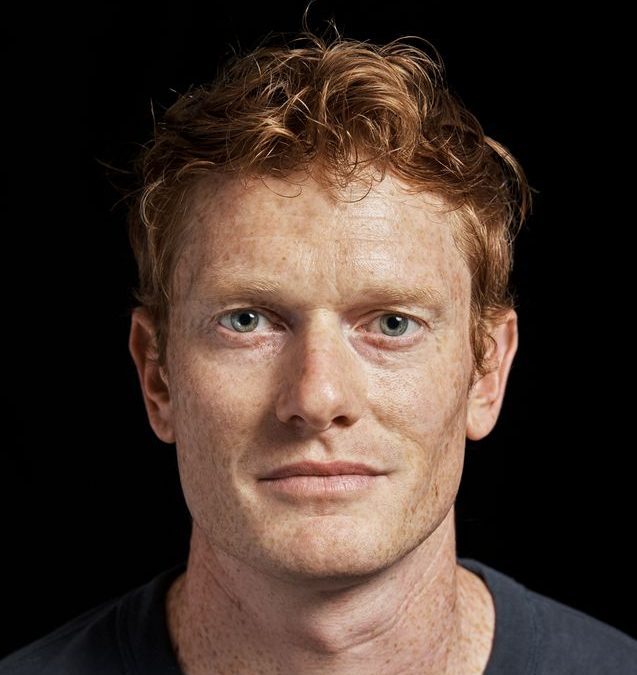
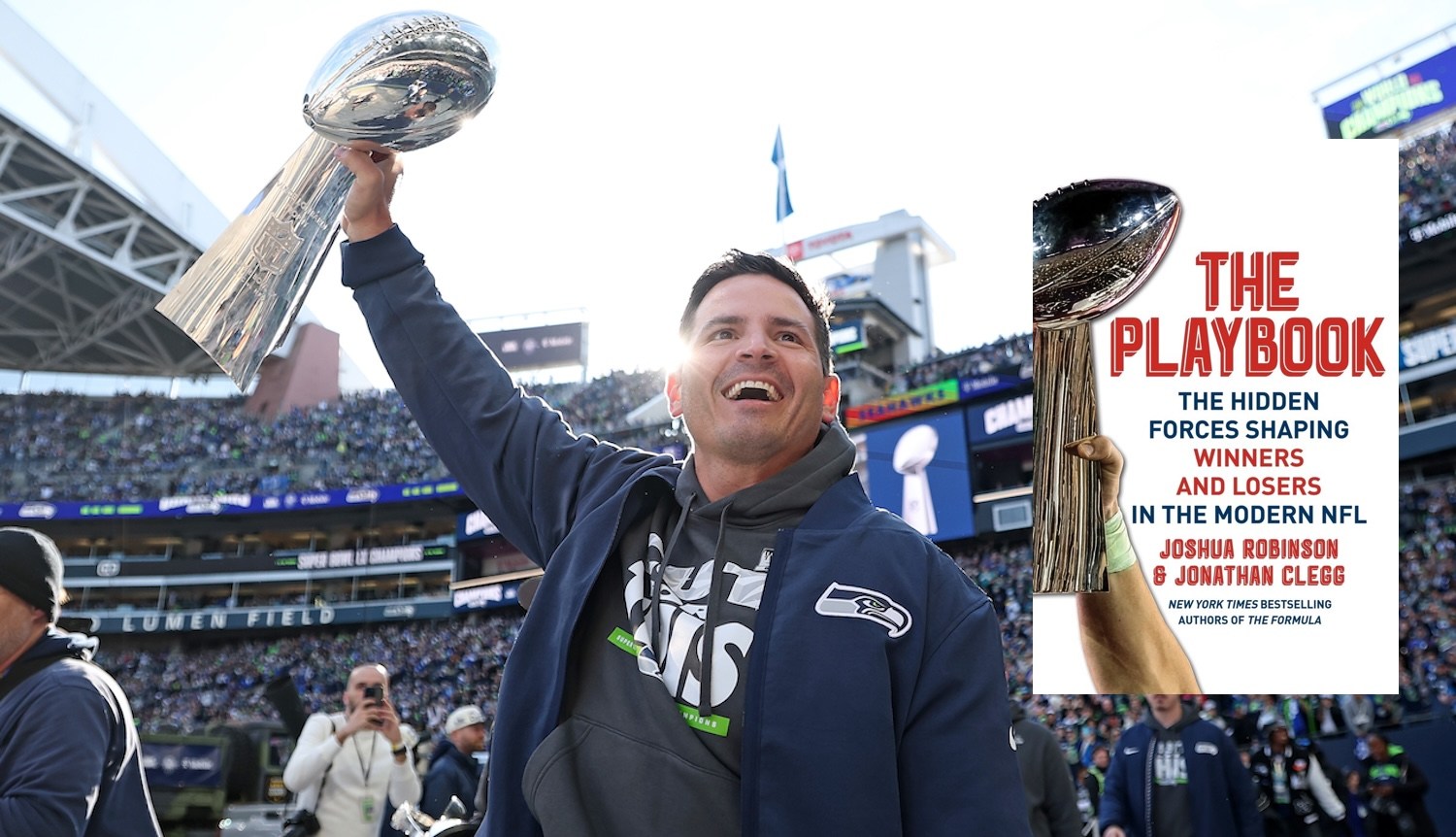
Joshua Robinson and Jonathan Clegg ask these questions in their new book, The Playbook: The Hidden Forces Shaping Winners and Losers in the Modern NFL, which is available now. This is the Wall Street Journal duo's fourth book together, and it's the product of a year of reporting and research. On Wednesday afternoon, I spoke with Robinson about the book's arguments, what makes team-building in the NFL so fascinating, and his and Clegg's co-writing process. Our conversation has been lightly edited for clarity.
This is your fourth book together. You have the the two soccer books and the F1 book, which are all very coherent with your experience as the Journal's European sports correspondent. This one's a little different. What drew you guys to do a book about the NFL?
We've always watched football, and Clegg, more than me, is a huge NFL fan. He's a massive Raiders guy. He grew up in the U.K. as well, and has been a Raider fan since the '80s.
That's perverse.
Yeah, I mean, he's also a West Ham fan, so he clearly has problems. The NFL is attractive because it's the biggest thing in America. Not just the biggest sport—it's just the biggest. It is the culture. We were thinking, how could we get into that, and what's the best approach to write a book about the NFL that would also be coherent with the way we write and the way we tell stories?
We knew the bar had to be high for the NFL, because we're not introducing something to American readers here. It's not like telling them the story of the Premier League or explaining Formula One. We wondered, How do we tell people something about the NFL they don't know? and that was when we became obsessed with this idea of a league built for parity. A league that's designed for its very survival to push everyone back to the middle with all these mechanisms, like the draft, the salary cap, and the redistribution of revenues, that are designed to punish winning and prop up losing. And yet we have teams like the Rams, Seahawks, Ravens, and Eagles that are good year after year.
The way you follow that through line from the early history of the league, through the Jerry Jones revolution, and into the Manning-Brady era is interesting. But most of the book is set in the very recent past. You establish that a lot of the thinking around front-office stuff has changed in the last 15 years. Why do you think that is?
I think it's important to establish that there were two completely math-changing moments in the history of the NFL, and they've occurred in the last 30 years. One was the introduction of the salary cap, which transforms the league from this grand exercise in talent-spotting into a puzzle of resource allocation. The second was the introduction of the rookie wage scale, which changes roster construction again because it artificially creates a class of player that is incredibly cheap. It creates enormous surplus value if you can get a good [rookie].
So to answer your question, it took a class of kind of younger thinkers, who were unburdened by the old ways of doing things, to come in and spot these inefficiencies. It took people who understood that you have to take risks to break away from the great big middle of the NFL. It's a league of groupthink, where the only thing worse than losing is looking stupid, and so it's very safe to just do things the way they've always been done. And the forces of the league will probably help you go, you know, 8-9.
There's an interesting thread in the book connecting the various general managers you profile. They all have different philosophies, but they're all adaptable in different ways at different times because they inevitably find the limits of dogmatism. What did you learn in the process of reporting and writing this book about that tension, and their ways of learning from their mistakes?
A lot of guys have to learn the hard way, and [Rams GM Les] Snead is a great example of that. He was the prototypical old-school NFL scout, from Eufaula, Alabama, driving around the South to make sure guys pass the eye test. But while he's doing all of that, he's also listening to Warren Buffett on tape and learning how to become a value investor. He got to a point where he realized that if he wasn't going to take risks and change the way he thought and operated, then he couldn't be successful in this league.
Each of these guys had that moment where they'd either been rebuffed the way [Eagles GM] Howie Roseman was, or they didn't have as much particular experience, or something that pushed them to almost reinvent aspects of roster construction from first principles.
One big realization they've shared is that the hardest thing to identify is when you're in a championship window. A lot of teams will think after a good season, like, Oh, we're there, we're ready to win a championship, but they're not because the pieces aren't all in place, or they have some massive salary-cap bomb coming. The trick is understanding how to stay there, and that the clock is ticking. It's so tricky to get that timing right and have the cold eyes to recognize when your moment is, because the NFL will beat you down eventually. Capitalizing on that moment, and then eating your vegetables when you need to, that's what it's all about.
To the point about reinvention, I really liked the bit about Roseman building around Saquon Barkley because he recognized nobody else was paying running backs. That had me wondering whether it's more important to simply just be doing stuff that other teams aren't, rather than pursue any specific innovations or adhere to any particular philosophy.
That's a great point, and I think it's true. Within reason, being different is certainly the thing that will give you the highest ceiling. The innovation informs how you zag, because you don't want to be different for the sake of being different. It's difference with philosophy.
You're someone who loves the Premier League, loves soccer, Arsenal till you die.
[Grinning] Exactly.
Something I love about the Prem is that it's so anti-parity. There are very tiered levels of finance and expenditure, and I love the competition that sort of financial dynamic produces. I wonder how your feelings about this question of parity versus market freedom have changed in writing this book.
Having been raised on the Premier League, my instinct is to be like, OK, this is the way all sports should be. Philosophically, I think I'm even anti-playoff. The regular season is the thing, and I want the test over 10 months, where it's this battle of attrition, and you grind it out, and the team with the most points at the end wins.
But what's so interesting about the parity and the edifice of rules that is the NFL is that it adds layers and layers of complexity that become really fascinating when you dive into them. I'll say this for it: It works. The NFL is a super compelling product. The games are close. Different teams win all the time. As an entertainment product, it's fantastic.
There's this good running bit of making fun of the Jets throughout the book, and that pays off in this amazing way where the last chapter starts with a deep dive into the team. It's a funny little left turn: No more stories about how guys have succeeded. It's now time to talk about some guys who suck.
Yeah, why bad teams are bad. It was a great payoff. Something I know we say a lot in the book is the fact that you need to have alignment between your owner, your GM, and your coach. Everyone needs to be on the same page, and you have to have the stomach to commit to the process. The Jets are like the kid at a buffet who hates everything. They just put their fingers in every plate and then don't eat anything.
I have some questions about craft. This is a relatively lean book, given how much good access you had to the principals. But it's not overly stuffed with details, and I got the sense that there's probably a lot of great stuff on the cutting-room floor. Do you have anything that didn't quite make it that our readers would like?
The stuff about the process of producing the NFL on Fox theme tune was pretty funny. Basically, Fox Sports president David Hill had been to an amusement park and seen the Batman ride, and he was like, "The theme song has to be like the Batman ride."
[Ed. note: For those curious, here's a deeper dive into that story.]
I'm curious about the co-writing process. You guys have worked together for so long. What's it like writing a book with someone else?
It's great, and it requires the kind of absolute trust that Jon and I have in each other. I think we spent close to a year just working out the narrative arcs we wanted to draw. We'd do these sort of semi-structured sessions where we'd sit around with big pieces of paper and map out the characters and the arcs, and just talk through them. We'd think and mull and obsess as we get through this stage, which we call the Big Pages Stage. Then, when it comes to the writing, before we attack any chapter, we'll map out every beat of it, and then one of us will take the first pass at a section or a chapter. We work in the same Google Doc, and then we write through each other over and over, to the point where we could open the book to a certain page and not know who wrote the first draft.
That comes across; the style is totally coherent.
That's been really important to us ever since the first one, but we have so much fun doing it. At the end of the writing process, and we've done this for all four books, we have the Big Read. It's usually a year, year-and-a-half after the Big Pages. It's the two of us sitting down in person or over the phone and reading the entire book out loud to each other. To polish it up, to hear it, to make sure the voice and tone are right, and to just make sure it sounds like us.
You've basically melted down and reformulated the roles of writer and editor, which I guess you can only do if you have two people who are doing both.
When we did The Formula, I was flying back from the Women's World Cup in Australia, and we started the Big Read the night after the final. I was in L.A. for like 36 hours, then went to New York, and over the course of that Sunday night in Australia to Wednesday morning, when we finally sent the manuscript, we spent 21-and-a-half hours on the phone just reading the book to each other.
You have a crazy life.