

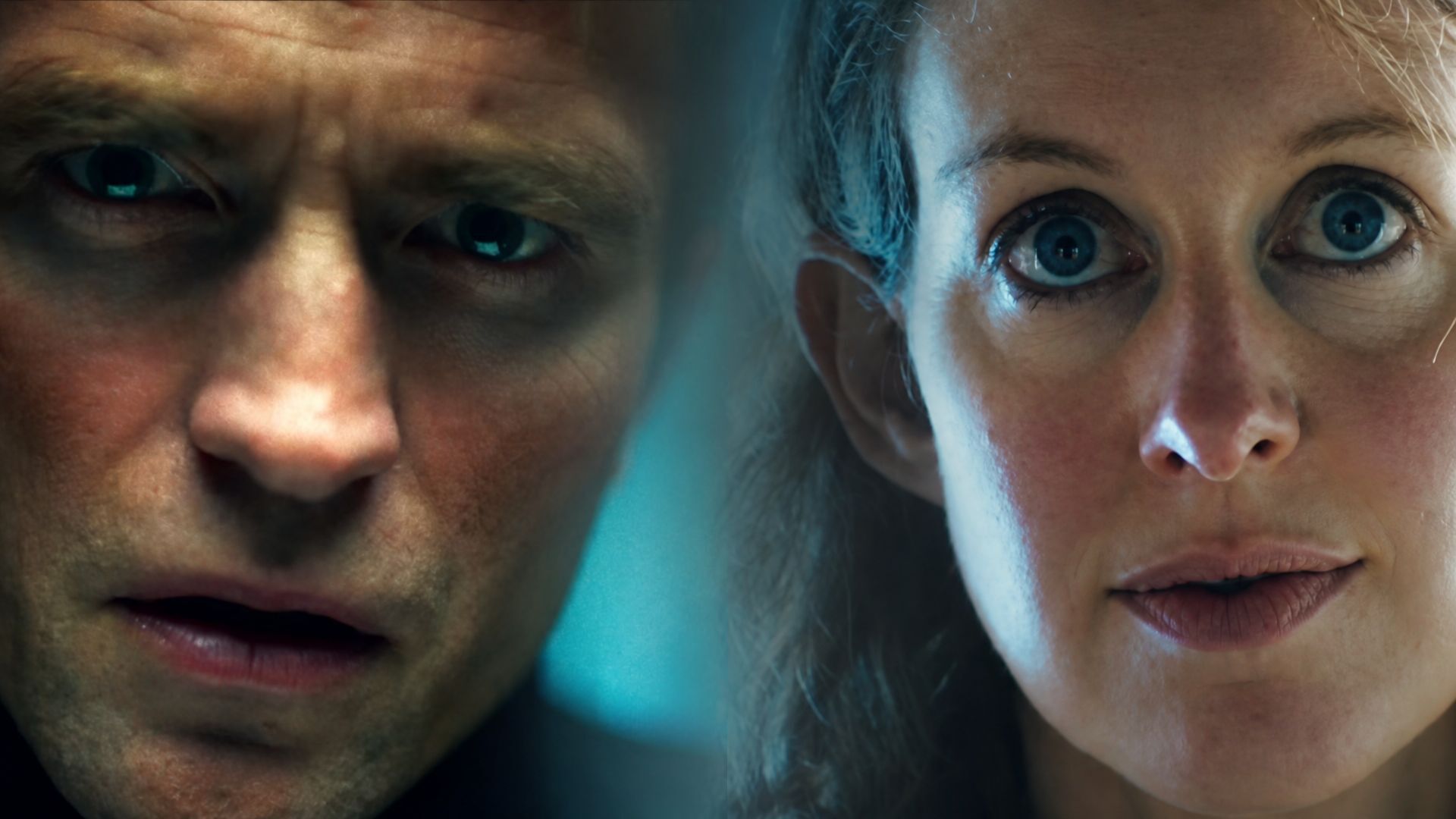
Given that we’re all being filmed and filming ourselves all the time, how can it be exploitative to put someone on camera? The two movies this fall directed by Lance Oppenheim, Primetime and You Can See Everything (which he co-directed with Nathan Fielder), explore voluntary surveillance and the ethics of non-fiction. Together, they share an interest in the violence and vulnerability of seeing and being seen in a sickly recursive popular culture.
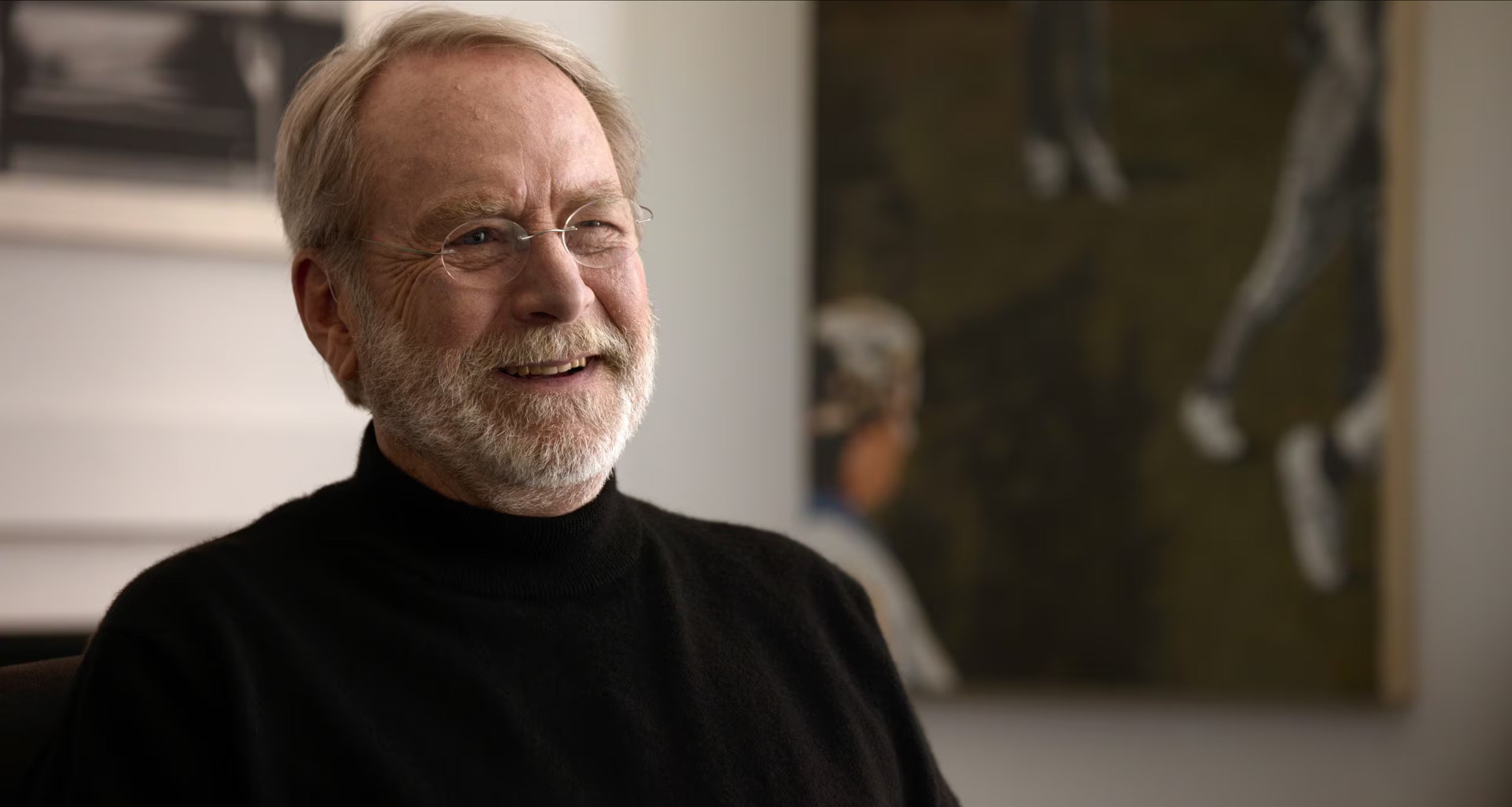
Oppenheim was precocious: His first feature-length film, Some Kind of Heaven, with an executive-producer credit from Darren Aronofsky, premiered at Sundance on January 26, 2020, Oppenheim’s 24th birthday. He was fresh out of Harvard, where he studied under the film diarist Ross McElwee. At a time when consumers were buying new, smaller cameras and making home movies, McElwee turned his life into a sprawling documentary project, interweaving personal milestones with larger social concerns across, such as his masterpiece, the 1985 New South dating odyssey Sherman’s March, and 1993’s Time Indefinite, about the death of his father and the birth of his son. By the time Oppenheim met him, McElwee was at work on Remake, his most recent film, which draws from his many hours of footage of his son from his birth to his tragic early death, and in which McElwee expresses remorse over casting his family as characters that he misinterpreted.
In one way or another, Oppenheim’s films also live with the consequences of throwing people into the spotlight. The feature-length documentaries he made in his 20s, Some Kind of Heaven, Spermworld, and the three-part HBO series Ren Faire, were about aging and loneliness: retirees in The Villages, a sprawling community in Florida, spending their golden years indulging in precarious hedonism; compulsive sperm donors; the Lear-like elderly “king” of a Texas Renaissance Faire, and the children and employees vying to inherit it, should he ever step down. Oppenheim’s subjects are all, in one way or another, clinging on, but they’re fully integrated into a uniquely heightened aesthetic scheme. Intense conversations occur in tight, frame-filling closeups, under stylized lighting and with faces tinted in aggressive color grading that strains against accepted notions of verisimilitude, as if these people are offering up their lives to the camera and losing control of the narrative. Shot-reverse shot setups suggest the conventional camera coverage and editing rhythms of a narrative film; no moment of these characters’ lives is so abject that it isn’t being filmed with an audience in mind.
Oppenheim’s documentary style, which makes a public-facing performance out of raw moments, is the visual equivalent of Posting Through It, apt for a time in which 4K cellphone cameras and short-form video make everyday life cinematic, with commensurate loss of contact with reality and basic norms of human interaction.
Primetime takes us back to the reflexive turn in pop culture, to a fateful ratings battle between ABC’s Lost and NBC’s To Catch a Predator, between scripted drama and tabloid journalism. The time is the early to mid 2000s. The dawn of the reality TV boom was concurrent with the Patriot Act, which lowered Americans’ expectations for personal privacy, and with the invention of internet sites that were ideal venues for grooming, in both the image-conscious and sexual senses. The time was ripe for To Catch a Predator, which showed regular civilians walking unaware into a trap, and recorded their reactions with hidden cameras, just like MTV’s prank show Punk’d, which premiered the year before TCAP. Pedophiles would show up for what they thought would be a rendezvous with an underage boy or girl, only to be met by smug host Chris Hansen. As played in Primetime by the always-vampiristic Robert Pattinson, Hansen takes a palpable relish in his subjects’ discomfort. The tone of the show was frequently sarcastic, as Primetime demonstrates with lightly fictionalized versions of some notorious TCAP encounters—former child star Jonathan Lipnicki as the guy stripping naked in the kitchen and applying Reddi-wip to his genitals is pretty close to faithful, and the gross-out promo that NBC cuts for it, in the film, plays like an early bro-humor clip from CollegeHumor or eBaum’s World.
To Catch a Predator, which carried out pedophile sting operations with of-age decoys impersonating teens both online and in person, made must-see TV out of bad people having their lives ruined on camera; it could aspire to be as outrageously entertaining as Lost under the guise of public-interest journalism. How much the public interest was served remains very much up for debate. In some cases, the TCAP crew scuttled prosecutions by refusing to show prosecutors chat logs that would demonstrate obvious entrapment, meaning that the primary justice meted out on the show was public shaming.
The film builds, as it must, to the suicide of a Bill Conradt, an assistant district attorney in Rockwall County, Texas, who ghosted a TCAP sting after a change of heart, then fatally shot himself when cops and cameras showed up at his house to confront him anyway, against the show’s usual protocol. The film moves this to a nighttime raid with the vibe of a military maneuver; the sheriff’s SWAT team has grenade launchers and an armored Humvee, presumably transferred from the Department of Defense under the 1033 Program, which, especially during the second Iraq war, upgraded local law-enforcement with heavy-duty military equipment. Hansen and his crew have chased Conradt, their “whale,” to Texas, in an Ahab-like pursuit of buzz and ratings, hoping to expose a high-ranking government official. Tired of nabbing mostly sad losers, TCAP imagines a proto-Epstein elite conspiracy, and this fills them with a sense of righteousness that allows them to continue ignoring the fact that most abuse happens in the family.
Primetime places the carceral sadism of To Catch a Predator in its wider cultural context. The film is set against the backdrop of the Iraq War, a time of ambient imperial bloodlust; the first predator is a veteran, and as an NBC news program To Catch a Predator is on a continuum with Dateline’s coverage of Saddam Hussein’s capture, swift trial, and grotesque hanging (a cellphone video of which circulated widely on the internet in the last days of 2006). The script, by Ajon Singh, overplays a parallel between To Catch a Predator and the philandering Hansen’s own impending exposure in The National Enquirer—despite how squicky and shameless TCAP was, that’s a false equivalency—and Oppenheim’s filmmaking turns heavy-handed whenever Hansen’s desperation for ratings and personal moral reckoning lead him to appear demonic, as he does when backlit by lightning strikes or glowing red from a TV playing Lost.
But the film holds together because of how spiritually diseased it all looks. The lighting is lurid and green, like a fishtank; objects glow with smeary halos and a hotel pool is the color of Gatorade Glacier Freeze. Domestic life, childhood itself, is ersatz: TCAP decoys such Phoebe Bridgers, as an actress who impersonates teens of both genders, complain about the dull suburban lives they’re escaping through the internet, and tell the pedophiles which of the identical houses on the cul-de-sac to find them in. Their inevitable first assumption is that Hansen is the father of their would-be victims, but daddy’s not home: Hansen is barely present in his own sons’ lives, and instead plays catch with one of his decoys, Dan (Skyler Gisondo). The decoy houses, furnished McMansions with deep-pile carpets and recently renovated colonial-style kitchens, look like houses featured on the home-renovation shows then proliferating on cable, and they’re staged, as if for an open house, with store-bought cookies that the decoys claim to have baked. The To Catch a Predator crew equips these houses with hidden cameras, anticipating the new normal of domestic surveillance — today they’d have Ring doorbells, at the very least.
Everyone who exposes themselves to scrutiny is portrayed as compromised. After he gets the decoy gig, Dan, played by the boyish Gisondo, works out a high voice, to complement his wardrobe of board shorts and preppy polos; his boss, a producer played by Merritt Wever, gives him praise and pills after every sting. Eager to please, a textbook grooming victim, he is also a perpetrator, who feels guilt about his role in luring men to their ruination, but keeps doing it because he also wants to do well, wants to be good TV, wants to get his SAG card—there is a direct link between his screen time and his livelihood.
Billy Evans and Elizabeth Holmes need the camera even more than Decoy Dan does, though it’s less clear why. In the first shot of You Can See Everything, Evans, Holmes’s partner and the father of her two children, explains, on a phone call, that he and Holmes wanted to document the last month before her incarceration, in 2023, for the frauds perpetrated by her biotech startup scam Theranos. “In the absence of knowing somebody,” a myth is built up, Evans says, which will be dismantled by their envisioned documentary.
So, lured with a notorious liar’s promise of total access and “radical transparency,” Nathan Fielder moves in with them, and Oppenheim’s crew shows up to film them. The sight of Fielder lurking around a domestic environment that his subjects turn out to share with several camera crews, recording from multiple angles, is one of many parallels to The Rehearsal. Holmes dropped out of college while Fielder graduated from one of Canada’s top business schools with really good grades, but both have experience in the motivational-poster self-belief of entrepreneurial bullshit; the film continues Fielder’s interest in truth, artifice, and the layers of performance that multiply when more and more cameras are added to a situation.
You Can See Everything sure looks like a Lance Oppenheim film, though. The cinematographer is David Bolen, who also shot Some Kind of Heaven, Spermworld, and Primetime, and the style is familiar. Ultra-long lenses make the close-ups so close you can count individual pores and stubble hairs on Fielder and Evans’s faces, or track the bloom of rosacea across Holmes’s cheeks. The lighting is sepia, to match the wood-paneled walls of Holmes and Evans’s San Diego beachside rental. The intimacy these people display in front of the camera is unreal—both figuratively and literally, in a film in which as much is concealed as revealed.
For the first hour-plus, Fielder and Holmes spar verbally while Evans listens to biology explainers at 2x speed (he and Holmes plan to relaunch Theranos with improved AI diagnostics) or else interrupts at strategic moments, frequently using their two small children as conversational exit strategies. Fielder mostly prods at Holmes to be “real” with him; these conversations are largely abstract, and hinge on the question of her self-awareness regarding her long record of untruthfulness. Is she a naive dreamer or conniving manipulator? Explaining why her assertion that a Theranos device truly “can” run tests that it absolutely could not and cannot run, she appears beatific but inhuman, staring at Fielder, her practically unblinking eyes the same electric blue as a spice addict from Dune, her frozen baby-doll face without guile but also without any other genuine emotions—her forehead is smooth even though her eyes have wrinkles; eyebrow raises stop abruptly, without furrowing the brow.
Fielder is not as awkward as he appears when performing as “Nathan Fielder” on The Rehearsal and Nathan for You, but is still being a bit faux-naive with Holmes, offering help-me-understand lifelines that Evans usually grabs at first, fawningly explaining that his love “just communicates differently…” There’s much more evidence that Holmes is a habitual liar who knowingly committed fraud than Fielder ever presents to her, or to the audience—he finds her delusions epistemologically compelling, and is gentle with them, because there isn’t much of a movie otherwise. The promise of Theranos, a lie the entire venture-capital investment world of the 2010s was happy to believe, was that its non-functioning machines could find in a single drop of blood enough medical data to basically end premature death. The film is engaged in its own cinematic-forensic attempt at perfect scientific objectivity; as Fielder warms to Holmes, and allows her to flummox him, it suggests that his efforts are as foolish as Theranos was. The film comes as a corrective at a time when consumption of non-fiction seems to be at an all-time high—in the form of disposable, quick-turnaround true-crime streaming documentaries offering the same visceral satisfactions as an episode of To Catch a Predator—and critical thinking about non-fiction at something like an all-time low.
Holmes and the glib Burner douchebag Evans embody an autist/bullshitter Silicon Valley dyad that’s actually a false dichotomy, and legally and ethically the question of her character is not as important as the film makes it out to be. But the forced stakes become important after Holmes goes to jail—at the end of the film’s 2023 shoot, after about a feature film’s worth of runtime—and Evans comes to the fore. The thesis Holmes’s family clings to is that her fundamental naivety was exploited by Sunny Balwani, her much older boyfriend and Theranos president; with Holmes in prison, a version of this narrative seems to replay itself, as Evans—whose constant sniffing becomes more audible in the audio mix as his politics and affect drift rightward—controls access to her, assuming power of attorney, and tweeting aggressively from Holmes’s account, claiming that their love is so pure that he doesn’t even need to ask her what she would do.
“Finding Frances,” Nathan for You’s feature-length series finale, includes a cell phone conversation between one of Fielder’s subjects and his long-lost love, recorded without the latter’s knowledge; Michigan, where the call was placed, is a one-party consent state, meaning that either person on a telephone call has the right to tape it. In You Can See Everything, the crew scrambles to turn off their audio recording when Holmes unexpectedly calls from prison; to dramatize the conversation later, Fielder rewrites it from memory, and formats it as a script, to be reread aloud by an actor playing Holmes. That’s what’s legal under these circumstances, so that must also be what’s ethical, right?
Oppenheim has had to think through similar questions about what’s legal and what’s ethical. While still a hustling Harvard student, Oppenheim directed the New York Times Op-Doc No Jail Time, about the defense attorneys who create heart-rending videos on behalf of their clients during the sentencing phase of their trials, in the hopes of obtaining a more lenient sentence. Recently, lawyers Katie Carter and Doug Passon, who’ve worked in sentence mitigation, have accused him of using footage from their colleagues’ videos without consent, and framing the material opportunistically. That the Times hasn’t taken down No Jail Time indicates that the footage in them falls under fair use, but the issue of moral fairness is a separate one. To the extent that Oppenheim got to the videos by getting close to his subjects, the question is a matter of the professional norms that dictate at what point the standard fawning of a potentially adversarial journalist negotiating access becomes actively deceitful. Or, framed another way, the question is to what extent it’s fair for the subject of a documentary to expect the film’s narrative to confirm their own.
As You Can See Everything begins to double back on itself and reenact events from earlier in its narrative, one moment sticks out in this regard, in which Fielder, Oppenheim, and executives from the film’s studio, A24, meet with an actor playing Evans, who, as Evans did, demands money for Holmes’s participation, citing the payment Prince Harry and Meghan Markle received for participating in their own documentary profile. Oppenheim, in his single line of dialogue, mumbles to Evans: “Those aren’t real documentaries,” but A24 makes the deal anyway. Carter, the lawyer, has said that in directing No Jail Time, Oppenheim “made money by stealing” the stories of disadvantaged offenders—this misapprehends the function of journalism, but as in the case of Evans’s request for profit participation, the filmmaker’s supposed financial gain is a proxy for the subject’s realization that his incentives and the filmmaker’s are not aligned. Of course, we know that once a camera, any camera, is on us, we may be perceived in upsetting, even violatory ways. Nevertheless it’s a gamble we make everyday with greater or lesser enthusiasm, and the gamble that Evans and Holmes go all in on.
You Can See Everything most resembles Primetime in how queasy it makes the transaction between subject and observer feel. Primetime is a paranoid-looking movie; it views Hansen from telephoto lenses, papparazzi-style, and Bolen gets a shot through a hotel peephole; conversations in You Can See Everything have a similar furtive drama to them. Zooms and shots through doorways make you antsy, and sound and image are sometimes severed, such that we can hear mic’ed up subjects in conversation behind closed doors. Everyone is being watched, but what matters most in You Can See Everything is what you can and can’t hear, especially once Holmes goes to prison and access to her is restricted. As conversations are recalled, precise word choices are important: the difference between what we heard as “I” or “it” instead of “they” or “something” speaks to the limits of our knowledge of an opaque Other—and, more urgently, to our responsibilities when we are representing someone’s public image. It is a question of what can feasibly be known, but also what can ethically be assumed. Holmes has been seen through the medium of Theranos advertisements, of Amanda Seyfried’s performance as her in Hulu’s The Dropout, and of the hologram for which she is scanned, seemingly at Evans’s behest—a visual recreation of her, at the bleeding edge of moving-image technology, but whose words are in her mouth? Hers, or the words of the guy who ventriloquizes as her on Twitter?
The film of course, is putting words in her mouth as well. Fielder recruits Seyfried, who was so good as The Dropout’s tragically flawed millennial girlboss, to play his absent subject in restaged scenes from the documentary, and scenes written from Fielder’s own memory. The major shift in You Can See Everything, the moment it changes from being a straightforward documentary to a meta-movie discourse bomb, occurs when Seyfried watches the first half of the film on a laptop. There’s one specific moment that stands out: Seyfried, who in the past has spoken about the vulnerability she felt as a young actress in Hollywood, and moved to a farm in upstate New York to feel more agency and less anxiety, is attuned to Evans’s controlling behavior, and practically jumps off her couch as she watches him snatch a mixing bowl out of Holmes’s hands because she was whisking the eggs wrong. (Huge credit to whichever member of Oppenheim and Bolen’s camera crew was already close in on the bowl before Evans grabbed it.)
As subsequent meetings between the two make clear, Seyfried hates Evans—hates him—but it is to the real credit of her moral intelligence that her visceral, basically instantaneous disgust for a man she clocks as an emotionally abusive narcissist does not really lead her to question her conviction that Holmes is also fundamentally a liar. Or maybe—and here we are walking the line between the truth claim of documentary and the fact of its inherent artifice—it is to the credit of the film’s editor, Fielder’s regular collaborator Adam Locke-Norton, who does a very nuanced job with Seyfried’s complicated character arc.
The film also calls for her to be Fielder’s dissenting voice, challenging his growing attachment to Holmes’s preferred self-image by asking pointed questions about her inconsistencies and his biases—the question of whether Oppenheim, or anyone else, fed Seyfried these questions is one the movie is happy for you to ponder—and his increasingly implicated accomplice. Hoping to shake loose something that will demonstrate Holmes’s ignorance of Evans’s less savory actions, Seyfried travels with Fielder and Oppenheim to visit Evans in Austin, where she goads him into making outrageous statements about his sexual history and intimate that he has connections to professional hitmen. The two argue about politics over dinner; Seyfried’s voice has a telltale white-wine extravagance about it.
She’s at first thrilled to be a co-conspirator, then becomes more uncertain, even guilty, as she sinks deeper into the interpersonal more, confronting her responsibility to Holmes when she watches footage of Holmes watching The Dropout, and finally becoming defensive when Holmes and Evans accuse her of misrepresenting Holmes. This is another false equivalency—Seyfried is flustered but correctly points out that her performance, despite extensive research, used creative license to portray a fictional version of a person who is even more public than the rest of us—but structurally it’s so neat when the actress who played Holmes starts sputtering and splitting hairs to convince us she’s not a malicious liar, either.
Seyfried comes across as a good hang, and plausibly the best actress of her generation. You Can See Everything is a documentary but I’m certainly voting for her as Best Supporting Actress in my critics’ group this year; everything she does is a performance, both because the film assigns her a role as Fielder’s counterweight and the embodiment of his ideas about acting, and because everything she does onscreen, all the thinking and exploring that she does about Holmes and Evans and her approach to them, is part of what an actress does, and the reenactments of her playing Holmes are thrilling to watch because the movie doesn’t separate this performance from the process, the life, that informs it.
Seyfried has rules, acting has rules, that she can fall back on when accused of putting words in Holmes’s mouth; it’s the first time anyone in Oppenheim’s movies can draw such a clear line between how it is and is not appropriate to behave either before or behind the camera. It’s a line Oppenheim’s had to draw freehand himself, given the betrayal of trust he’s accused of committing in the name of a good story about sentence mitigation—a story which incurred the anger of advocates for exposing what they felt to be the vulnerability of his subjects, however morally impure, which is also the accusation Primetime makes of the makers of To Catch a Predator.
What Primetime and You Can See Everything show is how an overall cultural tendency toward surveillance and exploitation slowly became ubiquitous and inevitable, through a combination of overt and subtle coercion. Primetime is a period piece, set during the same era of television that gave us shows like The Swan (a competitive plastic surgery show in which the winner was the uggo who transformed herself most completely) and Who Wants to Marry a Multimillionaire (a pageant special climaxing in the on-air nuptials of two complete strangers, one of whom had an undisclosed history of domestic violence). It’s about the callous and casual harvesting of people, and you recoil from its best moments, as you do from the best moments in Spermworld — you can see everything, but you’re not supposed to see this. You Can See Everything is up to the minute, with a glimpse of the future: having tweeted for Holmes, and scanned her for a hologram, Evans also discusses plans to release an AI avatar of her. When you can see everything, everything and everyone is content—or else totally supplanted by it.