

It's almost time for the World Cup. Before the tournament, we'll be previewing each of the top 15 teams by FIFA rankings that made the tournament. Why the top 15? Because that's how many we needed to do in order for the USMNT to make the cut. You can read all of our previews here.
Colombia comes into the 2026 World Cup as one of the hungriest teams in the field. After missing the 2022 edition of the tournament, Los Cafeteros are back, having breezed through the hardest qualifying test in the entire world: CONMEBOL’s grinding 18-match crucible, which Colombia finished in third place, eight points safe of the intercontinental playoff spot. Along the way, Colombia beat both Argentina and Brazil at home, the first time it had toppled the latter in World Cup qualifying history, and also added a runner-up finish at the 2024 Copa América, taking Argentina deep into extra time before losing to a 112th minute winner. In other words, despite the disappointment of the last World Cup cycle, this is an experienced and battle-tested side, one coming into the 2026 tournament with plenty of talent in a starting XI that can compete with anyone.
That’s not to say Colombia should be considered a dark horse to win the whole thing; there are some questions of depth, particularly in the midfield, and the top level talent is centered around two players, one of whom is long past his physical prime and the other who was cast off from Liverpool a year ago. So, there are questions, but manager Néstor Lorenzo, who took over after Colombia failed to qualify for the 2022 World Cup, has put together a strong collection of talent. As long as the team’s March friendlies aren’t an indicator of what’s to come—a 2-1 loss to Croatia and a brutal 3-1 defeat by France—South America’s third-best side could be in for a wild ride at the World Cup.
Who Is Their Main Guy?
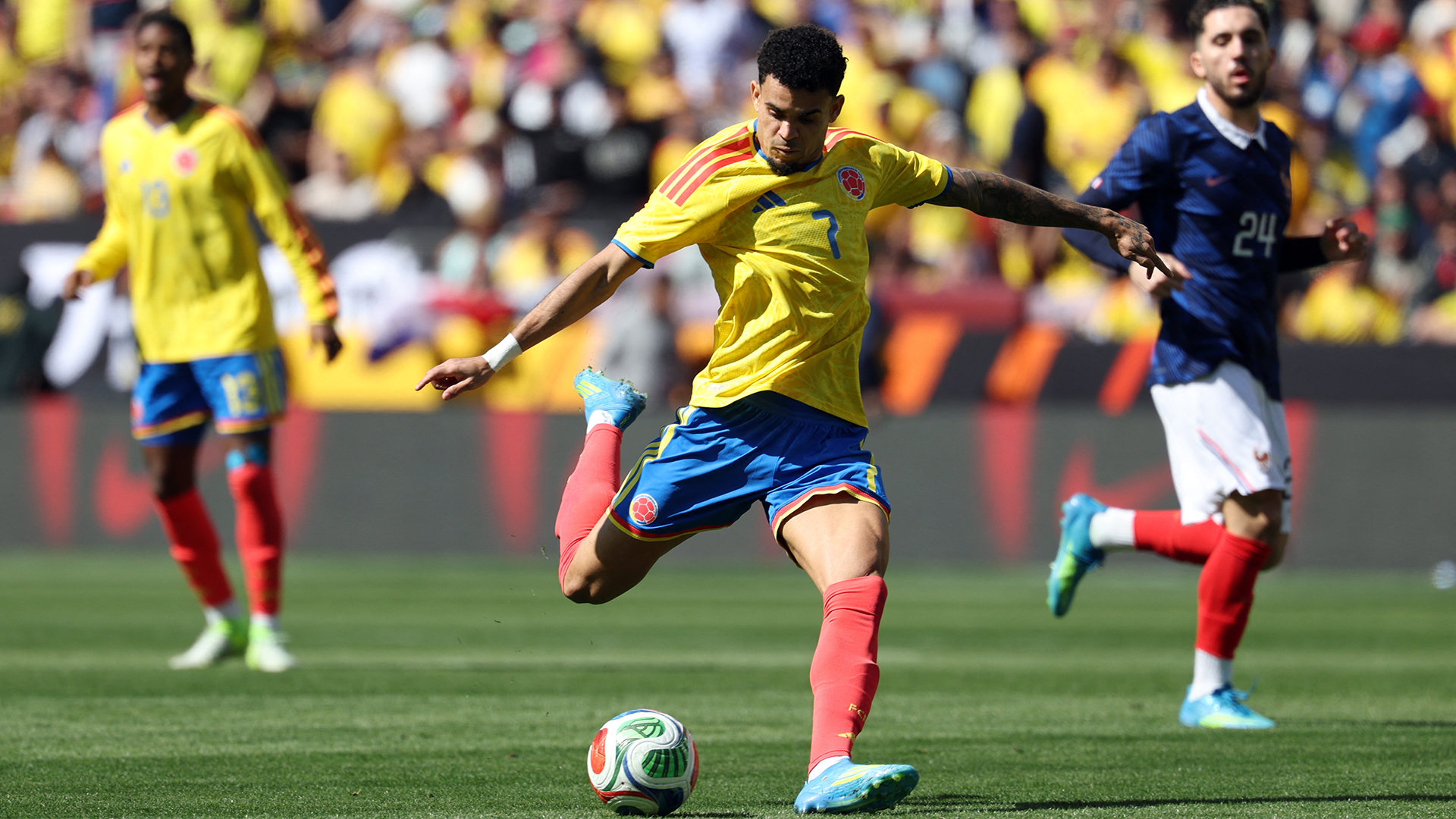
After Liverpool deemed him surplus to requirements last summer, Luis Díaz transferred over to Bayern Munich and promptly set the Bundesliga on fire. The 29-year-old had 29 goal contributions (15 goals, 14 assists) domestically, and added 10 more in the Champions League as Bayern finished first in the former and reached the semis of the latter. Whatever doubts Liverpool might have had about Díaz’s age and end product were put to rest, and now Díaz will lead Colombia in his first World Cup.
Díaz is fast, nifty with the ball at his feet, and has proven to be a difference maker for Colombia this cycle. He scored both goals in Colombia’s 2-1 win over Brazil back in November 2023, the first time Colombia had ever beaten the continent’s heavyweights in World Cup qualifying.
In all, Díaz scored seven times in 17 qualifier matches, continuing to cement his place as Colombia's best player, a process that arguably started when he was the co-top scorer of the 2021 Copa América. Since then, Díaz has been a mainstay in the starting XI, and he's peaking at just the right time heading into the tournament.
Playing from the left wing, Díaz loves to dribble straight at opposing right backs before either ripping off shots to the far post with his right foot or cutting the ball back towards the striker spot. While he won’t have Harry Kane waiting for those cutbacks like he does at Bayern, Díaz’s gravity as a dribbler and his ability to pick out open runners will give Colombia a secondary source of playmaking, complementing James Rodríguez and Juan Fernando Quintero in the No. 10 spot.
Who Is Their Main Defending Guy?
You could argue that Davinson Sanchez’s ability to shepherd the physical Colombia backline will be key for the side’s defensive efforts, and you wouldn’t be wrong, but the most important non-attacker for Colombia this summer will definitively be Crystal Palace’s 31-year-old Jefferson Lerma. Part of this comes from what Lerma himself brings: While not the best midfielder with the ball at his feet, Lerma works hard out of possession, is a good tackler, and has a keen nose for breaking up counter-attacks. Just on his own merits, Lerma would be a crucial part of Lorenzo's game plan, particularly when covering for James and Quintero, both of whom are low work rate players.
The bigger issue, though, is that Colombia simply has no midfield depth, particularly in terms of defensive presence in the middle of the pitch, and so Lerma isn't a luxury, but a necessity. Any sort of injury, even one that just slows him down, will put a damper on the style of possession-based play that Colombia enjoys, particularly against worse sides, and would leave it open to upsets. Lerma will also have to watch out for bookings for that same reason, and given how he almost doubles his tackles per game while playing for his nation in comparison to when he plays for Crystal Palace, there will be plenty of opportunities to pick up yellow cards. Lerma will be too important for Colombia's hopes to get himself suspended through bookings, so he will have to lean more on his ability to intercept passes if he's going to play every minute of every Colombian game at the tournament.
Who Is Most Likely To Break Out?
Real Betis striker Juan Camilo Hernández might not get the opening nod as Colombia’s striker over Sporting Lisbon’s Luis Suárez (who had 28 goals in Portugal’s Primeira Liga), but “Cucho” might end up as the most important central forward for Colombia anyway. The former Columbus Crew man will be returning to this side of the Atlantic off the back of a 14-goal season across all competitions for Betis, and he’s likely to add to that count in the World Cup, thanks to his pace off the ball and his flair on it.
Given how poorly the established attacking pecking order played in the aforementioned March friendlies, Cucho could serve as a spark plug and a change of pace for what looks to be a potentially stagnant attack with Suárez up top. It’s likely, given that Colombia plays a 4-2-3-1 system under Lorenzo, that Cucho’s lack of physical presence as the tip of the spear might hold his minutes back over the bigger and stouter Suárez, but Cucho works harder in defense and might end up giving Colombia a much-needed work rate boost, especially when James is out there. Speaking of …
Who Is Most Likely To Eat Shit?
It brings me no pleasure to say this, but the James Rodríguez of old has been dead and buried for years now. This is not to say that the 34-year-old can’t contribute, or even that he is a negative for Colombia; I’d argue that Colombia does look its best when he’s occupying the central attacking midfielder role. It’s more than James has not been a consistent performer at club level for about half a decade. James’s game was always going to age well, given his grace on the ball and his ability to put passes exactly where he wants them, but his body, already not built for high intensity soccer, has not aged well, and his stamina is down the tubes.
This means that anyone hoping for a repeat of the 2014 World Cup, where James won the golden boot, or even the 2018 edition, when he picked up a Man of the Match accolade against Poland, will likely leave disappointed. The most likely James experience, if he even manages to remain healthy, is that he’ll play roughly an hour per game before coming off for Quintero, who at 31 has a lot more fuel in the tank, if not as much talent. It’s still exciting to see James back at a World Cup, and I’ll be leaning forward to watch any time he has the ball in the final third; I just don’t expect him to consistently produce for entire matches at this stage of his career.
How Can They Win It All?
The real answer is that Colombia can’t win it all, but that doesn’t mean that they are drawing dead in the tournament. The depth isn’t quite there, but some injury luck to keep the starting XI together could be enough to make a deep run. Colombia has only made it to the quarterfinals of the World Cup once before, in 2014, and a repeat of that—with one extra knockout round win, thanks to the bloated format—would be a great success for South America’s third best team.