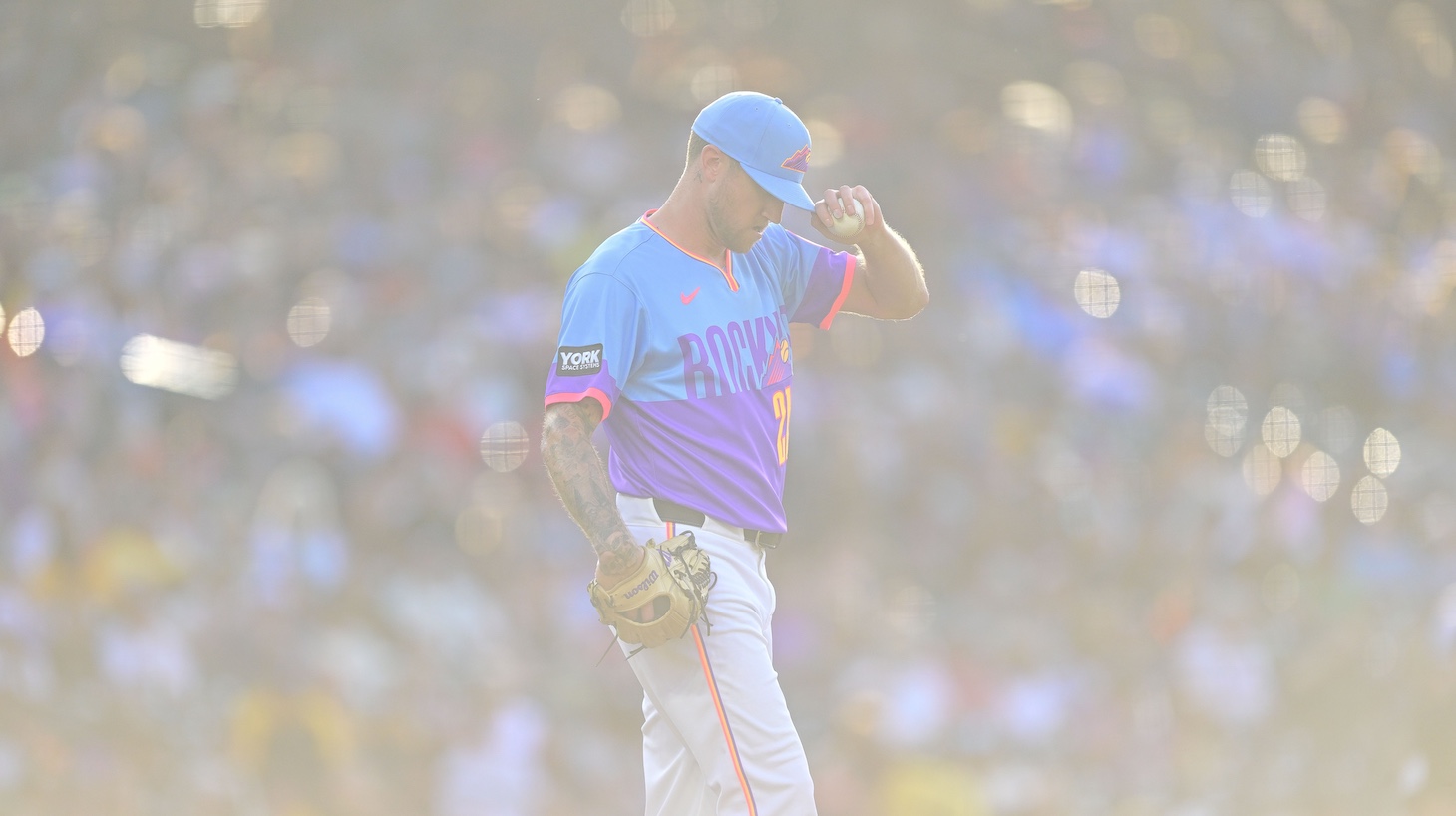
Among the things COVID does not get credited for—and think of the last time you read that sentence—is the way it has helped bad baseball teams perfect the art of bottoming out. Since the pandemic made us more comfortable with the idea of catastrophes, we have seen the worst teams in the majors choose to be, or accidentally become, spectacularly awful.
Sadly, though, that may be coming to a temporary end. After all, on the theory that if you're going to stink, be a sewage plant explosion, 2026 is shaping up to be a particularly meh year. An homage to the upcoming elections, if nothing else.
A year ago, the Colorado Rockies finished 43-119, fourth all-time by total of losses and 10th by runs allowed (1,021). The year before that, the Chicago White Sox closed out with a preposterous 41-121 record, second all-time after our beloved 1899 Cleveland Spiders (20-134). The year before that, the last Oakland Athletics team lost 112, and the year before that the Washington Nationals celebrated their 2019 World Series victory by losing 107, which while not as eye-opening at first glance represents an increase in defeats of 38, which will still get a person's attention.
Indeed, we haven't had the worst team in baseball manage less than 100 losses since the 2017 Tigers, who got their shit together two years later and lost 114. Or, we suppose, scattered their shit all over the yard and lost 114, if that's the analogy you prefer. One hundred has always been the minimum standard, 110 is now the accepted norm, and when the White Sox topped 120, it was clear the game was on to something. Call it turbotanking.
Now the reward for tanking in baseball is not as stark as it is in, say, basketball, football or even hockey. In soccer, badness tends to happen more organically, give or take the odd match-fixing scandal. But however minimal the prize, the trend is clear: Only two teams lost as many as 110 between 1970 and 2017, and now there's damned near one a year. Whether it's a byproduct of analytics, cutbacks in scouting or just standard stupidity, 110 is the new 100, and 120 is the new 105.
But for some reason, not this year. As day dawned against all odds and with the halfway point in the season upon us, the worst team in baseball, those doughty Rockies, are on a pace to go a mere 63-99, and reduce their total runs allowed by 100. That's an improvement of 20 games, which still keeps them bad but not memorably so. And where's the fun in that?
Worse, the White Sox are the surprise team of the year, as you know from your reading, and are on a pace to improve their record by 25 wins a year after improving their wins by 21. They are by that definition more than twice as good as they were two years ago, and since the idea of being twice as bad would make them the new and improved Spiders, this is a seriously annoying level of unprepared-for success.
So what have we to look forward to in the second half when it comes to looking at the standings while standing on our heads? Well, probably nothing, which is another homage to the upcoming elections.
The Los Angeles Angels are in a fierce anti-battle with the Boston Red Sox, Detroit Tigers and Kansas City Royals for worst in show in the American League, having just lost the re-emerging Mike Trout to the same injury bug that has taken out half the starting lineup and half the rotation. As such, they look like the team best positioned to power-slide into oblivion. But to catch the '24 White Sox they would have to go 9-75 from here, and while we would cheerfully applaud the effort, we suspect they don't have it in them, no matter how many times Jo Adell does this. Even at their present rate, they'd only end up with 98 losses, which is pathetic by any standard; nobody has ever remembered a 98-loss team.
That leaves the San Francisco Giants, who are largely tone-deaf to this season even though they are apparently breaking their decade-long pattern of hovering around .500 while casting no shadow. This time, they are hovering around .400, and they are casting a shadow, which is the same as their actual profiles. Their power numbers, which were abysmal at the start of the month, are rising slowly, but they remain steadfastly near the bottom in the other two true outcomes, walks and strikeouts. Their most memorable achievement this year has been antagonizing their already irritated fan base with Rainbowgate. The fans don't like the new manager, the new manager doesn't seem to like figuring out the intricacies of bullpen usage, and everyone is wondering if local icon Buster Posey is overmatched in his job of resuscitating this deeply mediocre operation.
However, they too would have to lose the rest of the season by a prodigious rate (21-65, is that prodigious enough for you?) to get to 110, and we don't think they can stay healthy or motivated enough to manage it. One caveat: They, like the Angels, Royals and Red Sox, might be keen to sell at the trade deadline. Colorado certainly won't, and the Tigers are not far enough removed from their worst seasons to poke that particular wasp hive again.
In short, we will probably have to settle for uninspired nothingness after the glory years of the high teens and low '20s. The old adage, "If you're going to be lousy, be great at it," seems to be a low priority this year. At least next year we'll have a hate-coated lockout, and every team can be the Cleveland Spiders. Even a clinically depressed person can overload on gummies and dream.