

Some time ago, if you asked me for an example of the most romantic, childhood dream–ass achievement for a baseball player, I probably would have pointed to Bryson Stott's home run against the Miami Marlins in the 2023 NL Wild Card series: a first-pitch grand slam with the crowd singing his walk-up song. But if we're being objective, there are a few flaws with the moment. The Philly crowd was singing, but it wasn't a game-winning grand slam, even if it was the dagger. The Phillies were already up three runs. This moment was surely romantic, but maybe the question should be reframed: What would be the most mathematically comprehensive achievement for a baseball player?
The ultimate grand slam is one answer. It's not just a walk-off grand slam, but a perfectly precise one, with the trailing team down three runs in the bottom of the deciding inning, and the grand slam providing no more runs than needed to lead to instant victory. The definition of an ultimate grand slam came up recently, on June 10, when Bryce Eldridge of the San Francisco Giants hit one with no one out in the bottom of the ninth, sealing an 11-10 win over the Washington Nationals. Depending on how you count it, he became the 33rd or 32nd player to ever achieve the feat. Stathead has 31 players before Eldridge. However, the MLB.com SEO post for every ultimate grand slam in Major League history has 32 before him. The difference between the statistics is Roberto Clemente's inside-the-parker in 1956 against the Chicago Cubs. (That MLB.com post has been regularly updated since 2019, and for the past few versions has kept the lede as "It's never over until it's over -- just ask the [last team to hit an ultimate grand slam].")
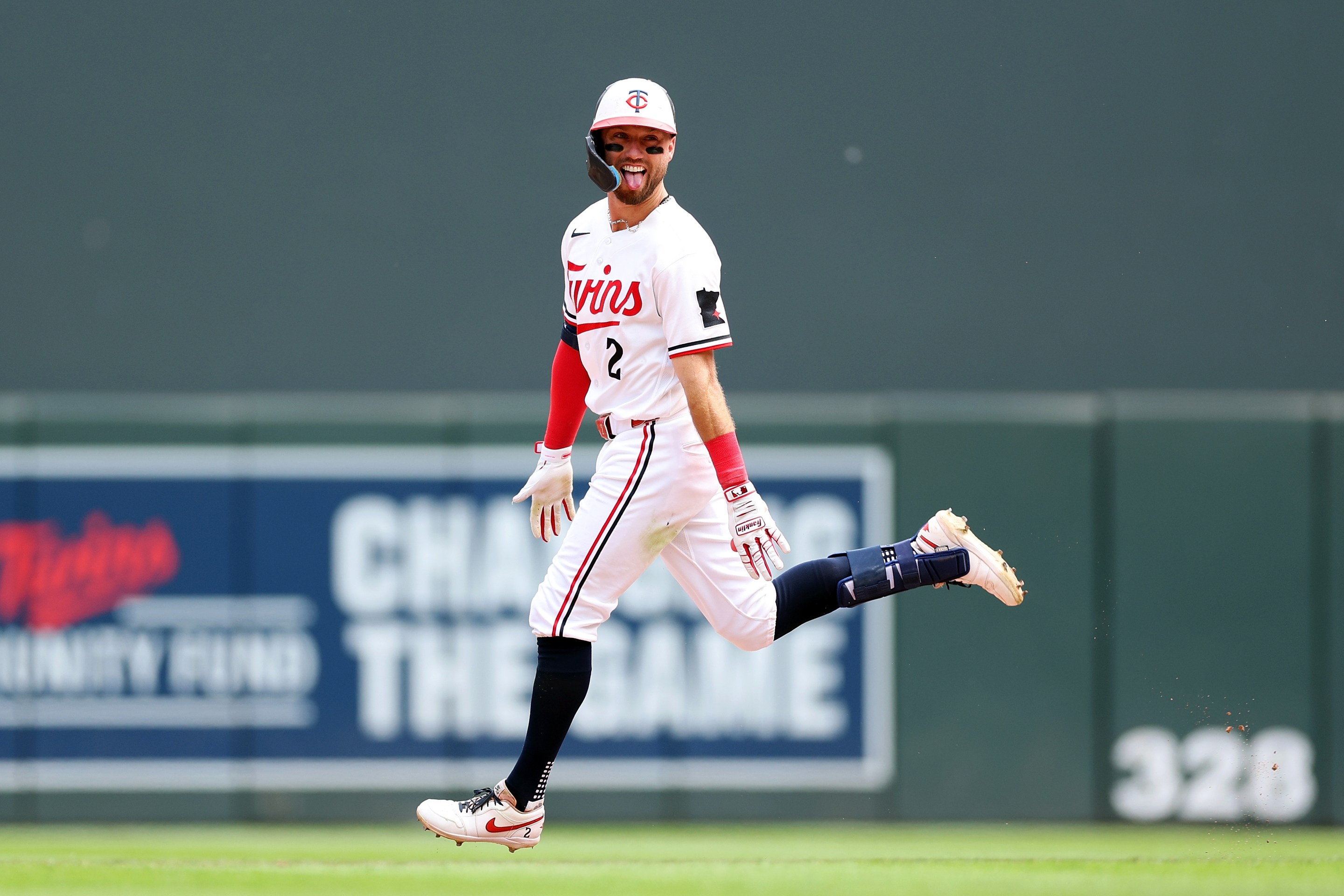
On Thursday, Kody Clemens of the Minnesota Twins offered an even more improbable grand slam—an ultimate ultimate grand slam, one might say. With the bases loaded in the bottom of the ninth against the Kansas City Royals, Clemens came up to bat with two outs and found himself quickly down in an 0-2 count. Then, as Royals pitcher Matt Strahm left a 83-mph slider in the zone, Clemens ripped it to right-center field for the first-ever ultimate grand slam on an 0-2 count. (To be comprehensive, the counts of several earlier grand slams are unknown on Stathead, and there were three other ultimate grand slams that took place on two strikes and two outs.) The moment was about as romantic as a regular-season game against the Kansas City Royals can be.
"That's stuff that you dream about, stuff like that, when you're a little kid," Clemens said after the Twins' 4-3 win. "That's what you envision doing." Exactly, Kody Clemens, son of Roger Clemens. You dream properly and envision doing the most Stathead-unprecedented grand slam ever.
But one hitter's dream is a pitcher's nightmare. My friends and I recently had a discussion about whether it was worse for a team to lose in a 8-7 shootout or a 1-0 pitchers' duel. The answer, in my view, was any game in which the starting pitcher was let down, whether by the offense or bullpen. A 8-7 shootout is different depending on how many of those runs were allowed by the starter. In Thursday's case, Royals starter Noah Cameron was most certainly let down: He pitched eight shutout innings and gave up only one hit and two walks. While Strahm will absorb the indignity of allowing the UUGS, poetically paralleling the actions of his former team, it was Lucas Erceg, another Royals reliever, who actually put the runners on. To compound the indignity, Erceg opened the ninth inning by inducing two outs before loading the bases.
The Royals' bullpen is cumulatively rocking a 5.31 ERA on the season, which is second-worst in the majors, ahead of only the West Sacramento Athletics. Erceg and company have blown a total of 21 saves this year, ranking fourth-most behind the Washington Nationals, Detroit Tigers, and Athletics. Really, that created the ideal set of circumstances for Clemens's feat. It's never over until it's over—just ask the 2026 Kansas City Royals.