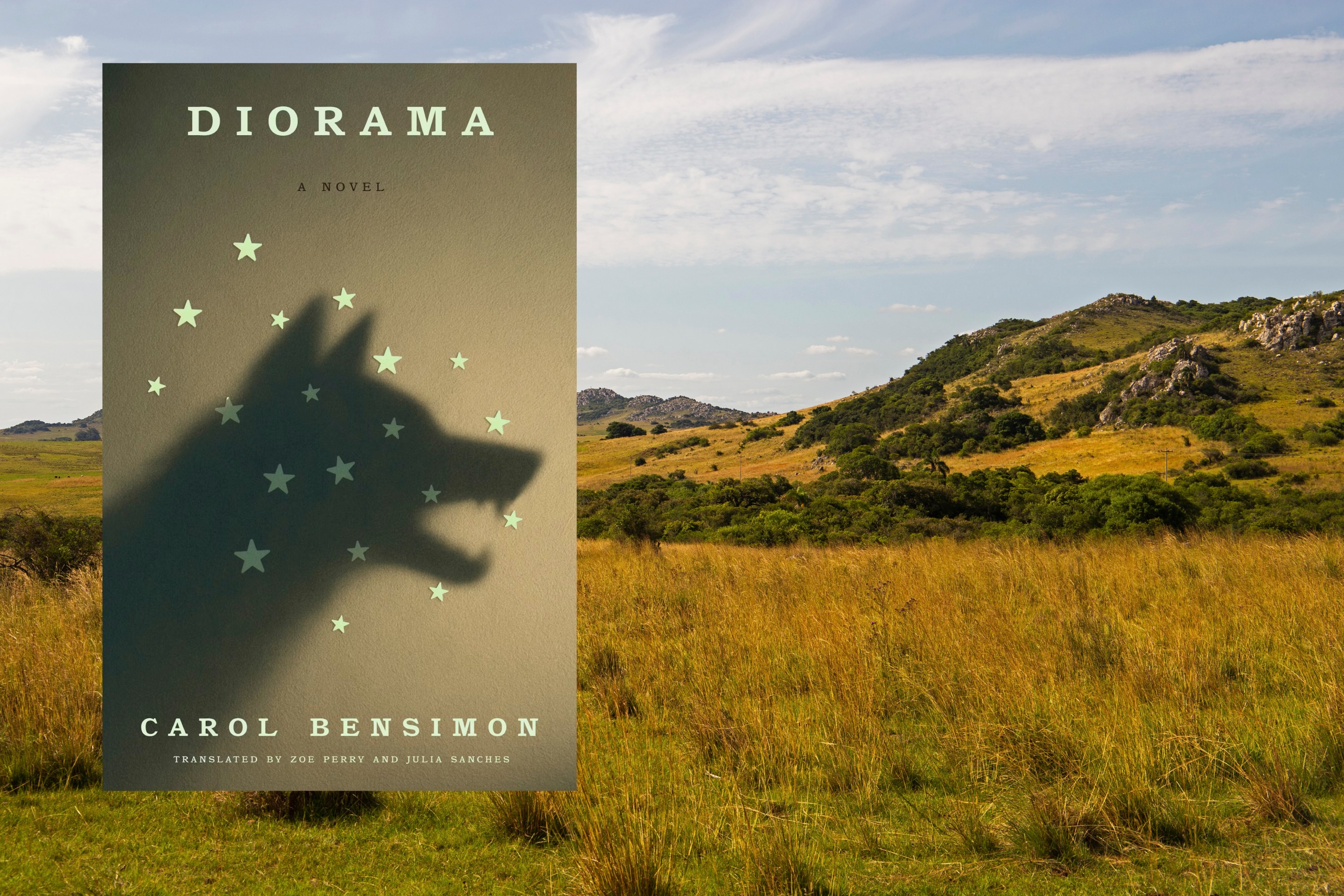
Where its harsh, cold plains stretch toward the Uruguay River, the southernmost Brazilian state of Rio Grande do Sul is blanketed by the pampas, expansive fields at odds with the sandy beaches and verdant mountains typically associated with Brazil. In fact, Rio Grande do Sul is a bit like the American West: built on settler mythology and Indigenous blood, conquered by men with a thirst for profit, and boasting of that vast kind of nature, big skies and endless plains. Also, there are cowboys.
A South American cowboy is called a gaucho. If, in North America, cowboys come clad in tall boots and tall hats, on the pampas their hats and boots are stouter, they wear neck scarves, and drink mate (a beverage enjoyed nationally in Argentina and Uruguay, but regionally in Brazil; we call it chimarrão). The gaucho is, finally, a virile man—a descendant of those combative settlers, a rugged horserider. Sandra Jatahy Pesavento, one of the preeminent historians of the state, describes the gaucho ideal as “the brave horseman of the undulating plains, the valiant centaur of the pampas.”
The Brazilian South is a largely conservative region, and strikingly white compared to the rest of the country, due to European and particularly German colonies established in the 19th century. It enjoys a place of prominence in the Brazilian collective imagination, perhaps nowhere more prominent than in the south’s own estimation—it has bred separationist, racist and homophobic ideas, and a psyche addled by European envy. Past presidents from Rio Grande do Sul include João Goulart, the last democratically elected president before the establishment of the military dictatorship in 1964, and dictators—some, like Getúlio Vargas, more popular than others, like Humberto de Alencar Castelo Branco. Gisele Bündchen is from there, too.
As it happens, Rio Grande do Sul also breeds writers. Its rich literary tradition is epitomized by the historical novelist Erico Verissimo, whose epic The Time and the Wind trilogy spans 200 years of the state’s history through successive generations of the Terra-Cambará family. Verissimo died in Porto Alegre, the state capital, in 1975, but since then, a crop of contemporary writers have taken up his torch. Many of Brazil’s most acclaimed young writers—affirmed by the much-coveted stamp of international approval that comes with being translated and read in English—are from Porto Alegre, among them Jeferson Tenório, Daniel Galera, Michel Laub, and the California resident Carol Bensimon, whose new novel Diorama came out in an excellent translation by Zoë Perry and Julia Sanches in March.
Diorama opens on the pampas, in 1987. Cecília Matzenbacher, the novel’s first-person narrator, is nine years old and tagging along with her father, Dr. Raul Matzenbacher—a physician turned congressman—and her older brothers, Vinícius and Marco, on a hunting trip. Being both too young and a girl, Cecília isn’t allowed to hunt, which to her is just as well. She passes the time inspecting a skunk bone found behind a gas station. Cecília is in the habit of collecting found “treasures” of the natural world in a shoebox in her room. Her mother thinks the box stinks, but to Cecília—an introspective, observant child of heart-aching tenderness—it contains no less than the world. The novel skips ahead to 2018, and Cecília is a taxidermist living in Los Angeles, having left Brazil for good 16 years ago. The narration alternates between the perspectives of her younger and older selves, one providing the context for the other: Cecília’s childhood sets the tone for her reclusive adulthood and affinity for California’s landscape.
Her home country is not the only thing Cecília avoids. She avoids people by working with animals, and the sorry state of her marriage by sleeping with the flirtatious grocery store clerk. Most of all, Cecília longs to be free of her family’s past. In the winter of 1988, shortly after the hunting trip that opens the novel, Raul Matzenbacher was accused of murdering his party colleague and close friend João Carlos Satti. A high-profile case involving two public figures, the murder became a sensation, not least because it was “the first trial in the history of Rio Grande do Sul to be broadcast on live TV.”
Despite an adolescent interest in the case that culminates in a careful catalogue of newspaper clippings, photographs, and even some interviews, Cecília severs herself from the event when she moves to the United States, as if distance could erase it. She revisits her memories after her brother calls her with news that their father has suffered a stroke, which has left him unable to talk. As she looks back on her childhood, she returns to her old inquiries: What led to the death of the man Cecília thought of as the kindly “Tio João,” whose pockets were always full of candy? What connection was there between the accused murderer in the news and Cecília’s father, who, granted, was always impenetrable to her? What were the basic facts of the case, the beat-by-beat of the police investigation?
Diorama’s central murder is based on the real-life assassination of the congressman José Antônio Daudt. He was shot twice, with a bullet hitting him fatally in the chest, as he arrived home on a cold night in June 1988. A colleague of Daudt’s, the doctor and congressman Antônio Dexheimer, was accused of the crime, tried, and acquitted. Daudt was known in Porto Alegre for being a radio journalist as well as a congressman. His signature flair was to punch the table in punctuation of his remarks. Dexheimer was the only suspect the authorities ever considered, and when the evidence turned out to be too circumstantial to secure a conviction, they let the case go. Over the course of a contested investigation—the conflicting interests of which are depicted in the novel—it emerged that Dexheimer’s wife was in love with Daudt, which angered her husband, despite the impossibility of her longing: It also became clear that Daudt was a gay man.
In an interview for the Brazilian literary magazine Quatro cinco um, Bensimon muses that the revelation of Daudt’s queerness led to “an agreement within gaucho society to sweep the story under the rug. It didn’t matter anymore if the crime—which was never solved—was punished.” The case is full of dramatically compelling twists and turns that make for a novelist’s playground: Dexheimer’s alibi hinged on a long drive he took to buy cigarettes, which was suspicious since he lived within blocks of a gas station with a minimart; one of the prosecution’s key eye witnesses was illiterate, deaf, and mute, all of which compromised her testimony. Extrapolating on these details as she turns them into fiction, Bensimon tells the story of a family strained and ultimately broken by convention.
In Diorama, Satti and Matzenbacher continually trade places representing the gaucho ideal and its underside. Both members of the centrist Brazilian Democratic Movement Party (PMDB) and elected to Congress in the first direct elections since the end of the military regime in 1985, they are called to politics for different reasons. While Satti’s “worldliness and encyclopedic knowledge … dovetailed pretty seamlessly with his gaucho ruggedness,” allowing him to “grill fifteen skewers of short ribs in a ditch while talking about Ronald Reagan, Margaret Thatcher, and the imminent demise of the Soviet Union,” Matzenbacher entered politics “more out of vanity than vocation,” and found in Congress a stage for his “small ideas and slick little ambitions.” Satti was “a progressive, perhaps motivated in part by the gradual return of democracy,” while Matzenbacher “was a skeptical conservative” with no real political goals apart from the maintenance of the status quo.
In Bensimon’s telling, Satti’s repressed queerness complicates the ideal he embodies. Despite his progressive beliefs and kindness toward Cecília’s brother Vinícius, whose reckoning with his own sexuality forms a heart-breaking subplot, Satti is an abusive man who wields his power ruthlessly over vulnerable people; he forces himself onto his driver, threatening him with a gun. “He was my boss,” the man tells the police. “What was I supposed to do?” That Satti “kept a gun in his waistband and the entire history of rural gaucho virility in his back pocket” elevates him in Matzenbacher’s estimation; what turns him into an enemy is that he exposes the hollowness of the ideal that organizes Matzenbacher’s conservative worldview. Considering her father as an adult, Cecília sees “less and less of the person and more and more of the puppet who reacted to the incitements of his day and age.”
Violent men need women to subjugate, and Cecília can’t quite accept the hypocritical glee with which her mother, Carmen, gives herself over to her role as a foil for the armed conservative gaucho. Carmen’s upbringing bears out her political leanings: In her youth, Carmen was a pageant princess whose proudest moments involved performing for the aforementioned dictator Castelo Branco. Both a victim of conservatism and its intrepid advocate, Carmen brings to mind the women who rally behind Donald Trump, blind to their own interests in the jostle for proximity to power. In her post-divorce adulthood, Carmen falls in love with ex-military men—whose duties during the dictatorship are questioned by Cecília—and worships Jair Bolsonaro, that “ridiculous little captain that crawled out of the gutters of Brazil.”
If Bensimon draws her characters according to archetypes, it’s because she is setting herself up to skewer them. Satti, the ideal gaucho, is both violent and gentle, the picture of virility and a sensitive gay man; Carmen is a ditzy apologist for fascism and a heartbroken, neglected wife. Even Cecília’s husband in California, a crunchy granola type who is quick to forgive her indiscretions, has his moments of darkness. Still, the novel’s most moving relationship is the one between Cecília and her brothers. In the thick of the family crisis, the school-aged siblings help each other navigate the ruins of what used to be their life. Cecília hangs on to the fixed order of the natural world, finding solace in the scientific method that guarantees a conclusion can be drawn from an observation. In nature, at least, things are often what they seem. In a vivid passage, Cecília studies the habits of a snail in the yard while her mother, overcome with grief, locks herself in her room in “a kind of sensory deprivation and chemical relaxation zone.” Meanwhile, it will later be revealed, her father disposes of one of his guns.
Many years hence, now a respected taxidermist, Cecília explains that what drove the American zoologist and conservationist William Temple Hornaday to taxidermy was that “he needed to kill in order to preserve.” This logic undergirds Diorama as a whole, from Cecília’s vocation to the crime that defines her life. It’s a capacious notion that allows Bensimon to move nimbly across a kaleidoscope of themes: political violence, repressed sexuality, environmental concern, the inescapable ties of family, and perhaps most of all, the past’s hold on the present. In their translation, Perry and Sanches keep up with energetic gusto, managing to weave the novel’s timelines together without losing the reader’s attention. The crime plot provides the page-turning pace, and Bensimon’s erudition grounds it in detail.
In The Time and the Wind trilogy, Erico Verissimo dramatized the origins of the rugged horserider myth. Working on a smaller scale—chronicling 30 years instead of 200, and examining one rather than three generations of a crumbling family—Bensimon takes the myth to its bitter conclusion. When her mother accuses her of not understanding Brazil, Cecília thinks she’s right, “because understanding that country means understanding a tolerance for horror.” With Diorama, Bensimon proves her tolerance is higher than most.