Every international tournament, the widely used and abused "dark horse" designation is bandied about as pundits, fans, and cretins (gamblers) try to be the first to predict a deep run for an unexpected team. The term itself is vague enough to apply to about half the field, depending on one's own criteria. It fits a team that could be a sneaky knockout-stage qualifier from a tough group, it fits a small nation that could even win a knockout match, and it fits a surprise quarterfinalist.
However, the concept is most consistently applied to a team outside of the World Cup elite (made up of the eight countries that have won it, plus the Netherlands) that has a realistic shot at getting to the semifinals. In that way, the dark horses are supposed to be the best of the rest, the best hopes we have of getting something more interesting and novel than just some combination of Argentina, France, Brazil, Spain, the Netherlands, Germany, and England in the final four.
The problem is that the World Cup doesn't really work like that. Looking at a list of semifinalists since the first World Cup of the millennium (2002 in South Korea and Japan), you could make the argument that only two true dark horses have made the semis: 2006 Portugal and 2018 Belgium. Those two teams came into the tournament loaded with talent and expectations, and, had things gone slightly differently—if Portugal doesn't give up a penalty to France, or if prime Eden Hazard-Romelu Lukaku-Kevin De Bruyne don't forget how to score against a French defense that shipped three against an underwhelming Argentina—they could have gone on to lift the trophy. (Maybe the trick to be a dark horse World Cup winner is just to avoid France.)
Other than that, though, here are the other semifinalists once could call "surprising" in the six tournaments since Y2K:
- 2002: Turkey, South Korea (hosts)
- 2006: No one
- 2010: No one
- 2014: No one
- 2018: Croatia
- 2022: Morocco, Croatia (again)
In other words, the semifinal spots at each of the last six World Cups have mostly been claimed by tournament bluebloods or teams that came broadly out of nowhere. That makes dark-horse prognostication somewhat useless, because by definition, a dark horse can't come out of nowhere. Dark horses are endlessly picked over in the run-up to the World Cup, their flaws rationalized and their strengths magnified until they resemble a funhouse mirror version of themselves.
That brings us to the 2026 World Cup, where three of the popular pre-tournament dark horses have shown how little value there is in these kinds of predictions. Belgium's golden generation may be on its last gasps, but a favorable group and a still-talented roster made the Red Devils an optimistic choice to go far. Similarly, Turkey has a long history of dark-horse flameouts in the Euros and now took that show into the World Cup, the country's first time at the big dance since that semifinal run in 2002. To round out the field, Ecuador was seen as the trendier pick from South America over Colombia, given La Tri's stout defense and victories over Colombia and Argentina in qualifying.
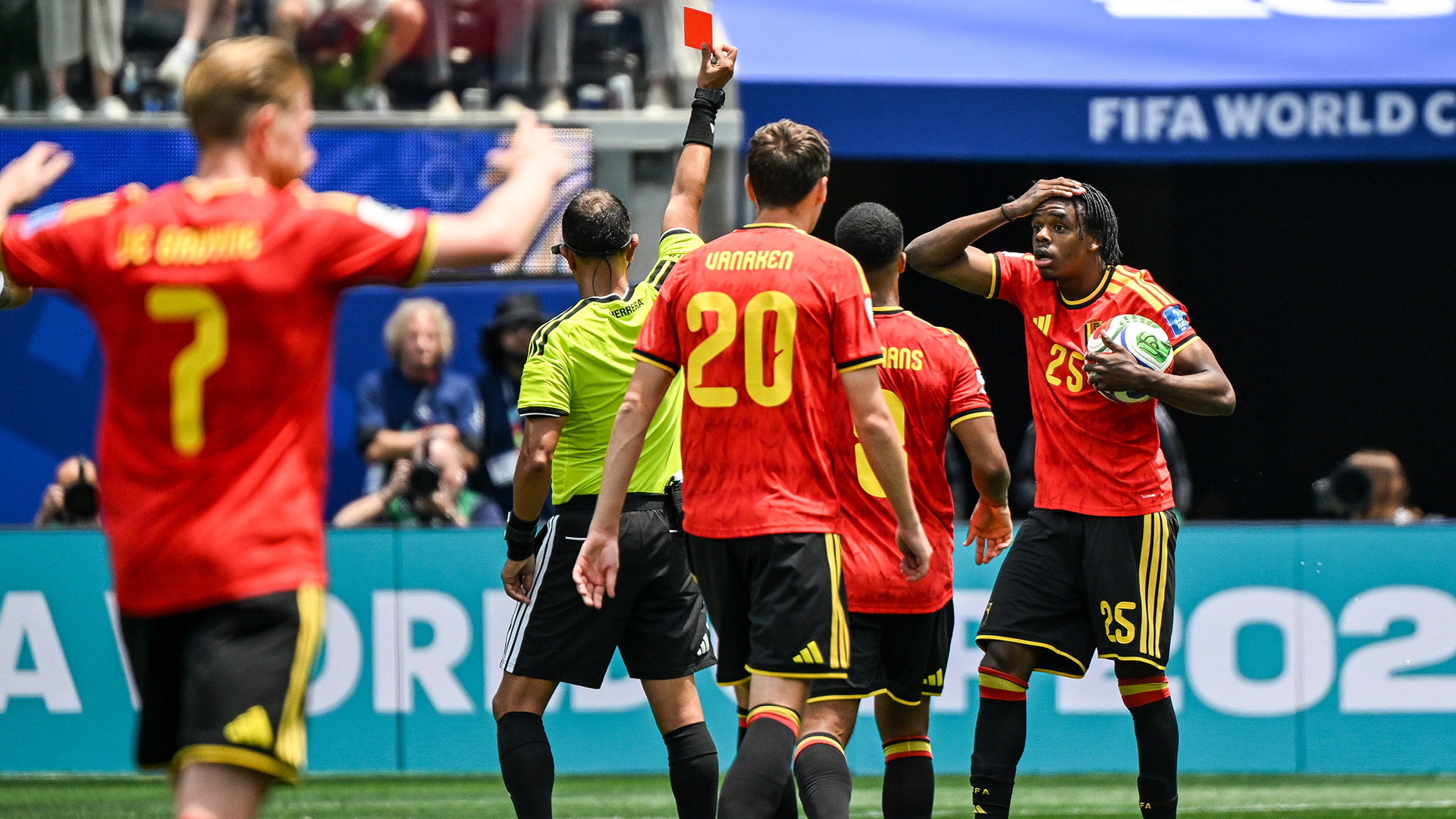
So far, those three teams have picked up quite a résumé: three draws, three losses, one total goal scored, and already an elimination for Turkey. Great job, everyone! Belgium picked up a red card and was one juicy ass from the Iran team from potentially losing on Sunday. On Saturday, Ecuador fell victim to Curacao goalie Eloy Room's 15 saves in a demoralizing 0-0 draw that highlighted the side's biggest weakness (only 14 goals scored in 18 World Cup qualifying matches). As for Turkey, even with Miguel Almirón earning the first-ever covering-your-mouth red card right before halftime, a 1-0 loss to Paraguay on Friday sent the Crescent Stars home with some mind-boggling stats (62 shots, 0 goals, becoming the first team to ever have 70-plus percent possession and 20-plus shots in a World Cup match without scoring a goal, and then in the next game becoming the second-ever team to do it).
This is the problem with the dark horse. World Cups favor the teams with the least weaknesses, rather than the best strengths. It's a pressure cooker of seven (well, eight now, thanks to the expansion) matches where a cold streak in front of goal can send a team home, and an ass millimeters offside can keep Belgium in the hunt. So much of a team's World Cup stay can be decided by luck, randomness, or other things out of a team's control. To go back to 2018, the reason Croatia went one round further than Belgium was probably just due to the luck of the draw, which put Denmark and Russia in the path of the Croatians, while Belgium had to win two tough matches against a strong Japan and Brazil. Even in the semifinals, Belgium faced France, a more complete and more talented team than England, Croatia's opponent. And yet Belgium only lost 1-0 and arguably deserved to win. It's all a crapshoot, basically, which makes trying to predict the chaos enough to not just go with one of the historic heavyweights to win the tournament a futile effort.
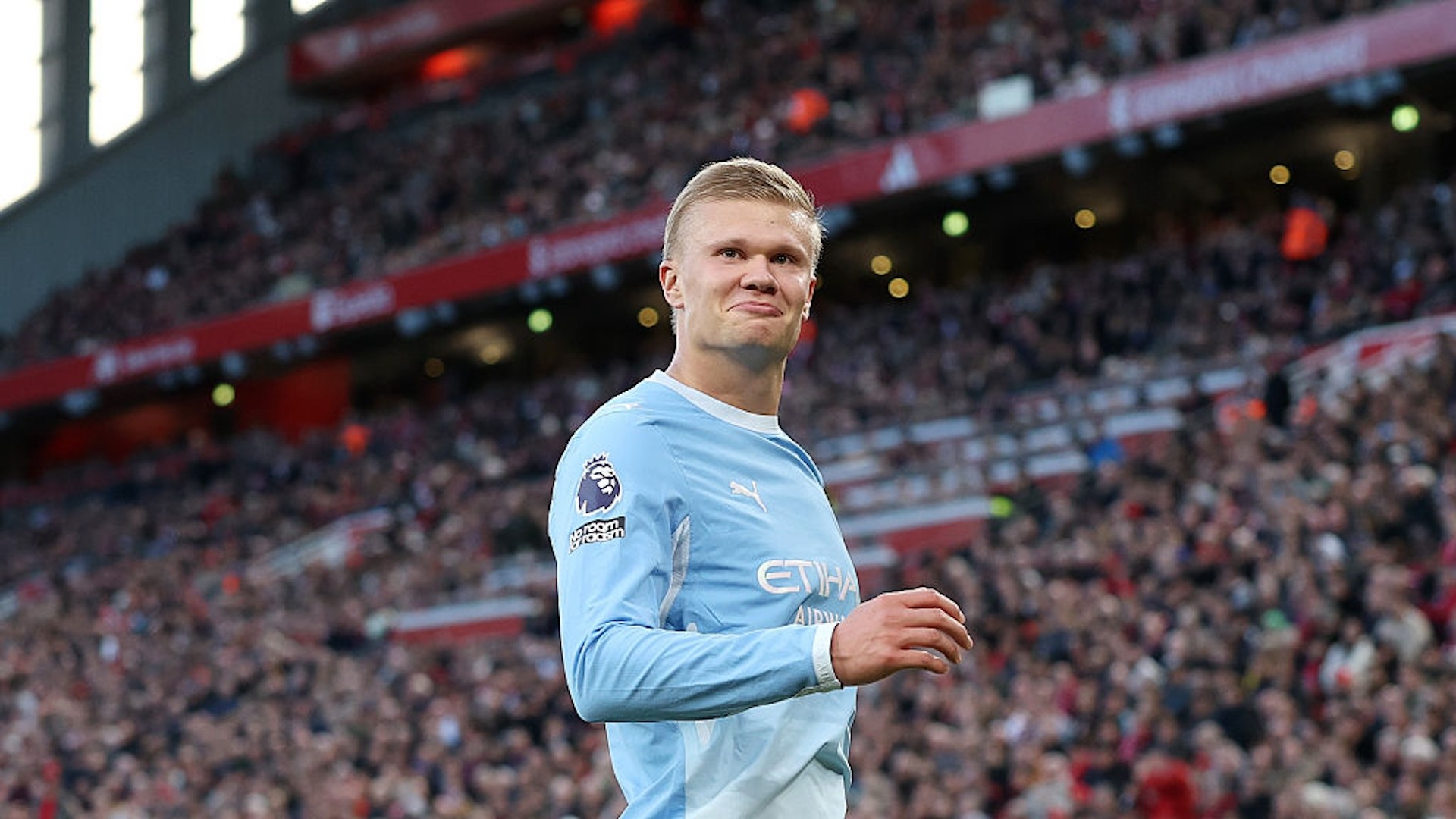
That won't stop anyone from trying to christen the next dark horse, though. Some candidates for the designation are still alive and well at this World Cup. After all, the term is broad enough that there will always be a dark horse until the field has whittled down to the usual suspects. Colombia was seen as a potential semifinalist heading into this summer, and its 3-1 victory over Uzbekistan has done nothing to undermine the Cafeteros' dreams. Norway, the European dark horse du jour thanks to Erling Haaland, Martin Odegaard, and a rollicking qualifying campaign, demolished Iraq in its first game, and might not need to beat France in the group decider, so its own dark horse candidacy remains alive and well too. And with a surprisingly strong start and home-field advantage, who knows how far the USMNT could go.
And yet, with all due respect to Haaland, Luis Díaz, and Tyler Adams, and to the concept of a dark horse as a whole, the World Cup is brutal and long, and most dark horses fall off the pace before the final stretch. Framing the tournament through this device always does a disservice both to the World Cup itself and to the teams assigned the moniker. It has been an incredible World Cup so far, with Curacao picking up a point or Cape Verde picking up two while playing some gritty, beautiful soccer. We had referee Iván Barton's screaming red-card call on Almirón, which has been stuck in my head since Friday night. We've had all of the things that make a World Cup wonderful, and there's no use in wasting energy bemoaning that your Turkey-to-the-quarterfinals pick has already busted. Rather than trying to forecast which of the less-pedigreed horses might go farthest, your time is better spent simply enjoying the race.