

I was able to hold it together until I was alone, but I cried when I learned that the Mets had traded Mookie Wilson. This was at summer camp, so the news might have been days old by the time it finally made its way to me and alone time was decently hard to come by. I was 11, which was old enough for Mookie to have been one of my favorite players on the Mets' 1986 World Series champs and nearly old enough for me to understand why the team had decided to trade him away. I cried all the same, just for a minute, while walking up a long grassy hill towards the bunks. It seemed, even then, like something that wasn't quite worth crying about on the merits, but you can't really negotiate with yourself on stuff like that. A big part of caring about a sports team amounts to figuring out how to accept things that are entirely out of your control, and it is a life's work.
The Mets had been too troubled by injury and addiction and natural attrition to come close to repeating in the years after '86. Getting to watch that utterly dominant and worryingly disinhibited team so early in my life as a fan was disorienting and set some very strange expectations; watching it fall apart, little by little and then all the way down to stinking rubble, was my first and most painful lesson in what being a fan is mostly like. The many incandescently radioactive personalities from that championship team had always existed in an extremely tenuous dynamic tension, and the front office swapped them out gradually and very carefully, like plutonium rods.
The biggest miss there was Kevin Mitchell, who became a star slugger and National League MVP after being traded for the dour Arkansan leftfielder Kevin McReynolds in 1987. In 1989, the team traded rageaholic platoon second baseman Wally Backman before the season, then dealt manic centerfielder Lenny Dykstra to Philadelphia in June. At the July 31 deadline, they traded Rick Aguilera and several of their best pitching prospects to the Twins for All-Star starter Frank Viola, then flipped Mookie Wilson to the Blue Jays for a 26-year-old Harvard-educated reliever named Jeff Musselman, who would pitch in parts of two seasons with the Mets; in August, Musselman will celebrate his 34th year as an employee of The Boras Corporation.
They were still competitive, especially considering how little they got from the deteriorating cornerstones of that '86 team. The aging Keith Hernandez and Gary Carter barely registered, Dwight Gooden missed half the season with a shoulder injury, Darryl Strawberry dropped 132 points of OPS from his monster '88 showing. They were too good to blow up, a concept that only sort of existed at the time. The idea, a decent one, was to rebuild on the fly.
Things wouldn't really stop working for the Mets until the early 1990s—that was the "stinking rubble" part, big-ticket free agents injuring children with firecrackers, things of that nature—but none of it really worked very well. The team stayed competitive until it really didn't, but '88 was their only trip to the playoffs until 1999; I wouldn't say I lost interest in there, really, but they felt less and less like the Mets to me with every deal they made, and so I felt less obligated to give them my time. I was also growing up, though, and other interests were crowding them.
Looking back at that 1989 team, what registers is less the lacerating sense of betrayal that I felt sniffling and stomping up that hill in Connecticut and something much more recognizable: a roster that reflects a very reasonable attempt at transition that wasn't going to work. The prospects that were replacing the aged-out red-asses and dead spots from that '86 roster didn't hit enough, or just wouldn't until they got free of a luridly toxic clubhouse; mid-career stars stagnated or backed up for the various reasons that things like that happen; the old guys had lost it, irretrievably. In those circumstances, it is not unreasonable to take a shot on Jeff Musselman. It is also not really unreasonable for an 11-year-old, or anyone, to feel sad about that decision. A baseball team cannot really afford to be sentimental or backwards-looking about itself in the ways that a fan can't help but be.
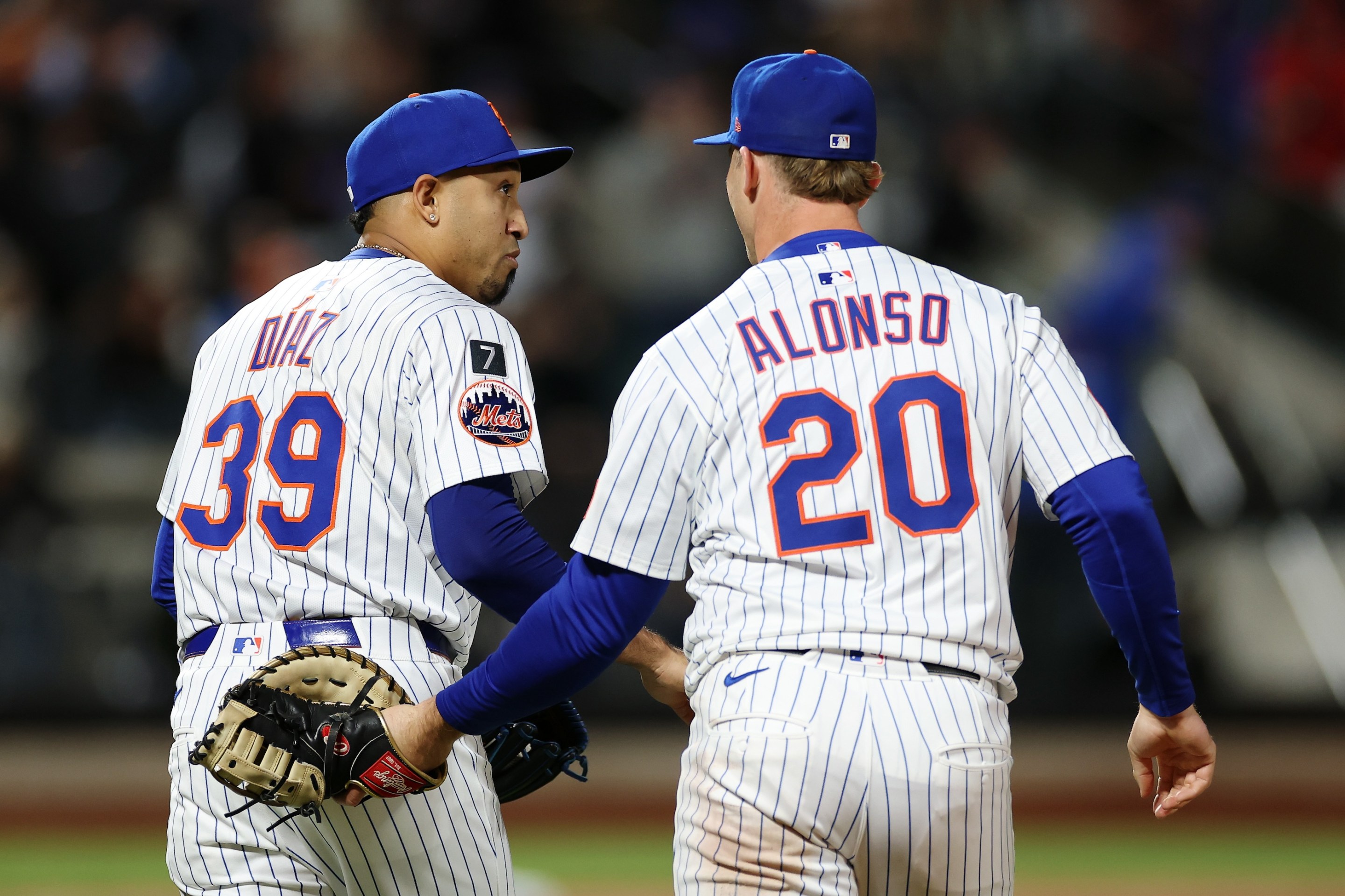
Of the three big offseason transactions that have turned over what had been the core of the Mets roster since 2019, only the trade that sent Brandon Nimmo to the Texas Rangers for second baseman Marcus Semien really counts as "a move." Closer Edwin Díaz and first baseman Pete Alonso left as free agents, in a pair of decisions that the Mets did not really fight very hard. The Mets brought in a viable replacement for Díaz in Devin Williams in the earliest days of free agency; Díaz either was or wasn't offended by this, depending upon which local tabloid you read, but he ultimately chose the defending champions' contract offer over a very similar Mets counter. Alonso and the Mets have been trying and failing to break up in public for several years now, and the five-year deal that the Orioles offered him was somewhere between two and five more years than the Mets were willing even to consider.
All of these moves made baseball sense and business sense; all three of the players are either already declining or actuarily due for it, all three are paid the going market rate for mid-career stars, and all three were integral to a group that missed the postseason four times in six years, most recently in an excruciating 2025 collapse that saw the team lose 60 percent of its games over the season's last three months. This era of Mets teams played from one wild streak to another, which made it difficult to assess how well any of it was actually working. There has been identifiable progress around the margins, and in fixing one of the ugliest institutional cultures in the sport; they really are good at some essential if smaller-bore player development stuff that they rejected more or less on principle under previous ownership. But the team was never good enough over a long enough period of time to believe in—their 101-win season in 2022 felt like a mirage by that September, and they were extremely convincingly bad in 2023 and during the first months of 2024, at which point they became equally convincing as a team of destiny and remained so deep into October. It is easier and much more fun to believe in magic than it is not to, but the team's long, listless unwinding in 2025 was, among other things, a daily hammer-blow of disproof.
The shortest and probably the most accurate answer to why the Mets' decision to move on from that core has been greeted with outrage and offense by Mets fans is that Mets fans are both "like that" and conditioned to be like that by a local sports media that understands the Mets first and foremost as a designated object of outrage. As a result, the offseason is proceeding along two parallel tracks. On one, the Mets are doing the sorts of things that a state-of-the-art baseball team would do after the grim experience of 2025—sticking with the broader program but turning over the big-league coaching staff and much of the roster; refusing to panic or even really rush in rebuilding the big-league team while adding useful players on high-dollar, low-term contracts; refusing to indulge the temptation to run back a failure until it results in a success. On the other, things are proceeding as normal amid the familiar sour fug of recrimination and crashout. "As typical," owner Steve Cohen posted on Friday, "the usual idiots misinterpreting a Post article on Mets payroll for ’26."
The article is not important; the idiots are not important; the fact that the owner is yelling at random squeakers on The Everything App while getting yelled at by Keith Olbermann on The Everything App is extremely small-time and embarrassing of him but also probably not very important. Baseball's winter meetings ended last week and Christmas is next week and there is no reason to think that the Mets or really any other team is "done." There will also be nothing much else to yell about for several months, though, and watching a leak-averse front office make its methodical way through a thoughtful offseason overhaul is not otherwise very entertaining. Neither, you would think, is hitting the screaming/crying/throwing up trifecta in public, but no one gets into sports fandom to be reasonable.
That the present in question was so unsatisfying and unsustainable would naturally matter less—no present is sustainable, really—than the heavy sense of its end. As Jarrett Seidler wrote in Baseball Prospectus, baseball teams live in these kinds of cycles, and new names invariably take the place of the old. The way that a fan understands a baseball team—as the cast of a favorite television program, or as distant friends they lose touch with every winter, or as a particularly vexing Sudoku-style puzzle they'll spend the rest of their lives going over—is not really the way that a front office would or should think about it. The relationship is different, but the moments when the friction between the product as it is manufactured and the product as it is consumed are most intensely felt are difficult ones. It pulls you up short; it reminds you how little any of this actually has to do with you or what you want.
The wild reaction makes more sense, maybe, if you understand that all the people involved—with the exception of the people in the front office setting up whatever deals may come—are grieving. It's possible that the more unbalanced among the faithful really had convinced themselves that Brandon Nimmo was actually their personal friend, or that they might have been able to make Pete Alonso stay if only they had cheered harder, but even as a kid trudging and crying towards the archery range I did not really believe that to be true about Mookie Wilson. It's not the sort of grief that comes with actual loss, but the lower-intensity kind that comes with every experience of change—with moments when the passage of time becomes too solid and too painful, when you can see the present slipping unmistakably and irretrievably into the past, when something that was always and already ending is finally over. In winter, the fact that spring is coming offers little in the way of comfort. But that's how it works, and it is coming either way.