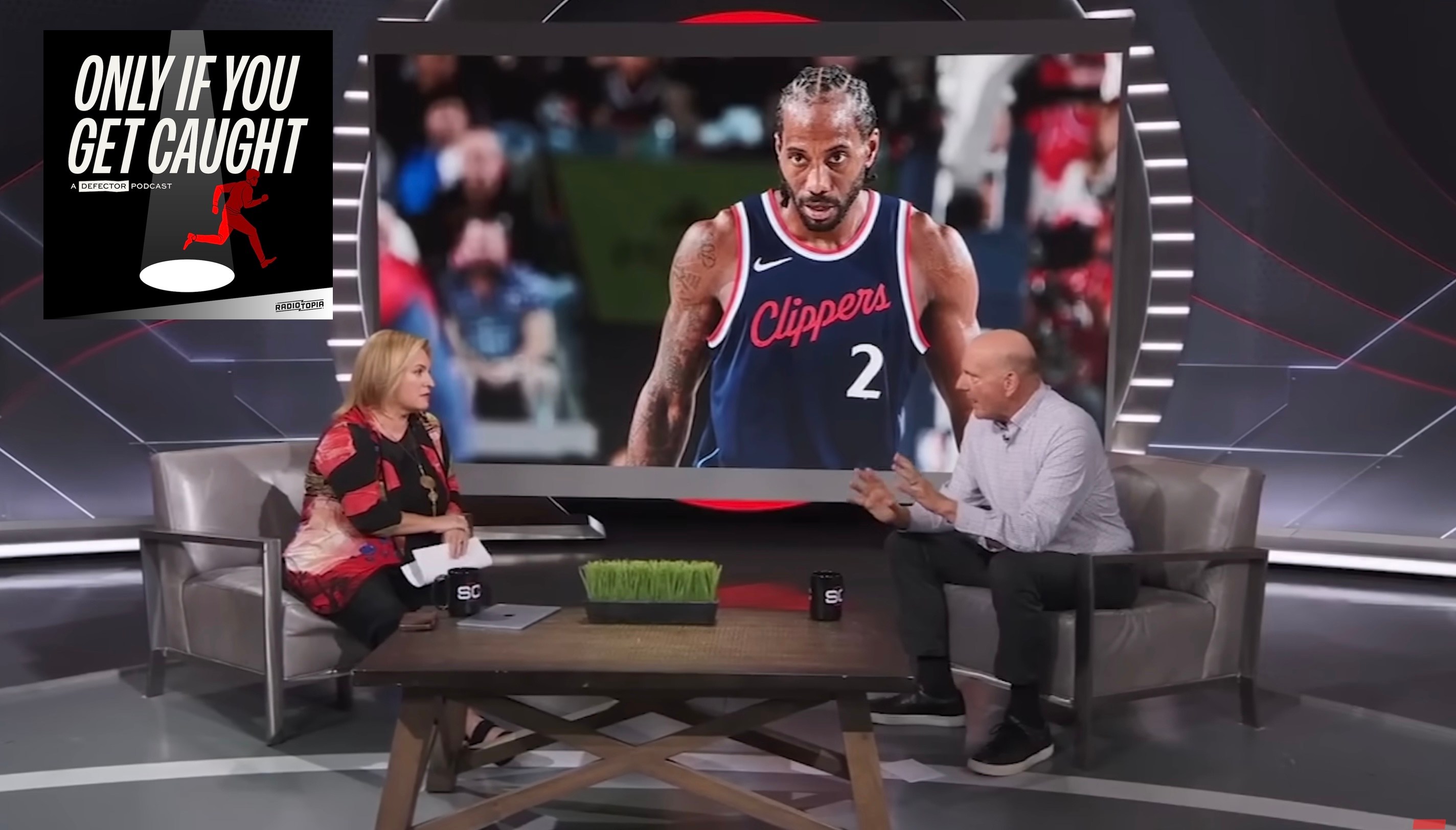


The 35-page report released on Wednesday by the law firm Wachtell, Lipton, Rosen & Katz, which contains a great deal of evidence that Kawhi Leonard and the Los Angeles Clippers circumvented the NBA's salary-cap rules, makes for some surprisingly fun reading. It includes some juicy and/or embarrassing emails and text messages sent by some of the parties involved in the Clippers' scheme, and my favorite part of the report is this one:
In December 2021, Mr. Sanberg discussed with senior Aspiration executives his desire for the company to enter into an endorsement agreement with Mr. Leonard on the terms described above. Mr. Sanberg did not have the authority to sign such an agreement on Aspiration’s behalf and, according to internal Aspiration emails, the reaction among its C-suite executives who did have this signing authority was swift and uniformly negative: “I have no idea why we’d do this,” wrote one senior executive; “this is not a good investment of our capital [...] It’s $48M over 4 years for Kawhi, who is not a big name [...] Not sure why we would make such a commitment considering we are already paying a huge sponsorship fee to Clippers,” wrote another.
When these concerns were conveyed to Mr. Sanberg, he told the Aspiration executives that “the Clippers are asking us to do this with Kawhi Leonard” and that the team would provide additional business back to Aspiration to help offset the financial impact on Aspiration. In an email exchange among Aspiration’s CEO, CFO, and general counsel, one wrote, “[Mr. Sanberg said] that the Clippers are promising to increase the amount they pay us per quarter in line with what we pay this guy [i.e., Mr. Leonard].” Another responded: “Thanks for verifying. ... We should be fine if it’s cashflow neutral.”
This excerpt is one of several within the report that could be described as a "smoking gun." Here you have Aspiration co-founder Joe Sanberg, who pleaded guilty to felony charges for defrauding all sorts of people while running Aspiration, hinting at the purpose of the company's endorsement deal with Leonard, only for his CFO, CEO, and general counsel to then describe the scheme in plain language: "[Mr. Sanberg said] that the Clippers are promising to increase the amount they pay us per quarter in line with what we pay this guy [i.e., Mr. Leonard].”
You read a sentence like that, in a report like this, and the famous Stringer Bell line immediately comes to mind: "Are you taking notes on a criminal fucking conspiracy?" It might even take you a minute to remember that there isn't actually a criminal conspiracy being described in this report, and that perhaps the reason Aspiration executives didn't hesitate to write emails like that isn't because they were foolish or arrogant, but because in this instance they were, for once, not doing anything immoral.
A quirk of the Kawhi Leonard scandal is how easily it maps onto a familiar type of American scandal, and how that familiarity has colored much of the media and public's reaction to it. Here you have many of the same beats that Americans have previously encountered while reading about political or corporate malfeasance: whistleblowers, anonymous sources, Pulitzer Prize–winning journalism, a fraudulent company, documentary evidence, a billionaire who thinks he can get away with it, investigators catching executives red-handed, and on and on. Steep yourself in all these details and it's easy to sort this scandal, in shape if not magnitude, with the likes of Watergate and Enron. Pull yourself out of the NBA's pocket universe, though, and you'll be reminded that no harm was actually done here.
This is why one of the Aspiration executives responding with a simple, "Thanks for verifying ... We should be fine if it’s cashflow neutral," to a description of the Clippers' scheme is so clarifying. Imagine for a second that you are an Aspiration executive in 2021. The founder of your company is doing absolutely crazy amounts of fraud every day. He's cooking the books beyond recognition, and your day is spent either ignoring or helping to cover up transactions that will eventually land the guy you work for in jail. Then one day you are told about a particularly confusing business arrangement: Your company is going to pay a basketball player $48 million, and then the team that guy works for is going to pay you $48 million. You are probably not an NBA fan, or if you are, it is unlikely that you are fully read up on the NBA's salary-cap rules. You are left trying interpret a conspiracy that is only a conspiracy within the arbitrary rules of a cartel made up of 30 billionaires. It's like being approached by a child who says he has an exciting business proposition for you: He'll trade you two $10 bills for a $20 bill. You can't figure out the angle. You decide that you don't really have time to think about this and write back, "We should be fine if it’s cashflow neutral."
It is at this moment in the report that the pin makes contact with the balloon, and the reader is reminded that all Leonard and the Clippers are guilty of is refusing to abide by some bullshit. Perhaps that feels like a dismissive way to describe the NBA's rules, which are collectively bargained by both the owners and the players, but it's important to remember that the CBA is not so much a compromise between ownership and labor, but the latest result in a never-ending battle that sees labor fighting to win a fairer share of the fruits of their work. A salary cap is not an immutable law of nature, nor is it a method of enforcing fairness. It is just a stronghold that NBA players have yet to breach, one which allows the owners to artificially suppress their employees' earning power.
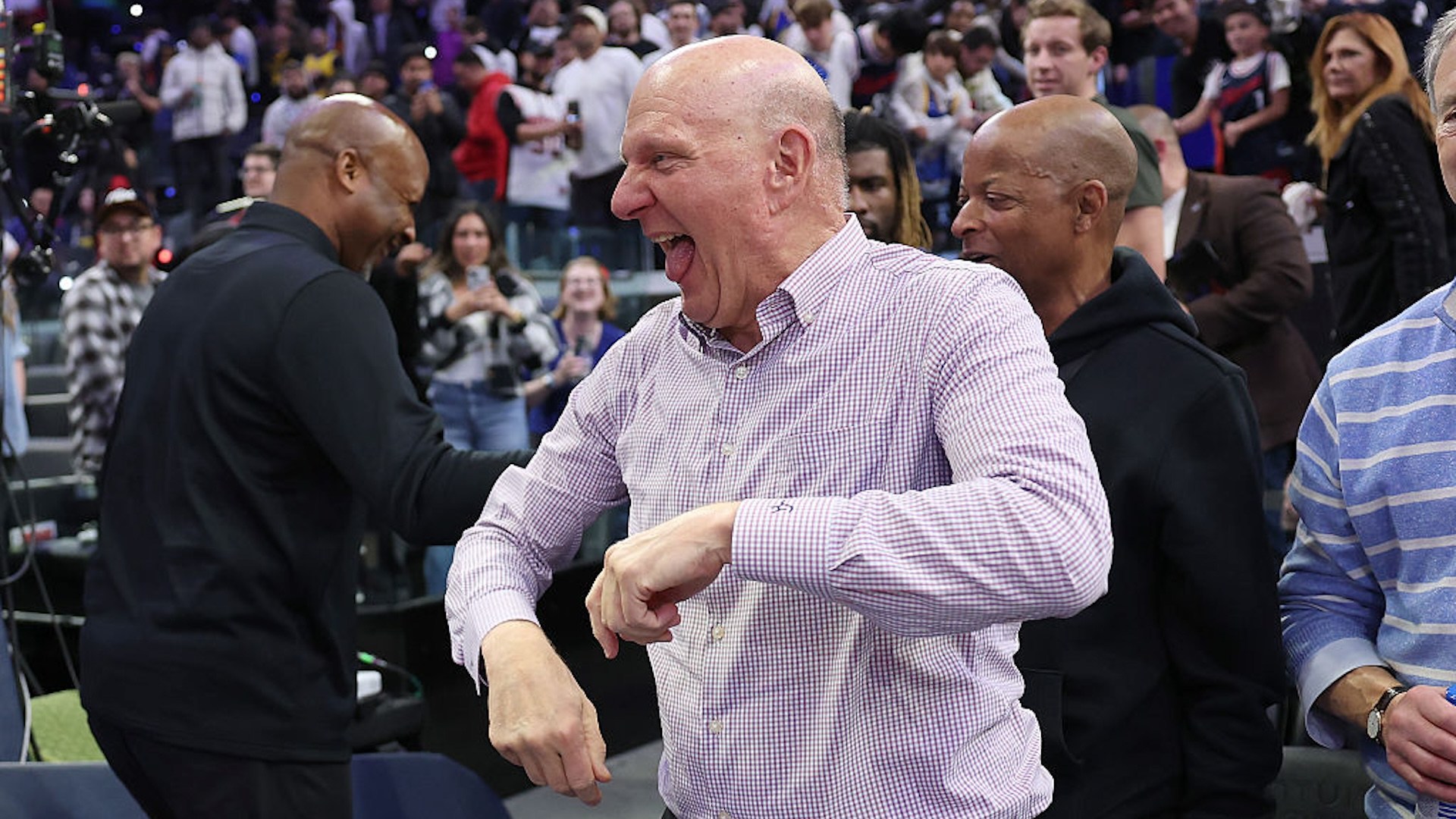
There is of course inherent pleasure to be taken from seeing a billionaire like Steve Ballmer and his lackeys take a header into the concrete due to their inability to successfully execute a relatively simple scheme, but the comeuppance they have been served comes with an odd flavor, as it's not really clear on whose behalf the Clippers' punishment has been dished out. Beyond the schadenfreude enjoyed by any fan, those hefty fines and seized draft picks don't represent anything other than Adam Silver enforcing the other owners' desire to keep suppressing wages. And none of this would have been a problem if the NBA just allowed its teams to operate like normal businesses, rather than leaving them to cook up bespoke versions of corruption that even executives at the corruption factory have trouble understanding.