Soccer is not usually the sort of sport that causes its players to lose their voices. And yet there was Harry Kane, minutes after his 10-man England squad escaped the Azteca with a 3-2 win over Mexico, nearly unable to complete his post-match interview due to the hoarseness of his voice. It was an unusual thing to see, but befitting of the game Kane had just played, which was so strange, so dramatic, that it was easy to imagine most everyone who watched or played in it being left speechless.
Too much is often made of the effects of home-field advantage in sports, but soccer is one where, in certain circumstances, the environment and crowd can have a material influence over what happens on the field. There's not really any other way to explain Mexico, a middling and often uninspiring international team in most circumstances, basically never losing when they play at the Azteca. It made sense, then, that so much of the pregame analysis was focused on how England would handle playing at altitude, in front of a ferocious crowd of 87,000, against a team that feels invincible whenever it steps into that particular stadium. I figured if England could make it to the first hydration break without wobbling too badly, they'd be in good position to slowly gain control of the match through their superior talent.
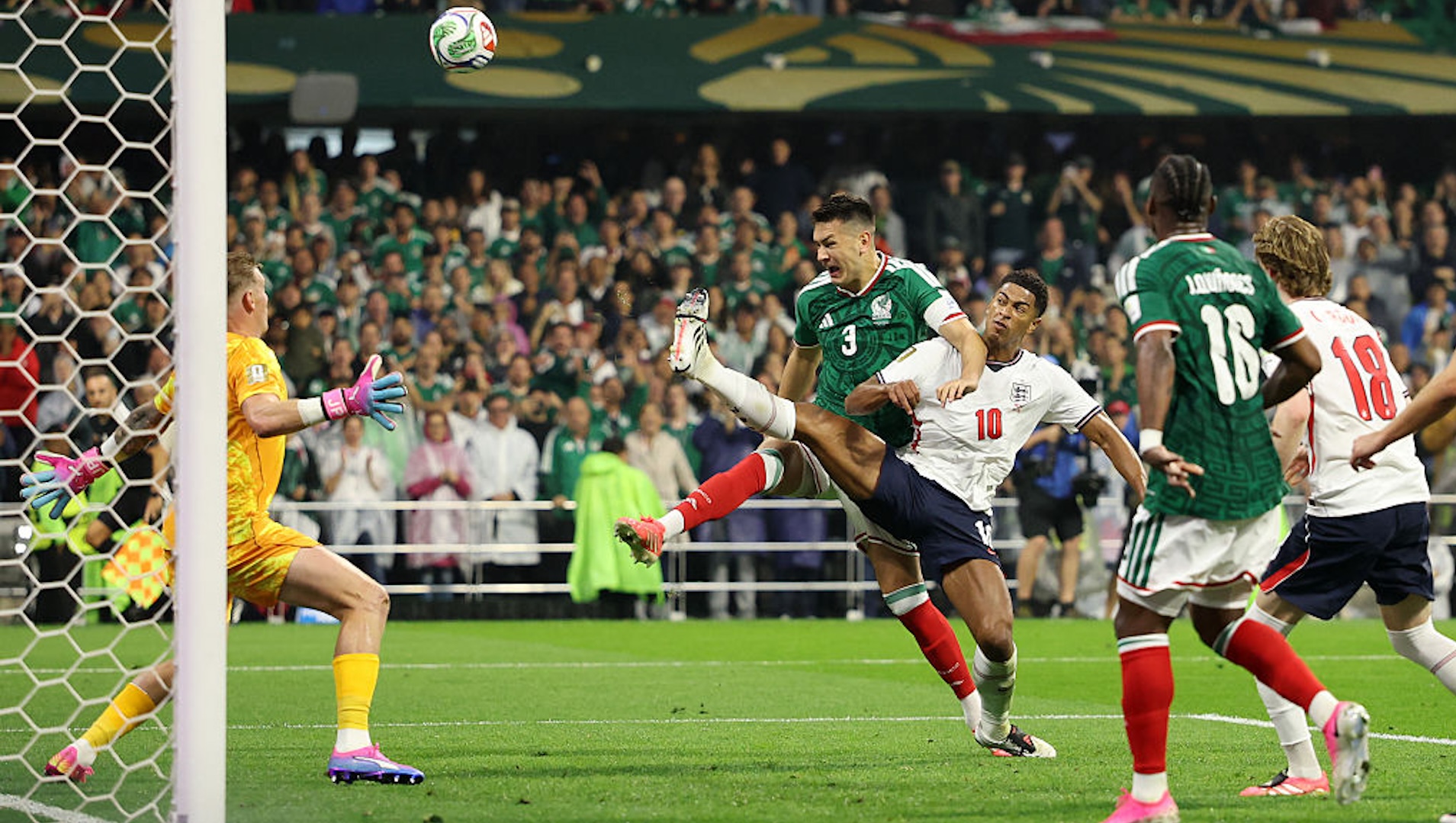
Everything went according to plan for England. An early header from Raúl Jiménez that seemed destined for the bottom corner was palmed away by Jordan Pickford, and suddenly a half-hour had passed without Mexico gaining too much of a foothold. And then, in the span of two minutes, it seemed that Jude Bellingham had singlehandedly removed the Azteca's mystique. His head met a cross at the back post to make it 1-0 England in the 36th minute, and then in the 38th he was there to finish off a move that started with Mexico giving the ball away in its own end.
Two goals like that, in such quick succession, can kill a game. The demoralizing nature of the second one seemed particularly suited to remove whatever was left of Mexico's confidence and turn the Azteca into a pit of despair. The Mexican players were bewildered, the fans were crestfallen, and England was in perfect position to keep the pressure on, push for a third goal, and turn the game into one of the worst nights in Mexico's soccer history.
Those circumstances made what happened next all the more incredible. From the second goal until halftime, Mexico played some of their best soccer of the tournament. A dangerous free kick into the box ended with Julián Quiñones firing a ball over Jordan Pickford's head to make it 2-1 in the 42nd minute, and from there it was Mexico who had the game in their teeth. England's penalty area was suddenly under assault, and it seemed more likely than not that Mexico would equalize before halftime, which created the rare scene in which the team that was leading 2-1 and just a few minutes ago had scored two back-breaking goals was desperate to hear the whistle and crawl into the locker room.
The second half was a testament to all the ways in which soccer players can find themselves at the mercy of their environment. It felt like the game itself had come alive, and was imposing its own chaotic will on the players, who were just trying to survive. The foul that earned England defender Jarell Quansah a red card in the 54th minute was exactly the sort of foul that a player commits when they have allowed themselves to be overcharged by the atmosphere and start flying into reckless tackles they'd normally abstain from. The same can be said of Mexican keeper Raúl Rangel's doomed attempt to close down Anthony Gordon's sprint toward the goal, which resulted in a foul and a penalty kick that put England up 3-1. By the time Harry Kane was committing his own foul in the box to gift Mexico a penalty and make the score 3-2, it felt like nobody, not even the referee, was in control of what was happening to or around them. There was just the crowd, the wall of noise it produced, and the madness of the game.
Even when the game settled into a more legible rhythm over the final 30 or so minutes, it never felt like anyone on either team had regained any sense of control. England spent basically every minute after Mexico's second goal with eight players hunkered down in their own box, and Mexico answered by firing cross after cross onto the heads of England's defenders. Anyone watching this at home would have been tempted to smack their forehead, incredulous at how unwilling Mexico was to try anything more creative than hoofing a series of crosses from 30 yards out into England's box. Maybe even a few England fans around the world were grinding their teeth over just how committed the Three Lions were to parking every available player in front of their own goal, never once trying to use their skill on the ball to relieve some pressure while down a man.
Such frustrations are understandable, but I think they overlook how easy it is for soccer players, while in the heat of the moment, to be overtaken by events. In a game like that it is easy for anxiety and fear to wrap themselves around instinct and produce only actions fueled by thoughtless desperation. The same base impulses that had Mexico's players crossing the ball at the first opportunity they saw were also urging England to keep charging those crosses down. Eventually, after 11 minutes of stoppage time, England survived the siege.
Once the game ended, I found it impossible not to think about its place next to some of the games that had preceded it during the weekend. I thought first of Cape Verde's heroic assault on Argentina, and how inspiring Sidny Lopes Cabral's extra-time goal was and will continue to be for years to come. Then I thought of Paraguay's objectively disgusting performance against France, which seemed to be motivated by nothing more than a base desire to injure and annoy Kylian Mbappé. It occurred to me that these three games, and so many others that we have seen at this year's World Cup, stand up as pristine examples of exactly what makes soccer such a thrilling and unique sport. The beauty of the World Cup is in seeing how each participating nation brings its own anxieties, priorities, and cultural understandings of how the game should and shouldn't be played to bear on the action on the field. We now know that Cape Verde's brand of soccer is premised on the belief that even the smallest minnows can play the beautiful game, that Paraguay believes in the advantages that can be carved out by becoming a vessel of pure evil, and that Mexico has sought an edge by building a cathedral of chaos that even its own players can succumb to. There are so many ways to play a soccer game, and there is value to be found in just about every manifestation—yes, even Paraguay's. It's good to be reminded of that sometimes, even if it cost Harry Kane his voice.