
It is late August, the waning days of a long summer. Though the oppressive heat still imposes itself on you, the days are shortening noticeably, the faint whisper of a chill in the air perceptible in the stiller moments of deep night. Soon there will be red leaves, sweaters onto shoulders, and NBA basketball.
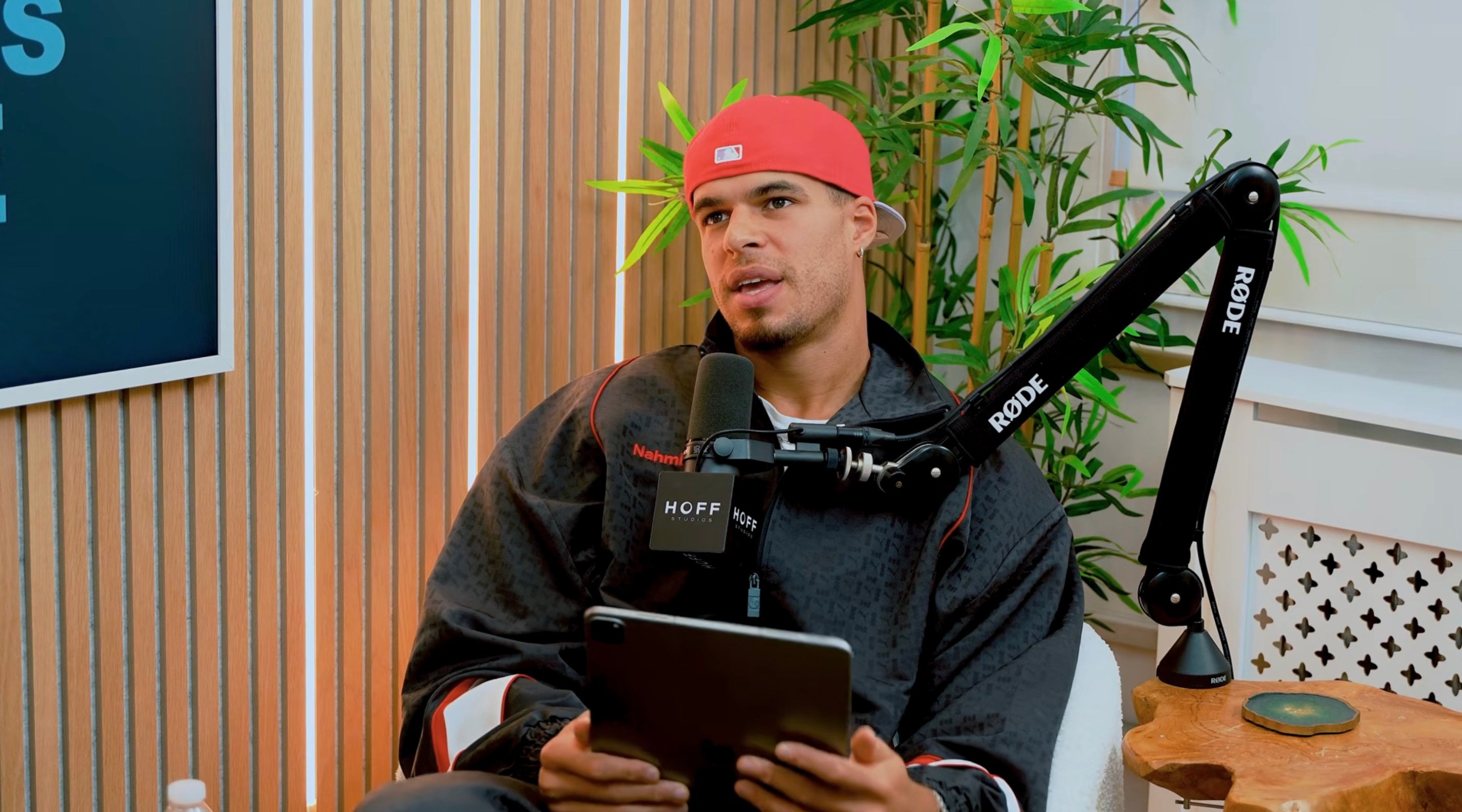
You both anticipate and fear the turnover of the seasons, though it feels abstract—that is, until your phone lights up. Someone has sent you an Instagram link to a clip from Michael Porter Jr.'s podcast, Curious Mike, where he and Lonzo Ball are inadvertently inventing effective altruism from first principles. Unable to look away, you scroll further and select a clip with the banner text "HOW WOMEN ARE TOXIC," and the captioned text "girls be toxic," learning about how these females often display toxic tendencies. Ah yes, you think to yourself, Brooklyn Nets basketball is right around the corner.
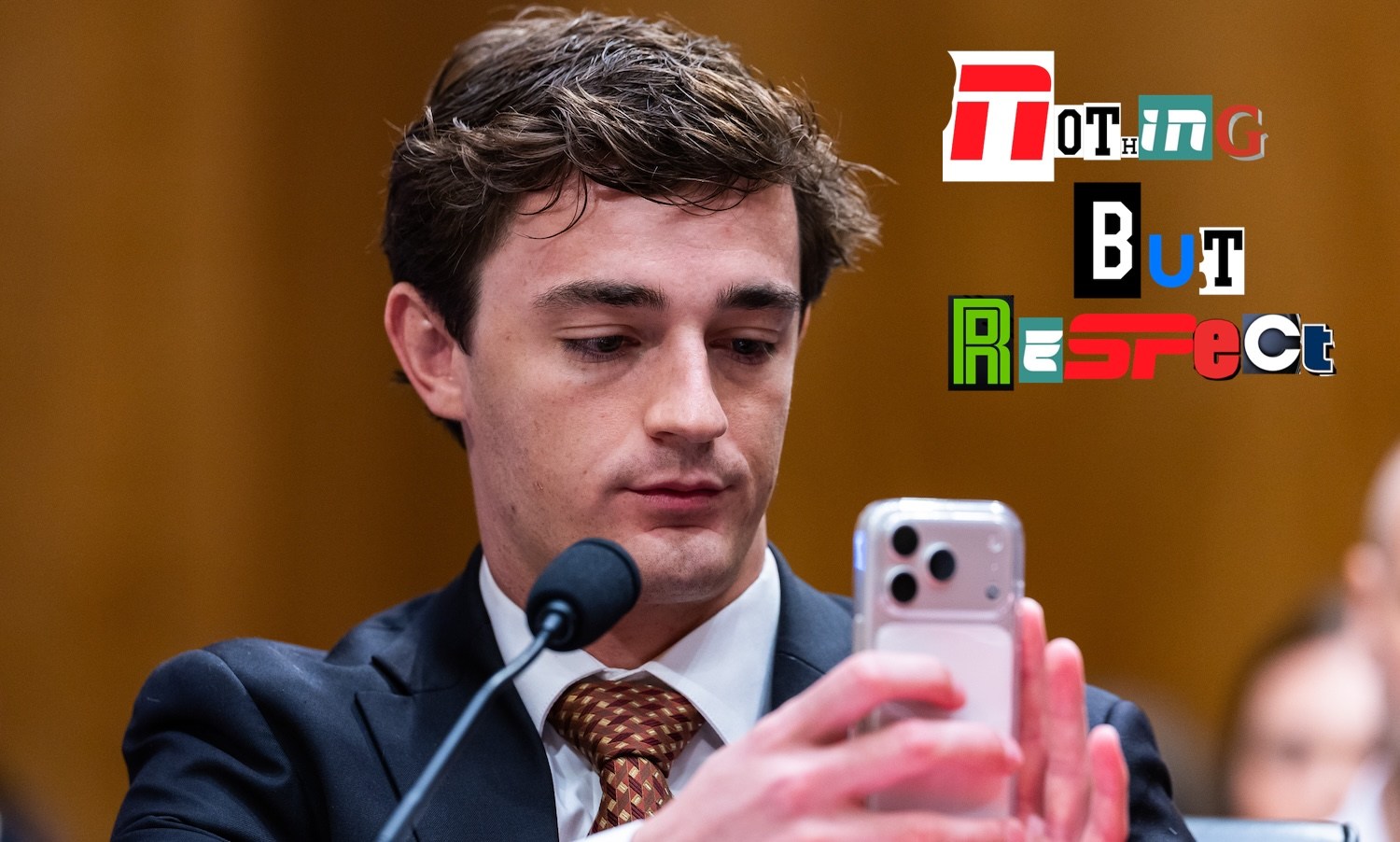
Porter Jr. is a figure of fascination around these parts, as he is a starting-caliber NBA player who is seemingly more dedicated to cutting odious podcast clips than he is to helping his team win basketball games. Last offseason, Porter Jr. called attention to himself—it wouldn't be quite right to say he "got himself in trouble" or "generated controversy," since those formulations presuppose both a consensus reality against which he clashed, and a mechanism of consequence that doesn't exist—by going on one of the Nelk Boys' podcasts and saying stuff like, "I'm not saying I'm a misogynist or anything, but I'll throw on some Andrew Tate and see how they react," because you have to "test a girl early" and "do your research." It was an occasion to reflect on the alarming, shrinking distance between high-level athletes and the internecine culture of the right-wing internet, which is to say: the internet.
One year later, Porter Jr. is still on the Nets and still podcasting. On the court, his most recent season was a breakthrough, and he posted a career-high 24.2 points per game while playing as a No. 1 option for the first time. The Nets were horrible, of course, which meant that his primary role in the broader NBA season was a sort of spectral figure; any fan of any team that needed size and shooting had to complete some mental pre-gymnastics at the prospect of his acquisition. He had a case to make the All-Star Game. He seemed likely to become a Detroit Piston or perhaps a Golden State Warrior in February, but did not; in early March he helped the Nets win a game that, for tanking reasons, the organization would have preferred to lose, and shortly afterward was put on the shelf for the remainder of the season.
With Porter Jr. getting a head start on his offseason, he was able to pursue his true passion of producing viral Instagram clips. I'm not editorializing there: He's been open about his opinion that most athletes are like "robots" because they feel they have too much to lose by speaking honestly. "I wanted to use my platform to actually have an impact and to be able to talk about what I want to talk about," Porter Jr. said on a May episode of Curious Mike with his old friend Steiny, a weird little guy last seen getting real with the NBA player about how you can't trust these fake L.A. women.
So what does Michael Porter Jr. want to talk about? I've watched his entire offseason compendium, which includes:
- The matter of whether it's acceptable or perhaps even required to pay a woman's rent.
- Porter Jr. realizing he wasn't as "ungaslightable" as he thought: "I thought I used to be very intuitive when it came to females."
- LaMelo Ball's "alien inventions going on," his "funhouse," and Lonzo Ball's concern that "I don't know how he live like that."
- "I'm so straight that even if I was a girl, I would go against my religion, I would go against my religion and still like girls."
- The concept of whether back injures are real problems rooted in the physical realm, or are primarily matters of belief and mindset.
- His "weird argument" for why he thinks Christianity is real: "When you watch scary movies or horror movies, it's never from like a mosque. It's always from like a church or mocking Christianity, or doing like the upside-down cross. Even when people get like exorcisms, they always go to a Christian or a Catholic person to pray the demons out. So I always thought that was like pretty clear evidence that the two sides were Christianity and then, you know, Satan and his side." His guest, the streamer N3on, posited that if you made a scary movie inside a mosque, you'd get canceled, to which Porter Jr. replied, "Maybe that's it then."
- This week's pièce de résistance, with the streamer Sneako on the matter of whether or not there are "people walking around here that are not fully human," which features Porter Jr. delivering an all-time line read of the word "Wow."
The nicest thing you can say about Porter Jr. is that he does come off as actually curious, but that curiosity is tightly circumscribed within the blast radius of the worst parts of the viral vertical-video economy. It's like rigorously applying the scientific method to solve the problem of the female's ideal body count.
What's interesting about Porter Jr. is that he's doing all this while also traditionally famous as an NBA player of some renown. To me, his zeal for asking people questions about how they approach an Instagram DM exchange with someone they like, but suspect may be trying to scam them, makes him the unwitting poster boy for the way fame works now. Every famous person is just someone on a phone screen, flattened of all context and in competition with every other famous or would-be famous person. The traditional paths have eroded. To someone interfacing with the world entirely through Instagram reels, which is by my estimate somewhere between 45 and 75 percent of anyone under the age of 30, Sneako, Lonzo Ball, and, say, Nicole Kidman aren't all equally famous, but they are all famous in the same way.
I don't think Porter Jr. realizes this, or at least he doesn't operate with that self-awareness. But you can detect a glimmer of contradiction in the second-most prevalent throughline in Curious Mike—the first, naturally, is why women are Like That—which is the emotional desolation of being rich and famous. He talks about it with streamers, abusive professional boxers, ex-pornstars, and even his peers in the NBA.
"It doesn't fulfill you in any real way," disgraced boxer Ryan Garcia said last August. "You're gonna be by yourself, empty." That's one of three pinned posts on the Curious Mike page, alongside a clip of former adult film actress Sky Bri talking about why she quit, and a delightful clip of Peyton Watson talking about how he couldn't party after the Denver Nuggets won the championship. "Some of the richest people are the most unhappy people," Porter Jr. said in May.
"[Being famous] really sucks," the Nets player said in another, more recent clip. "People these days will do anything for attention." This recent exchange felt particularly illustrative, as the nature of N3on's fame is essentially what Porter Jr. aspires to.
Is there something deeper being expressed here? Of course not. There's no revelation attached to it, merely an unarticulated expression of loneliness, blasted out from one phone to millions. A smarter person would realize the trap, but Michael Porter Jr. is not a smarter person. Instead we're left with questions like "Gay dudes: Are they all thots?"